 Hair, nail & outfit ideas by Natalie Vasilchenko
40 Little Girl Braids 2027
Little Girl Braids 2027 are the cutest hairstyles for your little one. Discover 40 adorable looks, from cornrow pigtails to braided pigtails with bows.

I keep seeing the same thing in the chair next to mine: braids that used to read as kid stuff, now worn by women who have opinions about their part lines. The neatness is the point, and the pastel beads are the wink. I am here for it.
This roundup of Little Girl Braids 2027 has 40 looks, from a five-minute bubble braid to a full feed-in install. Some need a salon chair, some need a mirror and patience. If your hair goes flat by 4 pm like mine, a braid is the only style that still looks deliberate at dinner.
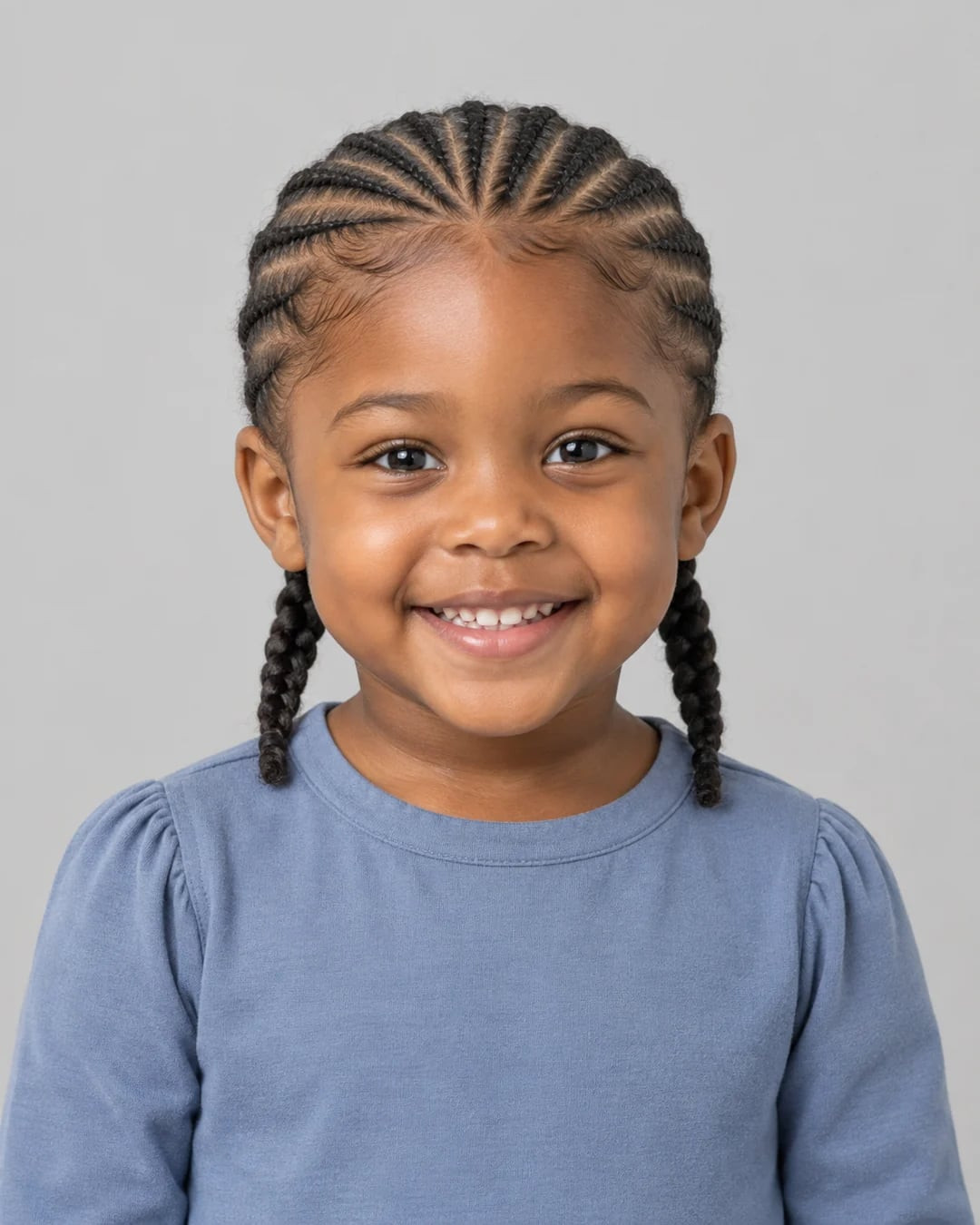
Neat Cornrow Pigtails With Defined Pattern
That parting is so precise it looks measured. The cornrow pigtails sit close to the scalp, then release into curly ends at the shoulder. Black on black, so the pattern does the work. On straight or relaxed hair this would slip by noon. On textured hair it holds for days. I have fine hair and I know my limits: this is for medium to high density, and it needs a salon booking. The neatness comes from even tension, not from a product.
Festive Braided Pigtails With Bows
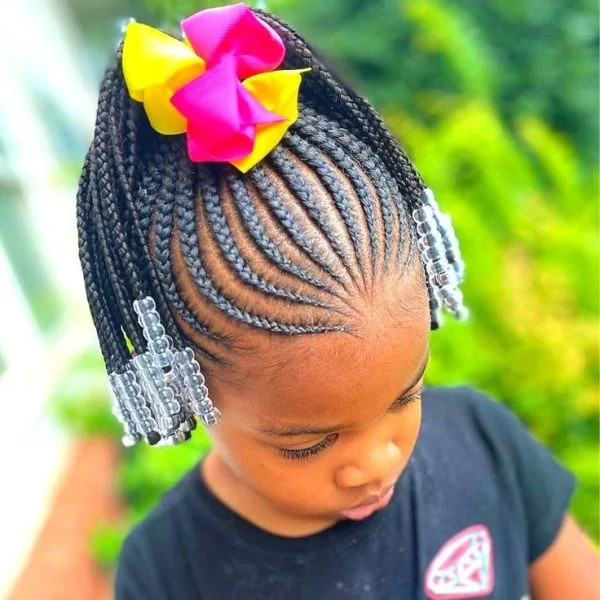
Can a braid be optimistic? The braided pigtails with bows and beads suggest yes. Black hair, shoulder length, the braids dressed in yellow and pink accents. The bow sits at the nape, the beads catch light at the ends. This is for a birthday, a holiday, a day you want to feel put together. The styling is the point: the accessories make it festive, not the braid alone. Take the bows out before bed. The beads can stay.
Blonde Boxer Braids With Side Part
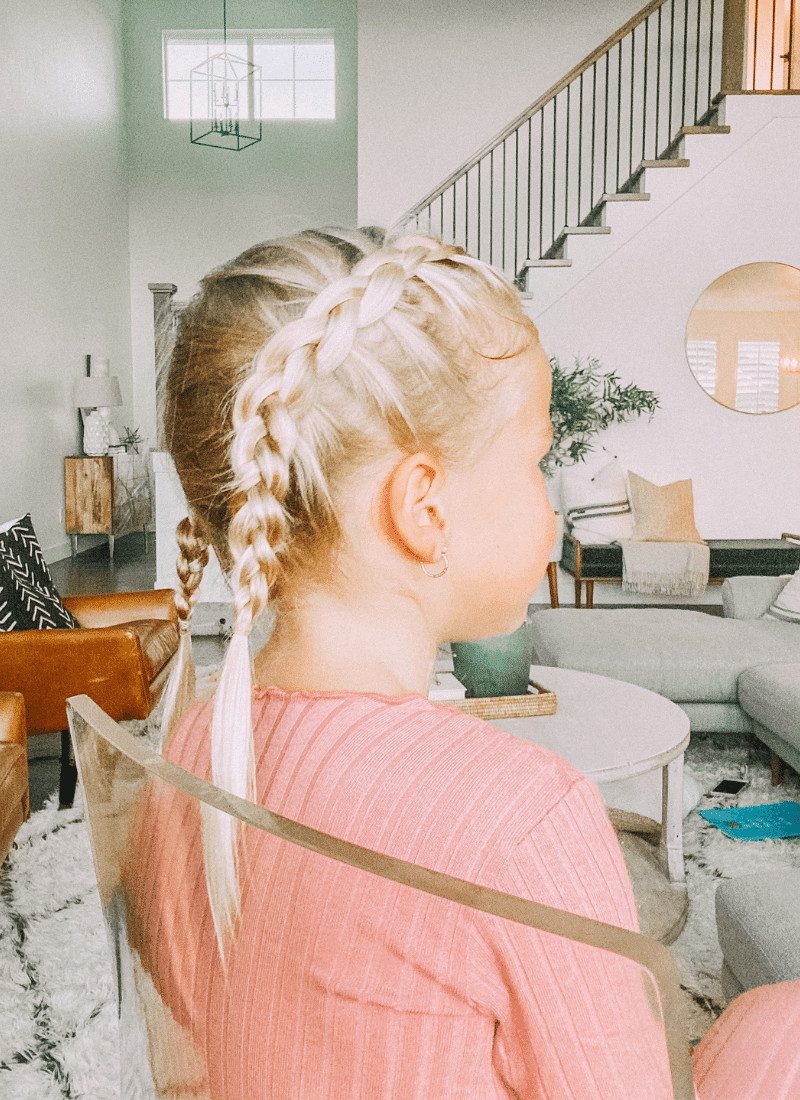
Boxer braids win over Dutch braids for one reason: the side part. A center part on boxer braids reads severe, like you are about to spar. The side part softens it. These are mid-back, blonde, straight, with layers that keep the braid from looking like a single thick rope. The honest downside: the layers mean shorter pieces escape near the nape. You tuck them or you live with them. I live with them. The hold is excellent, the clean lines are the point, and the side part is the difference between looking tough and looking polished.
Medium Brown Dutch Braids
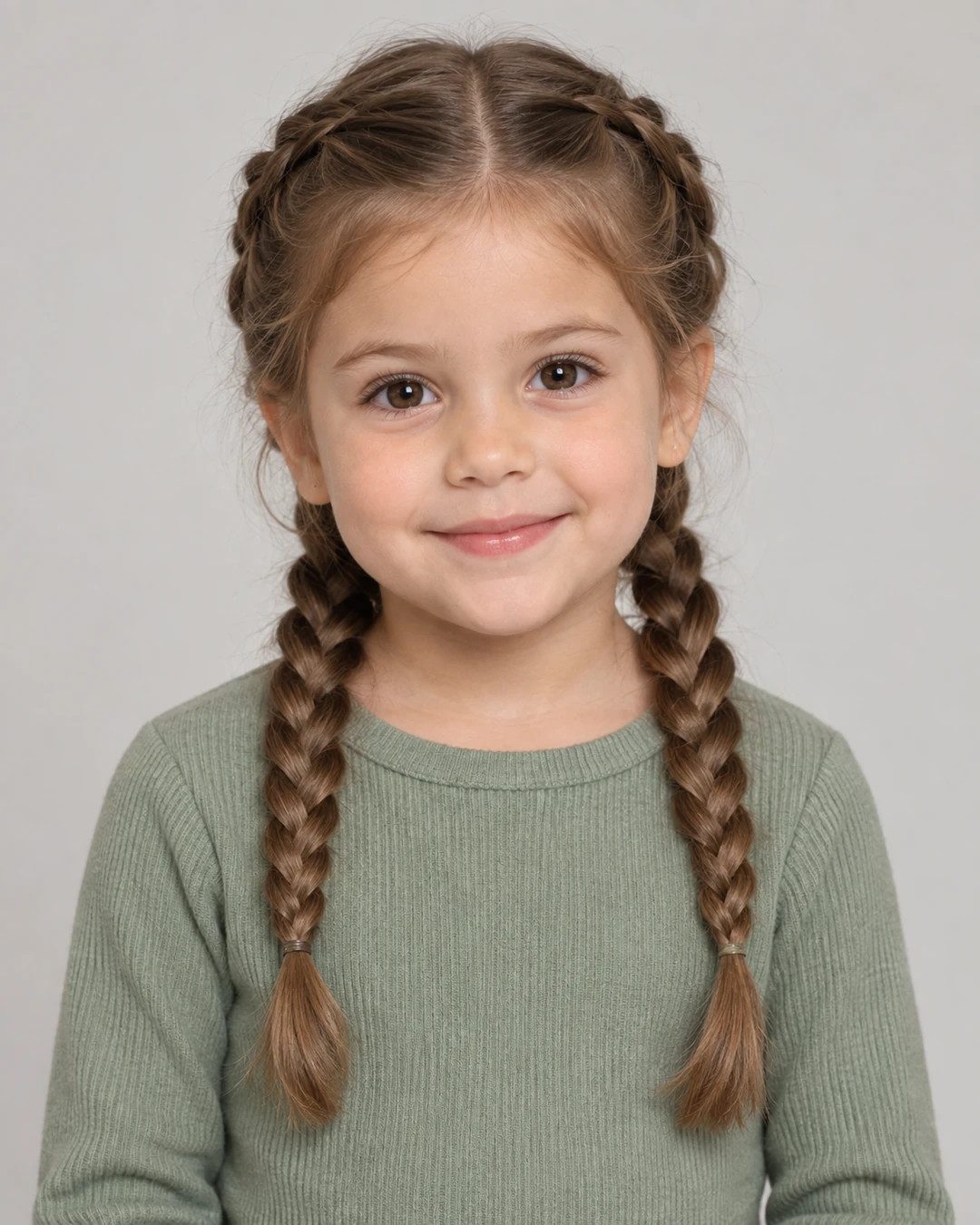
I confess: I expected Dutch braids to look bulky on medium density hair. They do not. The braid sits raised, not flat, which gives volume where straight hair usually falls flat by 4 pm. Shoulder length, medium brown, layered, with a middle part. The hold is reliable: three days before the crown starts to soften. The trick is even tension from scalp to end, which is harder than it looks. Salon job, not a mirror job. On fine hair the braid reads too thin. On medium density it reads just right.
Light Brown Fishtail Braids With Highlights
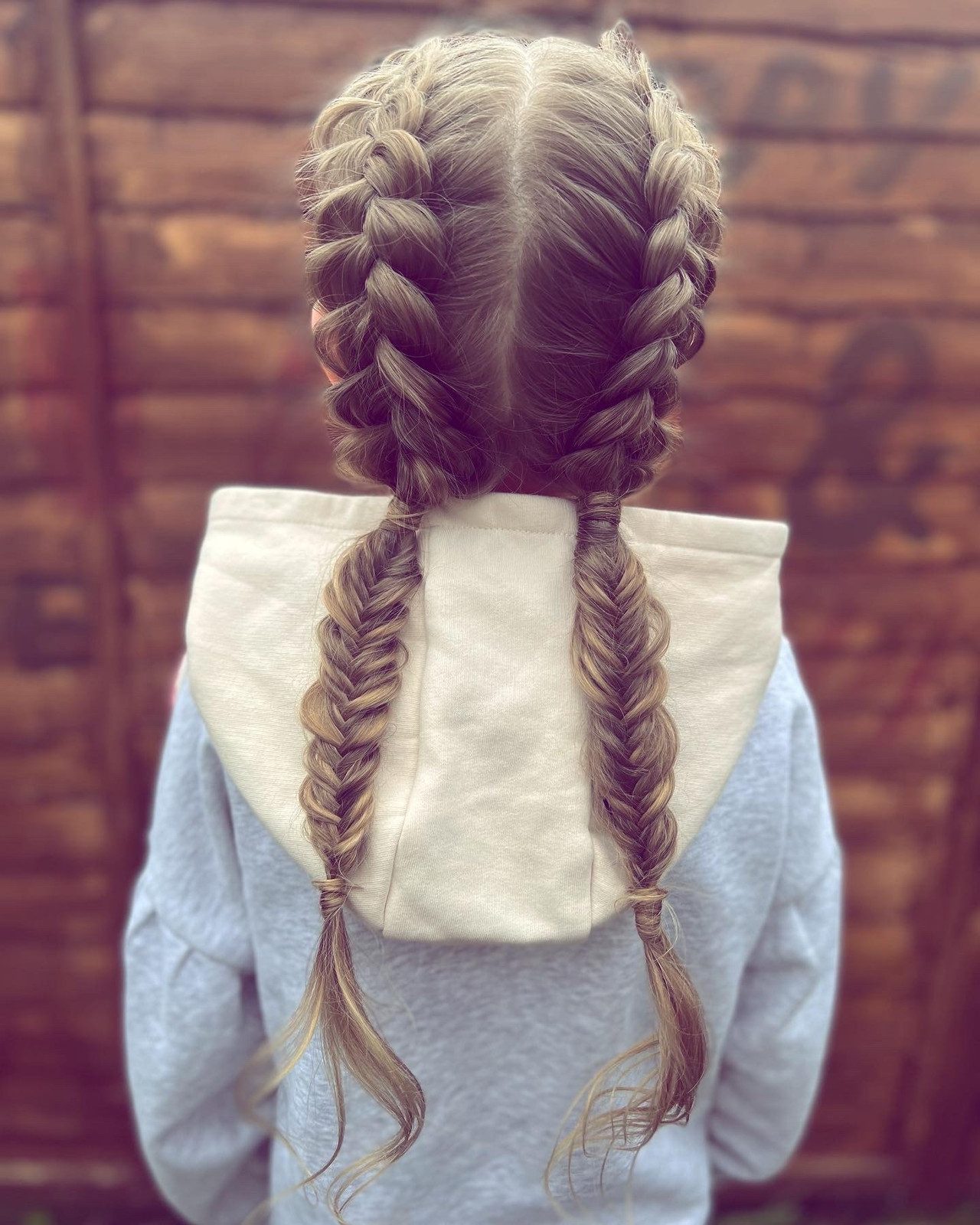
The fishtail technique looks intricate but it is just alternating small sections. The highlights here do the heavy lifting: light brown base with blonde strands woven through, so every crossover reads as texture. Mid-back length, wavy, medium density. A middle part keeps it symmetrical.
This is DIY-able if you have patience and a mirror behind you. Tell your stylist you want a light brown base with scattered blonde highlights, fine enough to read in a braid. The fishtail needs the wave to hold; dead-straight hair will unravel by evening. Wavy hair, this holds all day.
Wavy Fishtail Braid With Floral Accents
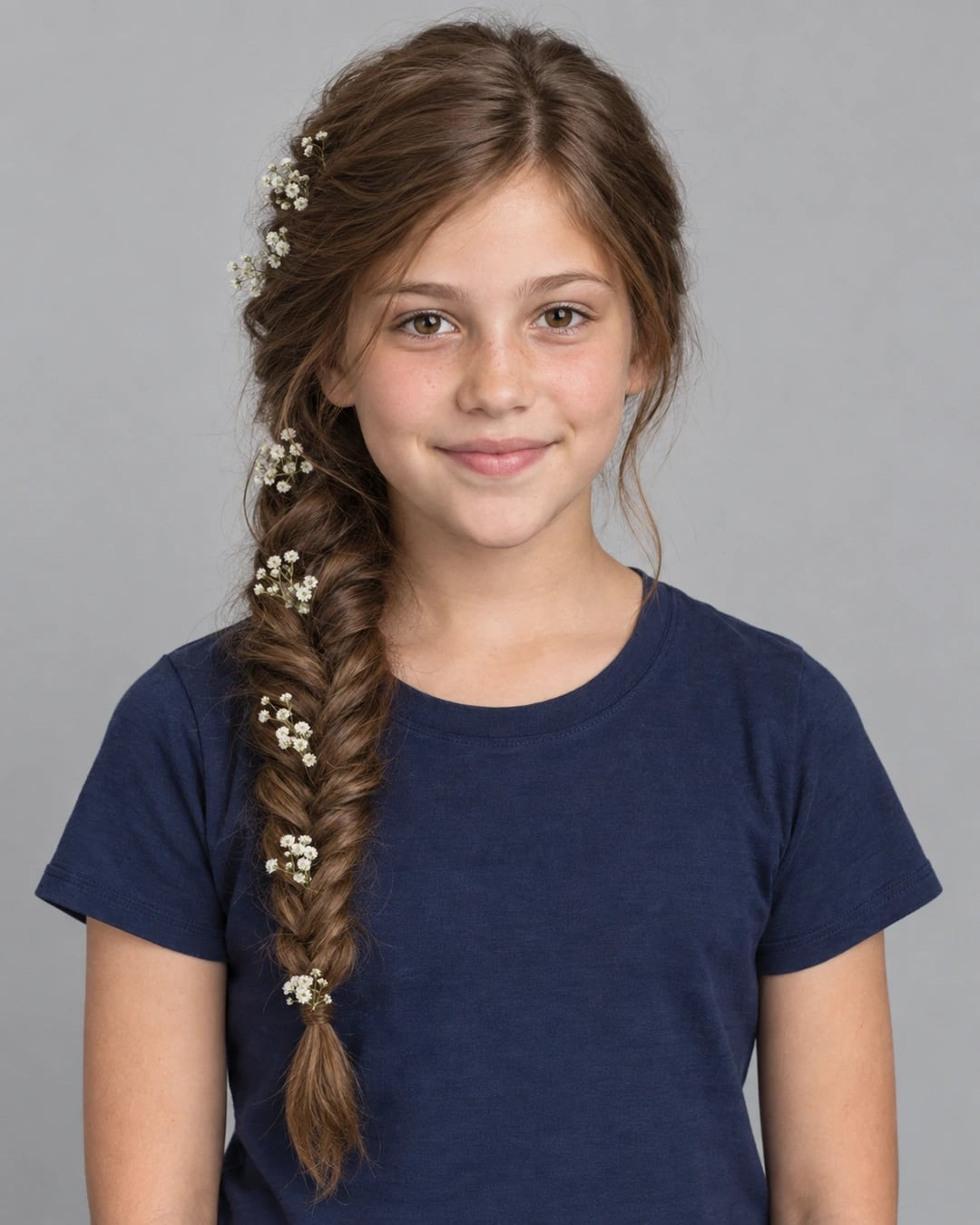
Who actually pulls off a fishtail braid with flowers without looking like they wandered out of a Renaissance fair? Someone with medium brown wavy hair at mid-back length, a middle part and wispy side-swept bangs. The small white flowers woven through the braid read romantic, not costumed. This is a spring wedding or a garden party guest look. The wavy texture gives the braid enough grip that the flowers stay put without pins sliding out by cocktail hour. Medium density hair holds the weave best. Fine hair will show every gap between the blossoms.
Medium Brown Wavy Fishtail Braid
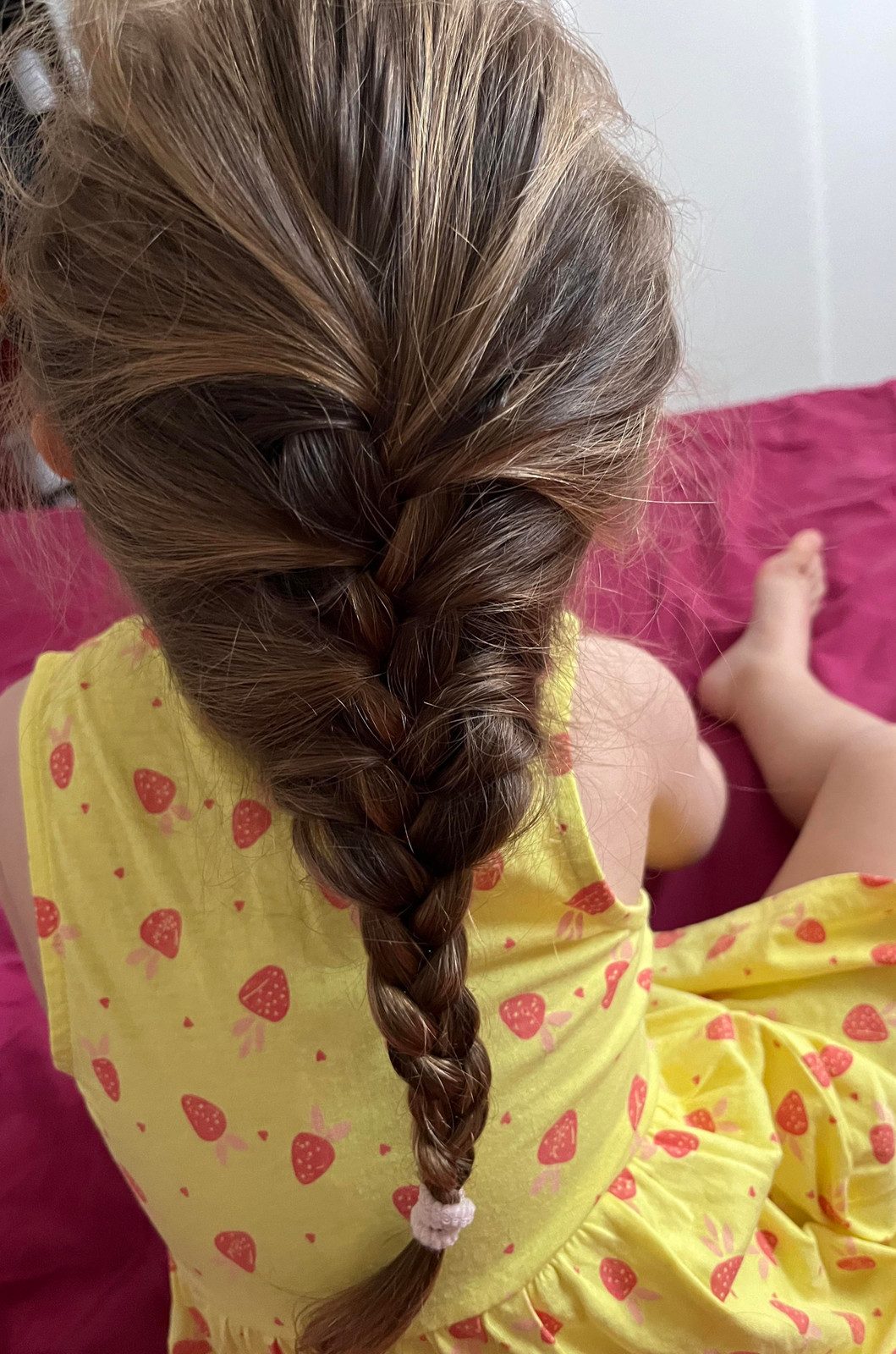
Best grow-out in this roundup. A medium brown wavy fishtail braid at mid-back length is the rare style that looks better on day three than day one. The wavy texture grips itself, so the braid stays intact without elastic bands pulling at the ends. No bangs, a middle part, and layers that let the braid sit flat against the back. I braided mine on clean hair and it held through a humid commute. Day two needed a quick re-braid at the bottom inch. Day three the waves softened the plait into something looser and more natural. By day four the top had frizzed enough that I pulled it into a low ponytail. That is five days from one session. For mid-back hair that is a win.
Wavy Fishtail Braid With Flowers
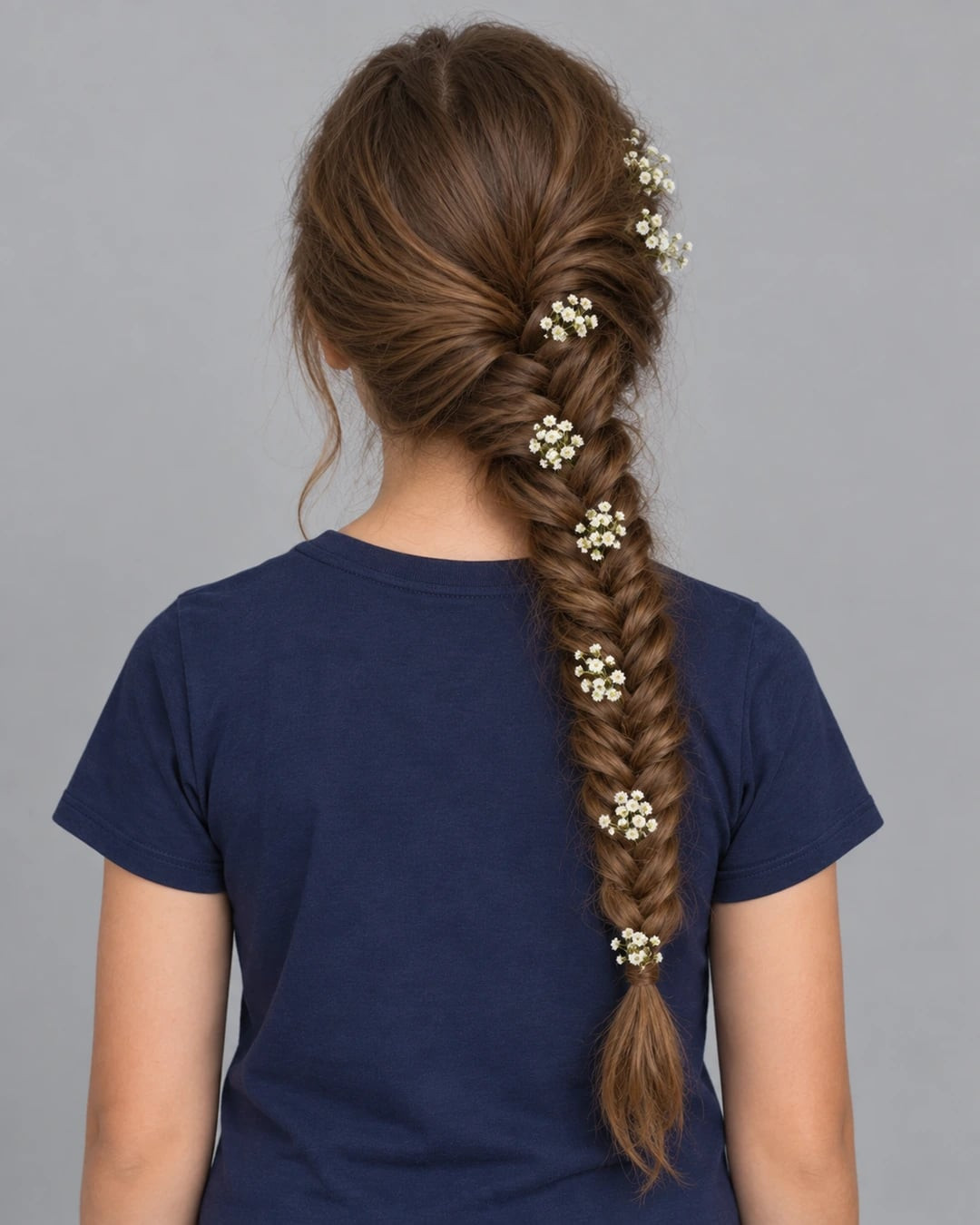
The small white flowers woven into this medium brown wavy fishtail braid are a summer move. Mid-back length, no bangs, a middle part. The braided fishtail with flowers works because the wavy texture hides the stems. Straight hair would show every wire. This is a late afternoon event style. The flowers read best in natural light. Indoors they look like an afterthought. The medium brown base keeps the white blooms from competing. On darker hair the flowers would need to be cream or pale pink to register.
Dark Brown Box Braids With Curly Ends
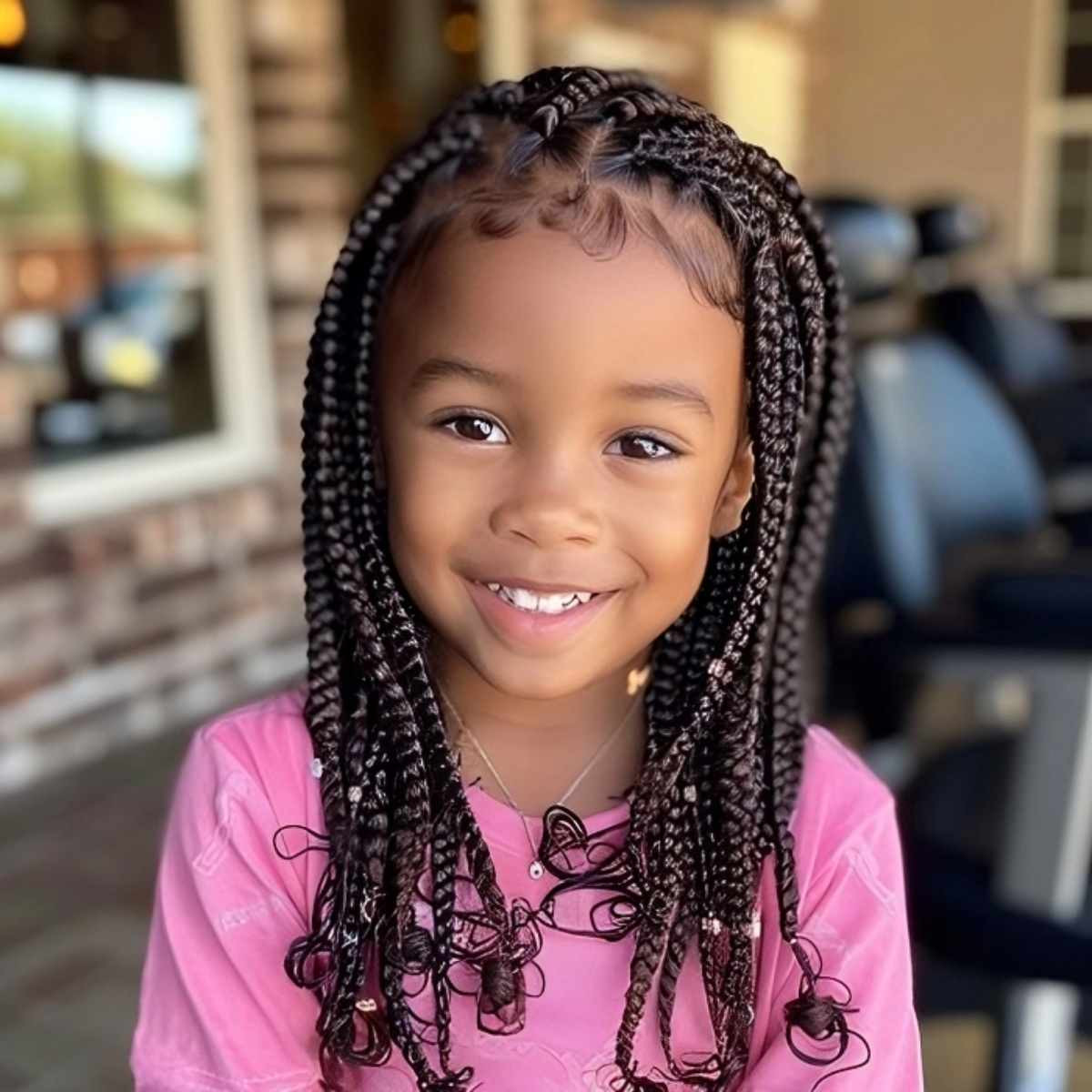
I should have asked my stylist to start the braids looser at the nape. Dark brown box braids with curly ends look clean from the front. Mid-back length, a middle part, baby hairs laid flat. The straight thick texture of the extension hair means the braids have weight. On my own thick hair that weight pulled at my temples by week two. The curly ends are the best part. They soften the blunt line that box braids usually leave. But if your hair is very thick, ask for smaller sections at the hairline. The tension adds up.
Mid-Back Braids With Colorful Beads
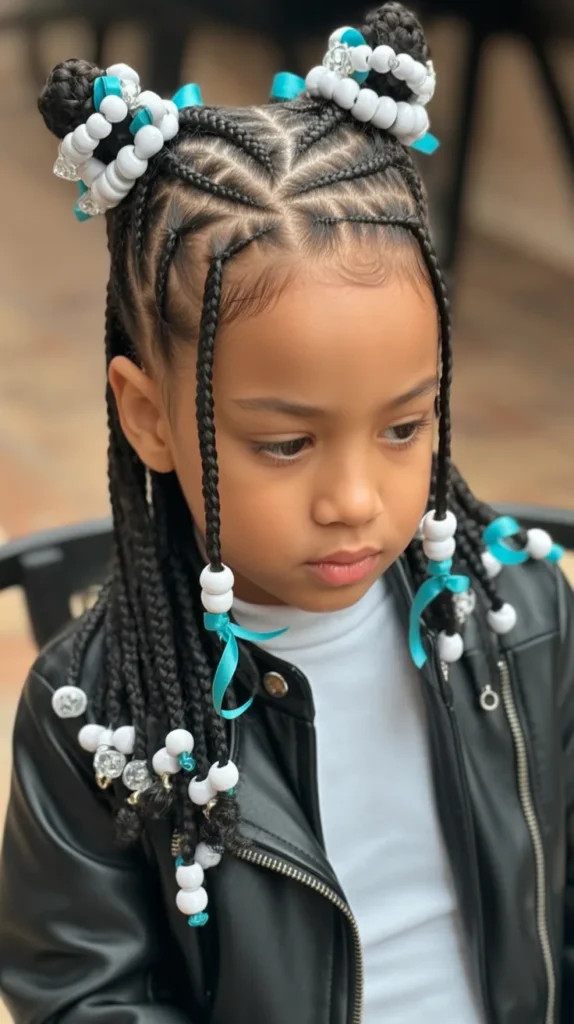
This is the ponytail that means business. The hair is pulled back tight at the nape, the base hidden under a thin section of hair wrapped once or twice, and the length falls in one blunt column past the collarbone. It works on straight or slightly wavy texture because the tension does the smoothing for you. A middle part widens a round face, so I ask for mine slightly off-centre. Colour matters here: a solid, high-contrast shade shows the clean line, while a lived-in root shadow keeps the part from screaming at week three. This is a five-minute morning style once you have the tail flick down, and it holds until dinner. The catch is the hold. Fine hair flattens fast, so I add a texture spray at the root and go about my day. It is not a wash-and-walk, but it is close. I have worn this to a full workday and it still had shape at 8 pm.
What it takes: a trim every six weeks to keep that blunt edge honest. The grow-out is the real story here, and it is not a pretty one. At week four the ends start to feather, and the whole thing goes soft. A middle part widens a round face, so keep it slightly off-centre if that is your concern. Fine hair loves this because the blunt baseline reads thicker. Thick hair needs layers carved underneath or it becomes a triangle. Book it. This is not a bathroom-mirror job.
- Feed-In Braids With Curly Ends and Beads
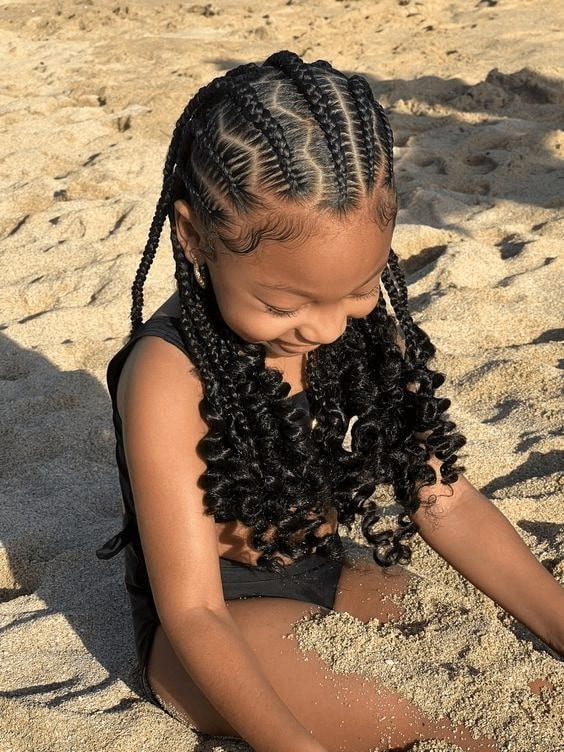
Feed-in braids look like they grew from your scalp, no bulk at the root. The stylist adds extension hair strand by strand, so the braid starts thin and widens as it goes. In this back view, the middle part is razor-straight, the geometric grid precise enough to measure with a ruler. Black, mid-back length, straight braids that end in loose curls and a few beads for weight. The hold is exceptional: feed-in braids with beads stay tight for three weeks before the edges soften. Styling is done in the chair, not your bathroom. You sit, they section, they feed, they curl the ends. That is the whole morning.
Small Straight-Back Braids With Yellow Beads
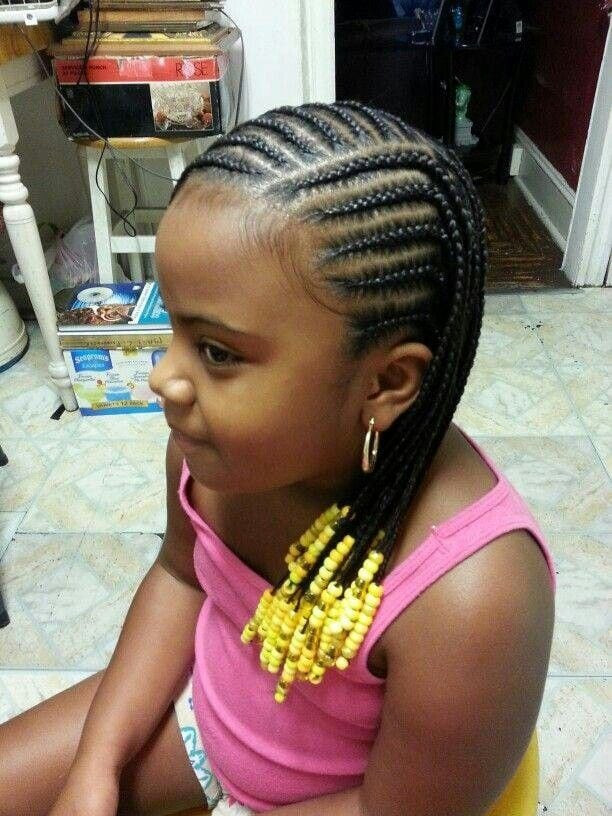
Does your hair need a style that moves with you, not against you? Small straight-back braids in coily texture, black, mid-back, with yellow beads threaded at the ends. The middle part keeps the line clean, the beads add a bounce that the braids alone cannot. This is a protective style that flatters round and oval faces because the vertical lines lengthen, they do not widen. The hold is reliable: two weeks without a touch-up, three if you sleep in a scarf.
Coily Box Braids With Curly Ends
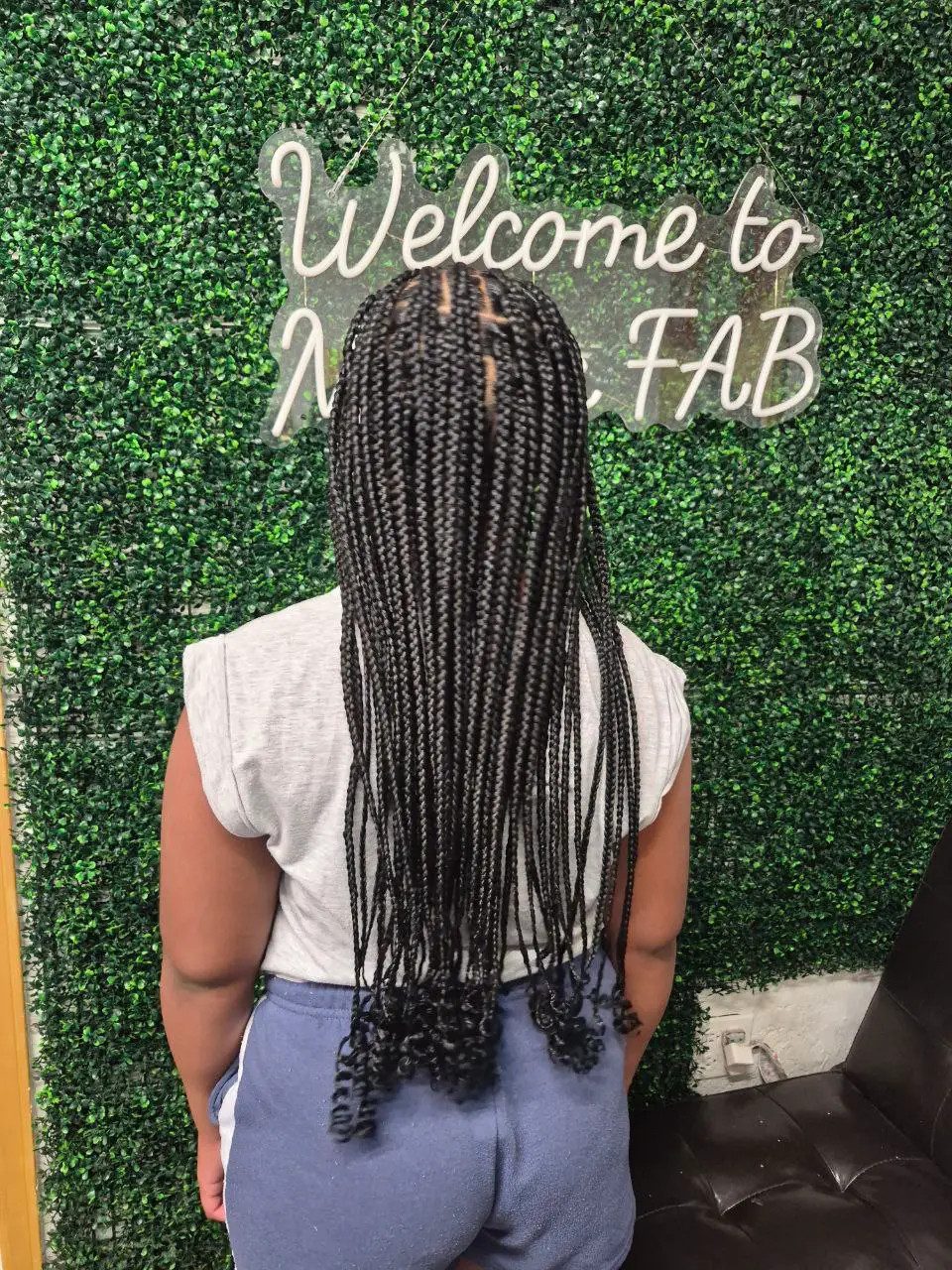
They hold. That is the first thing. Coily box braids in black, mid-back, parted in a clean grid, each braid ending in a curl that does not unravel by day three. The texture is fine at the root, coily at the tip, which means the braid has grip where it needs it and movement where it matters. But fine hair at the scalp means tension is real: if the braid pulls at the part line, you will feel it by bedtime. The curly ends soften the look, but they also catch on collars and scarves. The hold is strong for two weeks, then the roots need a refresh. Skip this if your edges are already fragile.
Shoulder-Length Braids With Colorful Beads
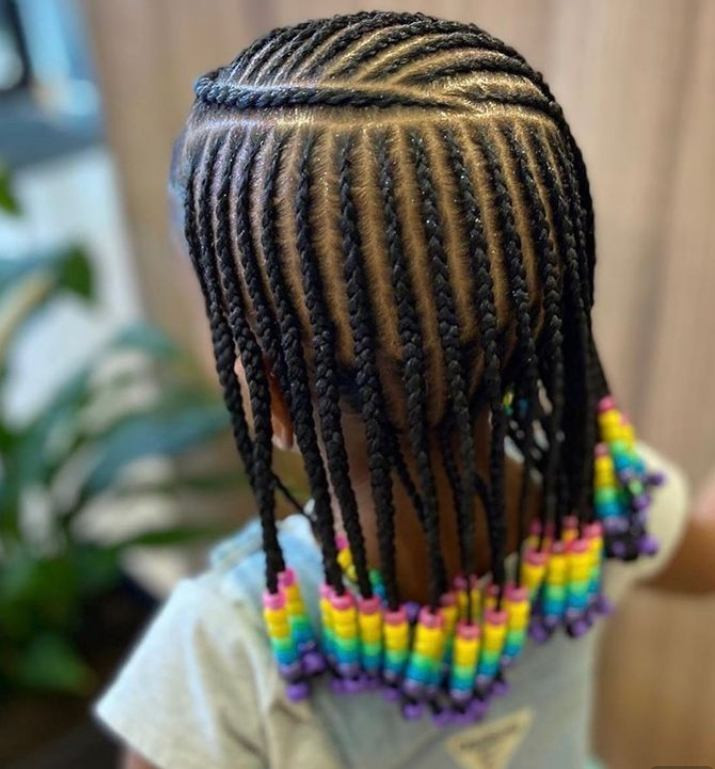
I confess: I used to think more beads meant more fun. It does not. Thin box braids with beads work best when the beads are spaced, not packed. In this side view, black braids fall to the shoulder, each one punctuated by a single blue, yellow, green or purple bead near the end. The middle part keeps it neat, the beads add a click when you move. This is a salon job: the part lines and bead placement need a steady hand. The hold is decent for a week, then the beads start sliding if the braid loosens.
Dark Brown Small Braids With Beads
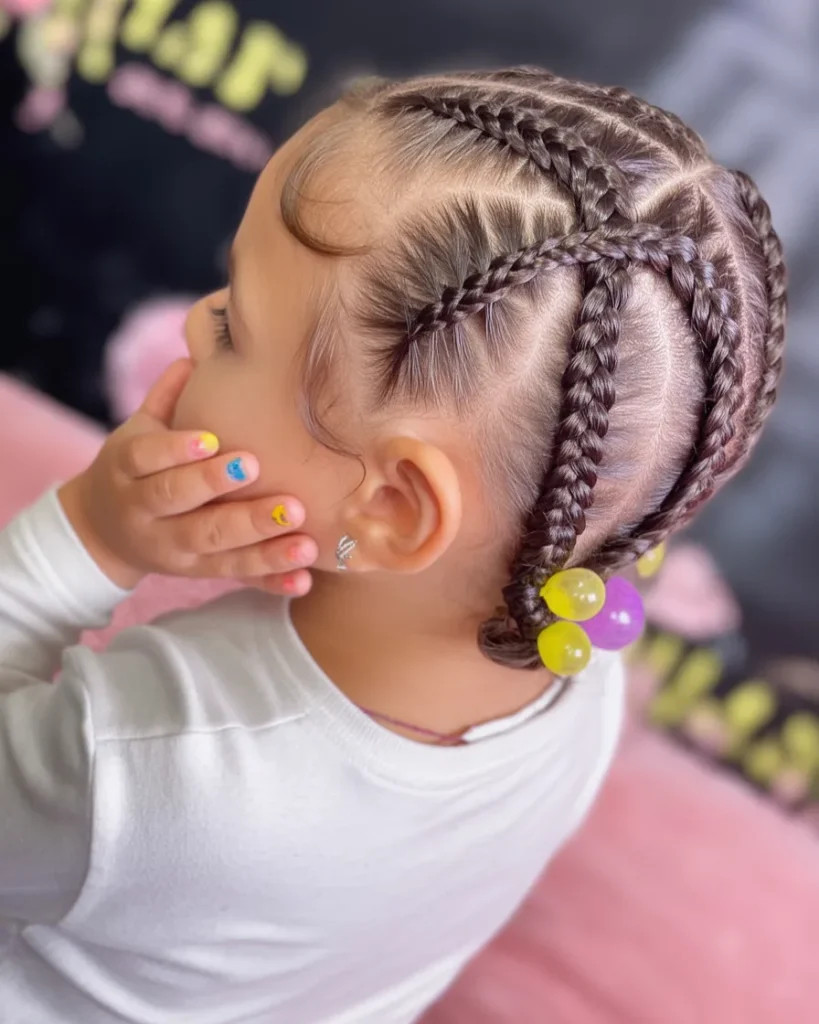
Summer parties and outdoor events are where small braids with colorful beads earn their place. Dark brown, braided and curly texture, the beads catch the light and the movement is audible. The side view shows the braids falling past the shoulder, each one tipped with a bead in pink, yellow or green. The colour is a warm brown that reads as natural, the beads add the event-ready pop. The hold lasts through dancing and humidity if the braids are sealed at the ends. A scarf at night keeps the beads from tangling.
Black Pigtail Braids With Scalp Patterns
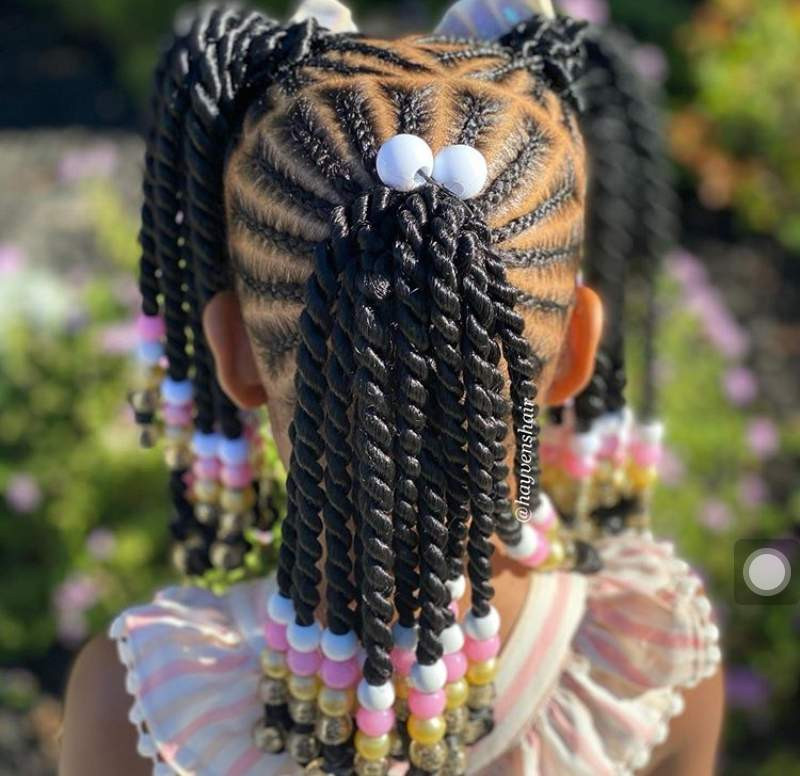
This is the kind of braids with scalp patterns that makes you stop scrolling. The back view shows a middle part, then rows of precise cornrows curving into two pigtails that land at mid-back. Black hair, straight and thick, with tiny beads catching the light at the ends. The pattern on the scalp is not random. It is mapped, symmetrical, intentional. That takes a professional hand and a few hours in the chair. The hold is rock solid for a week, maybe more, because the tension is even and the braids are sealed at the nape.
Length is mid-back, texture is straight and thick, colour is black. Styling is done once, then you sleep in a silk scarf and wake up done. The hold does not loosen. The scalp pattern stays crisp because the braids are anchored tight. This is not a bathroom-mirror job. Book the consultation first.
Black Braids With Buns and Beads
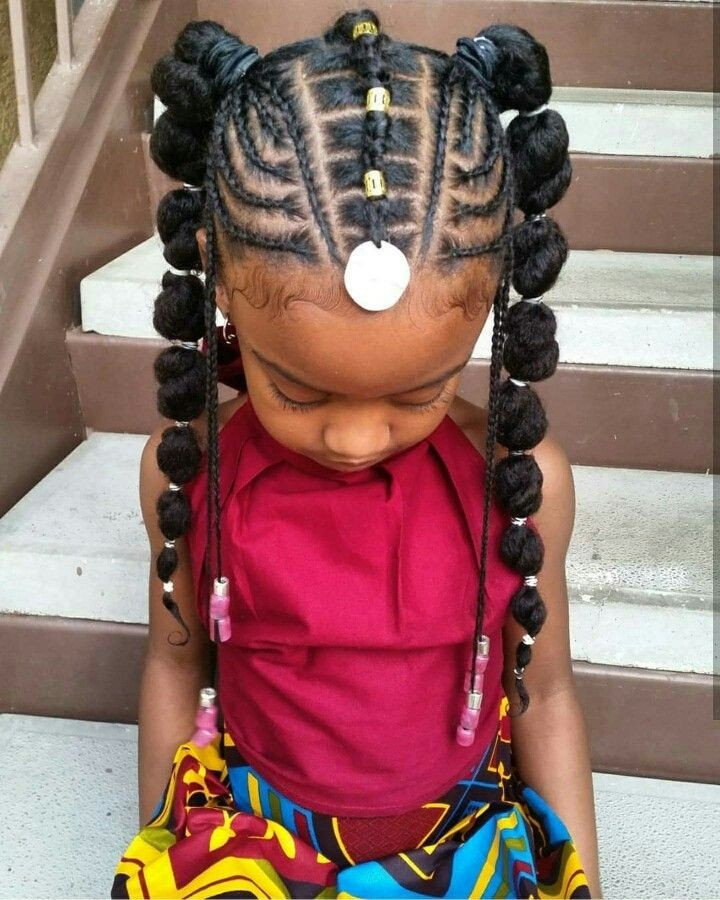
Can we talk about how coily hair makes this style sing? The front view shows multiple black braids swept into two rounded buns, each one dotted with white beads that clink when you move. The texture is coily, which gives the braids grip and body. Straight hair would slip out of those buns by lunch. Coily hair holds the shape, the beads stay put, and the whole thing reads as intentional polish.
This is a salon-only style. The buns are built from sections of braids, not wrapped from a single ponytail, so the weight is distributed evenly. Ask your stylist for a firm base at the crown and beads that are threaded, not glued. The colour is black, the length is mid-back, and the hold is strong enough for a full day of events. It is not a quick style. It is a statement.
Black Braids in Two Buns With Hanging Strands
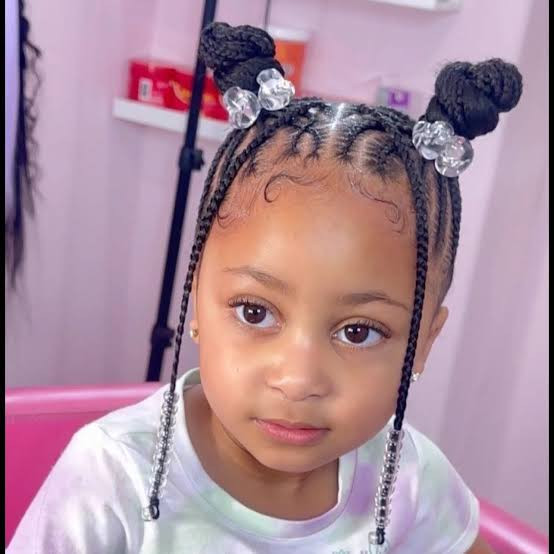
I will admit I was skeptical about the hanging strands. The front view shows two buns built from braids, with a few braids left loose to fall past the shoulders. Black hair, beads on the ends. It looks playful, almost unfinished. Here is the reality: those hanging strands get caught in jacket zippers and bag straps. They also make the style last longer because you can re-braid them if the buns get fuzzy. The hold is decent for three to four days if you wrap the buns at night. The texture is braided and curly, so the strands do not slip out. The colour is black, the styling is two buns with hanging braids, and the honest downside is that you will tuck those strands into your collar more than once.
Dark Brown Braids With Intricate Patterns and Buns
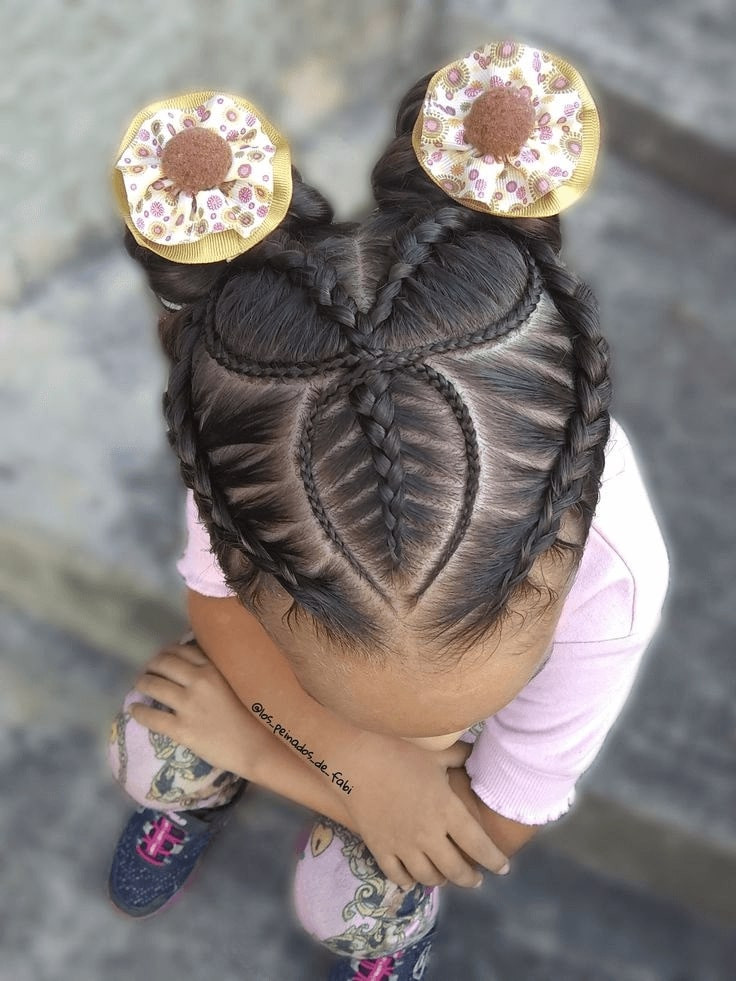
The mistake people make with braids with intricate patterns is rushing the consultation. The top view shows a middle part, then a geometric maze of cornrows that feed into two shoulder-length buns. Dark brown, straight and thick. The pattern is the whole point. If the stylist does not have a clear map before they start, the lines drift, the symmetry breaks, and you end up with a design that looks more abstract than intentional. The fix is simple: bring a reference photo that shows the scalp pattern from above, not just the front. The hold is excellent because the braids are tight against the scalp. The colour is dark brown, the length is shoulder length, and the styling is two buns with intricate patterns. Precision is not optional here.
Medium Brown Braided Crowns
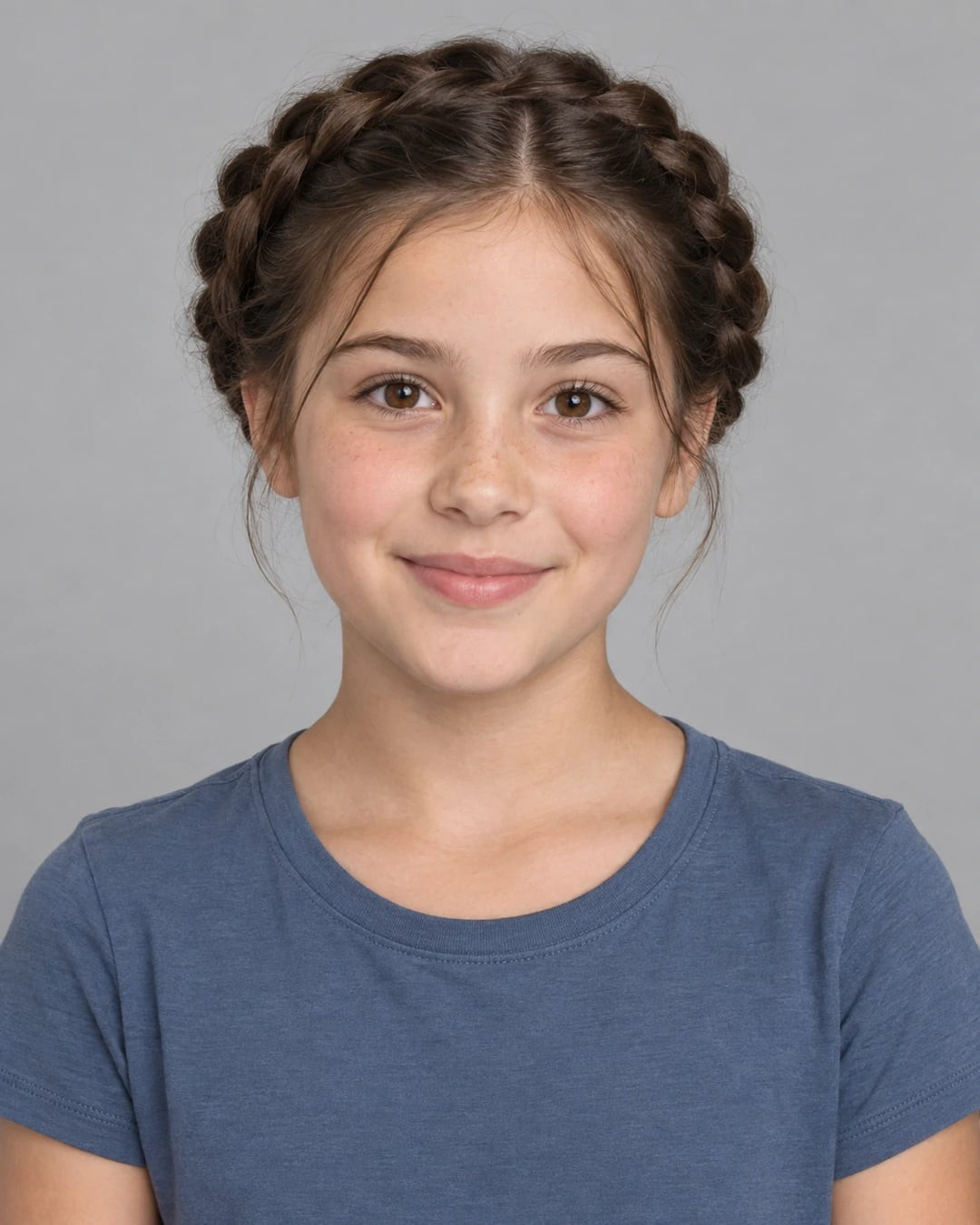
When do you wear a braided crowns hairstyle that takes two braids and wraps them around your head like a halo? Weddings, graduations, holiday dinners. The front view shows a middle part, wispy bangs, and two medium brown braids that start at the temples and meet at the back. The texture is wavy and thick, which gives the crown volume. Straight, fine hair would look flat here. The hold is solid for an evening, but the bangs will separate by hour four. The colour is medium brown, the length is shoulder length, and the styling is two braided crowns encircling the head. This is a special-occasion style, not a weekday thing. Book the salon, bring a photo, and accept that the bangs need a touch-up before dinner.
Light Blonde Dutch Braids With Accent Braids
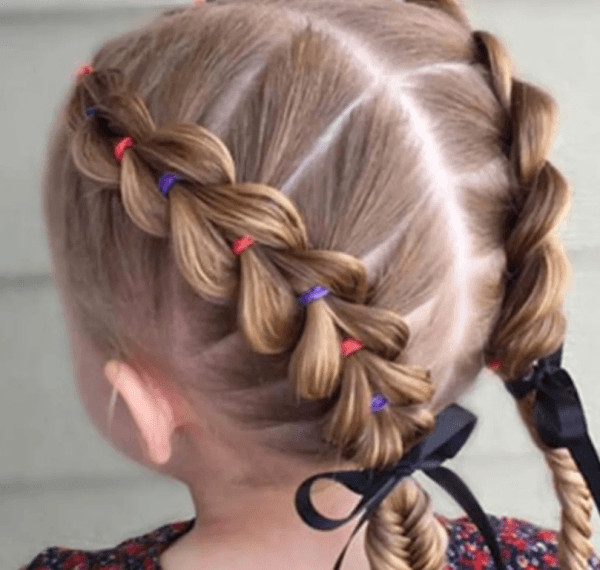
Best way I can describe this: it looks like someone braided a braid inside another braid. Two Dutch braids, each one built with a thinner accent braid woven alongside the main strand, all on a shoulder-length base of straight, fine hair. The middle part keeps everything symmetrical, and the light blonde colour lets the pattern read clearly — no shadow, no muddle.
Dutch braiding on fine hair is a test of tension. Too loose and the accent braid disappears into the main one. Too tight and you see scalp between sections. The technique relies on crossing strands under the middle section (that’s the Dutch part), and the accent braid needs its own cleanly separated piece from the start. This is a salon job, not a Saturday-morning experiment. Tell your stylist: two Dutch braids, each with a thin accent braid woven into the outer edge, no bangs, middle part, and keep the tension even so the fine texture doesn’t gap.
Cornrows With Purple Ombre Braids
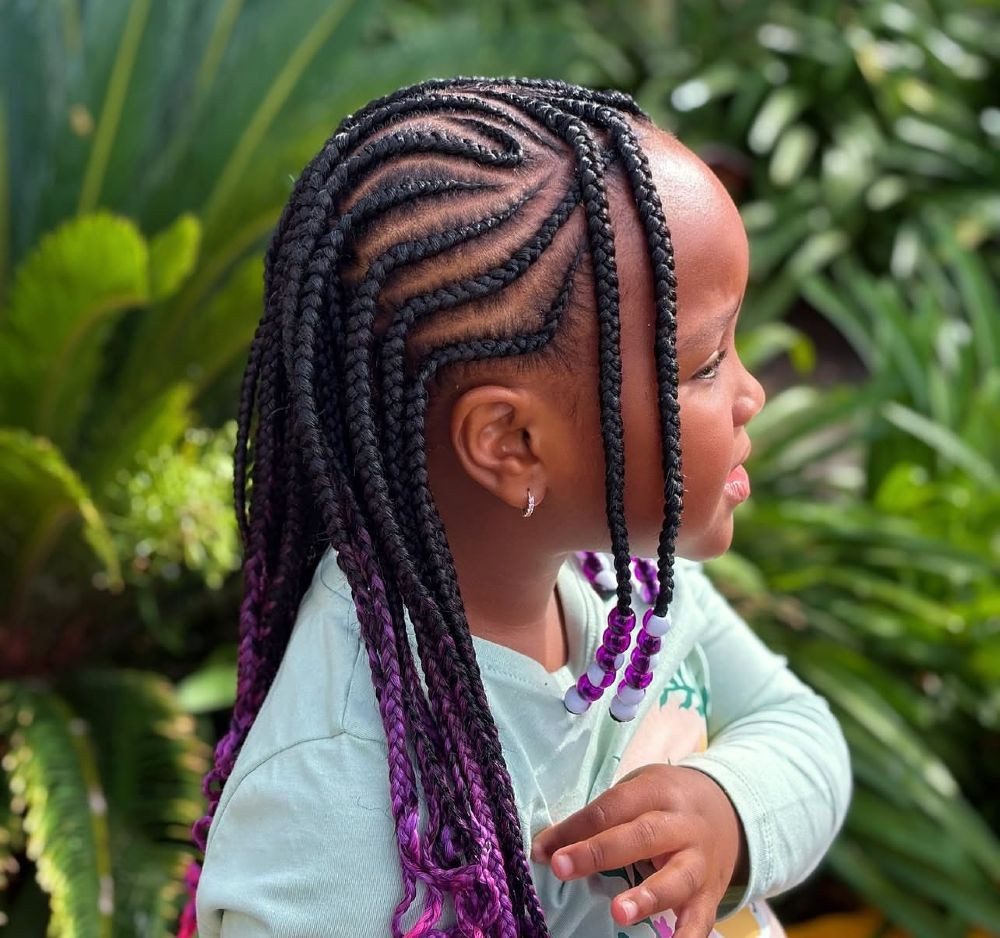
Black cornrows with purple ombre ends look like a mood board come to life, and I mean that as a compliment. The transition from dark to violet happens somewhere around the shoulders, so the colour reads as an accent, not a commitment. Mid-back length, straight texture, middle part, no bangs. The loose ends hang free, which keeps the silhouette from feeling too severe. This is a salon job, start to finish, and the ombre needs a colourist who understands how purple lifts on dark hair. Too light and it reads costume. Too dark and you cannot see it. The sweet spot is a dusty violet that catches sunlight and fades politely.
Coily Braids With Pink and Black Accessories
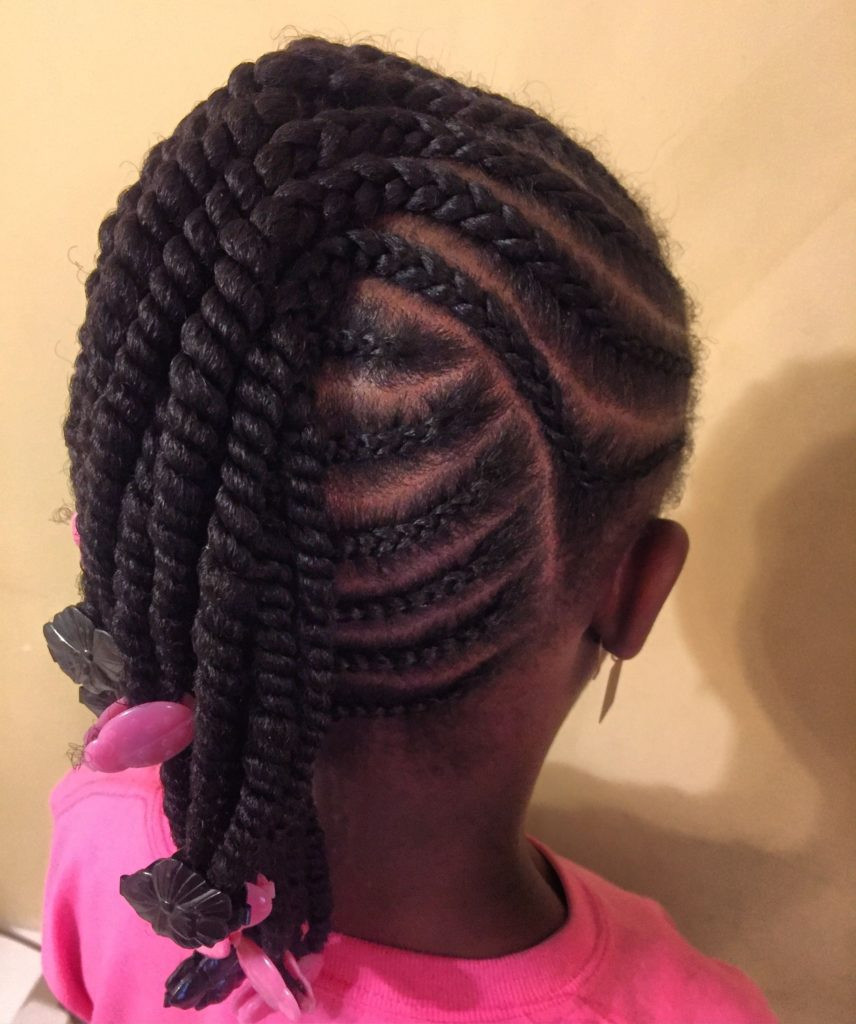
Can we talk about how this style actually holds up across a real week? The geometric cornrow pattern sits tight because the braids are small and the tension is even. Coily, thick texture, black hair, mid-back length, no bangs, middle part. The pink and black accessories are threaded in at intervals, and they do not slide or shift if the braids are sealed properly at the ends. Here is the honest downside: thick coily hair under tight cornrows needs daily scalp attention. A light mist in the morning keeps the edges from feeling tight by day three. The style lasts, but you have to tend the foundation.
French Braid Into Bubble Braid
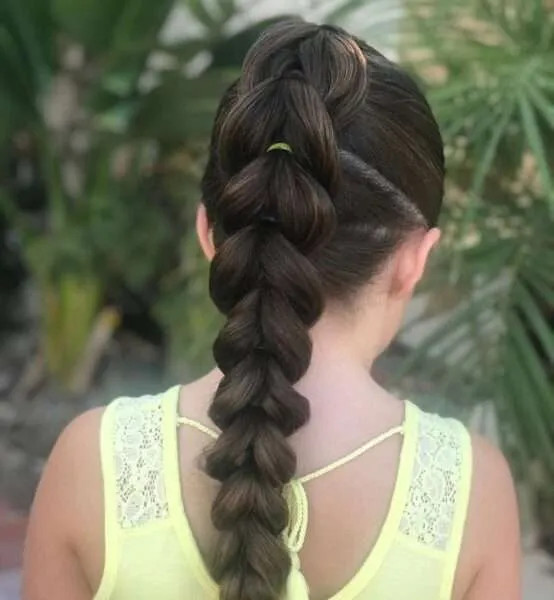
A classic French braid is neat, reliable, and frankly a little predictable. Then someone added a bubble braid at the nape and I had to reconsider. Dark brown, straight, thick texture, mid-back length, layers, no bangs, middle part. The French section starts at the crown and follows the scalp, and right where it would normally end, the hair fans into loose, gathered bubbles. The contrast works because the top is tight and the bottom is soft. It is not a quick style, and the bubbles need even spacing or the whole thing looks lopsided. But the hybrid solves the problem of the French braid ending too abruptly, and that is worth the extra effort.
Thick Dark Brown French Braid
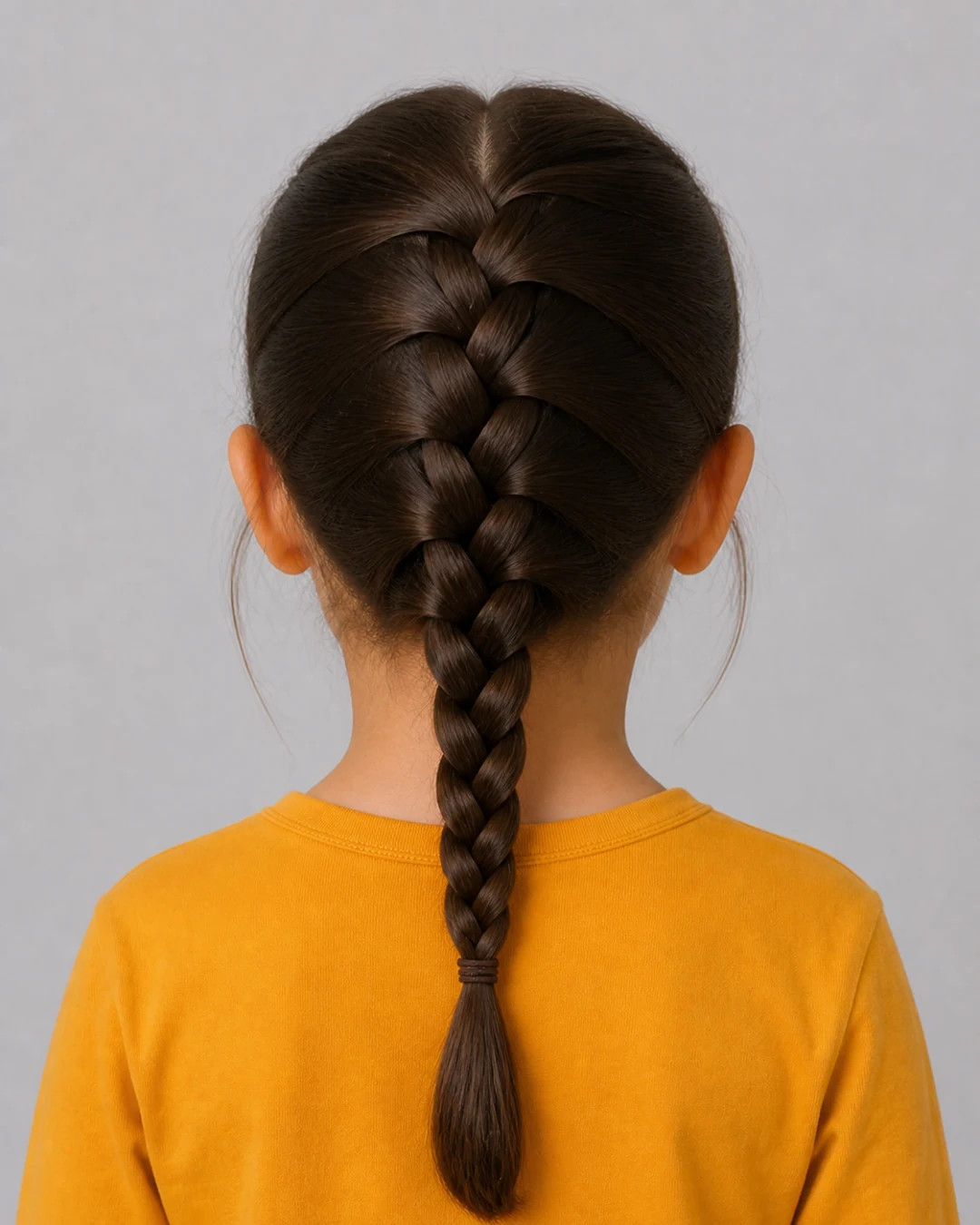
The mistake people make with thick hair and a French braid is pulling the sections too loose, which makes the braid look wide and sloppy by noon. This one gets it right. Dark brown, straight, thick texture, mid-back length, layers, no bangs, middle part. The tension is even from the crown to the ends, and the sections are kept small enough that the braid lies flat against the head instead of bulging. A perfectly executed braid on thick hair is harder than it looks, but when the grip is right, it holds all day without slipping or frizzing at the edges. The secret is starting tight and maintaining that tension through every crossover.
Dark Brown Braid With Daisy Bow
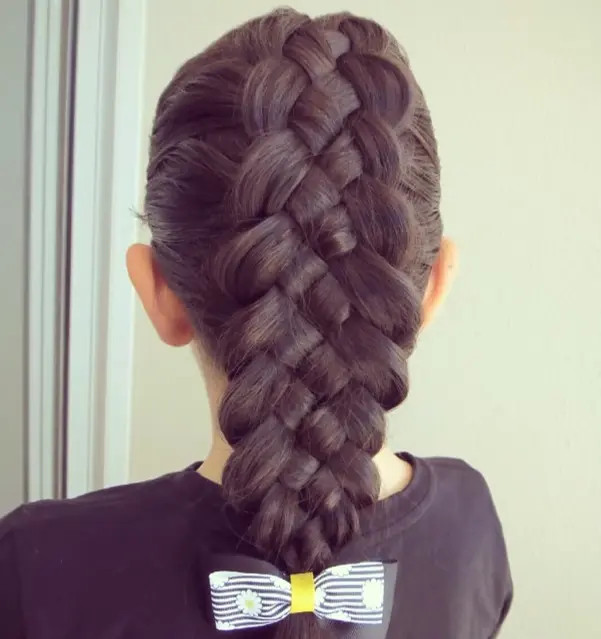
A large bow with daisies pinned at the base of a dark brown braid is the kind of detail that lands best in late spring or early summer, when the light is long and the occasion calls for something deliberate. Straight texture, mid-back length, layers, no bangs, middle part. The braid itself is a simple three-strand, nothing fancy, which is exactly why the bow works. An ornate braid plus a big accessory is too much. Here the hair stays quiet and the bow does the talking. Upkeep is minimal once the braid is in, and the bow pins in and out without disturbing the plait. A garden party, a bridal shower, a graduation.
Light Brown Dutch Braids With Curly Pigtails
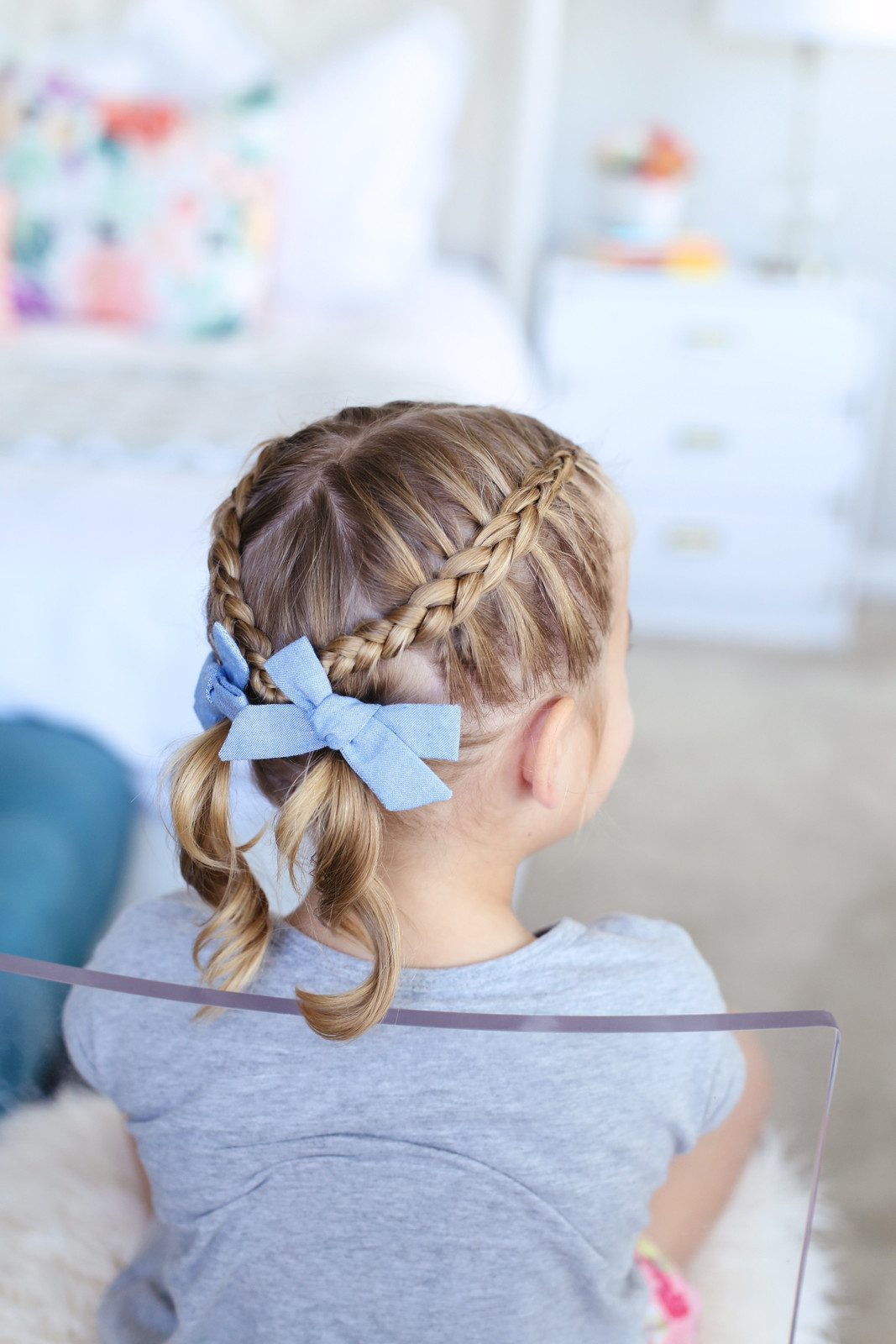
Have you ever watched a Dutch braid tutorial and thought, sure, that looks doable, then spent an hour with your arms above your head? This one starts with two Dutch braids running from the crown to the nape, woven tight against the scalp so they hold all day. The texture shifts at the shoulder, where the straight braid gives way to curly pigtails, a trick that requires setting the ends on rollers or flexi rods overnight. The light brown base keeps it subtle, the blue bows add a deliberate pop, and the hold is solid enough for a full day of movement. It is salon-leaning, not because the braiding is impossible at home, but because getting that transition from straight to curly without a kink in the middle takes a second pair of hands.
Upkeep is manageable. The braids stay neat for two to three days, the curls need a refresh with a spritz of water and a scrunch each morning. The bows are decorative, not functional, so pin them in after the braiding is done. This is a weekend project, not a Tuesday morning decision.
Black Braids With Pink Tips and Beads
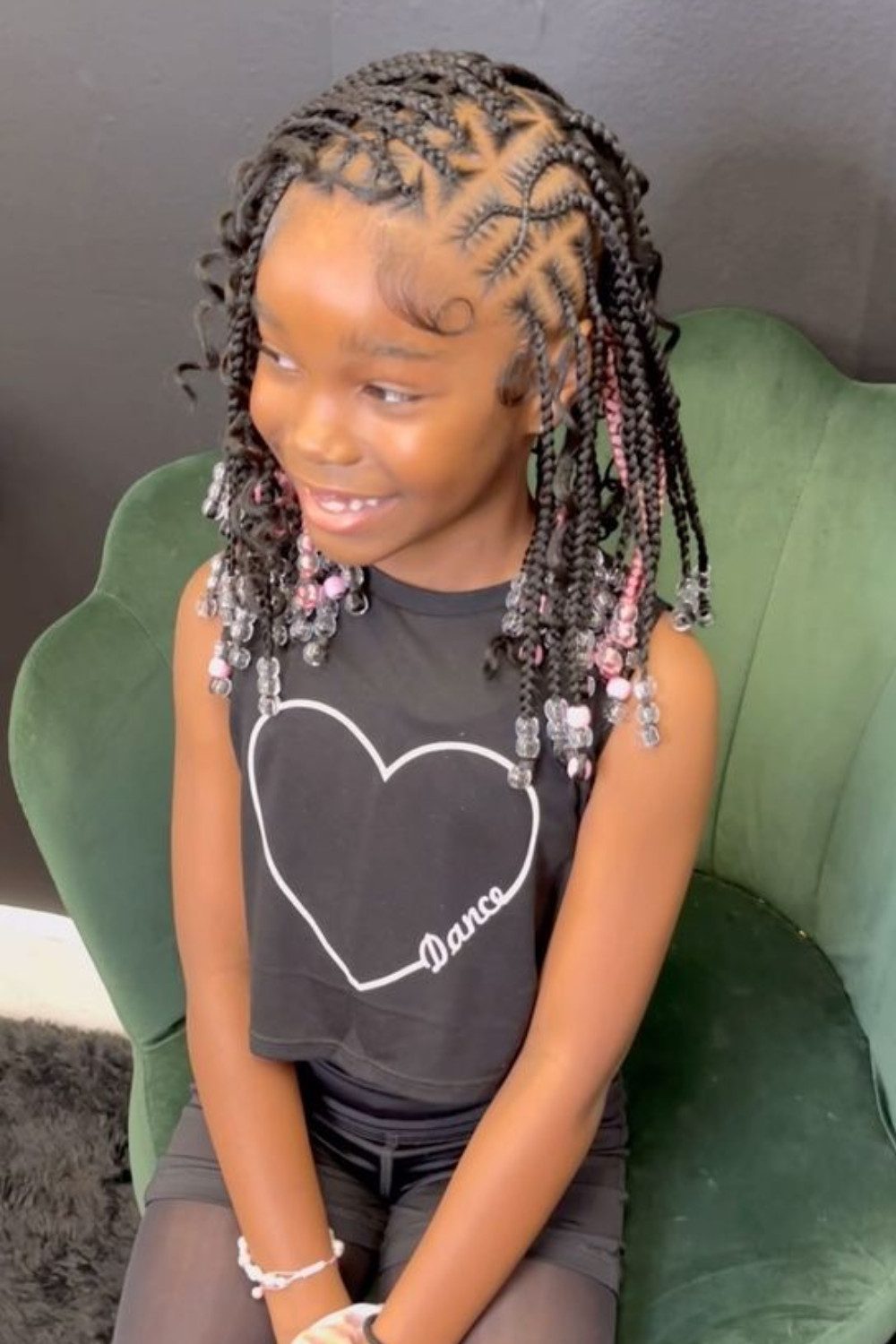
I will confess, I was skeptical about pink tips on black braids until I saw them on someone with a warm skin tone, and it clicked. The black base is the anchor, the pink ombre tips add a gradient that reads playful, not childish, and the beads at the ends give it a finished weight that stops the braids from flipping up. This is a salon job, no question, the color application alone requires a professional hand to keep the pink from bleeding into the black. The middle part and styled baby hairs keep the front polished. It suits anyone who wants a little edge without going full neon, and it works best on shoulder-length braids where the pink has room to show. The beads add a soft rattle with movement, a detail you do not notice until you do.
Blonde Pigtails With Small Braids and Ribbons

Verdict: this style looks like a three-hour commitment but actually takes twenty minutes once the small braids are in. The blonde base is fine and wavy, which means the pigtails sit close to the head and the ribbons add the volume the hair lacks naturally. The small braids are the key, they are woven into the pigtails at the crown and give the style a structure that holds through a workday and a gym session. The honest downside is the ribbons, they slip on fine hair unless you pin them in with a bobby pin, and they need to be retied each morning to keep the bows crisp. The short bangs stay put with a quick blow-dry. The hold is good for two days before the waves at the nape start to frizz, and a dry shampoo refresh at the roots buys a third. It is not a wash-and-wear style, but it is close.
Cornrows With Two Braided Pigtails
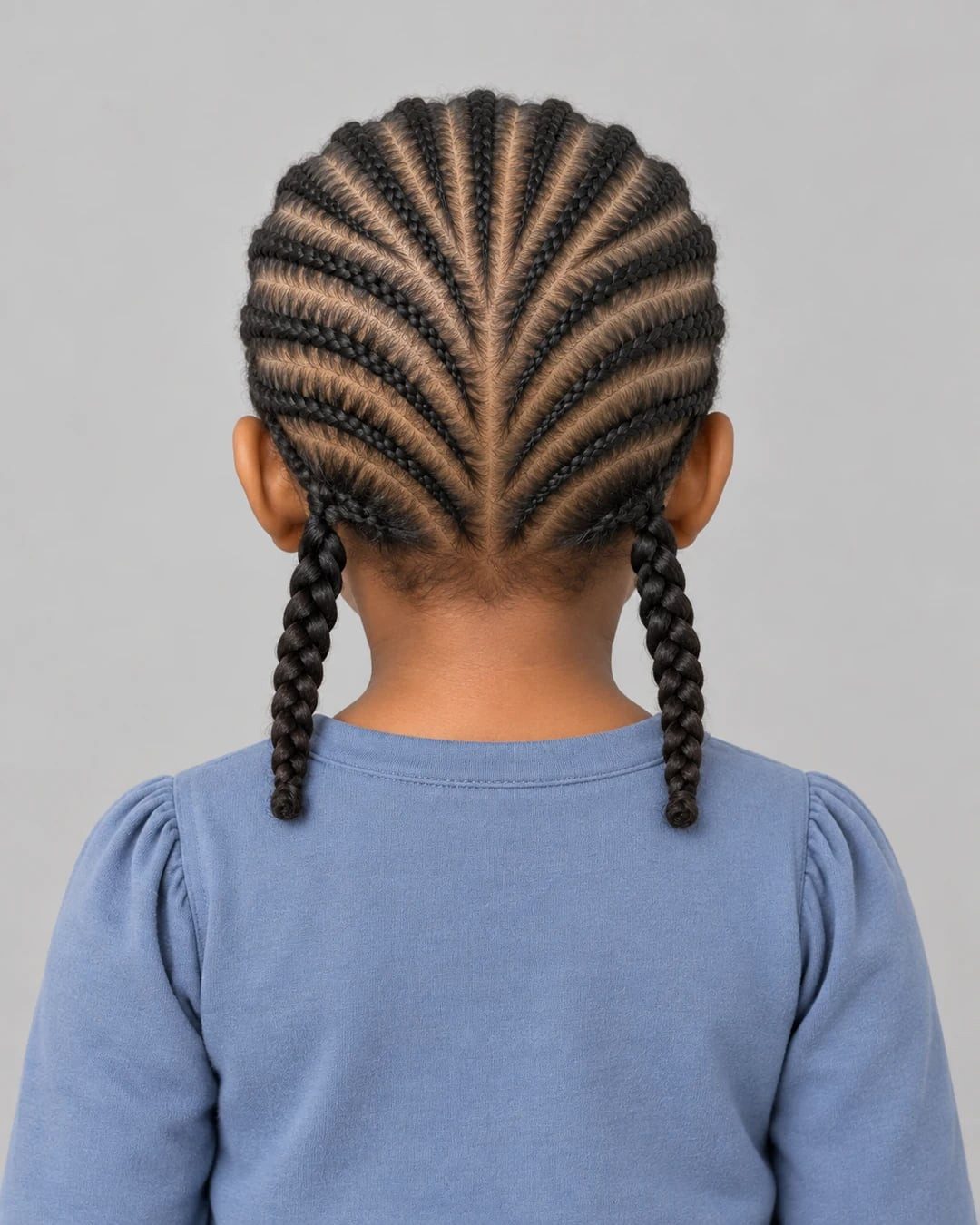
My gut says clean parts make or break this look, and too many people rush the sectioning. The geometric cornrow pattern requires precision, each row needs to be the same width and follow a straight line from the hairline to the nape, or the whole thing looks off. The mistake is treating it like a casual weekend braid, it is not. The cornrows feed into two braided pigtails that fall past the shoulders, and the middle part keeps the symmetry. The black hair and straight texture let the pattern stand out. This is a salon-only job, and you need to ask for a consultation first so the stylist can map the pattern on dry hair before wetting it. The hold is two weeks minimum, and the scalp stays comfortable if the braids are not too tight.
Blonde French Braid With Highlights
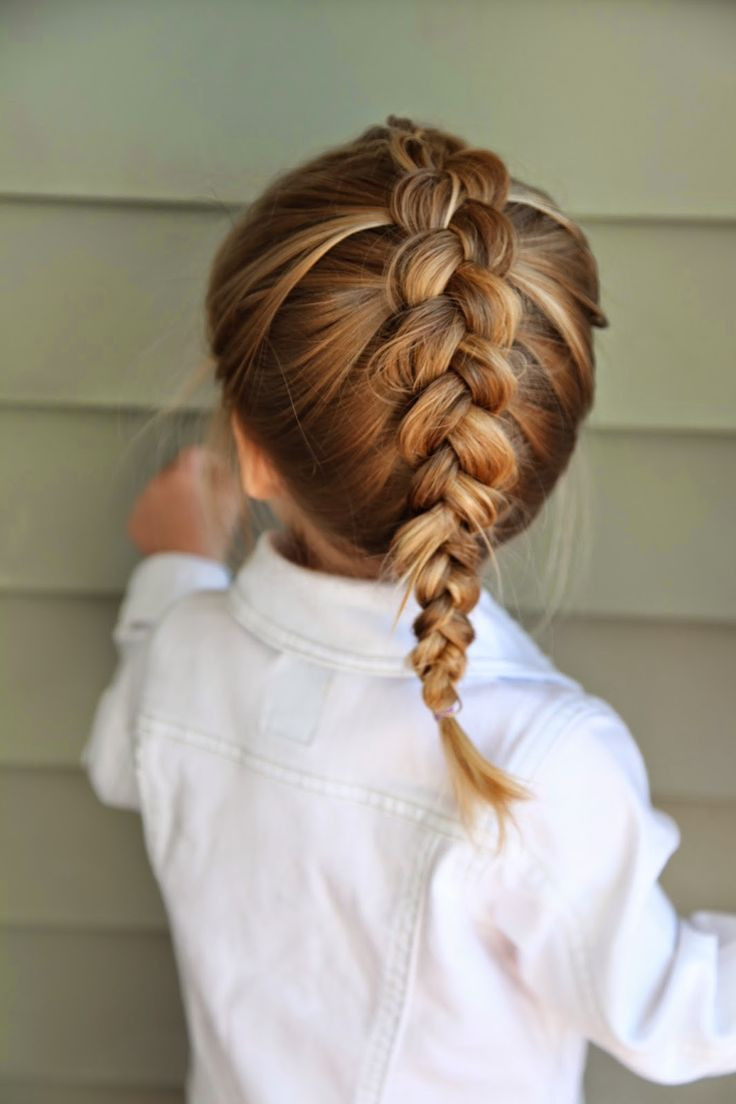
That braid is woven so tight it looks like it was done by a machine. The blonde french braid sits at the shoulder, straight texture, middle part, no bangs. The lighter highlights catch the light between each twist, so the whole thing reads as one continuous shimmer. This is a spring afternoon style, the kind you want for a bridal shower or a garden party. It holds all day, no touch-ups, no loose strands creeping out. The layers underneath give the braid body without bulk. You need someone who understands tension, this is not a mirror-over-the-sink job. Book the consultation first.
Blonde Dutch Braid With Low Ponytail
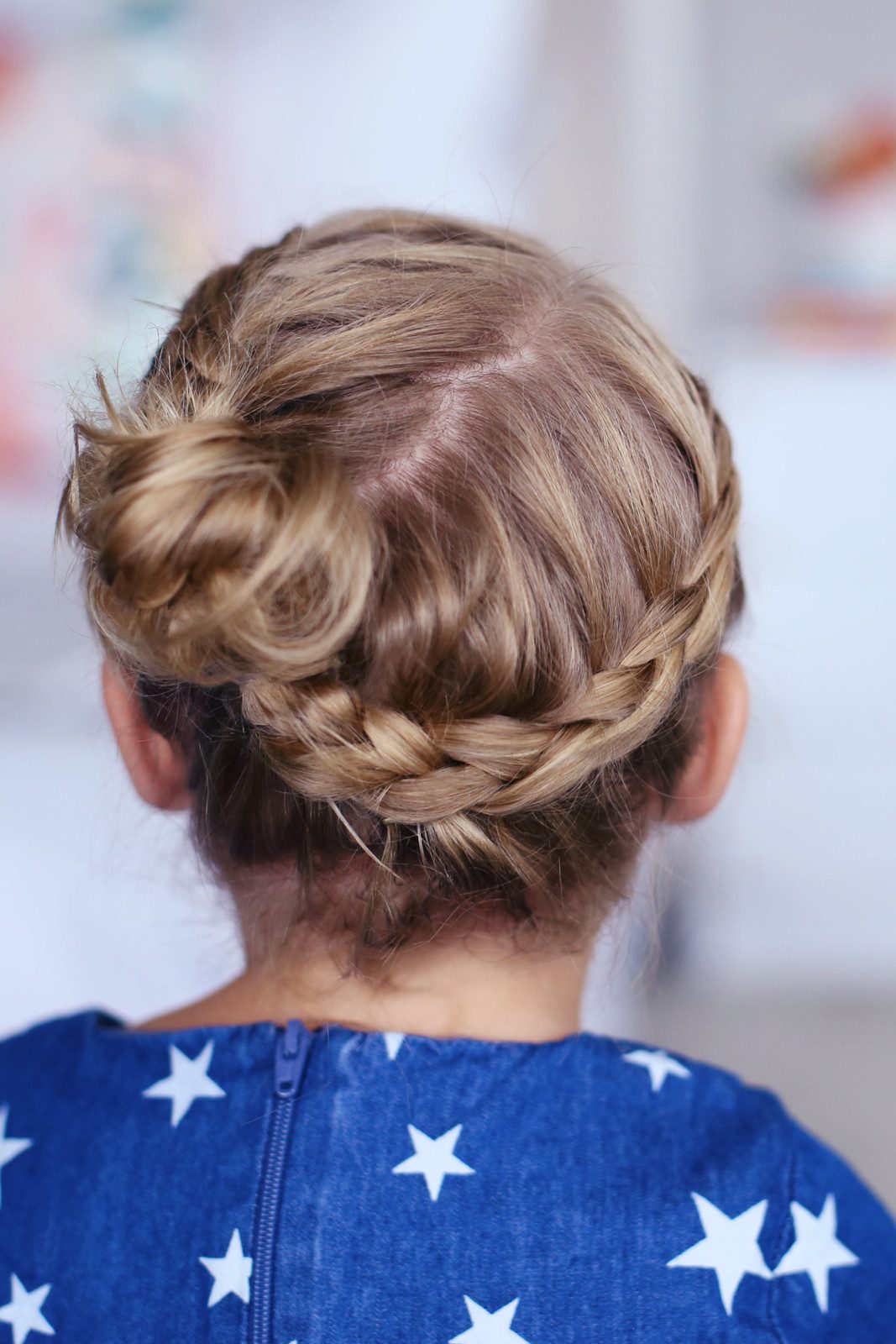
Ever wonder why some braids look like they are about to slide off your head while others stay planted? The dutch braid with ponytail is the answer. It starts at the crown, sections inverted so the braid sits raised off the scalp, then it feeds directly into a low ponytail at the nape. Blonde, wavy, thick hair, side part, no bangs. The braid is the anchor, the ponytail is the release. That transition is the tricky part, one wrong twist and the whole thing buckles. Salon-leaning for sure. But once it is set, it holds through a full workday without a single pin.
Light Brown Braided Headband
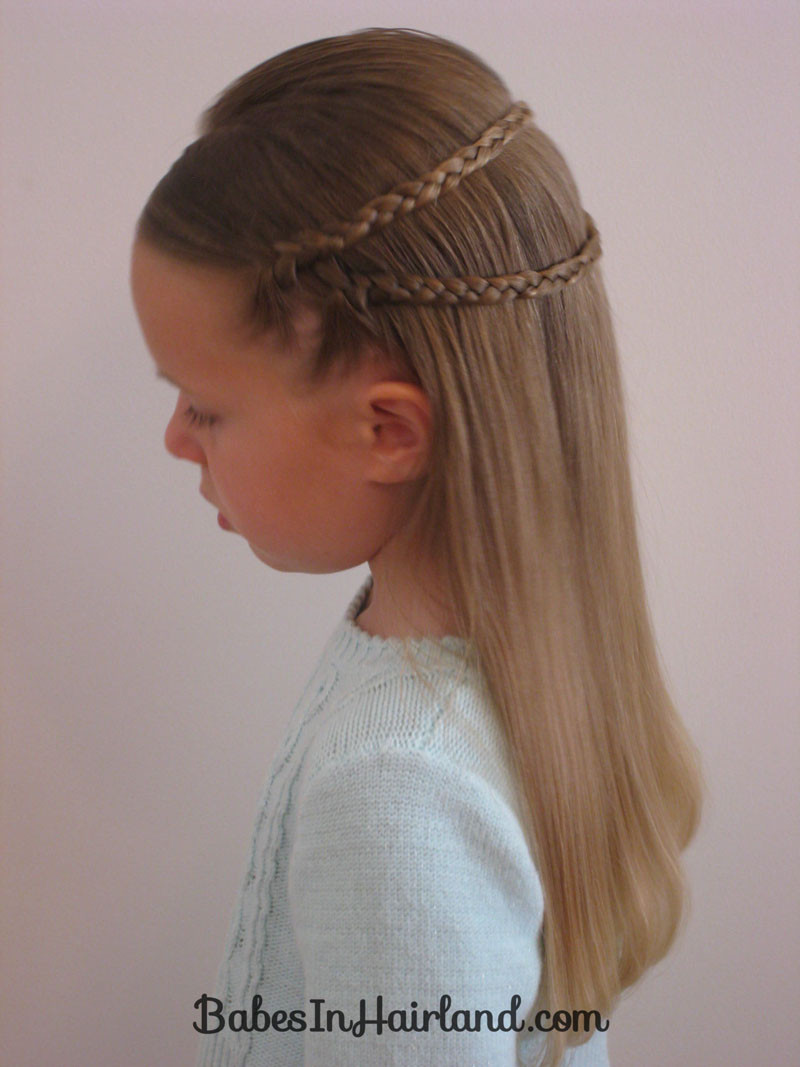
This one is for fine, straight hair that usually refuses to hold anything. The braided headband style uses two small braids that run across the hairline, pinned behind the ears, while the rest falls loose to the chest. Light brown, no bangs, side part. It looks delicate, almost fragile, but it actually grips better than a heavy style would. The downside: the braids loosen by hour six, especially if your hair is silky. You can re-pin them, or you can accept the soft halo effect. Grow-out is invisible because the braids sit at the front. A trim every ten weeks keeps the ends clean. Who it suits: anyone with a lower hairline who wants the illusion of more volume at the crown. Skip if you have thick, coily hair, the braids will look too thin.
Red Hair Braid Headband
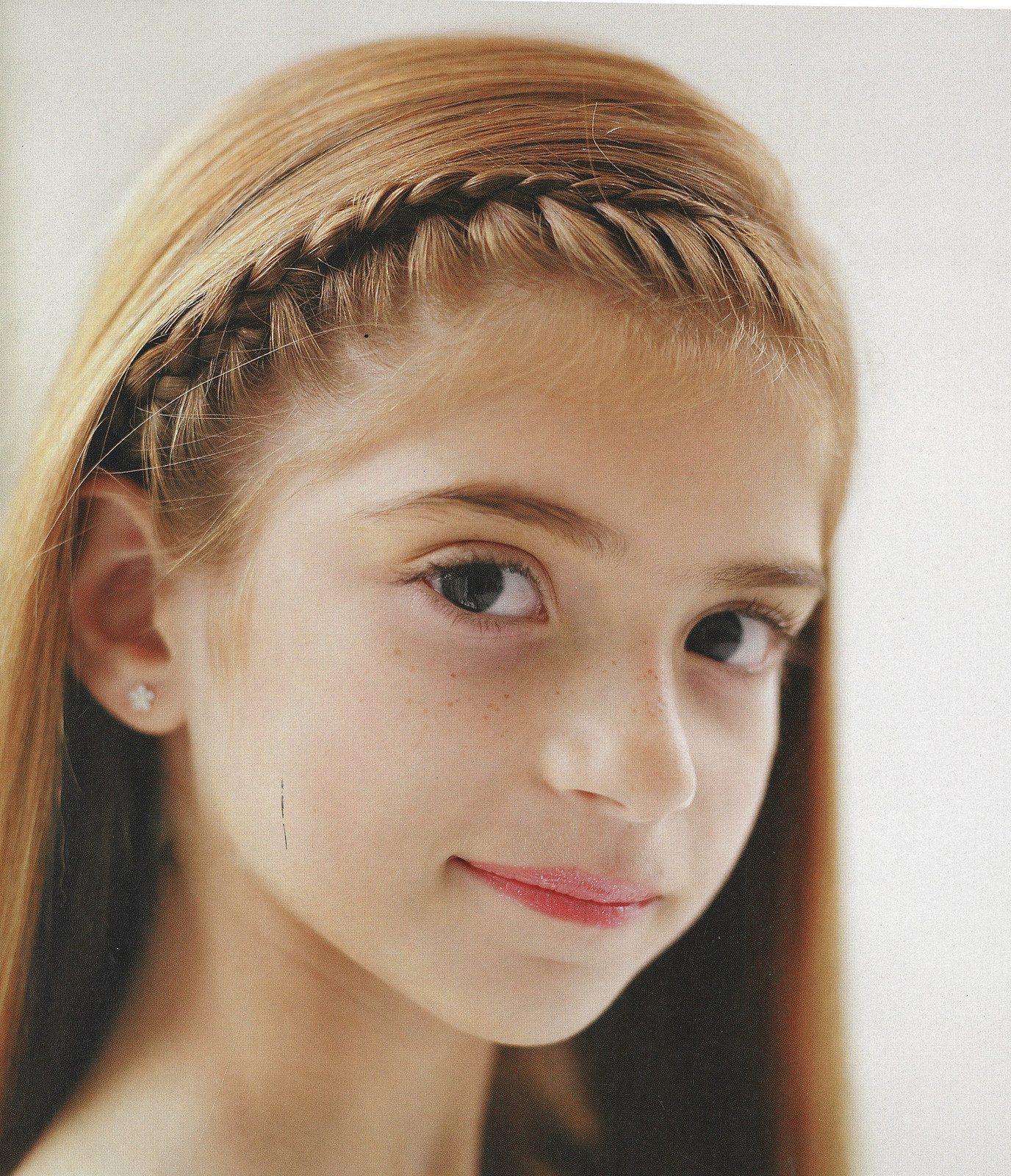
I will admit I was skeptical about a braid headband for red hair. Red is already a statement, does it need a frame? Turns out, yes. This one is a single delicate braid that starts at the temple and wraps across the crown, disappearing behind the opposite ear. Straight texture, shoulder length, middle part, no bangs. The braid is thin, almost fragile, but it holds the front sections back without pulling. Wear it on day two hair, the grip is better. By day three, the braid starts to soften and the red fades a shade darker, which actually looks better. Re-braid it in five minutes or let it fall out gracefully. It is not a protective style, it is a styling shortcut that looks intentional.
Visual Idea
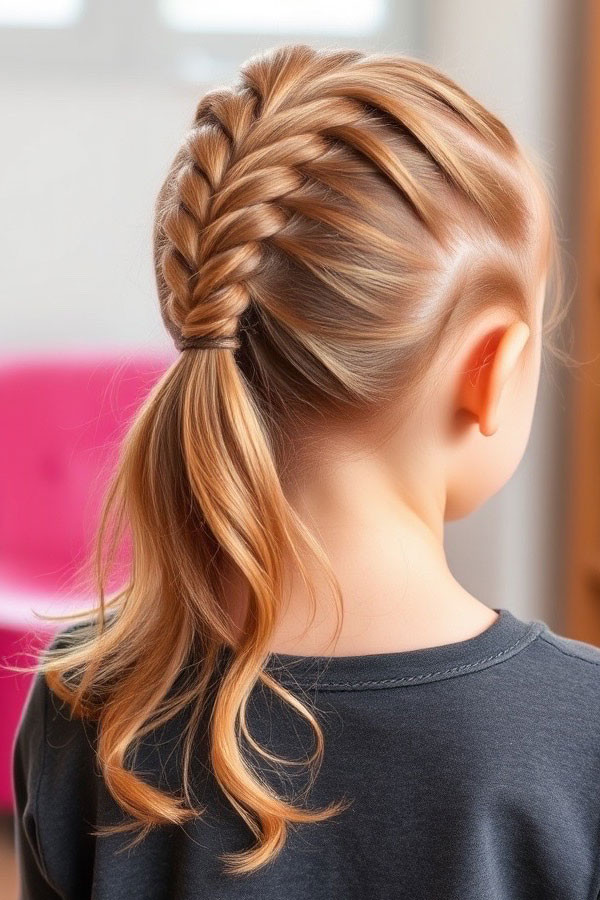
The mistake people make with collarbone length hair is thinking it is too short for a real braid. This fishtail proves otherwise. It starts at the crown, middle part, wavy texture, blonde with subtle highlights, and transitions into a low ponytail that grazes the collarbone. The braid is the entire silhouette, no loose strands, no half-up trick. It holds because the fishtail weave is denser than a three-strand, it grips the shorter layers that usually escape. You need a mirror and patience, this is not a five-minute style. But it changes the whole proportion of a medium length. Suddenly the hair looks longer than it is.
Collarbone Visual Idea
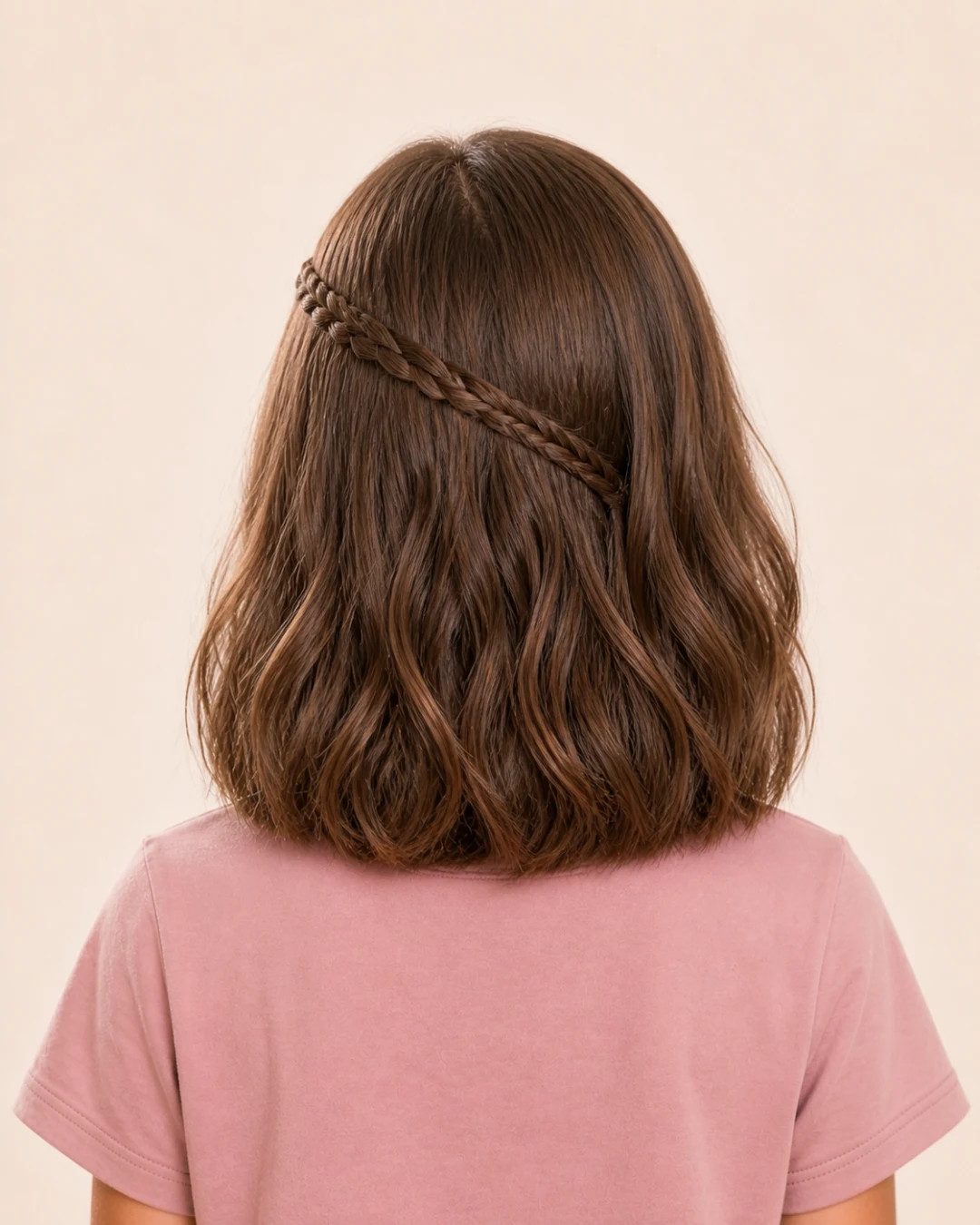
Ever notice how a bob can feel like a commitment and a cop-out at the same time? This one lands somewhere smarter. Dark brown, collarbone-grazing, with a single thin braid tucked into the waves from the back. It is not a full braided style, it is an accent, a quiet detail that says you thought about it. The middle part keeps it open, the wave gives it movement. For a warm-weather wedding or a Saturday that is not quite casual, this is the hair that does not try too hard and still wins.
Shoulder Visual Idea
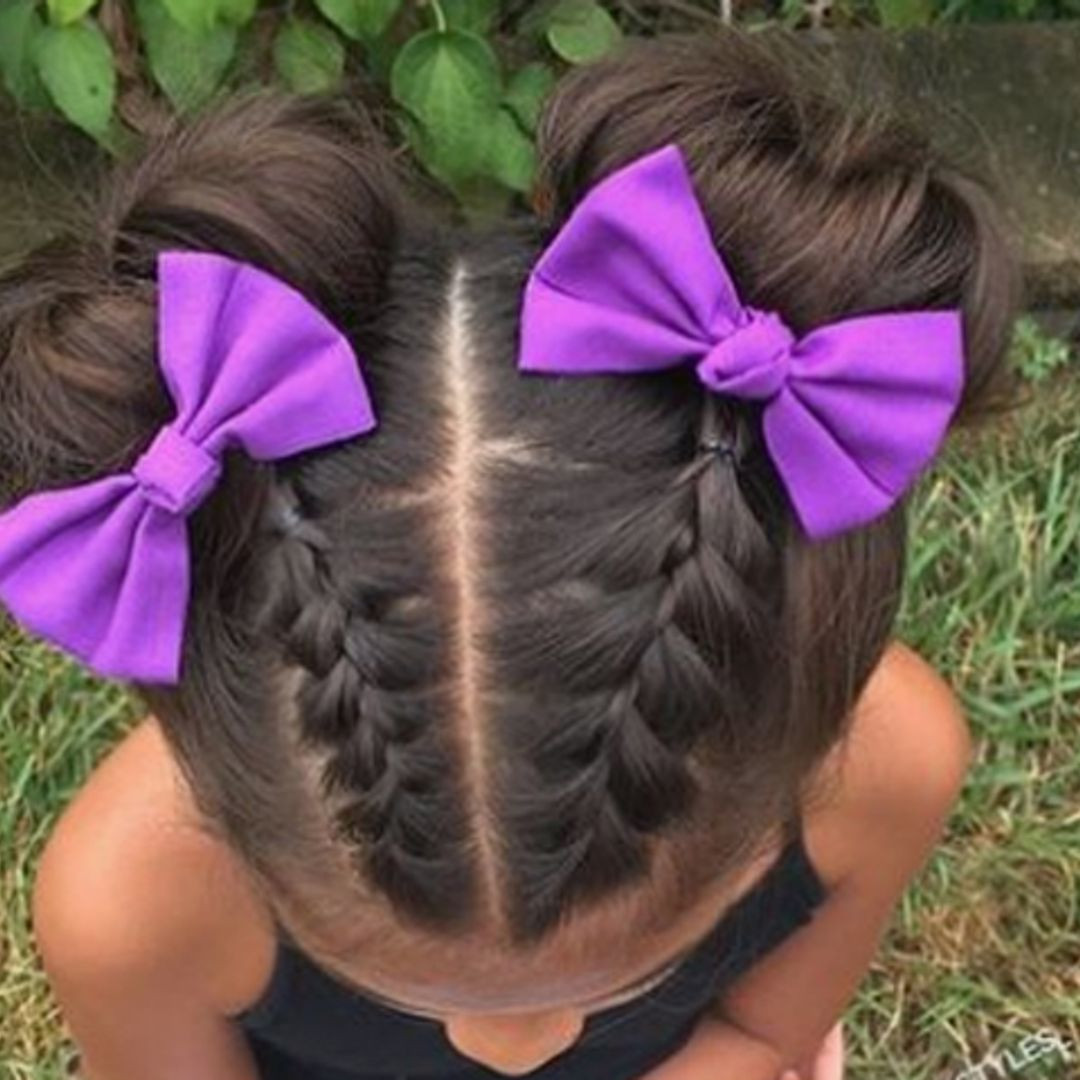
This is the look that makes you book a salon appointment before you have the occasion. Two space buns, each wrapped in a braid, with a purple bow tied at the base of each. The hair is dark brown and wavy, cut to the shoulder with layers that give the buns volume without bulk. The braids are the structural trick: they keep the buns from looking like messy knots and add a line that holds all day.
Do not attempt this in your bathroom mirror on a Tuesday morning. The braiding needs tension, the buns need symmetry, and the bows need placement that does not droop. This is a stylist’s job, and it is worth the chair time. Ask for two tight Dutch braids that feed into the buns, then add the ribbon yourself at home.
Mid-Back Visual Idea
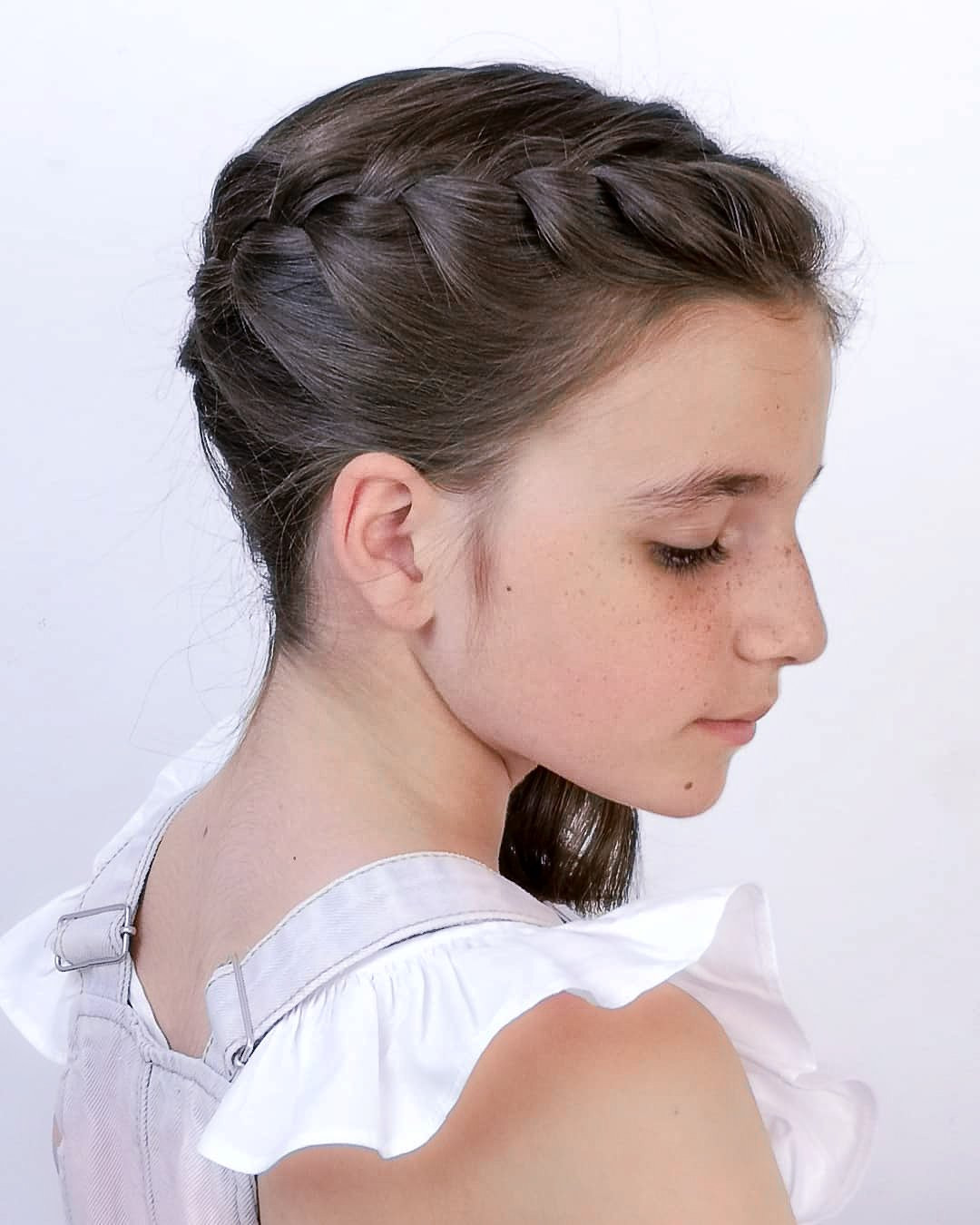
I saw this and immediately wanted thicker hair. A single Dutch braid, pulled to one side, starting at the temple and running down past the shoulder blades. Dark brown, straight, high density. The braid is prominent, the side part gives it drama, and the length means it lands with weight. This is not a delicate style. It is a statement, and it needs the hair to back it up.
Who should try it? Anyone with medium to thick density and hair that reaches at least the mid-back. Fine hair will look swallowed. The upkeep is low once the braid is in: it holds for a full day and night, no touch-ups needed. But the prep matters. Start with dry, second-day hair for grip, and do not braid too tight unless you want a headache by dinner. A satin scarf at night keeps it wearable for day two.
Dark Brown Visual Idea
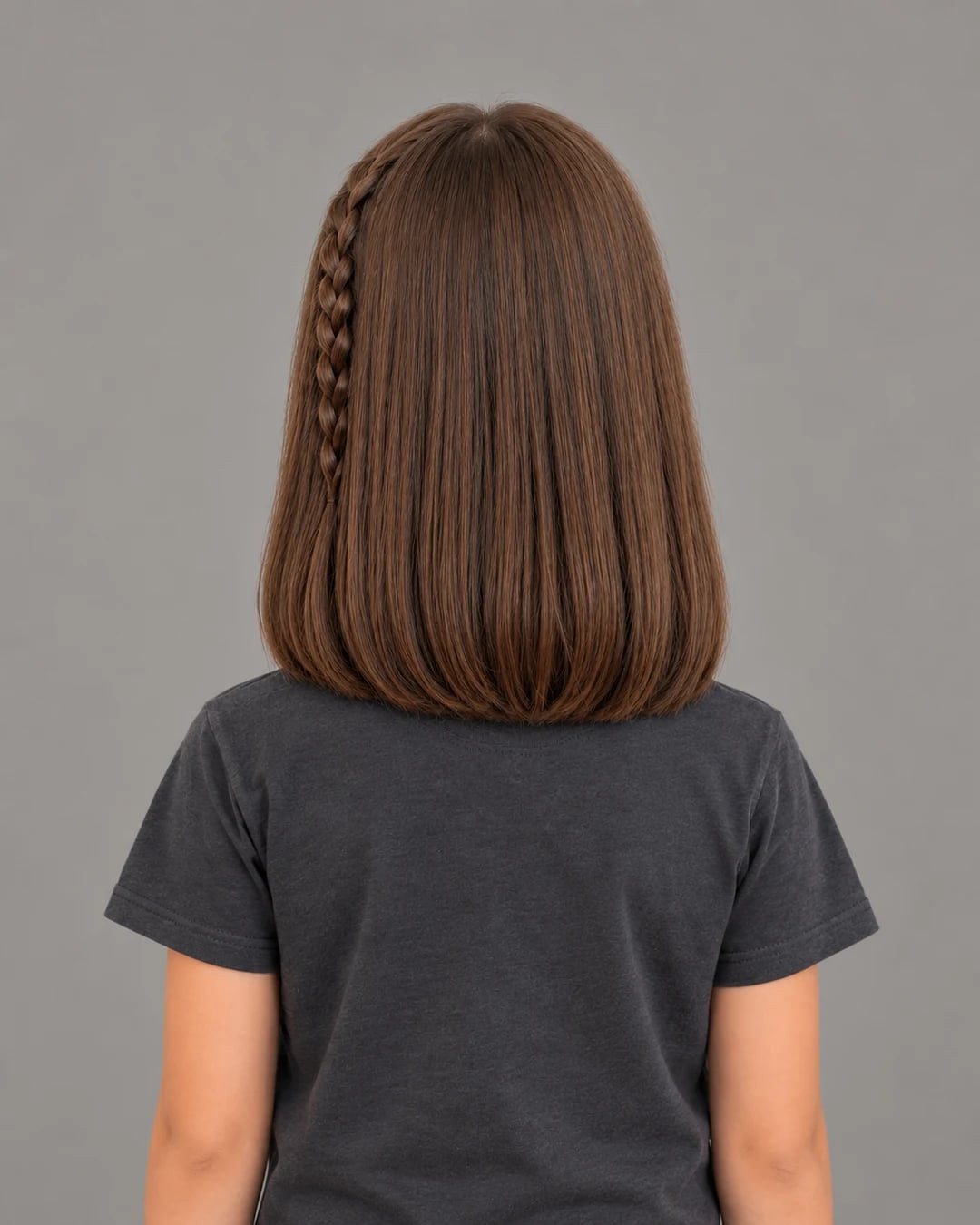
I’ll admit it: I tried this on my own fine, straight hair and it slipped by 10 a.m. The single side braid is a French braid, worked into a collarbone-length bob with a middle part, and the dark brown colour makes the weave visible without being loud. The hold depends on texture. My strands are too smooth and thin to grip each other, so the braid loosened fast. If your hair has any grip or you use a texture spray, this will stay. For me it was a half-day style, pretty while it lasted.
Brown Visual Idea
Final Thoughts
After writing all of these, I noticed the common thread: the braid is the structure, and the beads, bows, and ribbons are the personality. I am booking the feed-in braids with curly ends next, mostly because I want to see if my fine hair can hold that much shape.