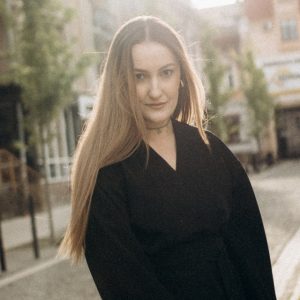
A December haircut can feel disappointingly familiar even when nothing is technically wrong with the length. The useful question is not how many inches to remove, but which part of the shape is no longer doing enough: the perimeter, the face framing, the fringe, or the placement of layers. The strongest December haircut ideas start there, with one structural change that gives the silhouette a clearer point of view.
Length labels are convenient, but they can hide the choice that matters most. Two December haircuts can both land near the shoulders and still feel completely different when one carries a dense, even edge and the other breaks into shorter pieces around the face. Looking at where fullness begins, where the outline narrows, and how the front connects to the rest of the cut makes a reference far more useful than choosing by length name alone.
A Shoulder-Length Cut With Lively Turned Ends
The cut sits close to the shoulders with a near-center part and a smooth, relatively uninterrupted shape through most of the length. Because there are no strongly separated short tiers competing for attention, the silhouette reads clean first, while the modest overall length keeps the outline compact instead of letting it trail far below the shoulders.
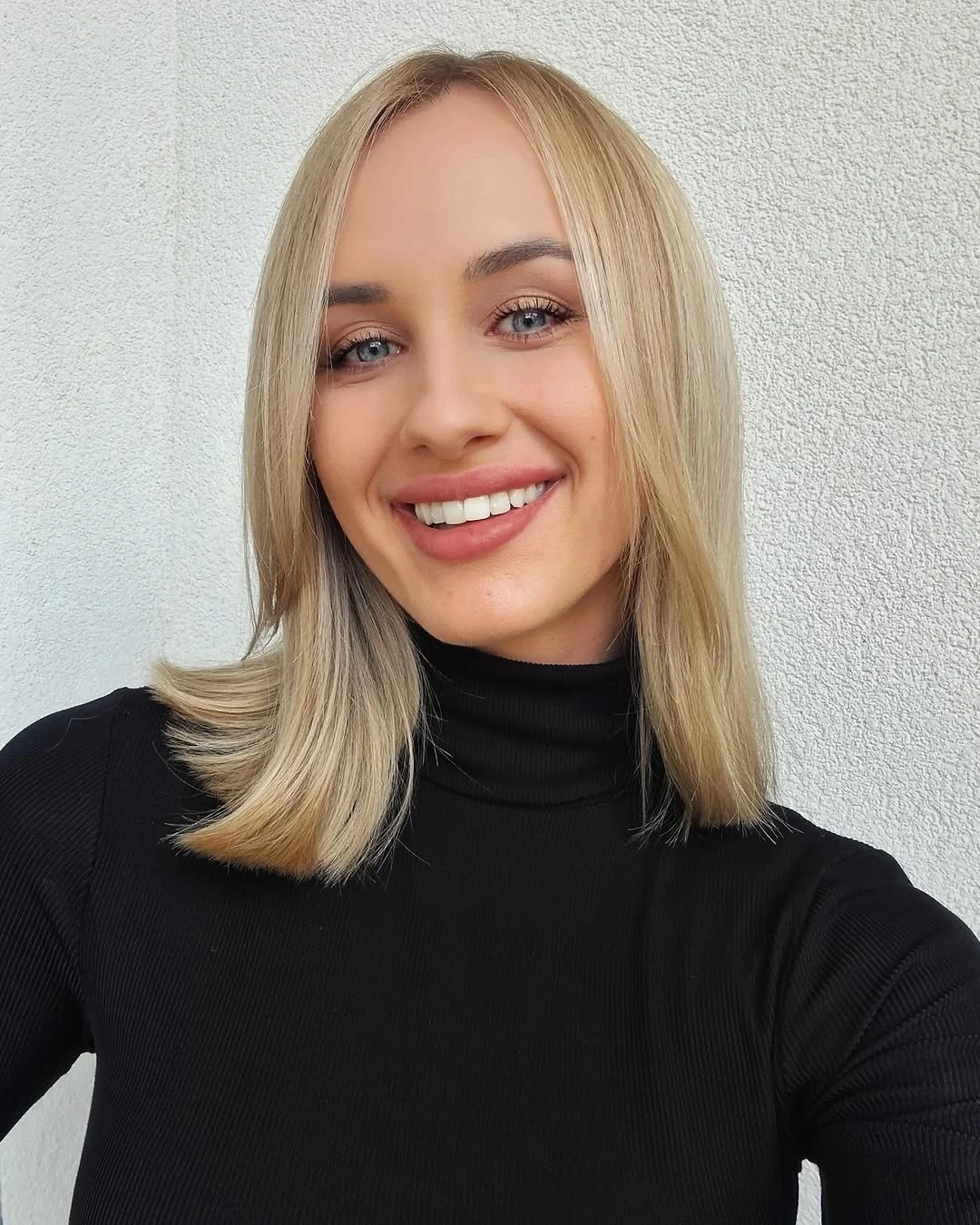
What gives this shape its personality is the change of direction at the bottom, where the ends turn outward rather than dropping in one straight line. The flip is especially noticeable around the shoulder area, so the eye lands on the perimeter even though the upper sections stay controlled and simple. That small directional shift keeps a restrained cut from looking static.
For someone drawn to clean medium lengths, the deciding detail may be the behavior of the edge rather than the amount of layering. A shoulder-length cut like this can stay visually simple through the body while the outward-turning ends give its perimeter a more expressive finish.
A Dense Brunette Lob With a Clean Edge
This brunette lob keeps its weight concentrated near the bottom, where the perimeter appears dense and comparatively even. A center part divides the front cleanly, and the lengths fall with very little obvious interruption before reaching the shoulder and collarbone area. The result is a solid-looking outline that feels deliberate without depending on pronounced layering.
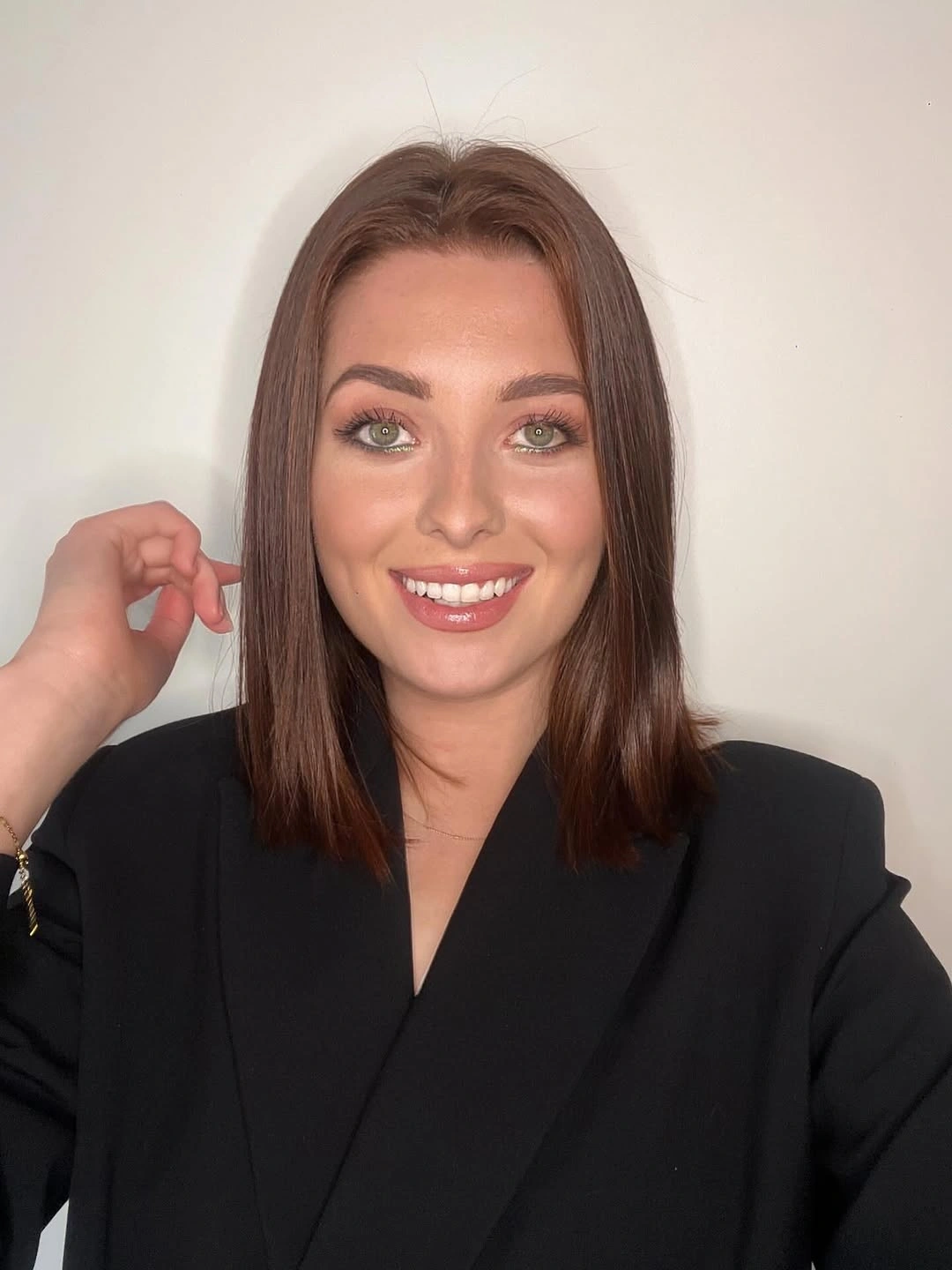
Because there are few visibly shorter sections through the body of the cut, the eye reads the lower edge as the main structural feature. The straight finish reinforces that impression, but the haircut itself still appears substantial through the ends rather than tapered or feathered. It is a useful distinction for anyone who likes medium length but does not want the silhouette broken into many visible levels.
For anyone comparing December haircuts, this is a reminder that movement is not automatically the goal. A dense edge can be the feature worth preserving when the appeal comes from weight, order, and a clear lower line.
Long Blonde Layers That Keep Their Length
The overall length remains generous, falling well below the shoulders, but the front is not left as one continuous sheet. Broad face-framing sections begin higher and connect gradually into the longer hair, so the cut gains shape near the face without giving up the impression of long hair. That relationship makes the front feel intentional rather than simply shorter by accident.
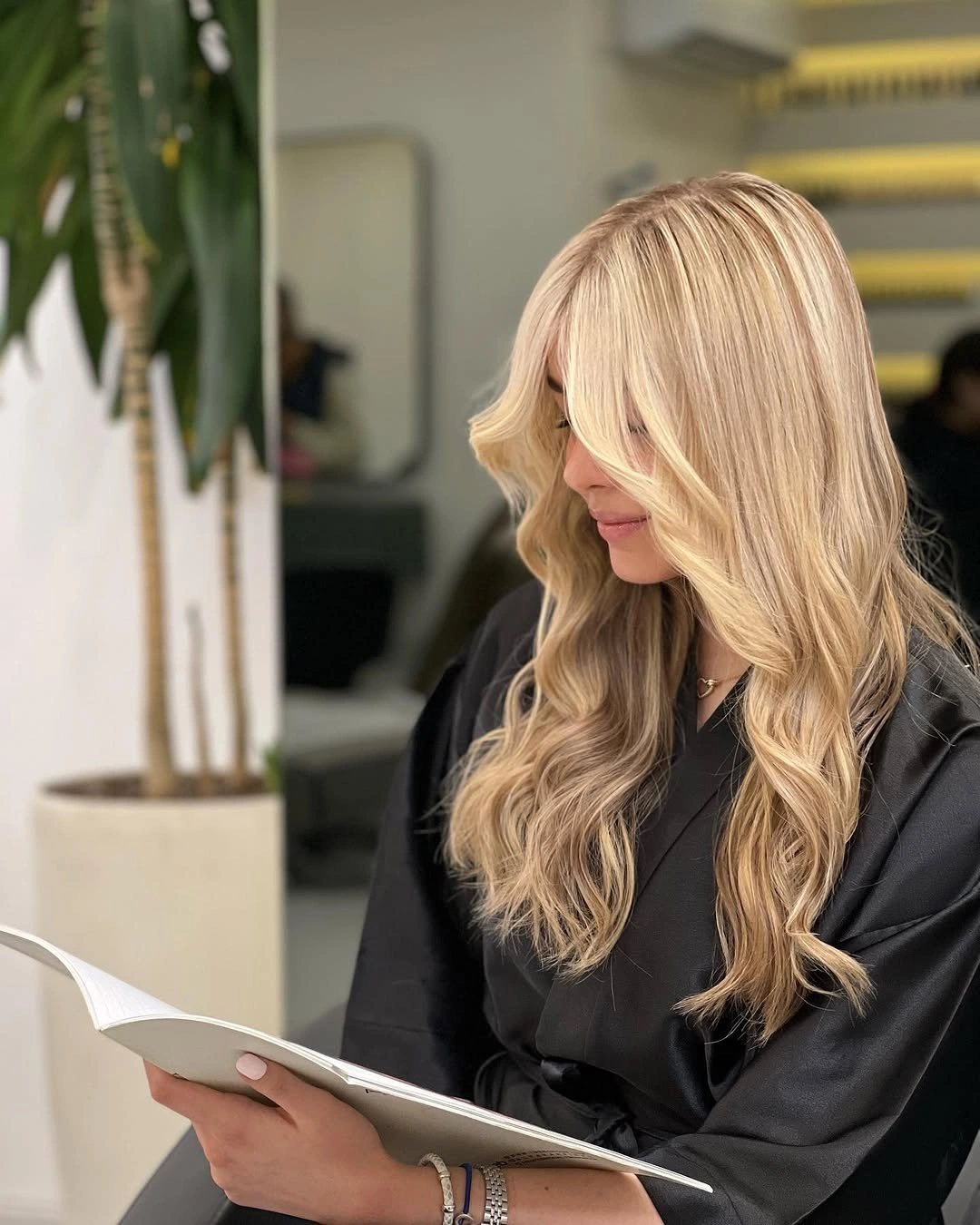
Large, loose bends make several layer levels visible through the lower lengths, especially where one curve gives way to another instead of forming a single uniform wave. The effect is broad rather than finely feathered, so the hair still looks substantial even as the outline moves. This is the kind of layering that changes how long hair occupies space without making the ends look sparse.
This works particularly well as a reference when keeping substantial length matters more than creating a dramatically new perimeter. The meaningful change comes from internal shaping around the face and through the lower lengths, allowing the haircut to feel more defined without sacrificing its long silhouette.
Wispy Fringe Gives Medium Layers More Character
The fringe is the first structural feature to register here because it spreads lightly across the forehead and connects to shorter pieces beside the face. Those pieces continue into a shoulder-length silhouette with noticeably irregular, textured ends, so the front does not feel separate from the rest of the haircut. Instead, the shorter lengths create a continuous frame from forehead to jaw and down toward the shoulders.
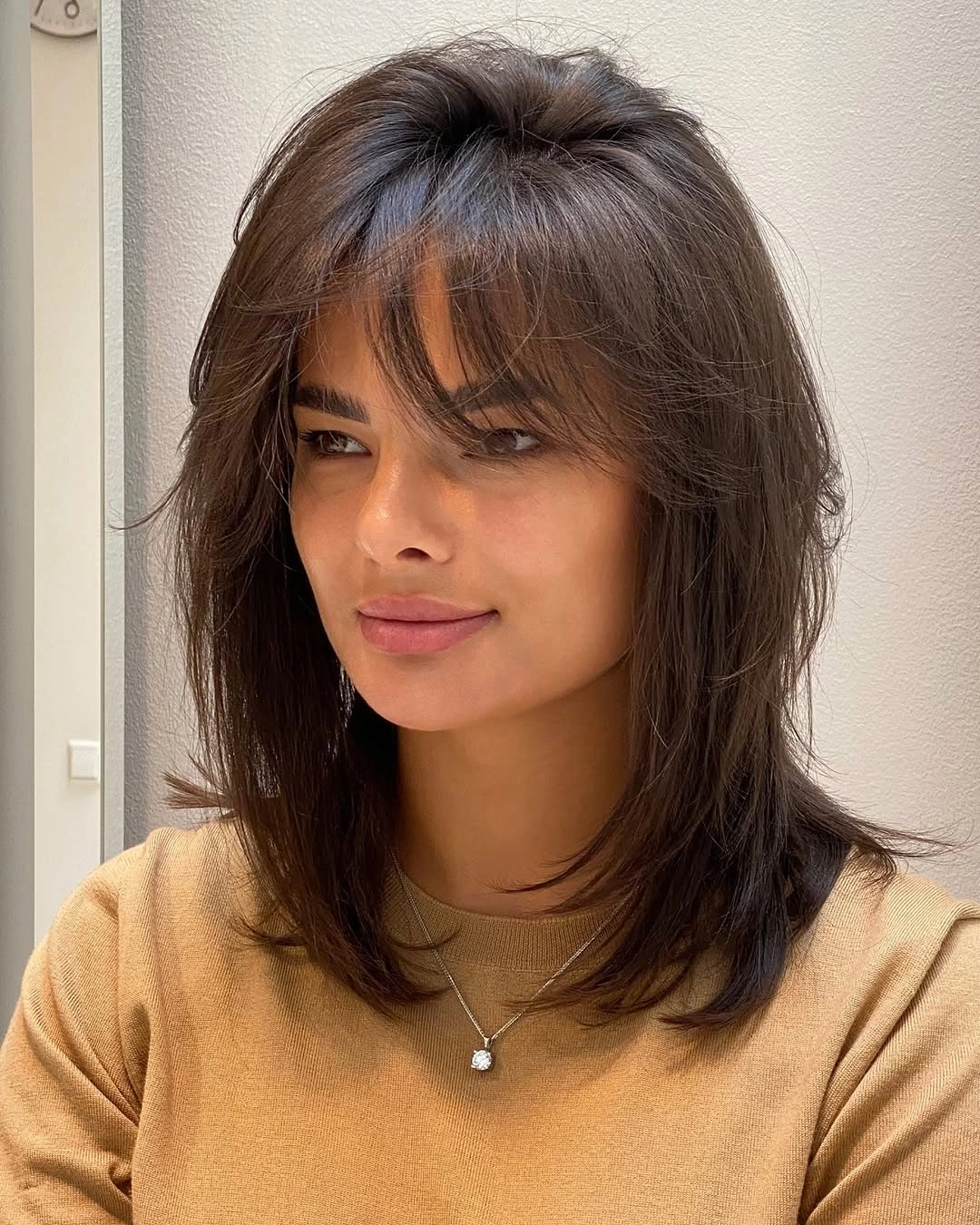
Layering changes the entire outline by breaking up the dense block shape that a straighter medium cut can create. Shorter sections around the cheeks and sides interrupt the perimeter, while the lower ends move in different directions rather than lining up as one heavy edge. That irregularity gives the haircut a livelier surface and lets the fringe feel integrated instead of added on top.
Among layered haircut ideas, this one lets the front of the cut do much of the expressive work. Someone drawn to fringe and cheek-level pieces may prefer that emphasis to a cleaner perimeter because the shape already feels active before the eye reaches the ends.
Bright Face Framing Changes the Whole Outline
The underlying haircut is medium-long and center-parted, with a fairly straightforward fall through the lengths and softly irregular ends. What changes the visual structure most is the contrast between the darker root and upper areas and the bright blonde sections around the face and through much of the lower hair. The color difference makes the front contours easier to see even before the individual pieces are examined.
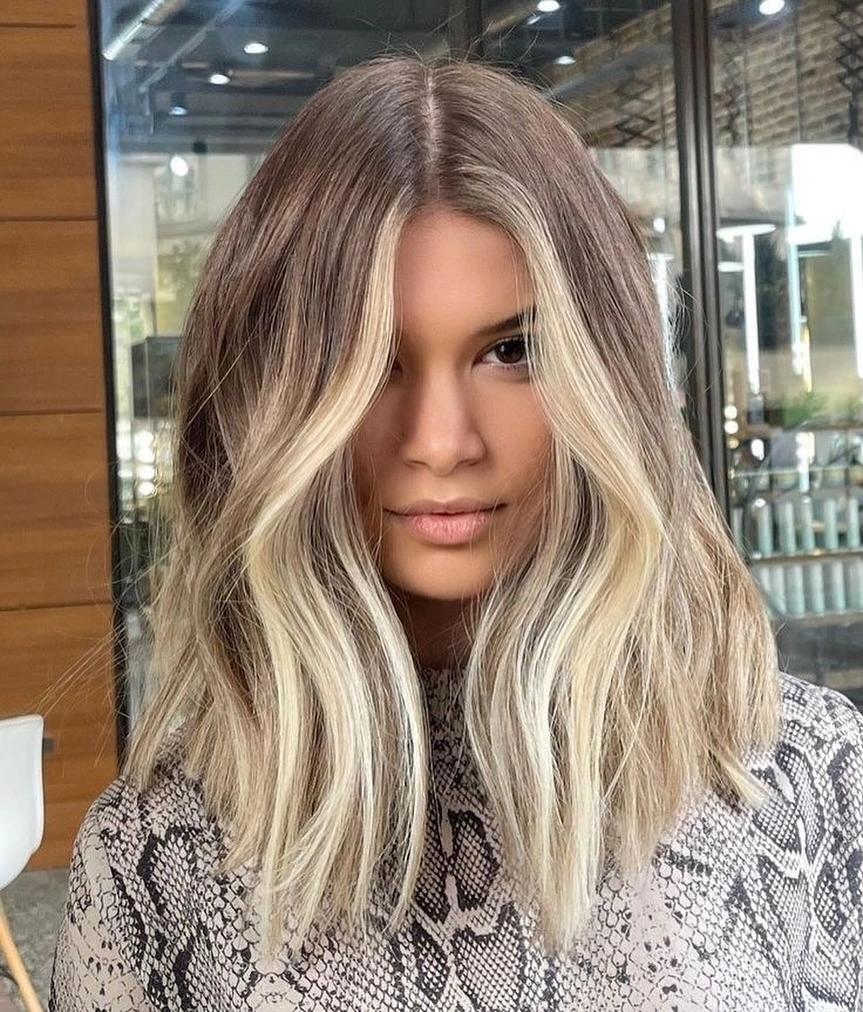
The palest sections sit prominently beside the face, so they trace the front edge of the haircut and make those pieces look more pronounced against the deeper surrounding color. Lighter lengths farther down repeat that contrast without creating one perfectly uniform band. The result is a strong visual frame that depends as much on the placement of light and dark as on the actual cut line.
The useful distinction here is between haircut structure and color contrast because either can be borrowed without copying the other. Someone exploring December hair color ideas could emphasize the front with brighter placement on a different length, while the medium-long shape itself could also work with a quieter color relationship.
Long Blonde Layers With a Feathered Lower Shape
The overall length stays well below the shoulders, but the front is cut noticeably shorter, creating a clear step between the face-framing pieces and the rest of the hair. With the center part keeping both sides balanced, those shorter sections become the first place the eye lands before the longer layers begin to fan outward through the lower half.
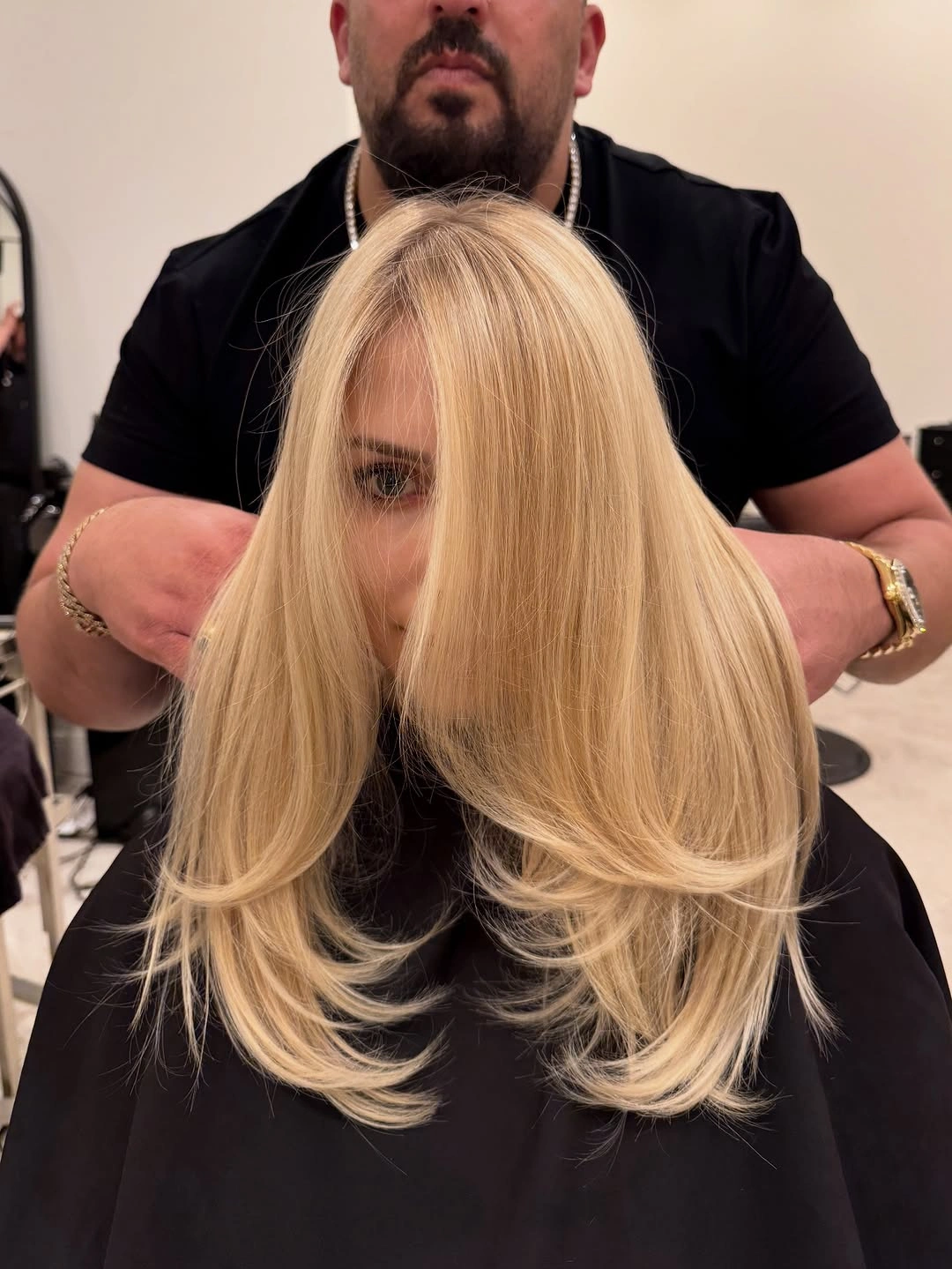
What makes this shape especially readable is the repeated outward curve through several levels of the lower hair. Instead of collecting all the weight in one blunt line, the cut spreads fullness across a series of visible tiers, so the long silhouette still feels substantial while the ends have more separation and direction.
If the goal is a layered look that reads immediately even with a smooth finish, this amount of depth makes sense. A subtler version could keep the same long base while reducing the number or contrast of visible tiers around the lower half.
Low Layers Keep the Upper Shape Smooth
From the back, this brunette cut looks smooth and relatively uninterrupted through the crown and upper lengths, which makes the change lower down much easier to see. The layers become more apparent through the lower third, where shorter sections begin to curve away from the main length and the outline gradually narrows toward the ends.
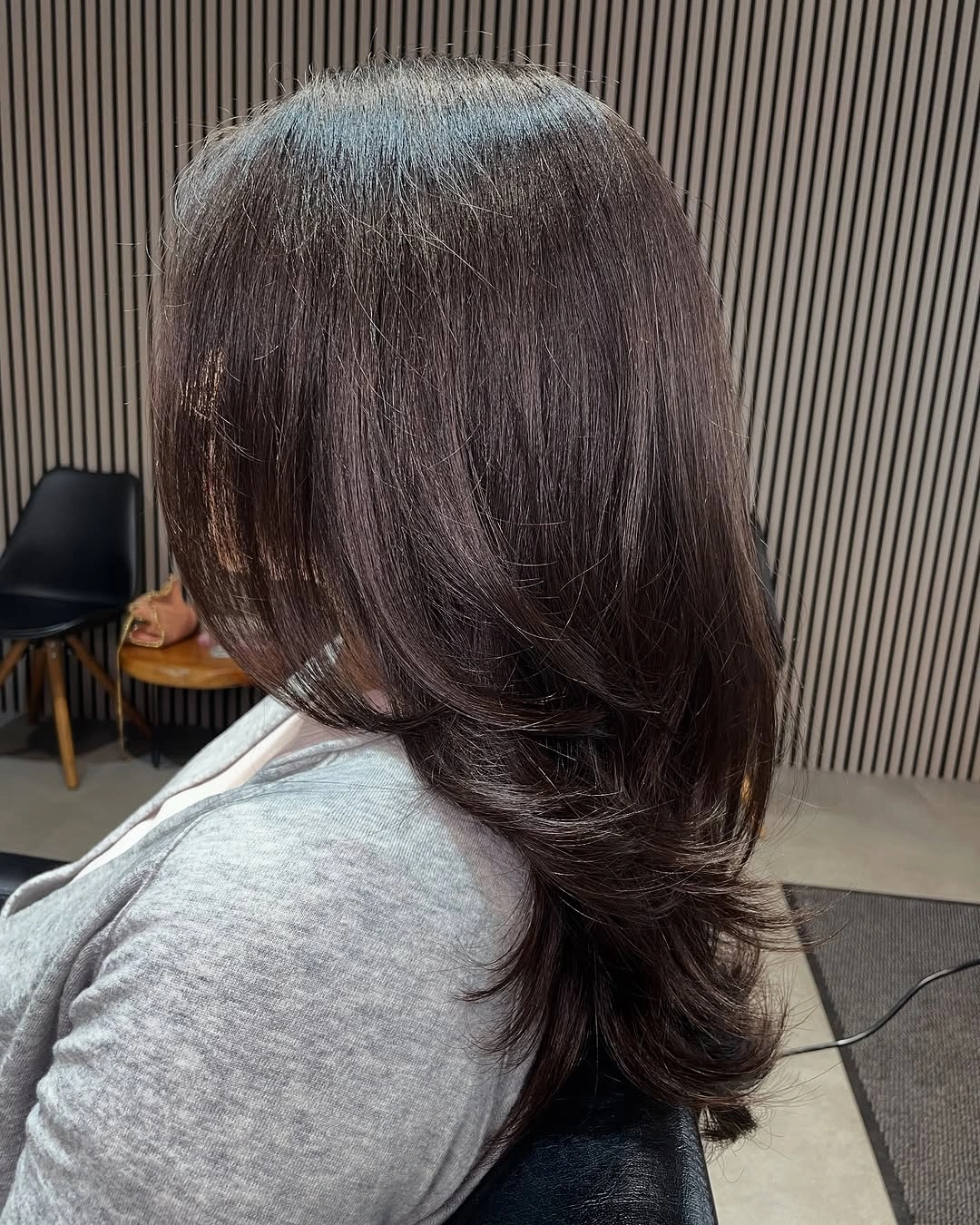
That low concentration of layering is useful because it changes the bottom shape without making the entire back look busy. The upper section keeps a calm, continuous surface, while the lower layers introduce enough separation to soften the perimeter and give the ends a more tapered profile than a one-length cut would have.
This is a strong reference for someone who wants layers to begin lower rather than reshape the crown and upper back. The deciding question is where that transition should become visible, since moving it higher would change the whole balance of the rear silhouette.
Full Long Layers Build Shape Around the Face
This long black haircut puts the strongest shaping close to the face, where broad front sections sweep outward from a center part before blending into the longer lengths. Those pieces create a pronounced frame without making the overall cut look short, and the lower hair still carries enough density to keep the silhouette grounded.
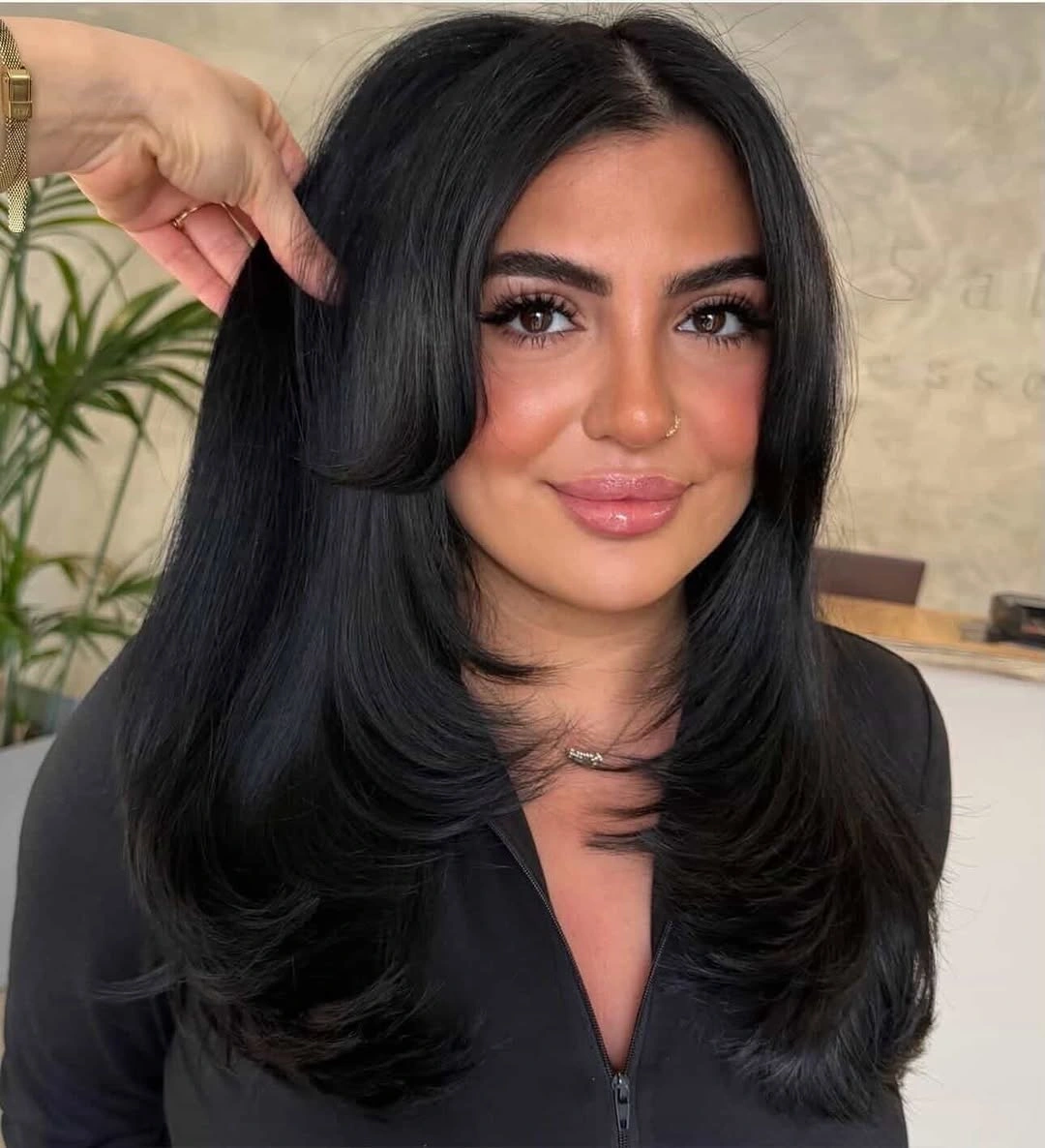
Below the face, the layers build in rounded stages around the shoulders and chest rather than thinning into fine, wispy ends. That stacked progression gives the lower half noticeable movement while preserving a full-looking base, so the cut has both a sculpted front and a substantial finish through the longest sections.
This kind of long layered haircut works when the front and lower half are both meant to carry visual weight. If face framing alone were the priority, the lower sections could be quieter, but this version keeps the shape active well past the shoulders.
Blended Layers Create a Softer Back Taper
Seen from the back, this blonde haircut forms a long silhouette that gradually narrows toward the ends instead of finishing in a broad straight line. The loose waves make that taper especially easy to read because each bend reveals a slightly different layer length, while the mixed lighter and darker blonde sections run vertically through the hair.
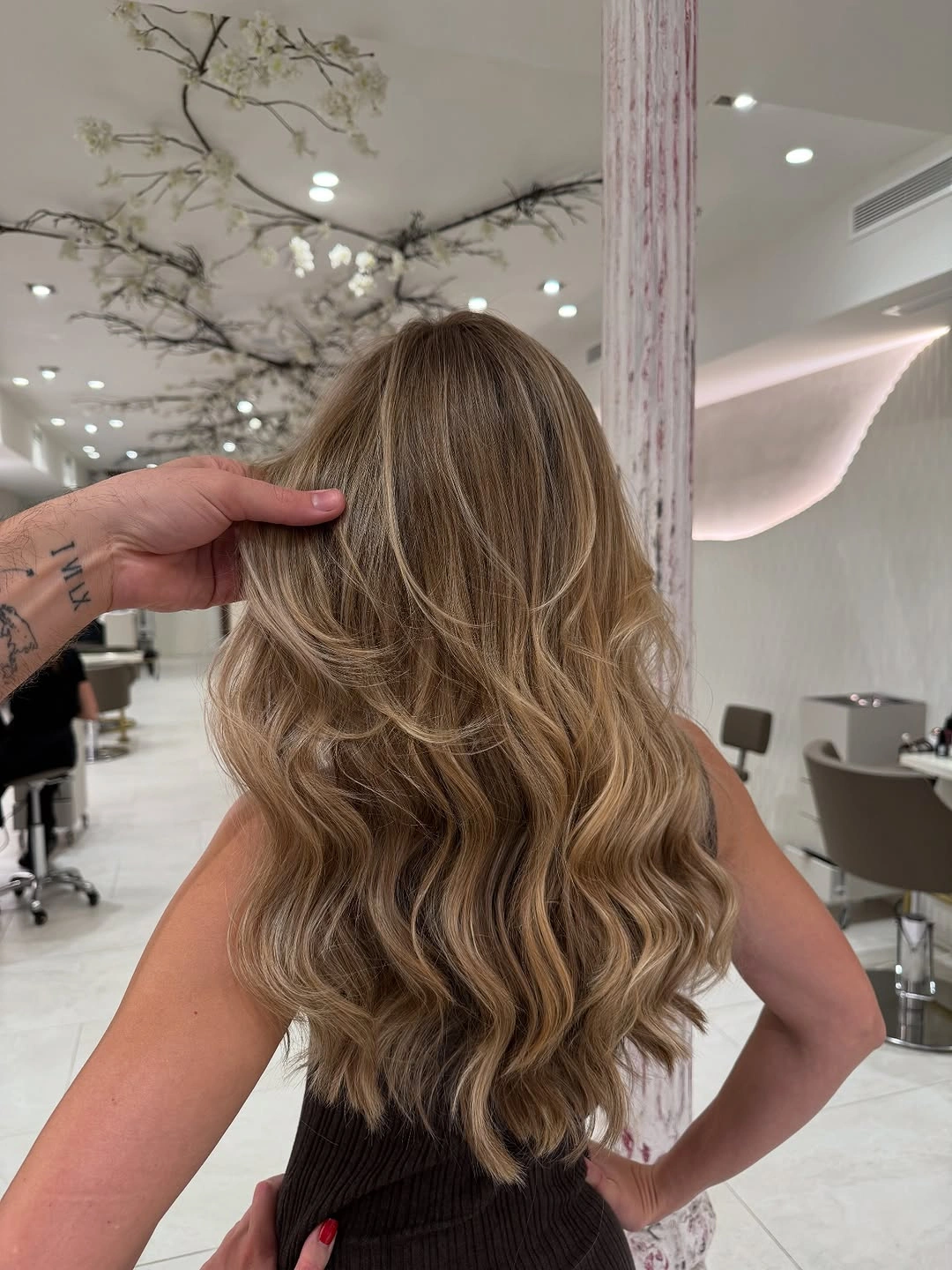
The layering here feels blended rather than sharply stepped, with one level flowing into the next as the waves move down the back. That softer progression gives the perimeter a flowing, elongated shape, and it creates a different effect from cuts where individual feathered tiers are much more obvious at first glance.
For a softer long-layer reference, the key is the gradual narrowing rather than sharply separated tier lines. The back view makes it easier to judge whether that blended taper is the effect you want before focusing on the wave pattern or color contrast.
Broad Layers Keep Medium-Long Hair Full
The warm brown hair extends below the shoulders with a center part and broad front sections that curve away from the face before joining the longer lengths. Rather than breaking into many narrow layers, the cut relies on larger pieces, so the shape reads soft and spacious while still keeping a strong sense of fullness through the bottom.
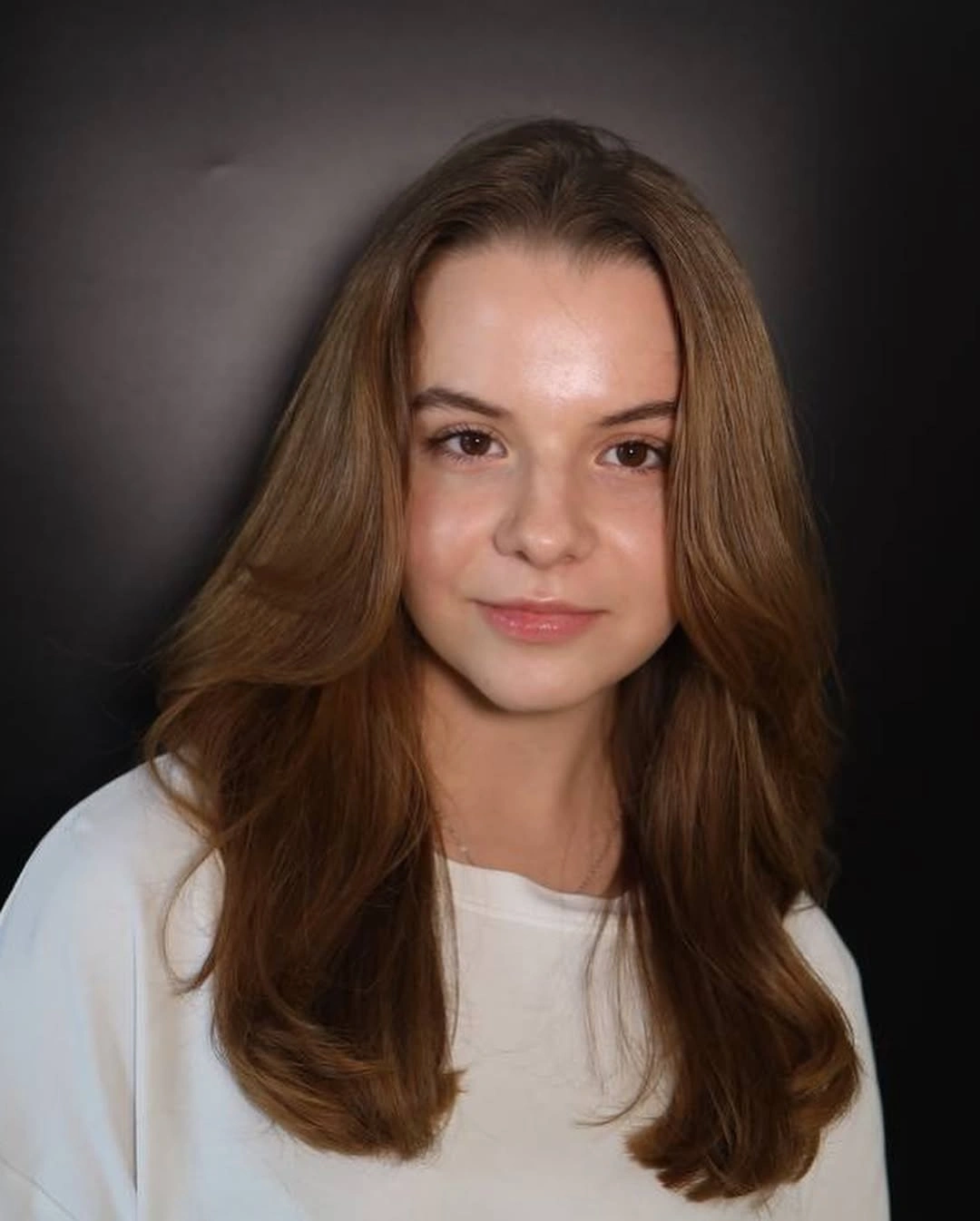
Large inward and outward curves give the lower half its movement, but the ends remain visually substantial instead of dissolving into a fine feathered edge. That balance matters because it shows how medium-long layers can create shape without making the perimeter look thin, especially when the sections are broad enough to keep their weight.
Layer scale is the interesting decision here. Fewer, broader sections can make medium-long hair feel full and continuous, while more numerous narrow layers would create a more fragmented outline even at a similar length.
Rounded Brunette Layers Keep the Silhouette Soft
The near-center part keeps the front balanced, but the shorter sections beside the cheeks prevent the shape from feeling flat or overly symmetrical. Those pieces turn outward before meeting fuller lengths below, creating a soft transition from face framing into the broader body of the cut. The result is layered without looking sharply stepped.
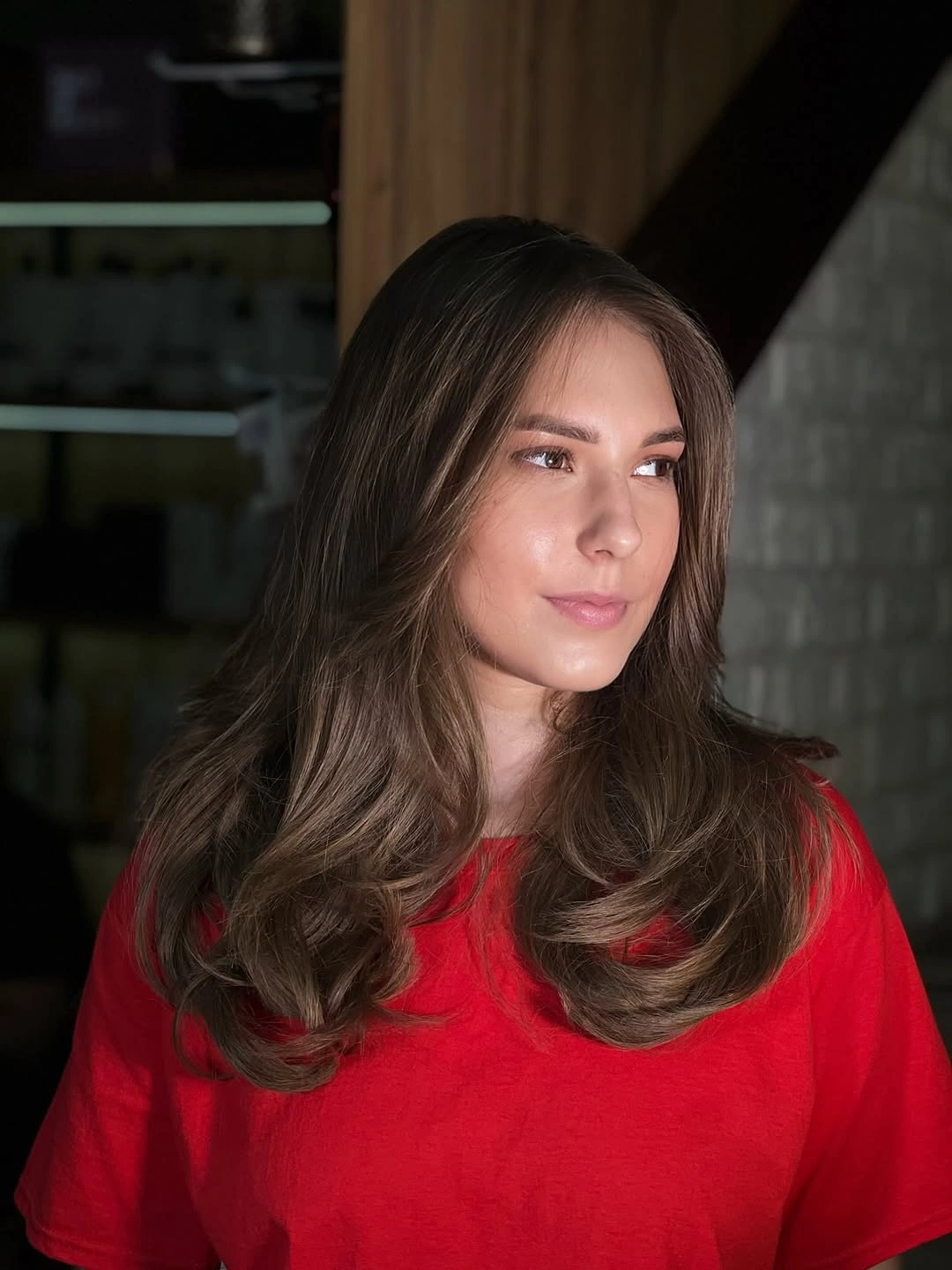
What stands out most is the rounded fullness through the lower half, where the hair bends outward and then curves back in around the shoulders and chest. That broad shape gives the cut a generous, cushioned outline instead of a narrow taper. For brunette haircut inspiration, it is a useful example of visible layering that still feels smooth and cohesive.
If you are choosing between similar brunette cuts, compare where the shortest visible front pieces begin. Here they sit low enough to keep the forehead open and put the framing effect around the cheeks, giving the cut a softer front boundary than a fringe-led shape.
Elongated Face Framing Creates a Narrower Shape
The center part opens into long face-framing sections that descend diagonally past the cheeks before merging into the rest of the hair. Because those front pieces are elongated rather than abruptly short, they create a stretched, tapered frame instead of a wide halo around the face. The lighter-looking sections near the front make that descending line even easier to notice.
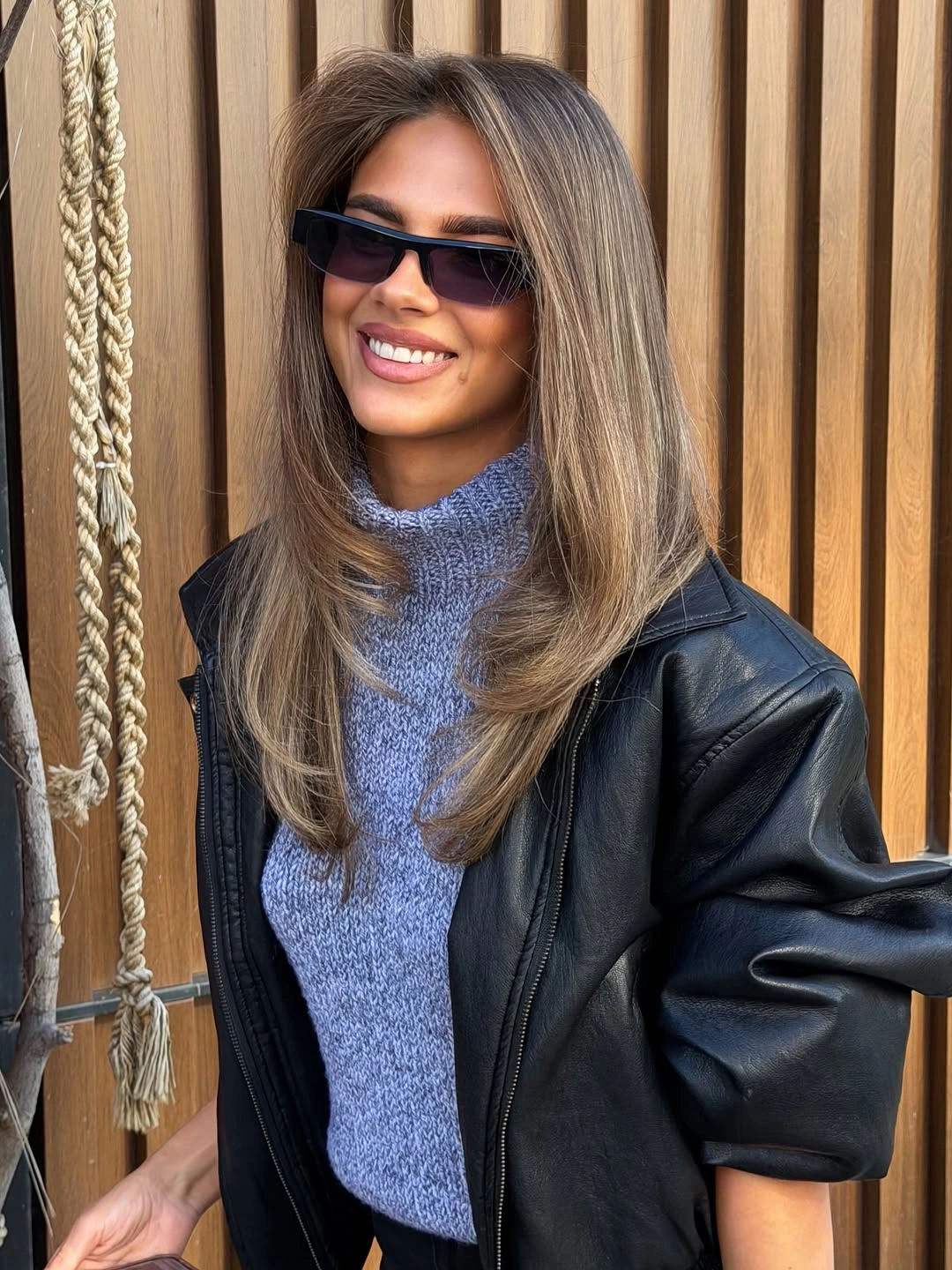
Through the lower half, the haircut narrows as the layers continue toward the chest, with the ends turning outward rather than building a broad shelf at shoulder level. That vertical emphasis gives the silhouette a leaner feel than fuller layered cuts with more width at the sides. It is a strong reference for someone who prefers length to read as elongated rather than rounded.
The outward turns at the ends add a small lateral accent without changing the narrow overall outline. That distinction is useful if you want some visible direction at the bottom while keeping the main silhouette long and streamlined.
A Side Part Shifts the Layered Balance
The medium-long cut has broad curved layers around the shoulders, but the side part changes how those layers are perceived from the front. One side lifts and sweeps away from the forehead, while the opposite side carries more visual weight beside the face. That uneven distribution gives the same underlying length a more directional, less centered character.
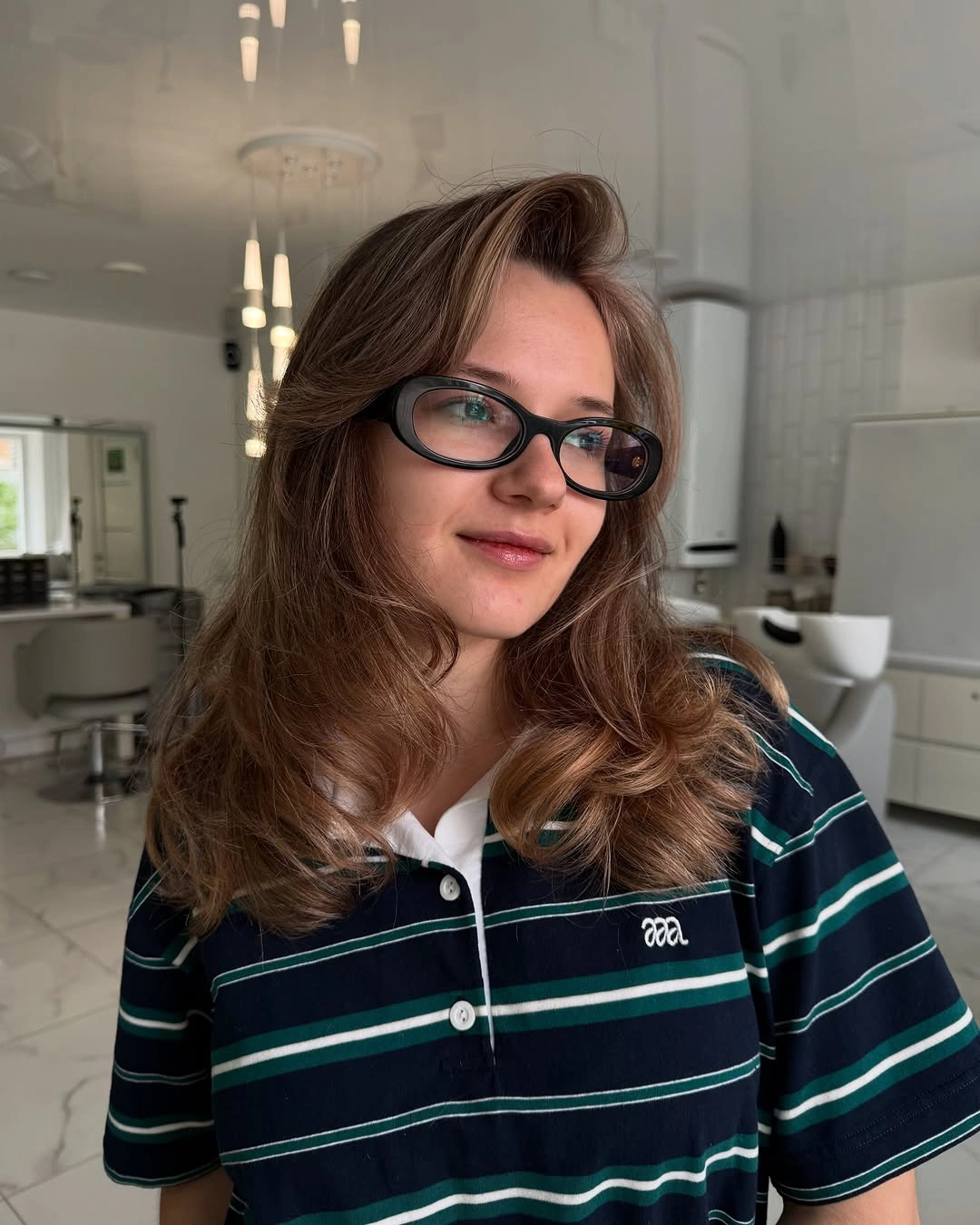
The lower sections remain soft and full, so the side part does not turn the haircut into a sharply asymmetric shape. Instead, it shifts where the eye notices volume first, moving attention toward the lifted front section before the gaze settles on the curved ends. That interaction matters because part placement can change the apparent balance of a layered cut without changing its actual length.
If a side part is how you normally prefer to wear your hair, it is worth judging a haircut with that placement already established. Here the lifted front section is central to the silhouette, so shifting the part toward the middle could change which layers appear most prominent.
Very Long Hair With a Continuous Dark Outline
The back view is almost entirely about continuity: very long dark hair falls in a straight vertical sheet with little obvious interruption from shorter internal layers. The length extends far below the shoulders, and the surface stays visually calm from the crown through most of the body. That makes the overall silhouette feel long, narrow, and deliberate.
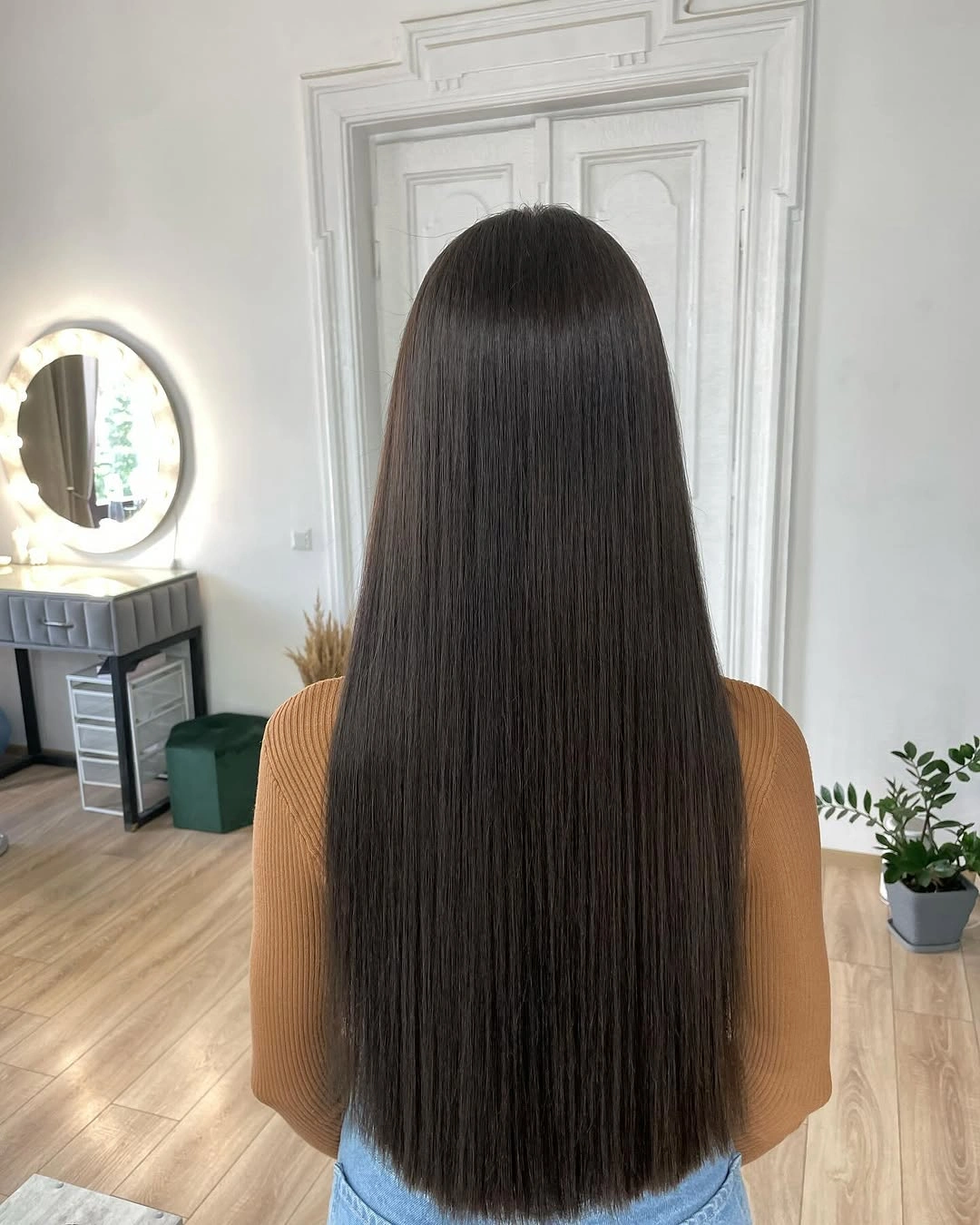
At the bottom, the edge remains dense and continuous, with only slight softening rather than breaking into clearly separated tiers. Minimal visible layering lets the eye follow one uninterrupted line through most of the length, so the lower perimeter feels substantial and deliberate. That continuity gives the cut its impact without relying on obvious internal shaping.
With so few shorter layers competing for attention, the lower perimeter carries more responsibility for the overall shape. A back view becomes especially useful here because it shows whether the appeal comes from uninterrupted length rather than from details concentrated around the face.
Long Front Pieces Stay Visible When Hair Is Up
With the longer hair gathered back, the front pieces become the clearest part of the haircut to assess. A long curtain-like fringe falls across the forehead and connects with shorter sections beside the cheek and jaw, leaving a visible frame even though the main length is pulled away. That separation shows how much influence the front can have on the haircut’s identity.
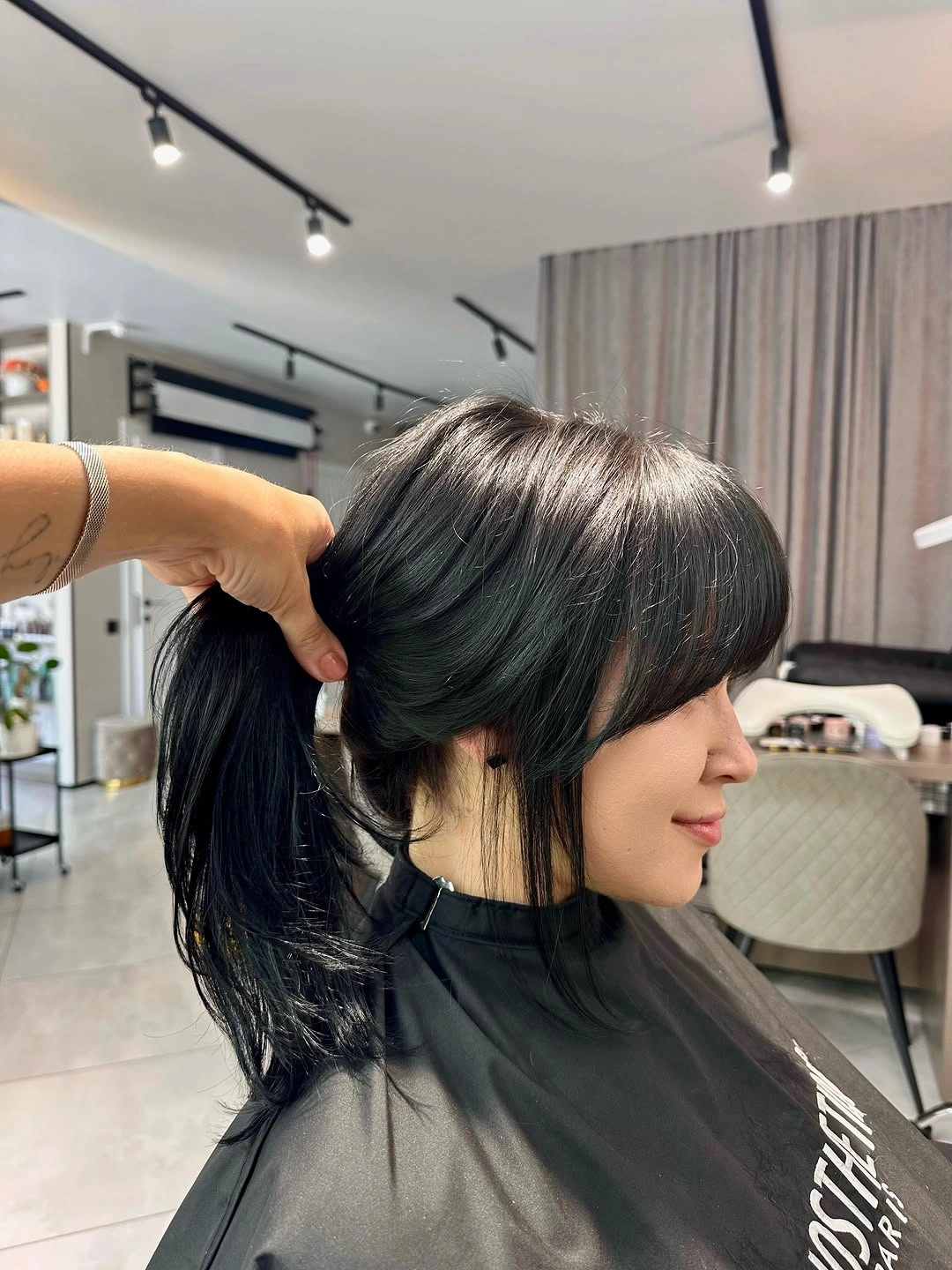
Those shorter pieces do more than soften the hairline because they create an independent shape that still works when the rest of the hair is collected behind the head. The eye reads a layered front rather than a bare forehead followed by a ponytail, so the haircut retains structure in a practical pulled-back arrangement. That makes front-layer length an especially useful decision for anyone who wears hair up often.
For anyone who regularly wears longer hair tied back, the shortest front sections deserve their own consideration rather than being treated as an afterthought. They are the pieces that remain on display in this arrangement, so their length and density can determine whether the front still feels deliberately shaped.
A Long Blunt Cut With a Strong Perimeter
The back view makes the lower edge impossible to ignore: the warm light-brown hair falls in a very straight sheet and finishes in a dense, near-horizontal line around mid-back. With little visible interruption through the length, the cut reads as one long shape rather than a sequence of tiers, so the perimeter becomes its clearest design feature.
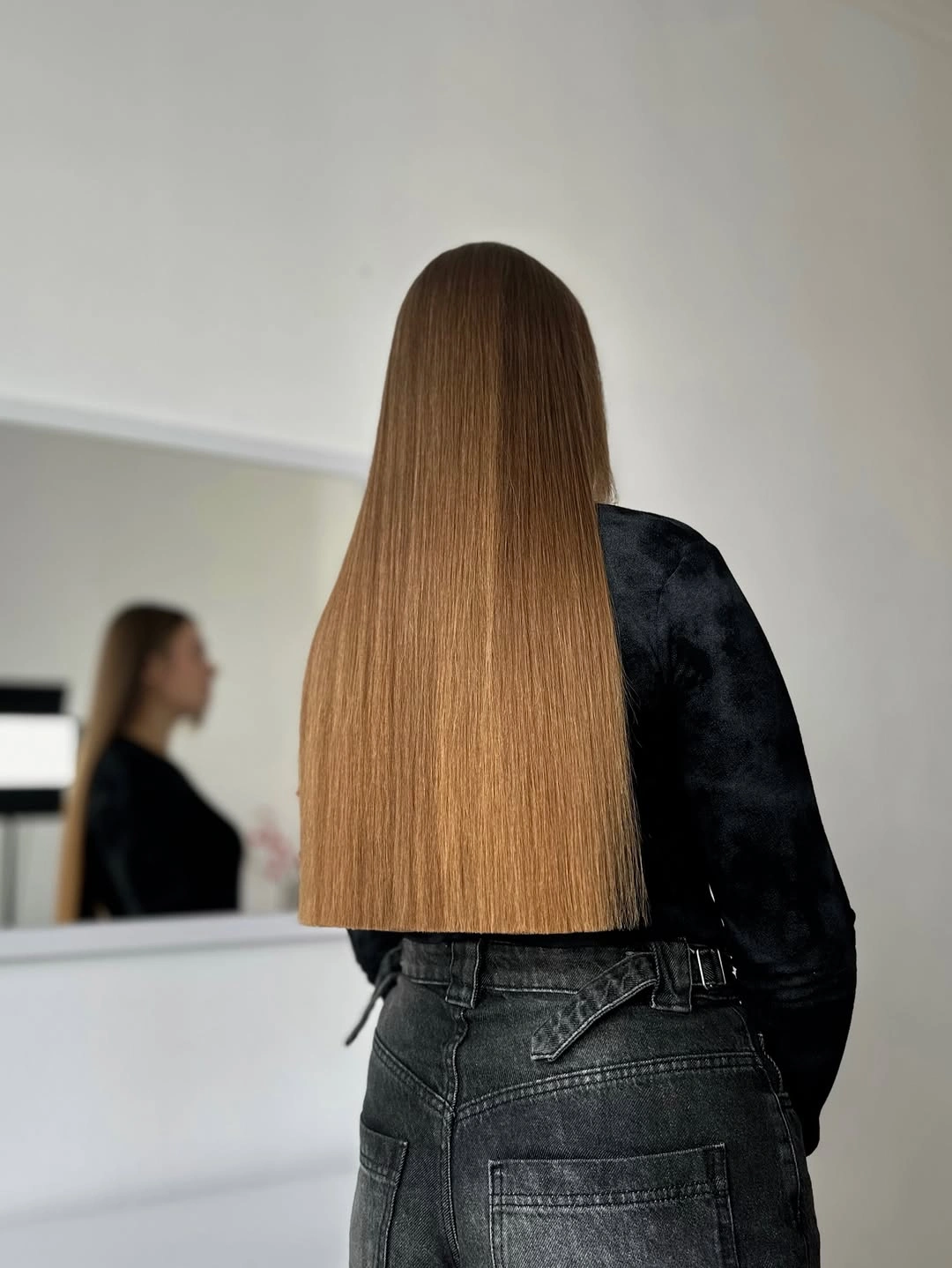
Minimal visible layering keeps the surface continuous from the upper back through the ends, which gives the hair a substantial, almost column-like silhouette. The straight finish makes that continuity especially obvious, but the important structural point is how much weight appears to remain at the bottom instead of being dispersed through shorter internal sections.
This is a strong reference for someone who wants the bottom line to carry more visual authority than internal movement. Even a modest change to that perimeter would noticeably alter the geometry of such a pared-back long cut.
A Compact Bob Defined by Its Side Profile
From the side, this brunette bob sits around the chin and jaw with a compact outline that follows the curve of the head before dropping toward the front. The nape area appears slightly shorter than the frontmost length, creating a gentle forward extension rather than a dramatic angle. That subtle geometry is what gives the cut its clean, controlled shape.
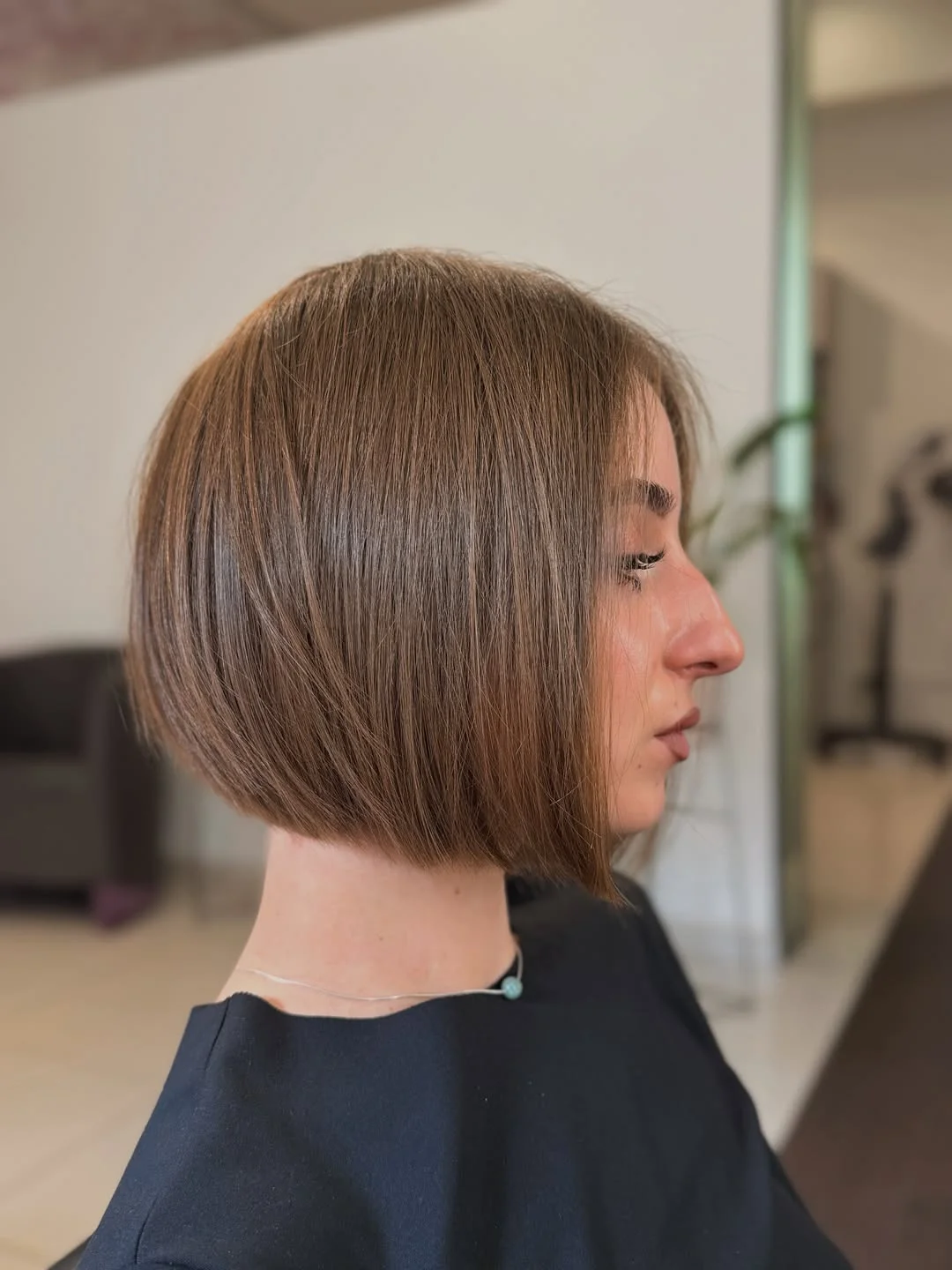
The rounded contour matters as much as the lower line because it keeps the bob from reading like a rigid box. Volume stays close to the head through the back and sides, while the edge moves gradually toward the jaw, so the silhouette feels polished without needing visible internal layers or a heavily textured perimeter.
If you are comparing short haircuts for December, a side view like this can be more informative than a front-facing reference. It shows exactly how the back, jaw area, and front edge relate, which is often the difference between two bobs that otherwise seem nearly identical.
A Graphic Bob With Red Edge Accents
The haircut is built from two clear horizontal ideas: a straight full fringe across the forehead and a short perimeter that lands around the jaw. The pale silver-blonde color makes that geometry easy to read, while the smooth sides keep the overall form compact. It feels precise because the fringe and lower edge speak the same visual language.
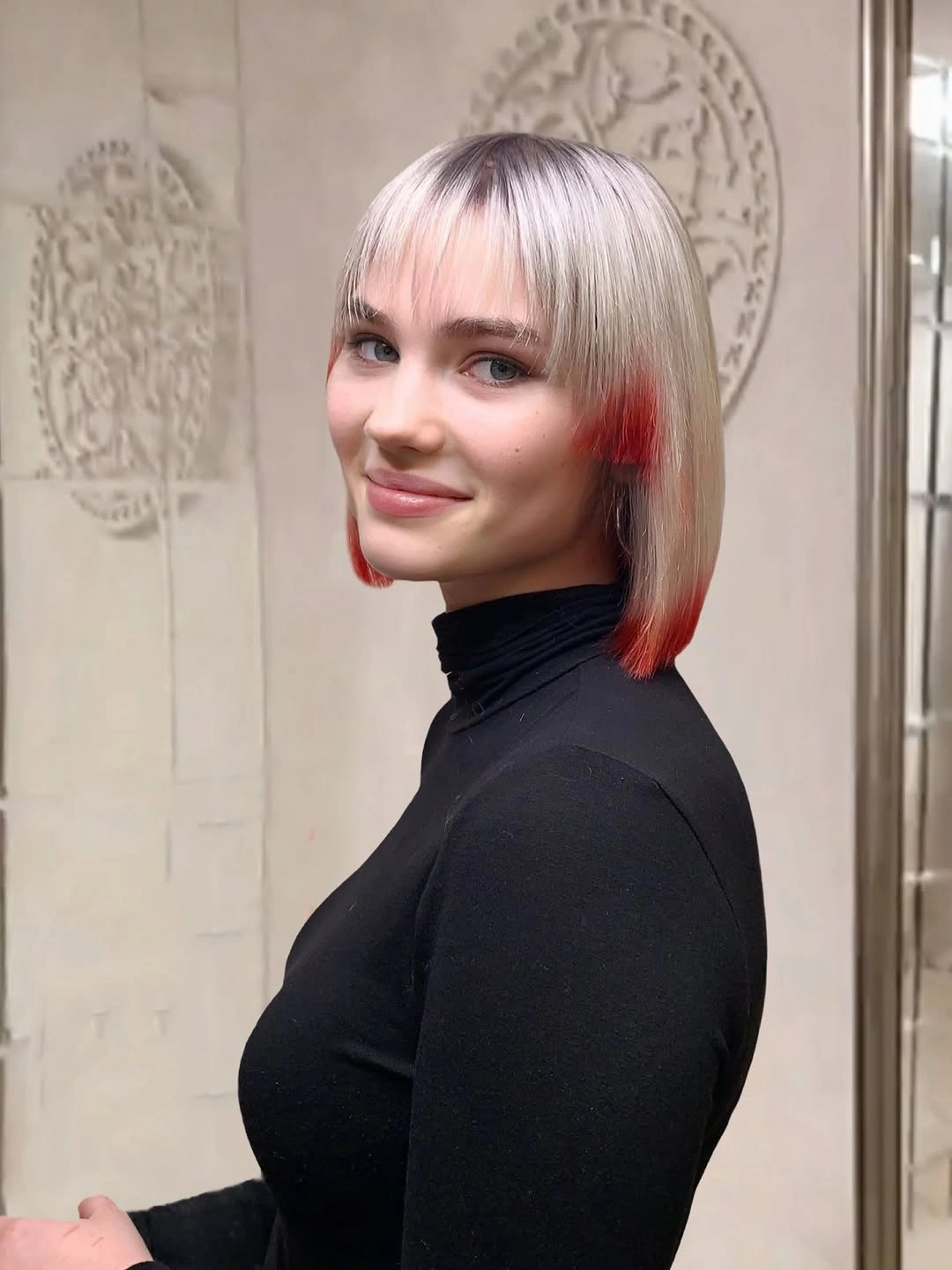
Vivid red appears near both sides of the face and again along portions of the lower edge, drawing attention to the corners where the bob changes direction. Rather than spreading evenly through the hair, those concentrated accents make the side sections and ends more conspicuous. The color therefore reinforces the haircut’s geometry without replacing it.
Among December hair ideas, this offers two distinct decisions rather than one inseparable look. The bob and full fringe already make a strong shape on their own, while localized red accents are an optional way to emphasize its edges more dramatically.
Very Long Layers With Fullness Placed Low
The center-parted black hair stays relatively sleek through the upper lengths, allowing the very long overall length to register before the layering becomes obvious. Below the shoulders, shorter side sections begin to separate from the longest pieces, but the top half remains comparatively uninterrupted. That placement keeps the silhouette narrow high up and more expansive farther down.
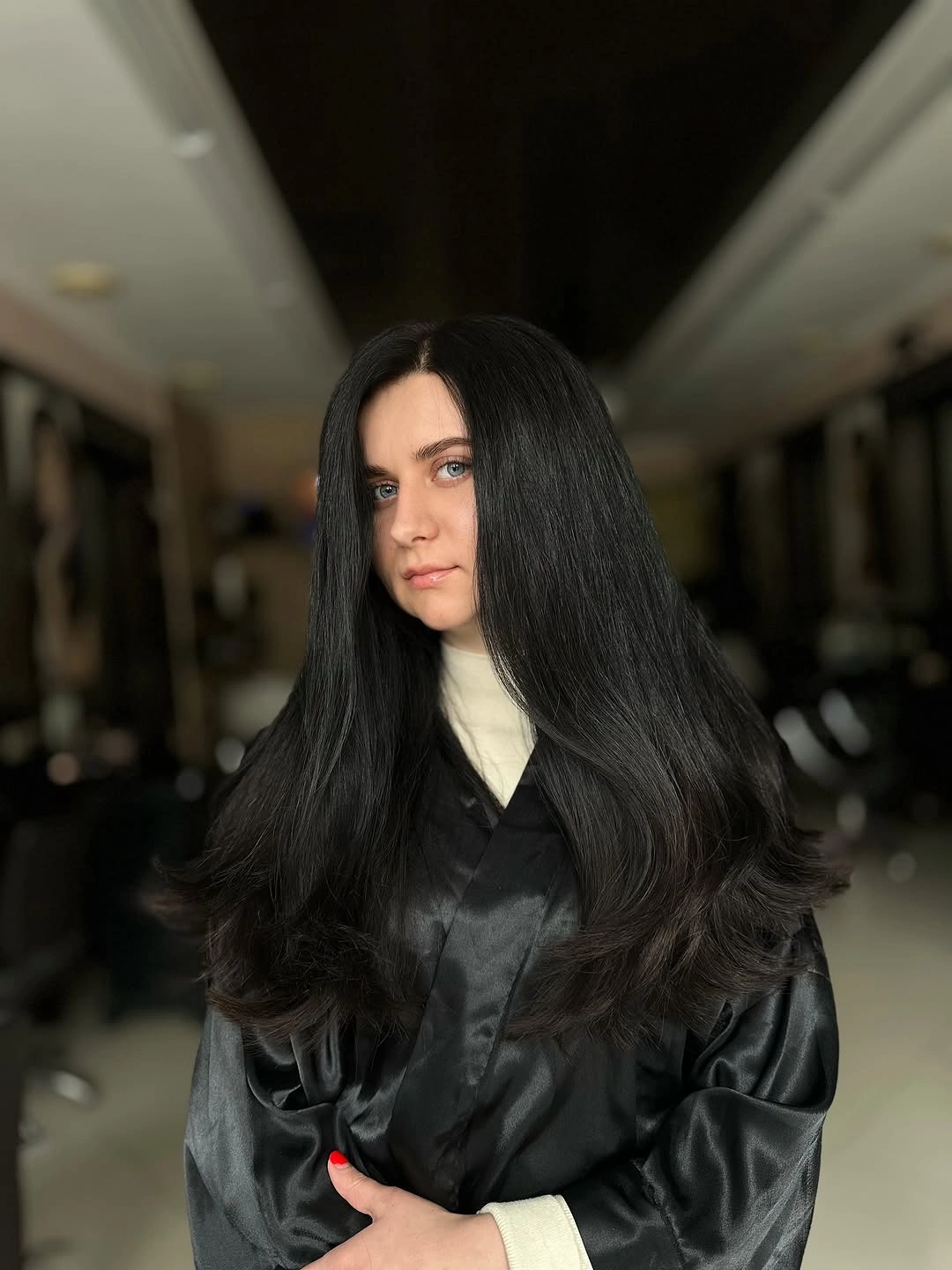
Near the lower portion, the layers fan outward in large curves that create width across the ends instead of around the crown. The longest sections still extend well down the torso, so the cut preserves its dramatic length while giving the bottom a fuller, more sculpted outline. The effect comes from where the shaping is concentrated, not from shortening the whole silhouette.
For anyone collecting long haircut inspiration, this photo is especially useful for seeing how fullness can be placed low rather than distributed evenly from crown to ends. The broad lower curves add width near the bottom while the upper length stays comparatively sleek, creating a strong contrast within the same very long silhouette.
A Quiet Bob Built on Clean Proportion
This light-brown bob ends around the jaw with a clean, compact perimeter and a smooth surface that keeps the cut easy to read. The part sits slightly off center, while one side is tucked behind the ear and the opposite front section remains forward. Those small shifts create a neat frame without introducing fringe or obvious internal layering.
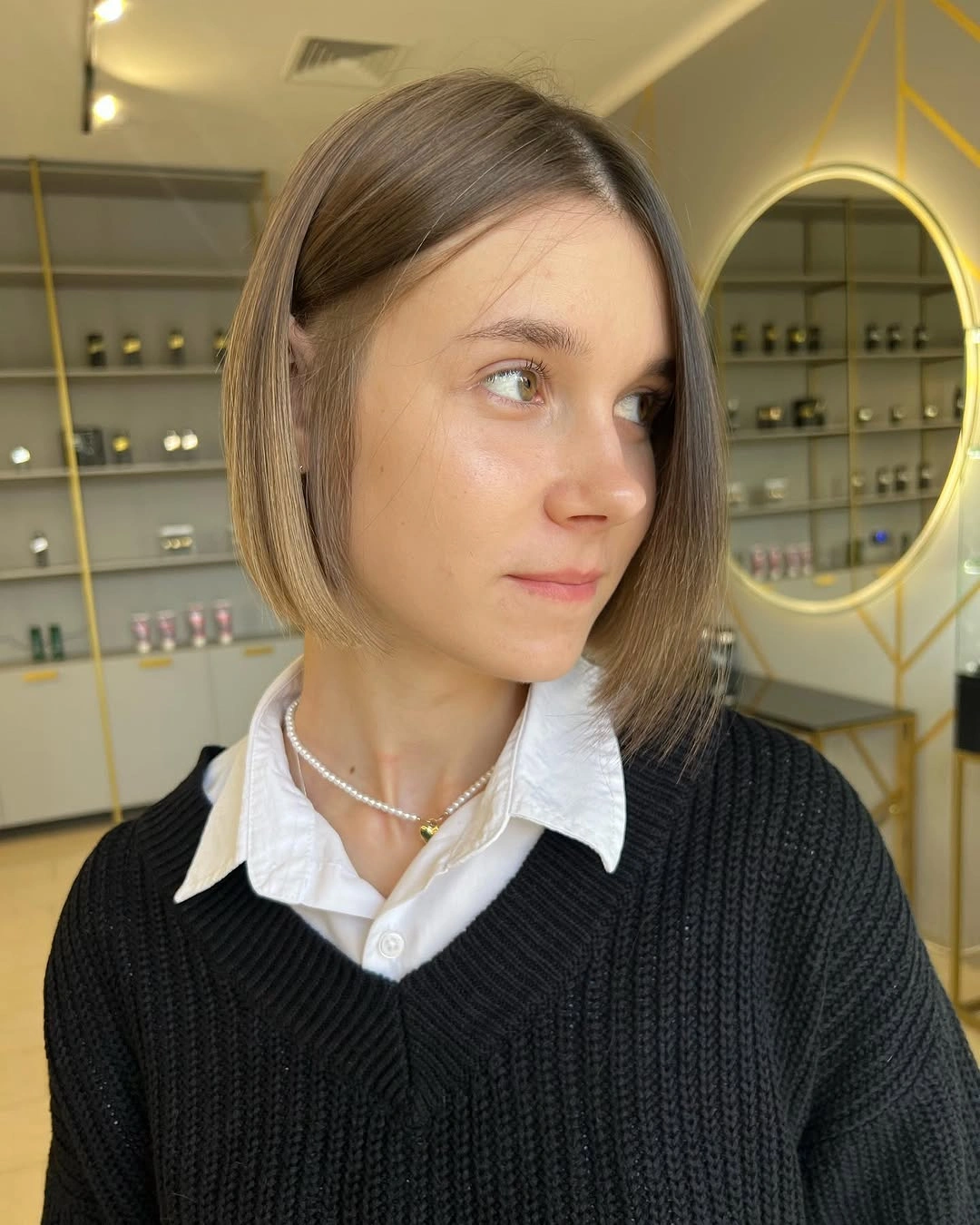
The tucked side exposes the side edge and the area around the ear, while the untucked section falls in a longer-looking diagonal toward the face. That contrast creates asymmetry through the way the bob is worn rather than through an obviously uneven perimeter. It is a subtle detail, but it changes how the same short length occupies each side of the face.
For restrained bob haircut ideas, proportion does most of the work here. The appeal lies in where the edge meets the jaw and how the front falls, showing that a short cut can feel distinctive without relying on heavy layering, fringe, or high-contrast color.