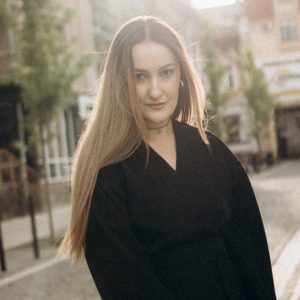
I keep seeing lavender hair in the chair next to mine. Not the cotton-candy pink of 2023, but something cooler, smokier, with roots that look intentional. It is a shift I did not expect, and honestly, it is making me rethink my next colour appointment.
This roundup has 32 ideas for Lavender Hair 2027, from a five-minute root touch-up to a full afternoon in the salon. There are options for fine hair that goes flat by 4 pm, for curly textures, and for anyone who wants a colour that fades gracefully instead of screaming for a toner at week three. I wrote this because I know what it is like to sit under heat for six hours and still wonder if the grow-out will be a nightmare.
Soft Ash Lavender Waves
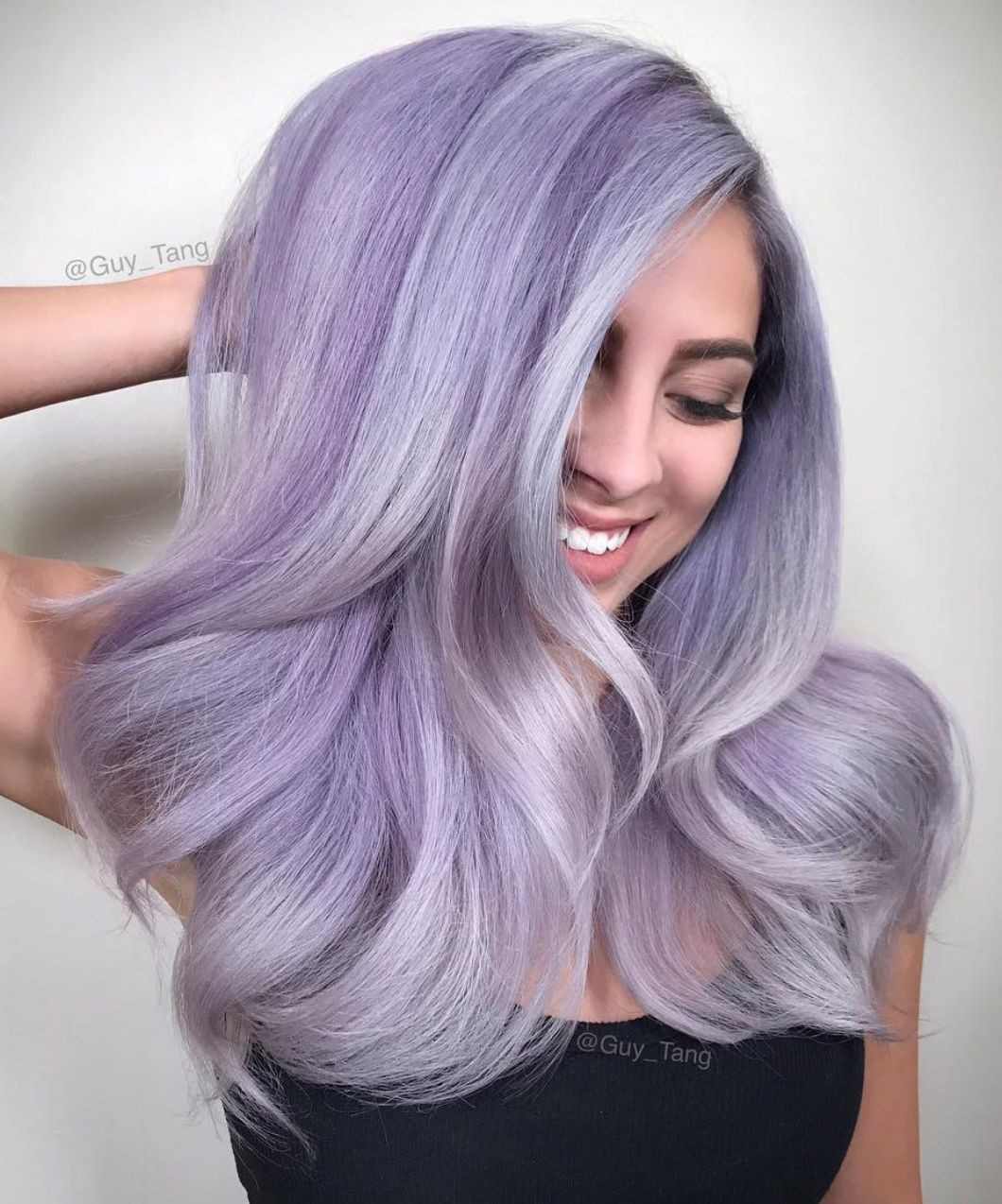
This is the kind of soft lavender hair that makes you stop scrolling. Thick mid-back waves, a middle part, no bangs — the ash undertones keep it from reading as a costume. The cut uses long layers that start below the shoulder, so the weight stays in the wave instead of collapsing into a triangle. Each bend catches a different shade of lavender, from pale violet to dusty grey. It is not a flat pastel. It is dimensional, and that is what saves it from looking like cotton candy.
Shoulder Length Ash Lavender With Blonde
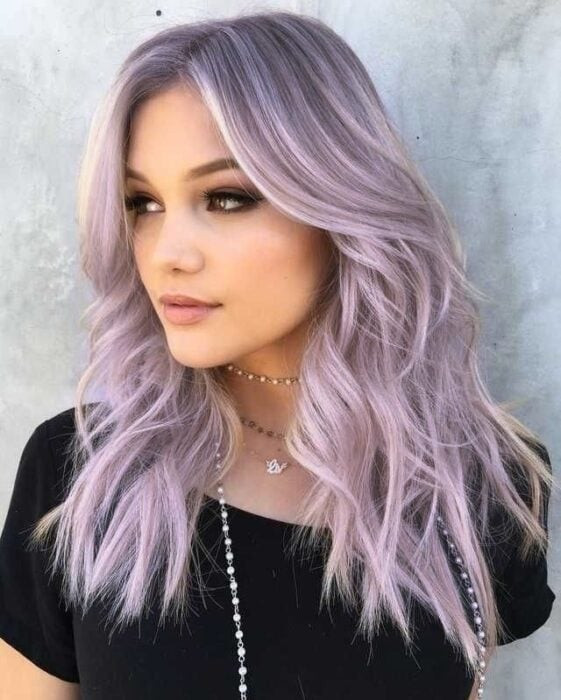
Can shoulder-length hair carry ash lavender highlights without looking busy? Yes, if the placement is deliberate. This cut sits at the collarbone with soft layers throughout, a side part and no bangs. The blonde highlights are concentrated around the face and at the ends, which lifts the lavender without bleaching the whole head to white. Medium density hair holds the wave without frizzing. On round and oval face shapes, the side part and face-framing layers add length and structure. The upkeep is a toner refresh every four weeks and a trim every eight — the blonde highlights will warm up faster than the lavender base.
Uniform Luminous Collarbone Lavender
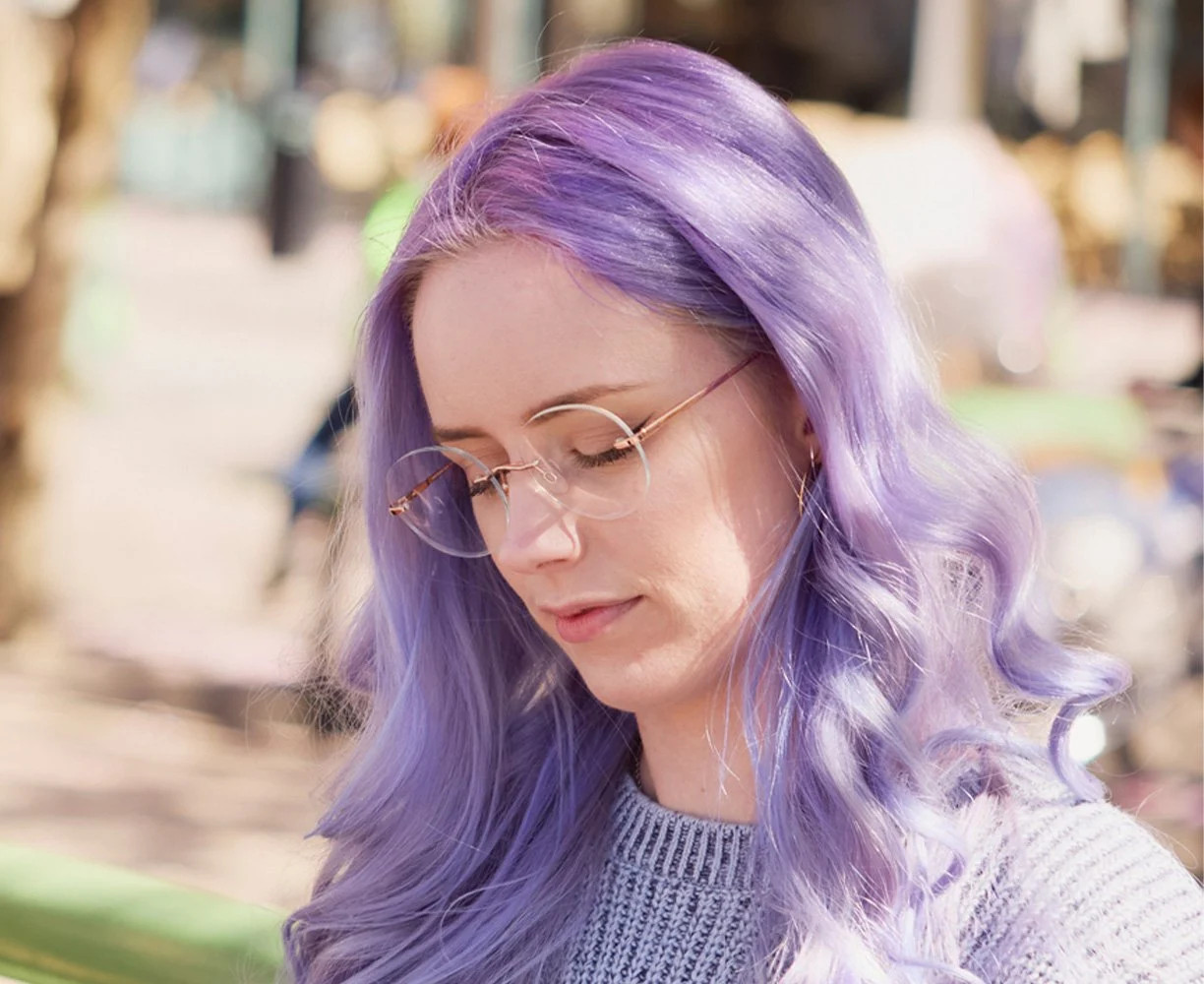
A collarbone cut with long layers, a middle part and no bangs — the wave is uniform, the colour is soft lavender, and the shine is the whole point. This is not a wash-and-wear colour. By day three the ends start to look thirsty, and by day five the lavender pulls slightly green if you skipped a toning wash. The styling fix is quick: run a flat iron with a slight curve at the ends, about seven minutes total. The collarbone length hits the sweet spot between practical and polished. It tucks behind ears, it stays out of coat zippers, and when the colour fades, the grow-out line is soft enough to stretch to six weeks.
Shoulder Length Lavender And Grey Blend
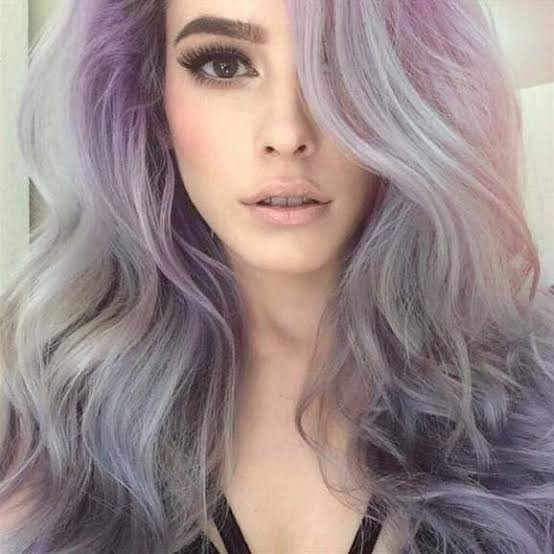
I will admit I was skeptical about lavender grey hair. It sounded like a filter. But this shoulder-length cut with layers, a side part and no bangs proves the technique works. The grey is the base, the lavender is woven in as a second tone, and the two colours sit in the same strand instead of fighting each other. The result is metallic, not muddy. On shoulder-length wavy hair, the multi-tonal blend reads as texture even when the wave drops. It works best in winter light — the grey catches cool daylight, the lavender catches warm indoor lamps. A sea salt spray scrunched into damp hair and diffused on low heat keeps the separation visible.
Muted Ash Lavender Back View
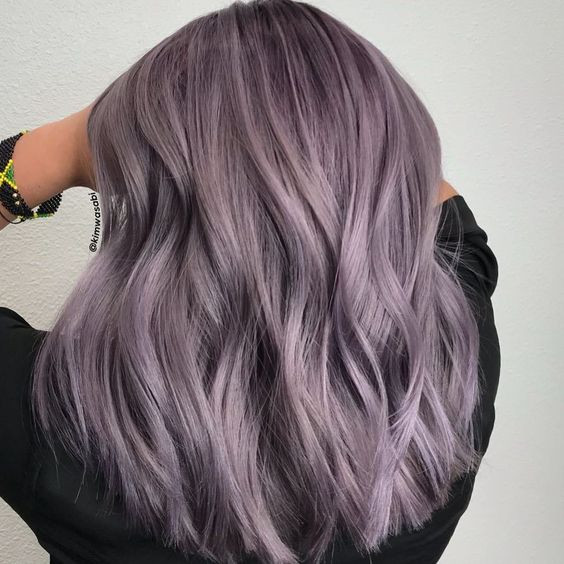
Standard flat pastel dyes sit on top of the hair. This one lives inside it. The back view shows long layers falling in ash lavender waves, with lighter lavender highlights placed where the light naturally hits — the mid-lengths and the ends. No bangs, a middle part, shoulder length. The difference is in the depth. A flat pastel reads as one solid block from behind. This reads as movement, because the highlights are painted on the surface of each layer, not soaked through the whole strand. The upkeep is a toner every three weeks and a trim every ten. The lighter highlights will fade first, but the ash base keeps the grow-out soft.
Smoky Lavender With Dark Roots
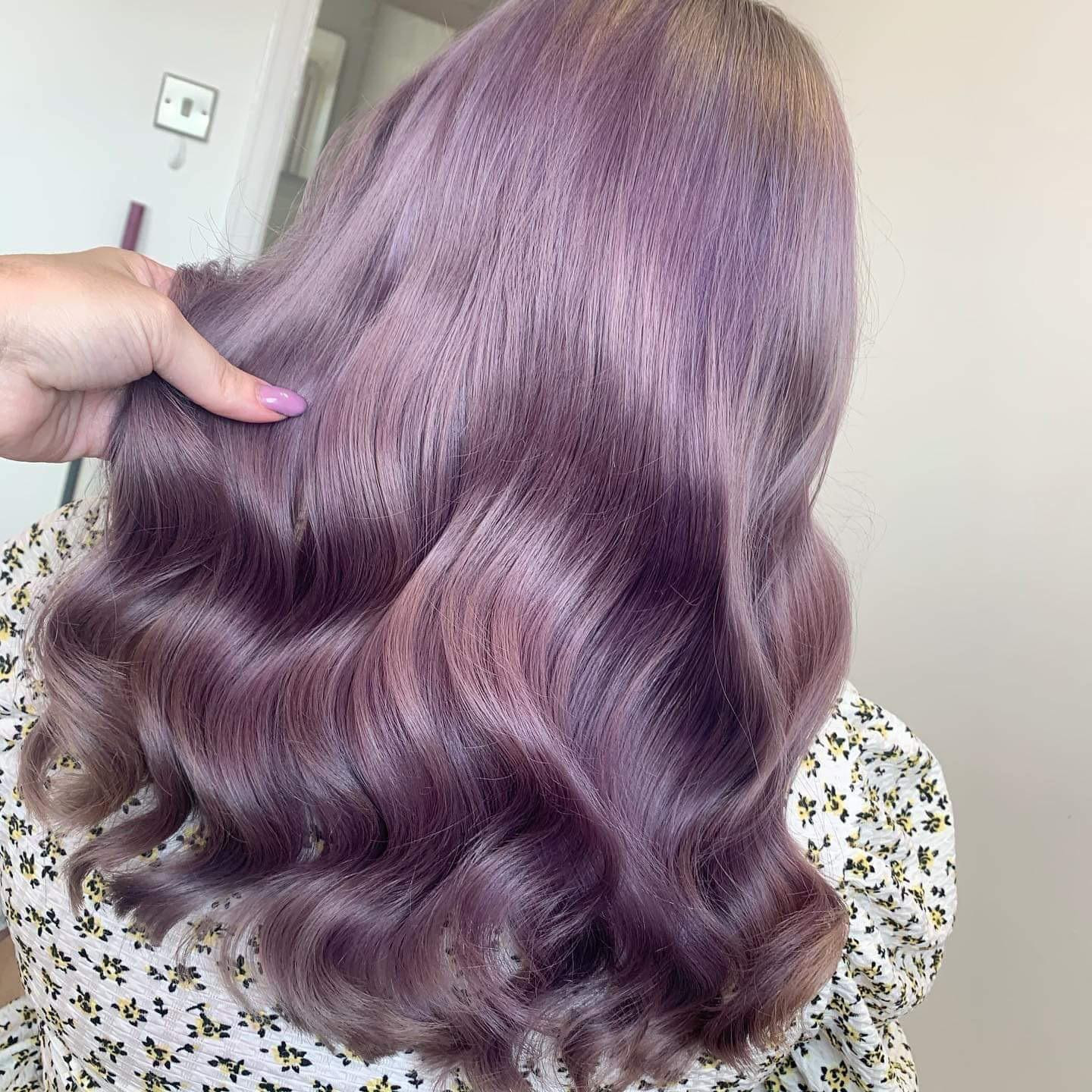
The 2027 take on lavender hair is a blunt cut that stops at the collarbone. Mine landed right at the hollow of my throat, and the line is doing all the work. No layers, no softness, just one clean edge that makes fine hair look twice as thick. It reads sharp in a way that surprises me. The colour keeps it from feeling severe, that pale lavender reads cool against warm skin, so the whole thing softens without a single face-framing piece.
Here is the reality: this cut needs a trim every six weeks or the blunt line starts to split. My hair is fine and straight, and it still held its shape until about 4 pm, which is more than I can say for most cuts. The grow-out is not the nightmare people warn about. The line stays clean for a month, then it softens into a lob you did not ask for. Book it. This is not a bathroom-mirror job.
Pale Lavender With Ash Blonde
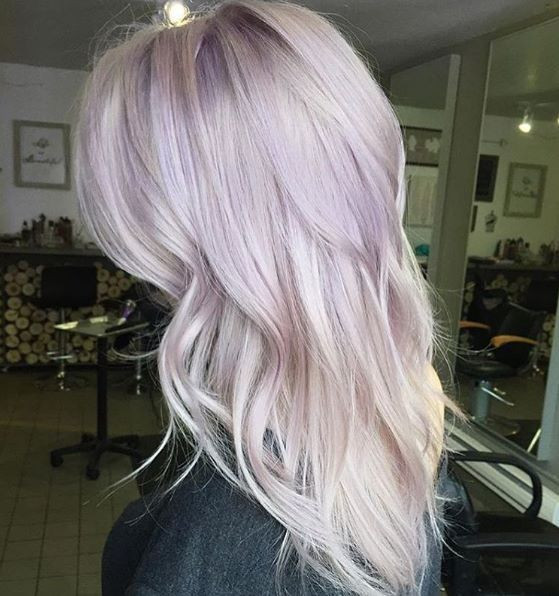
My first reaction was that this can’t be real hair. Pale lavender with ash blonde undertones, mid-back length, long layers, no bangs, a middle part, loose waves on fine to medium density. It looks like a filter, but it’s not. The ash blonde undertones are what make it work on fine hair. Pure pale lavender on fine strands reads chalky by the second wash. The ash neutralizes the yellow that fine hair pulls when lifted to pale. The long layers are cut to move without losing volume, so the wave pattern stays open and soft. A lightweight volumizing spray at the roots before blow-drying, then curls away from the face with a 1.25-inch iron, finger-combed immediately. That’s the routine. The fine texture means the colour fades faster than on coarse hair. Expect a toning visit at week four if you want to keep the pale from going grey.
Uniform Thick Pale Lavender Waves
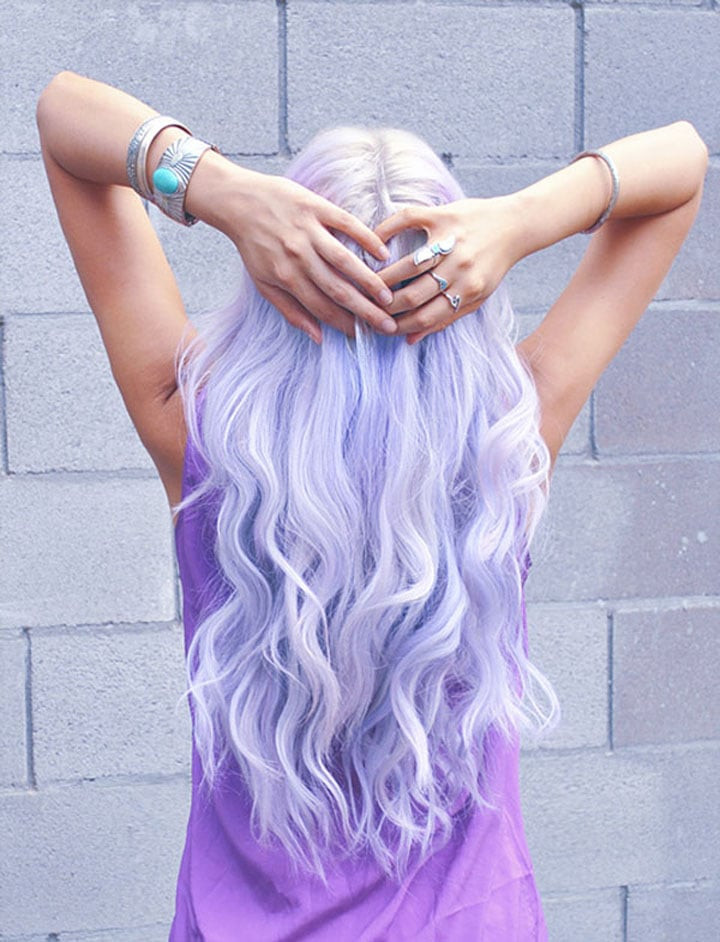
Is this your hair type or are you just scrolling? If you have thick, wavy hair and you want uniform pale lavender, this is the one. Mid-back length, layers cut to stack through the mid-section, no bangs, a middle part, loose waves that hold their shape because the density is there. The uniform pale lavender colour works on thick hair because the pigment has enough mass to read evenly. On fine hair, the same shade looks patchy by day two. The layers are cut to prevent the weight from pulling the wave pattern straight. A rich hydrating mask once a week keeps the cuticle smooth enough to reflect light. Blow dry with a paddle brush, then set large sections on jumbo velcro rollers for the bend. The honest downside: thick hair takes twice the product to lift to pale lavender. Expect a full day in the salon, not a half day. The uniform colour shows every root millimeter at week three. Book a root shadow or accept the stripe.
Skip if you wash your hair daily. The pale lavender will be gone by week two. Thick hair holds colour longer than fine, but daily washing strips the toner fast. A dry shampoo stretch between washes is not optional here.
Curly Chin Length Grey Lavender Bob
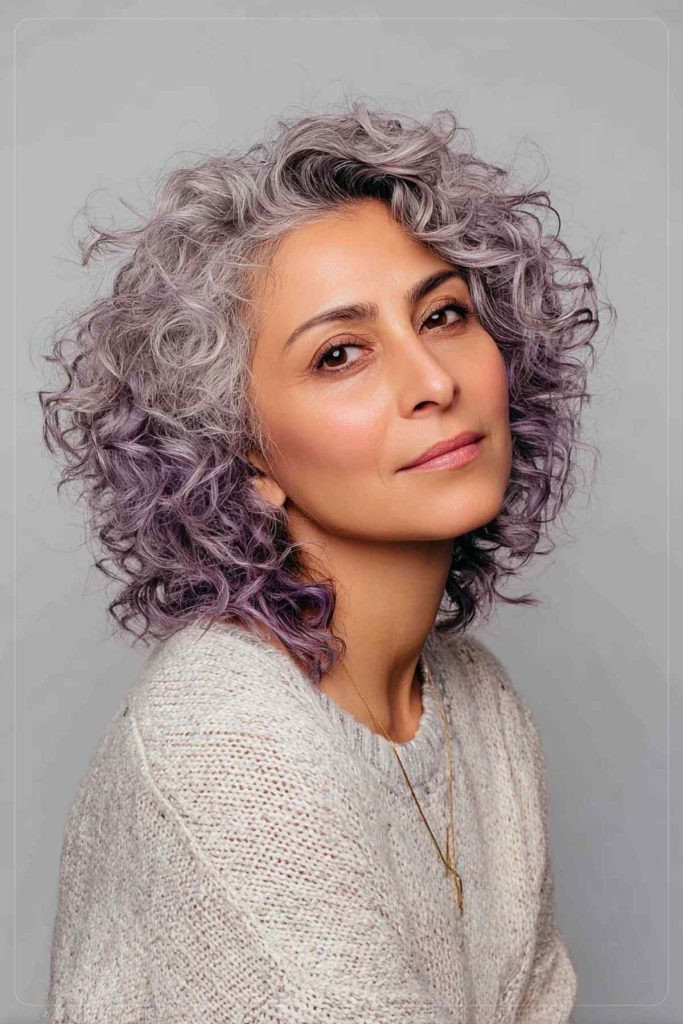
I noticed something about this bob that most chin-length cuts don’t do. The curls sit at chin length, no bangs, a side part, grey with lavender tones woven through. The bob cut is blunt at the baseline, which gives the curls a rounded shape instead of the triangle that layered bobs can create on thick curly hair. The grey lavender tone is not uniform. The lavender reads as a subtle shift in the curl pattern’s light areas, not a solid colour. That matters because solid lavender on curly hair can look like a costume. The upkeep is real. Curly hair at chin length needs a trim every six weeks to keep the shape from growing into a shag. The grey lavender tone needs a purple shampoo once a week to keep the lavender from pulling yellow. A curl activator cream applied to soaking wet hair, scrunched upward with a microfiber towel, diffused on medium heat until 90 percent dry. That’s the routine. The tone lasts about four weeks before it starts fading to silver.
Polished Pastel Blowout Layers
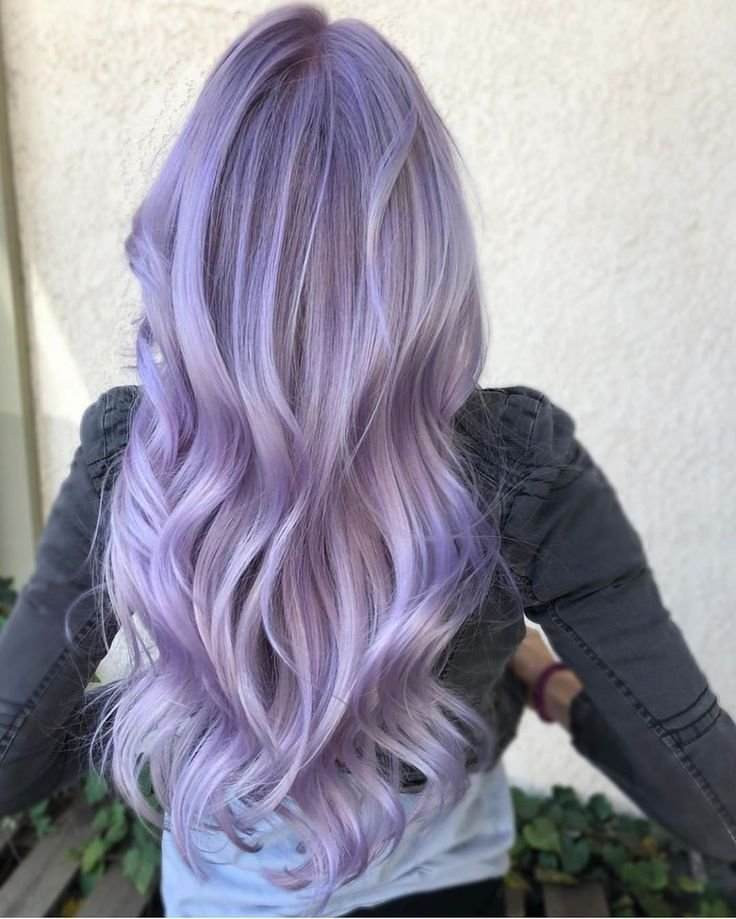
I will admit I was skeptical about pastel lavender on fine hair. Then I saw the back view of this blowout. Mid-back length, layers cut to stack through the mid-section, no bangs, lavender with lighter lavender highlights woven through the mid-lengths and ends. The fine texture is what makes the blowout work. Fine hair holds a blowout shape longer than coarse because the strands are light enough to stay in the curl set. The layers are cut to create movement without removing density, so the blowout has body instead of hanging flat. The lighter lavender highlights are placed on the top layers to catch the light. A large round ceramic brush, rolling each section under at the ends, then a glossy finishing spray for shine. That’s the technique. The pastel lavender colour on fine hair fades faster than on medium density. Expect a toning visit at week three. A root shadow at the bowl keeps the grow-out line soft when the pastel starts pulling white at the roots.
Mid-Back Waves With Curtain Bangs
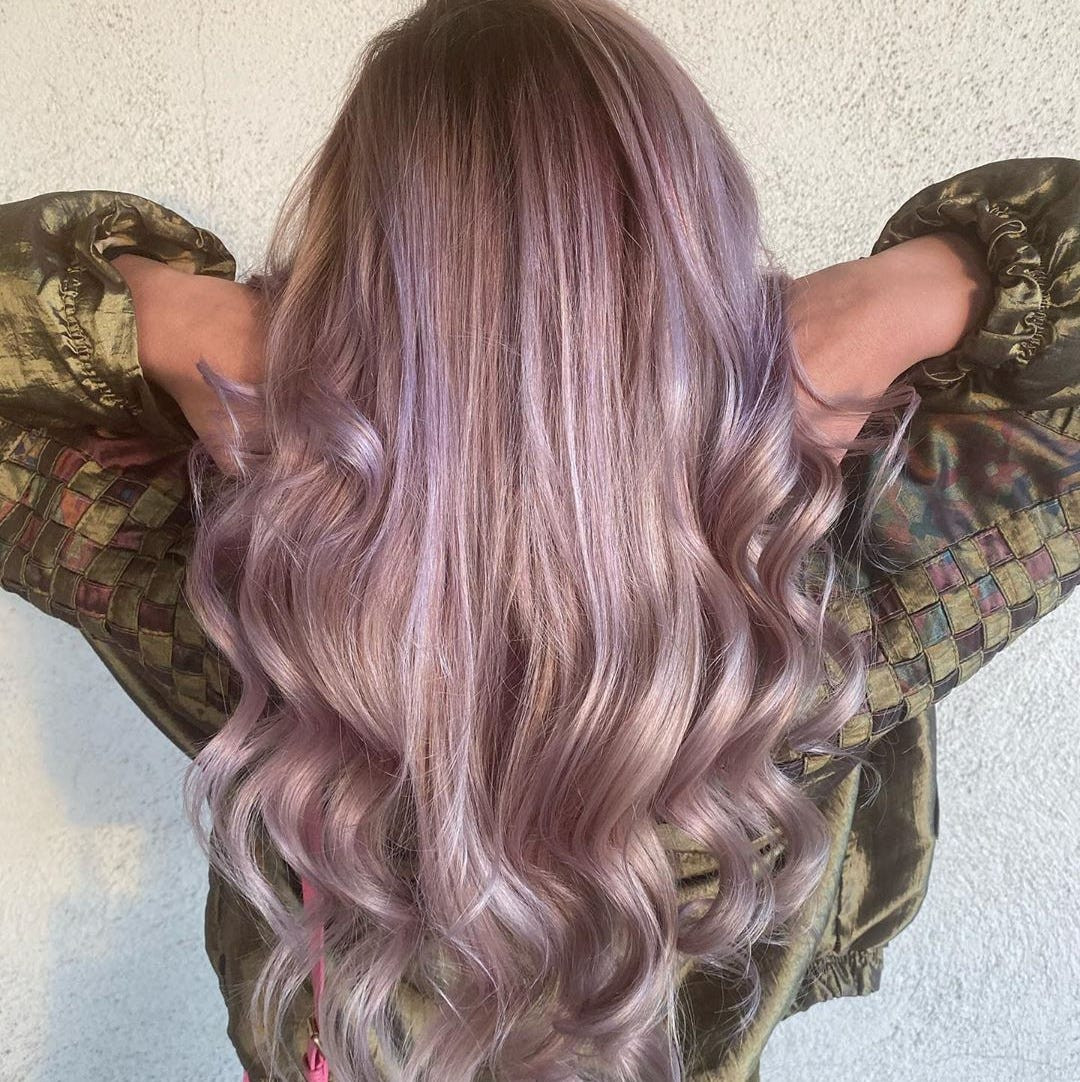
Curtain bangs win this one, and it’s not close. On thick, wavy mid-back hair, lavender with curtain bangs gives the whole cut a soft, romantic movement that a plain middle part just can’t match. The long layers keep the weight from dragging the waves flat, while the bangs frame the face without committing to full fringe territory. Middle part, back and side view, the bangs sweep outward and blend into the layers, so you get that flowing, touchable look that reads as effortless, though it isn’t. Set them on a velcro roller while your makeup sets, then diffuse the rest. That’s the whole trick.
Natural Grey To Vibrant Purple Ends
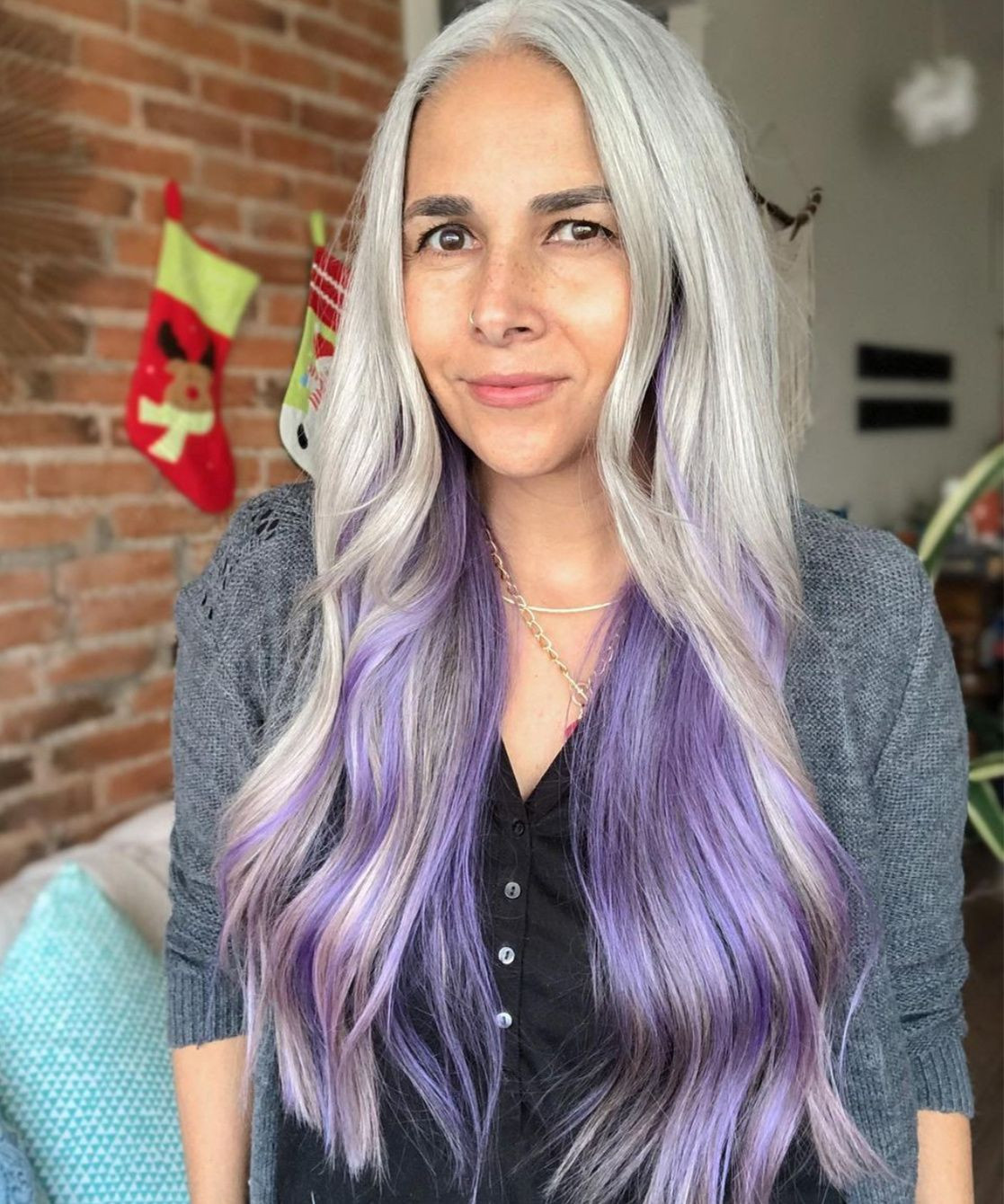
So you’ve got grey roots and you’re eyeing vibrant lavender ends. I get the appeal, the contrast is striking, but let’s talk about the reality of doing this at home.
That grey base is not a blank canvas. It’s porous, it grabs colour unevenly, and if you try to slap purple on the ends yourself, you’ll likely end up with blotchy patches and a line where the grey meets the violet. This is a salon job, full stop. A stylist will place the lavender and purple highlights so they melt into the grey, not fight it. Mid-back, long layers, no bangs, thick wavy texture, the grey reads as silver and the ends pop like they were born that way. Book the appointment, don’t DIY this one.
Pastel Lavender Balayage On Dark Base
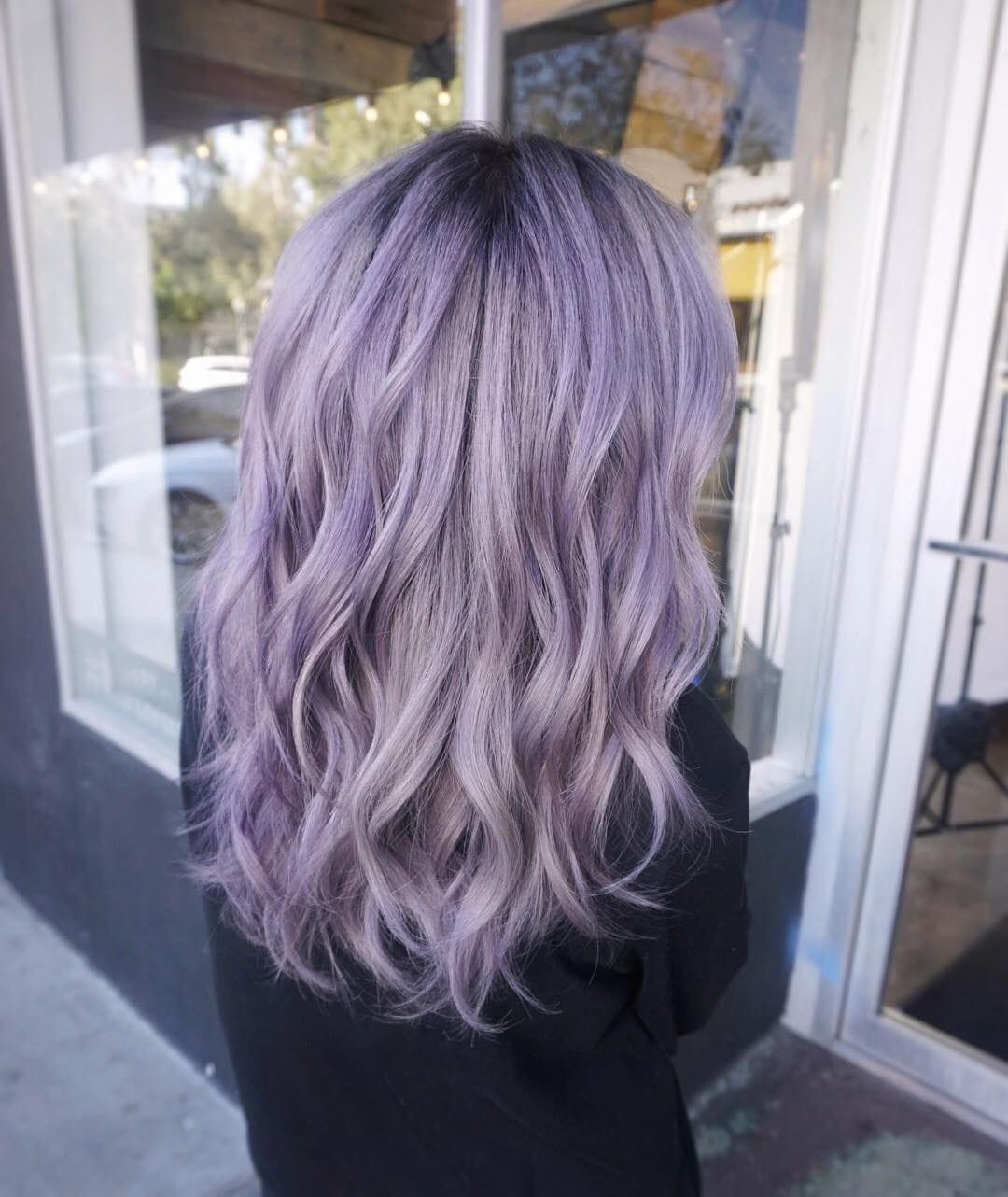
This is what balayage is supposed to look like when it’s done right. Pastel lavender balayage over a darker base, mid-back, long layers, no bangs, and the whole thing reads as one seamless wash of colour instead of a stripe. On medium-density wavy hair, the dark base gives the pastel something to hold onto, so the lavender doesn’t wash out to nothing. The dimension is the point, the dark peeks through the waves and keeps the pastel from going flat. Wear it loose, let it move, and it’ll stay looking fresh for a good few weeks before the roots start to show.
Dark Brown To Vibrant Purple Ombre
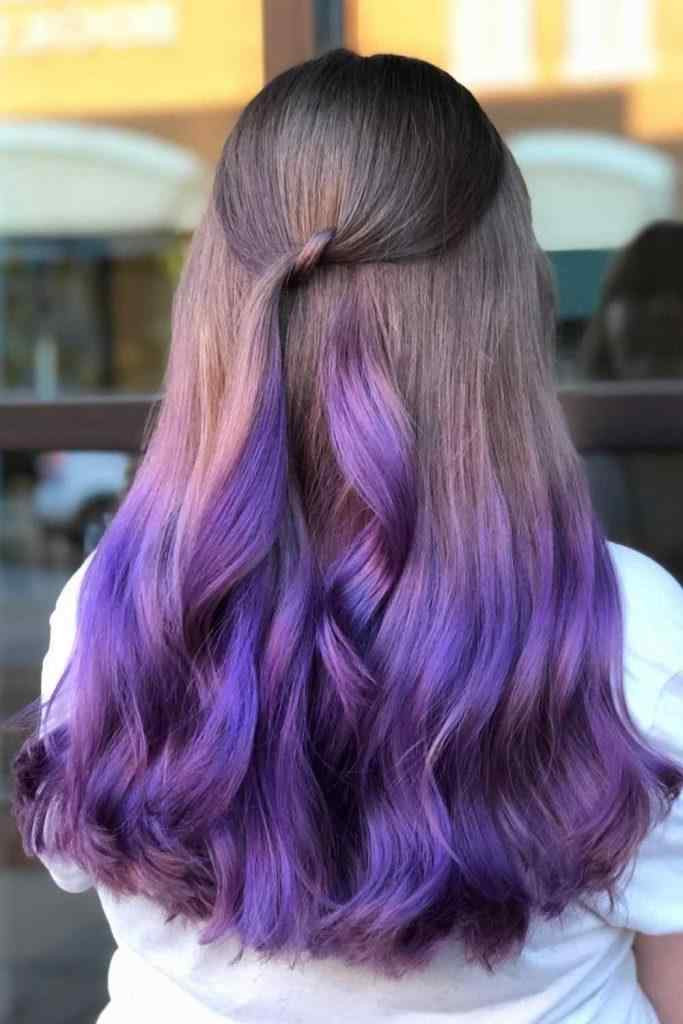
Are you ready for a colour that announces you from across the room? Dark brown to vibrant purple ombre is that colour, but it’s not for everyone.
If your skin has warm undertones, the purple will fight it, you’ll look washed out instead of bold. Cool undertones, you’re in luck, the violet picks up the cool and makes it sing. And your hair has to be healthy enough to take the lightening, because going from dark brown to that bright purple means bleach, no way around it. Mid-back, wavy, medium density, long layers, no bangs, the ombre lands the purple at the ends so the dark roots keep the grow-out looking intentional. But if your ends are already split or over-processed, skip it, the bleach will make it worse.
Collarbone Dark Base Bright Purple Ends
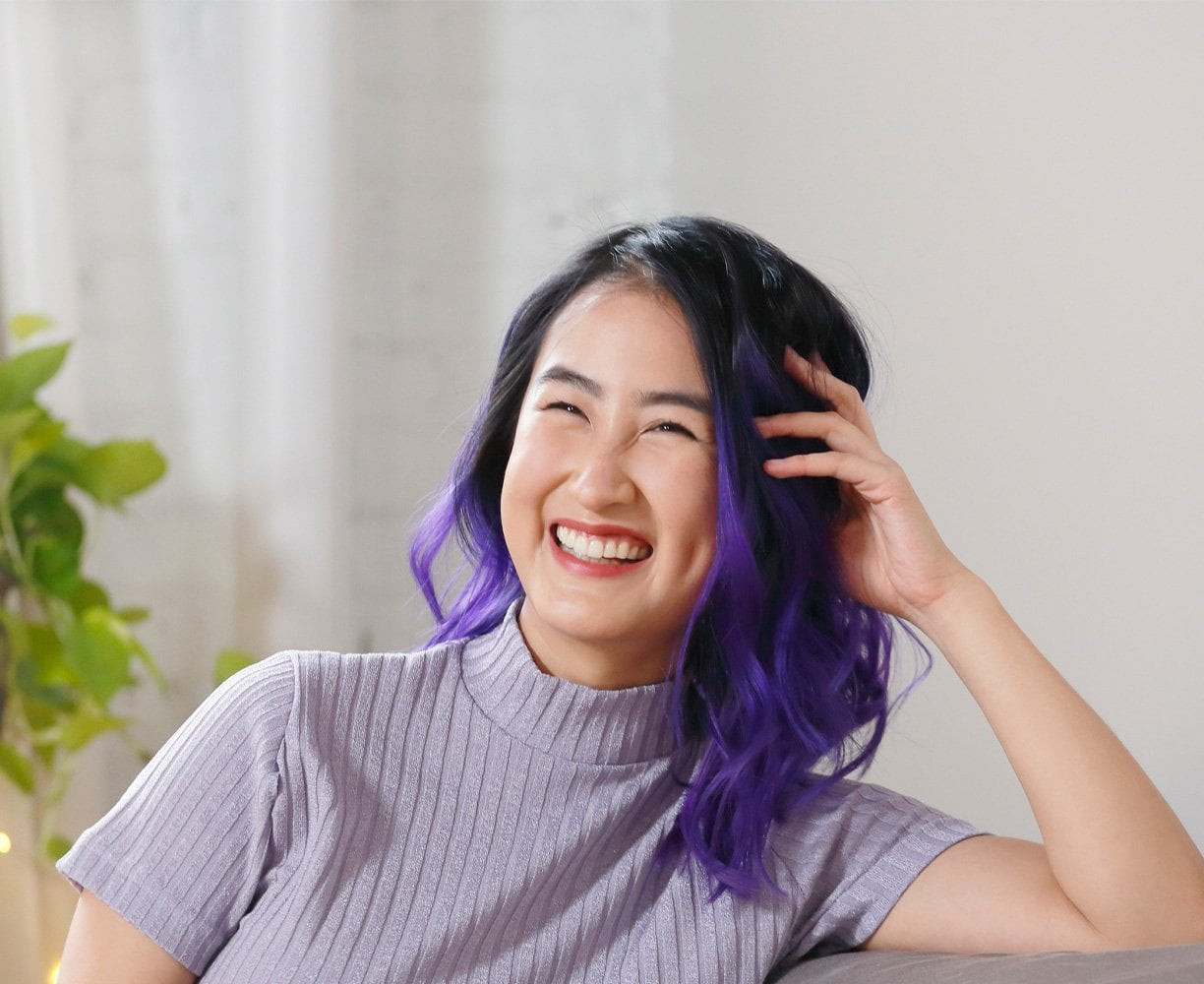
Collarbone length, dark base, bright purple ends, and the grow-out is the real story here. With layers and no bangs, the purple sits at the bottom, so as your hair grows, the dark base just gets longer and the purple stays put at the ends. It’s the rare colour that actually looks better at week six than week one, because the roots blend into the dark base instead of showing a harsh line. Medium-density wavy texture keeps the ends from looking thin, and the compact length means the purple doesn’t take over the whole head. It’s punchy, it’s contained, and it’s the most forgiving purple I’ve seen.
Collarbone Vibrant Lavender Blowout
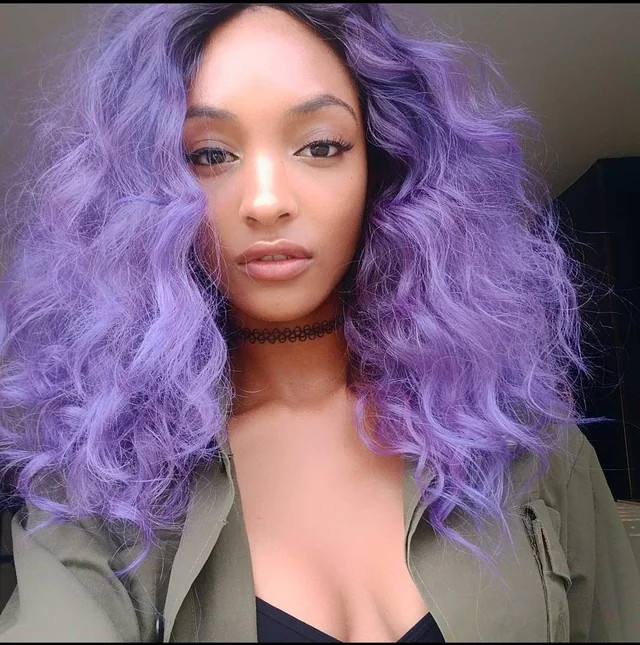
I have a confession: I thought root shadow was a crutch for people who skip appointments. Then I saw this collarbone blowout on thick, wavy hair and changed my mind. The cut uses layers that start around the chin, which keeps the weight off the ends so the volume holds past noon. No bangs here, just a middle part that lets the vibrant lavender hair do the work. The root shadow is not a fade into nothing, it is a deliberate darker base that sits about an inch deep, and on thick hair that is the difference between a root that blends and a root that announces itself at week four.
The blowout technique matters too. A round brush at a 90-degree angle lifts the root without pulling the wave out, and on collarbone length that is enough to make the layers stack instead of collapse. I would not try the root shadow at home, the placement needs to hit that inch of regrowth zone exactly or it reads as grown out, not intentional.
Split Dye Deep Purple And Pastel Lavender
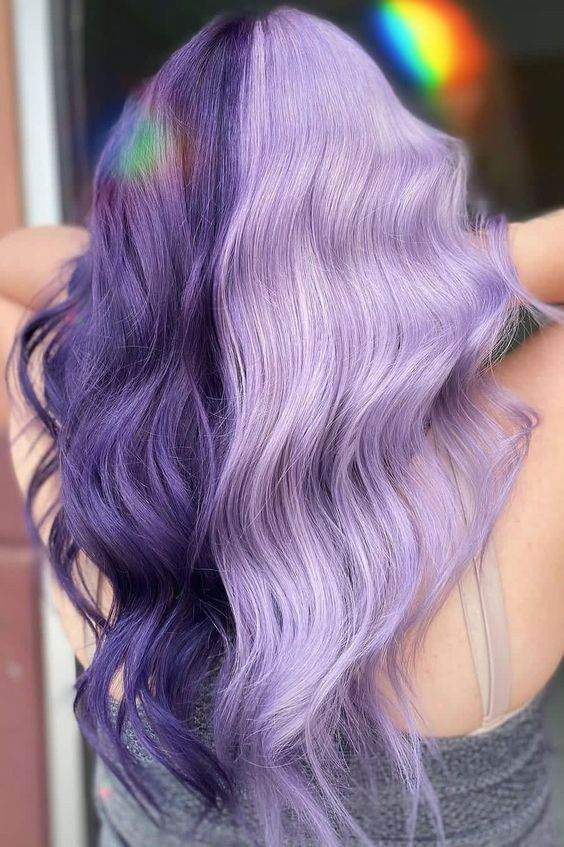
Best grow-out in this roundup. Split dye hair does not fade evenly, and that is actually the point. The deep purple half stays dark for weeks while the pastel lavender side washes out faster, but because they are separate colours the contrast just shifts instead of looking patchy. Mid-back length with long layers keeps the weight down so the waves hold their shape, and no bangs means the middle part lands clean. Medium density wavy texture works best here, fine hair might show the parting line too much. The upkeep is different from standard pastel, you wash each side separately if you want to keep the purple from bleeding, and that is a real commitment.
Rich Lavender Base Dark Undertones
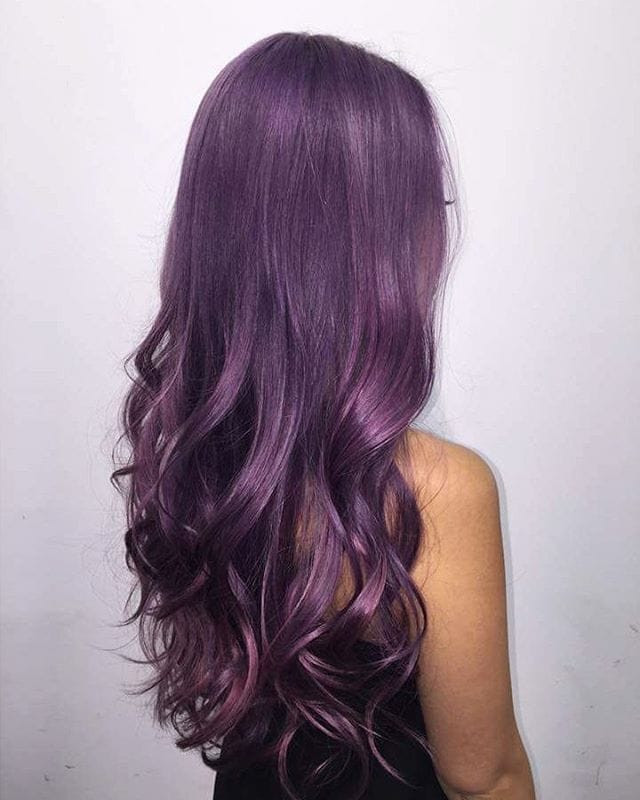
You walk into the salon and say “lavender base with darker undertones” and the stylist nods like that means something specific. I am still not sure it does. The idea is a mid-back cut with long layers, no bangs, middle part, loose waves on medium density hair. The colour is a rich lavender hair that has a second, darker lavender tone woven underneath, visible when the light hits the wave from the side. It is a salon job, no question, because two lavender tones that close in value need a colourist who can keep them separate. I booked this twice in one season. The first time the undertones blended into the base by week two, the second time a different stylist kept them distinct for six weeks. Worth finding the right person, worth the appointment.
Visual Idea
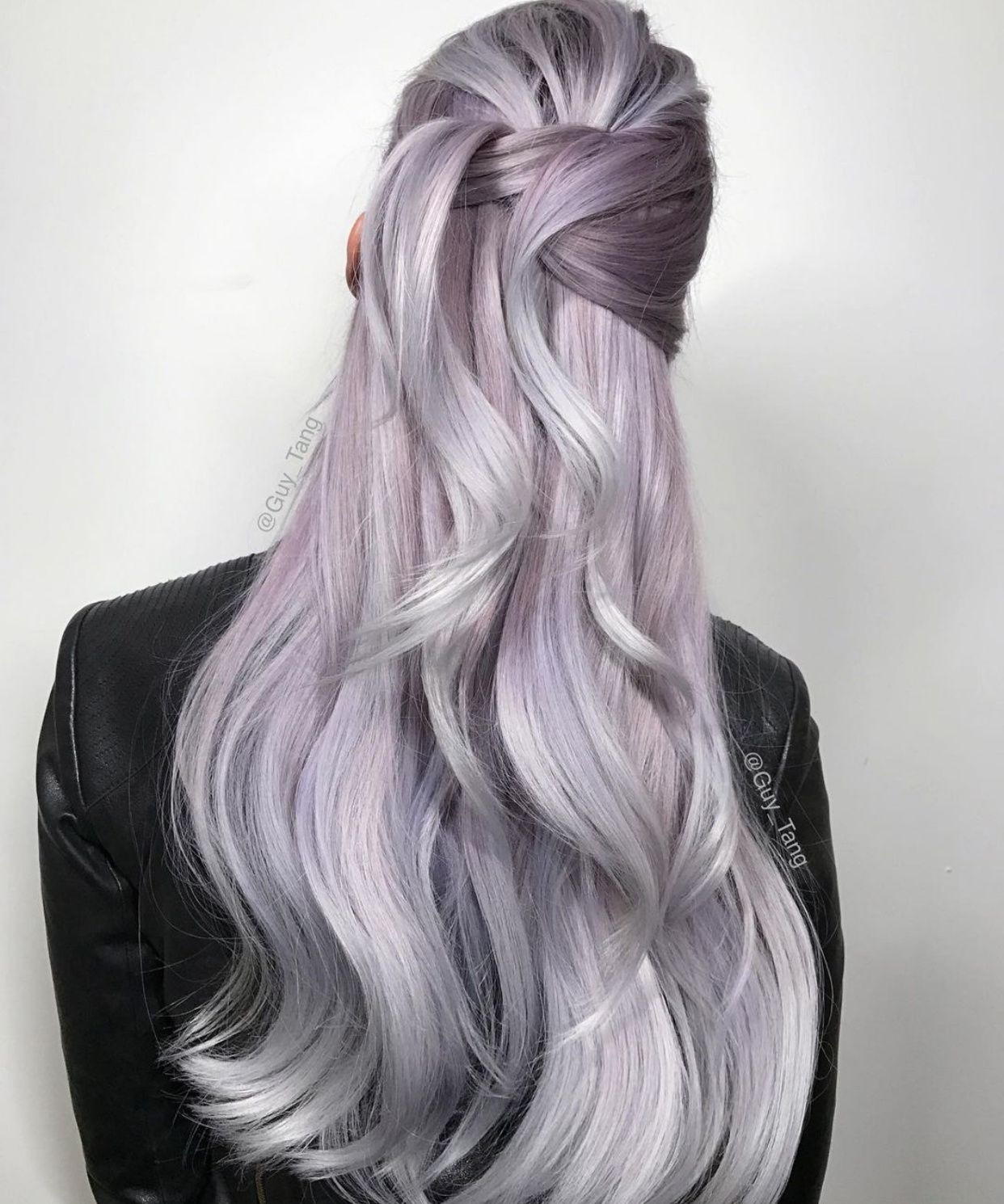
Gut reaction: this is the most wearable version of the lavender silver hair trend I have seen. The updo at the crown pulls the fine texture up so the roots have lift, then the loose waves below show the colour blend. Long layers, no bangs, middle part, mid-back length. The silver reads cool against the lavender, not ashy or flat, and the darker roots at the base keep the whole thing from looking washed out. Fine to medium density hair needs that root depth or the silver takes over. The twist at the crown is not complicated, it is a simple pinning job that takes two minutes, but the colour placement has to be right first or the twist just looks like a bun on faded hair.
Collarbone Visual Idea
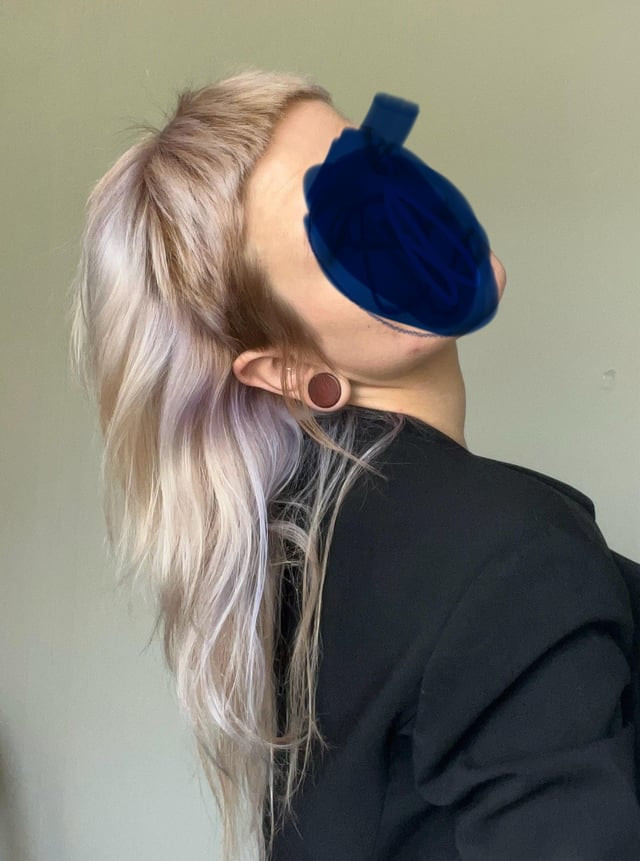
Does your hair fall flat by noon? Then look at this collarbone shag with curtain bangs and subtle lavender highlights on ash blonde. The shag layers start short around the ears and stack down, which gives fine to medium density hair the volume it cannot generate on its own. Curtain bangs frame the face without committing to a full fringe, and they grow out gracefully because they are built into the shortest layer. The lavender highlights are subtle, just a few face-framing pieces and some scattered through the mid-lengths, so the grow-out is gentle. Honest downside: the shag needs a trim every six to eight weeks or the layers lose their shape and the whole thing goes flat. Fine hair especially, you will see the difference at week seven.
Muted Lavender Visual Idea
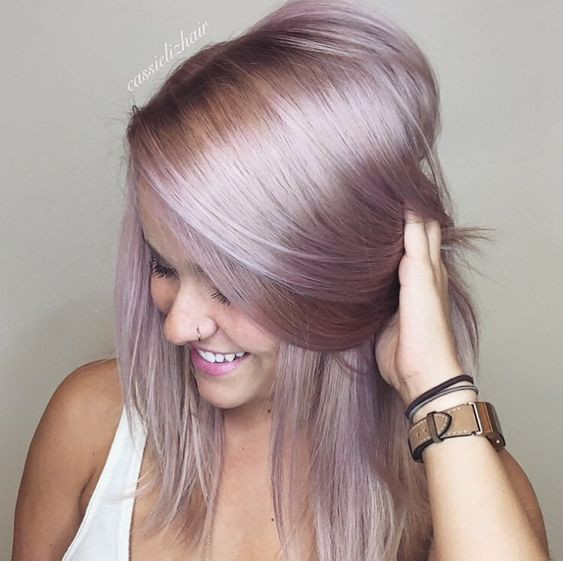
That muted lavender reads like a neutral, which is rare for a pastel. Fine, straight hair at collarbone length with side-swept bangs needs daily attention. I reach for a flat iron every morning, because the layers drop flat by noon if I air-dry. The side-swept bangs separate into two pieces by 3 pm unless I hit them with a quick blast of heat. It is a collarbone length lavender that asks for a round brush and five extra minutes. I give it those minutes, because the colour earns them.
Chin Visual Idea
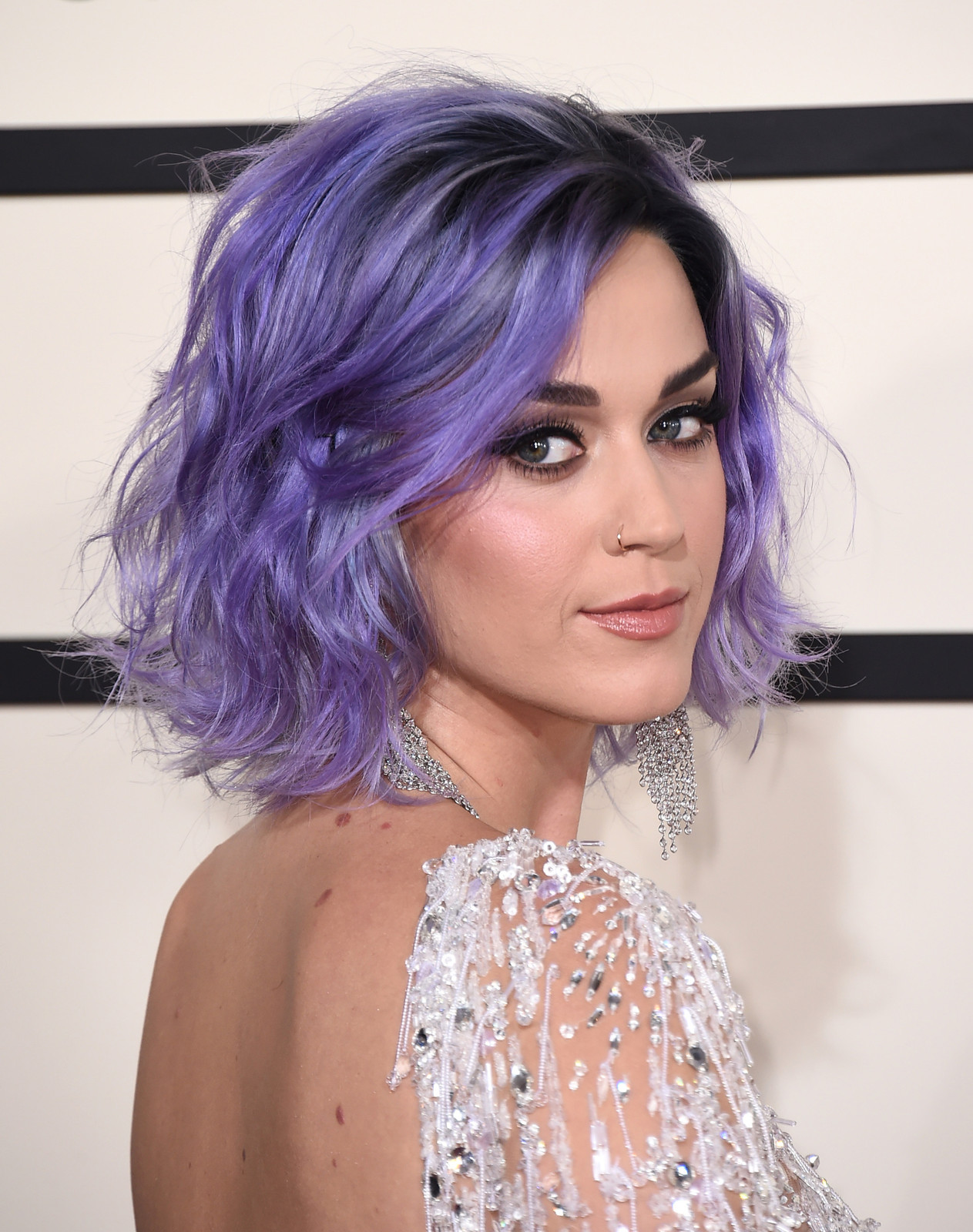
I told my stylist I wanted volume, not height. She gave me a chin-length long bob with side-swept bangs and layers cut into the interior. Thick, wavy texture takes a lob and makes it look like I have more hair than I do.
The trick is the cut. She point-cut the ends so the waves stack instead of fan out. Then she razored the side-swept bangs to blend into the longer layers. Vibrant lavender on thick hair needs that weight removal, or it sits like a helmet. I walk out with a lob that moves, and the colour catches every wave.
Ear Visual Idea
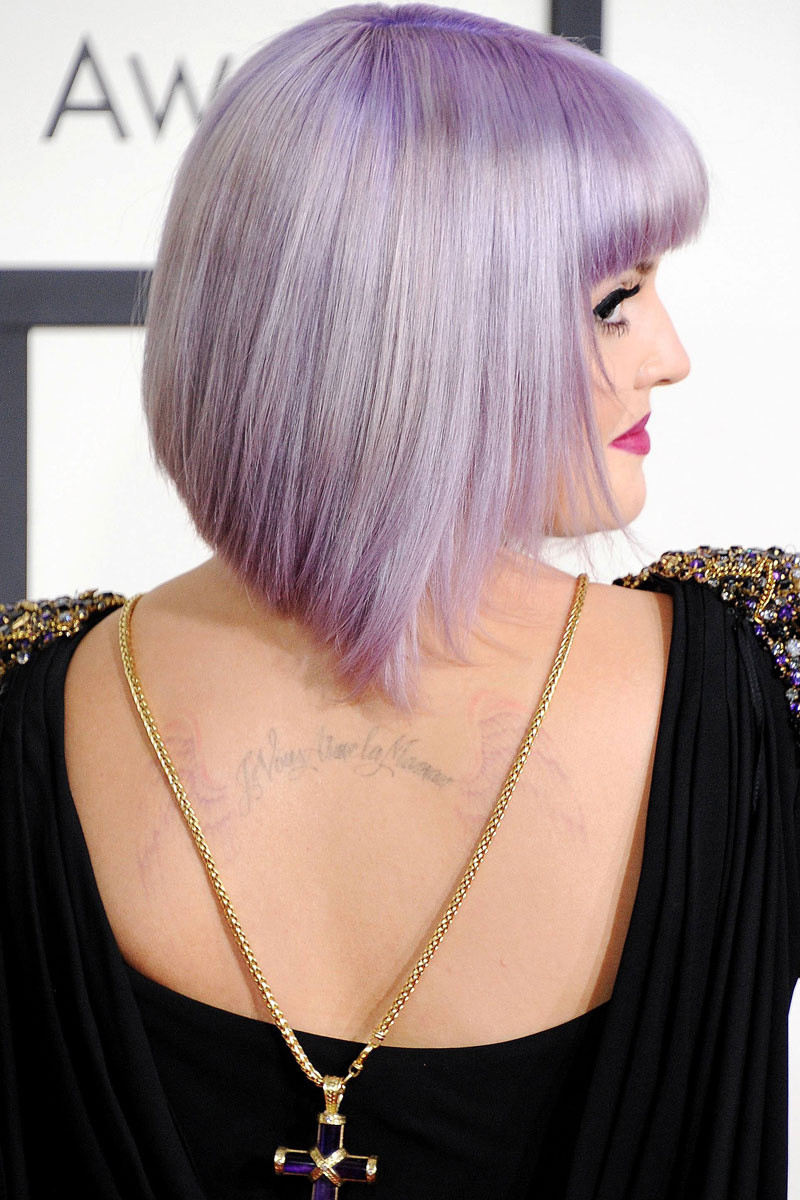
Blunt bangs at ear length are not for the hesitant. A pastel lavender bob cut straight across the bottom reads severe, intentional, and fast to style. Fine to medium density hair holds the shape because there is no weight to pull it down. Softer layered bobs at this length look romantic. This one looks like a decision. I prefer the decision. It takes three minutes with a flat iron and zero product. The pastel lavender does the rest.
Chin-Length Visual Idea
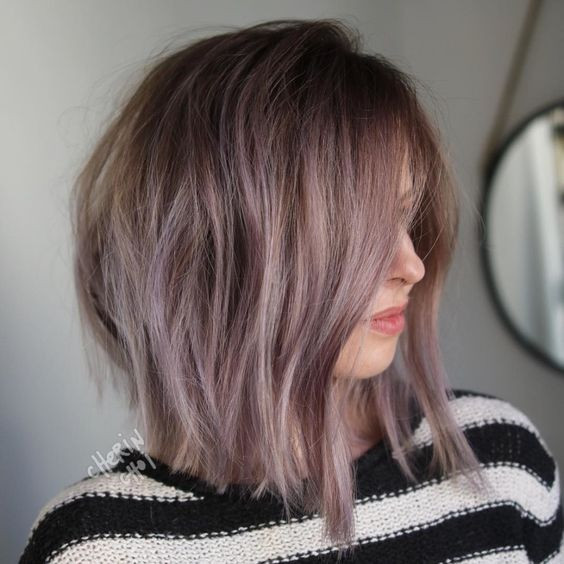
I sat in the chair and the stylist handed me a mirror. The choppy bangs hit above my eyebrows, the shag layers started at my cheekbones, and the ash lavender looked grey in the salon light. I said yes anyway.
Then I tried to style it at home. A chin-length shag with thick wavy hair and choppy bangs needs product — a texture spray, a diffuser, and ten minutes of scrunching. Without those, it looks like I wrestled a pillow. The ash lavender fades fast on unbleached ends, so I book a toner every six weeks. It is a salon cut and a salon colour. I do not attempt either at home.
Lavender With Subtle Blonde Highlights Visual Idea
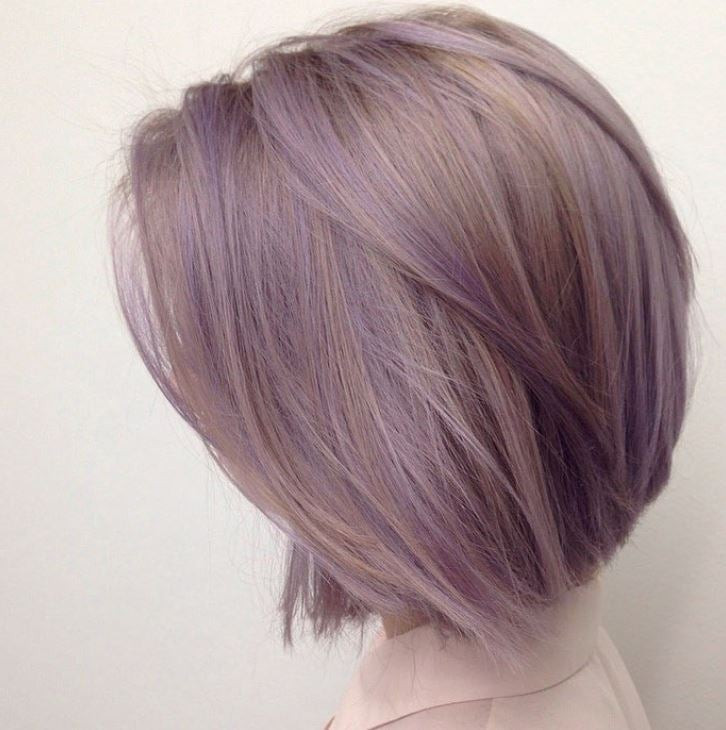
A chin-length bob with a sleek blowout and no bangs is the most honest haircut in this roundup. Fine, straight hair shows every line, so the blunt cut matters. The lavender with subtle blonde highlights adds dimension without texture. I run a round brush under the ends, one pass, done. No bangs means no midday separation. The colour does the work, the cut stays out of the way.
Lavender Visual Idea
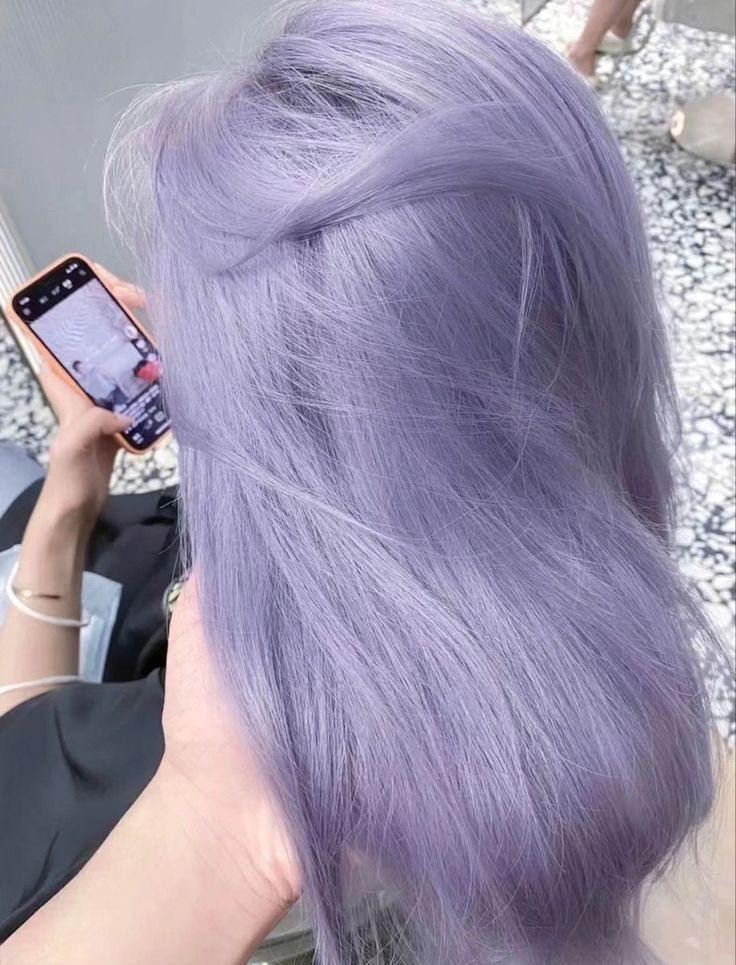
Who actually looks good in a straight, fine chin-length bob in lavender? People with narrow jawlines and low-density hair that needs the blunt line to read like a solid block of colour. The middle part pulls the eye down, which means a rounder face shape gets a longer, leaner line instead of a helmet. No bangs keeps the perimeter clean, and that matters because the lavender shade needs a crisp edge to look deliberate rather than faded. The honest downside is the grow-out: lavender fades fast on fine hair, and at chin length you see every quarter-inch of root inside three weeks.
Visual Idea — The Base Colour Is Dark Brown

That ombre transition from dark brown to lavender at the ends means the curls hold their shape longer than a single-process pastel would. The dark base hides the root line, so you get closer to six weeks before the grow-out becomes a conversation. The loose curls add volume that shoulder-length hair needs, but only if the layers are cut to support the curl pattern rather than fight it. Fine curly hair will drop the wave by midday if the stylist over-layers it.
Visual Idea — Almost White Ends
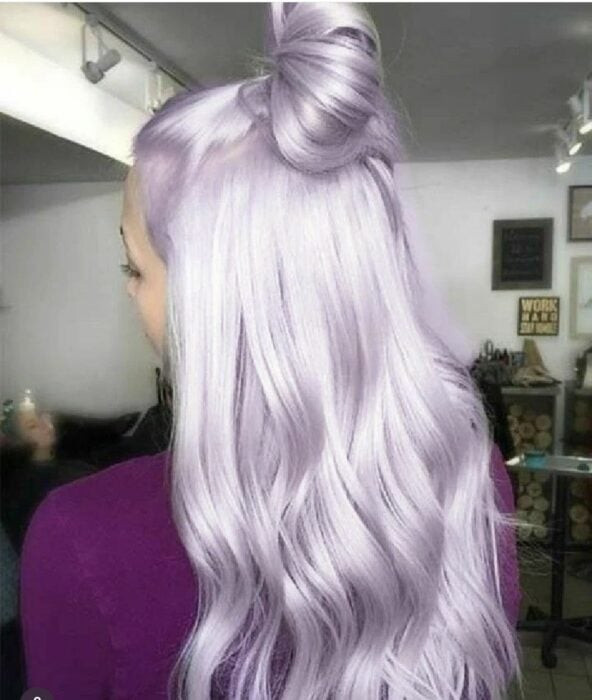
I will confess I did not expect to like the white-end thing on mid-back length hair. It looks like the colour ran out of pigment at the bottom, which sounds like a mistake until you see how the long layers catch the light. The pale lavender sits above the lighter ends, so the fade reads as intentional gradient rather than neglect. Getting that almost-white section requires lifting the ends to a very high level before toning, and that is a salon job. The layers need to be long enough that the light ends do not look like a separate haircut.
Light Lavender Visual Idea
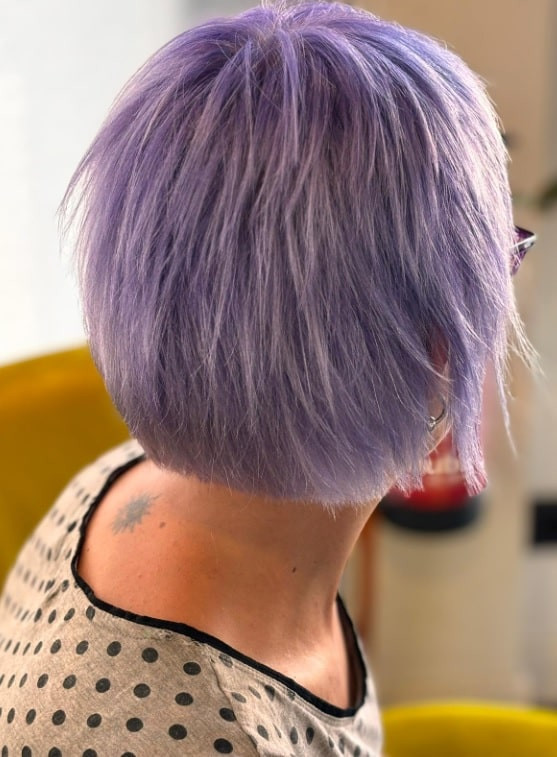
An ear-length short bob in light lavender beats a longer lob for one reason: the colour refresh cycle. The shorter the hair, the less product you need, and the faster the grow-out gets cut off at the next trim. No bangs keeps the shape simple, and the wavy fine texture gives the bob movement instead of a hard helmet line. The upkeep is a trim every five weeks and a toning session every three, but at ear length you are not paying for a full head of foils every time.
Shoulder Visual Idea
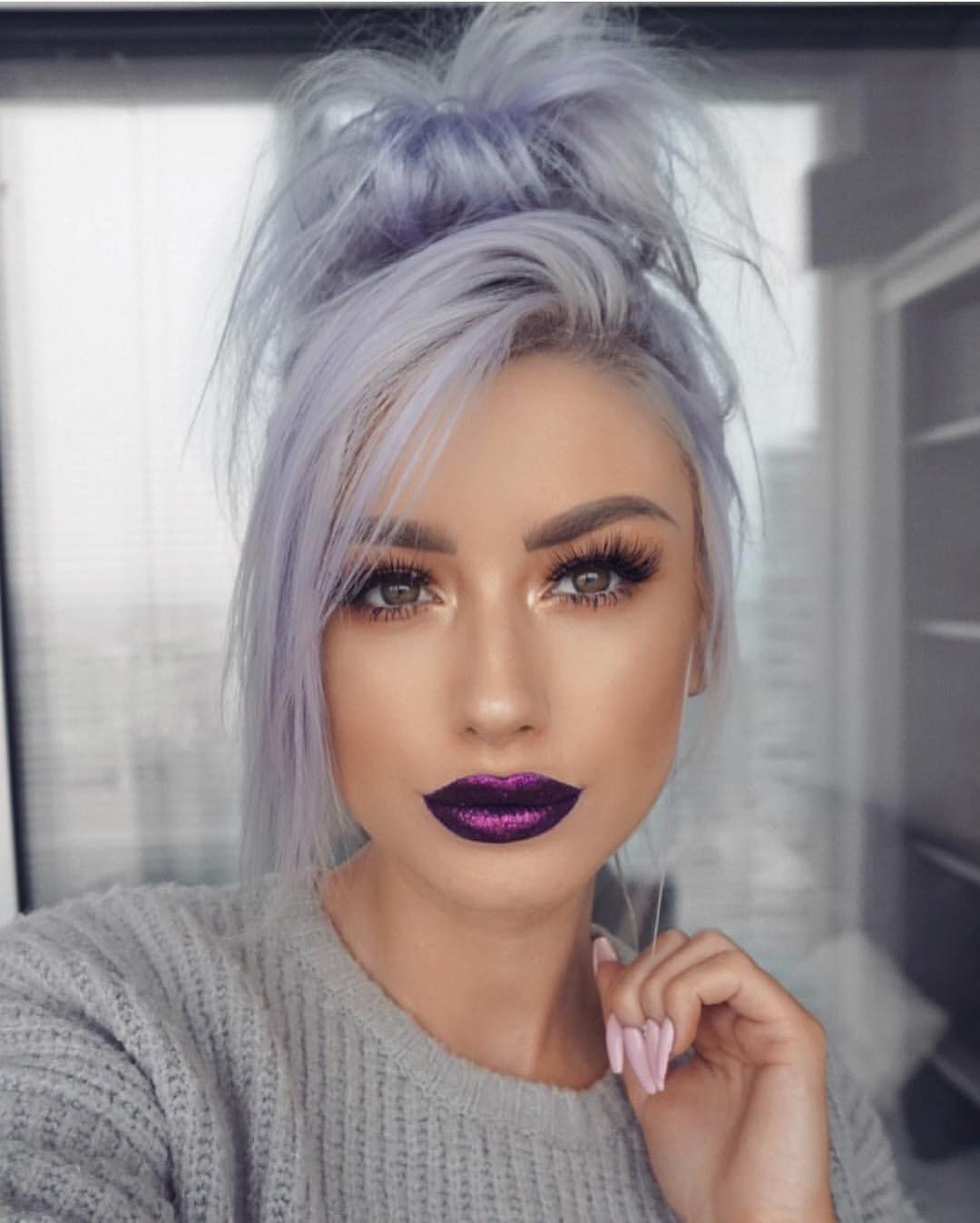
You see the messy bun and think easy. I see fine wavy hair in a lavender shade that will not hold a bun past noon without three bobby pins and a texture spray. The side-swept bangs help because they add weight to the front, but the layers mean the bun ends up with too many short pieces slipping out. This is a salon-leaning cut because the layers need to be graduated just enough to keep the bun compact without losing the wave pattern. I would book the consultation and ask for a demonstration of how the layers behave in a ponytail before committing.
Visual Idea — The Image Shows Shoulder-Length
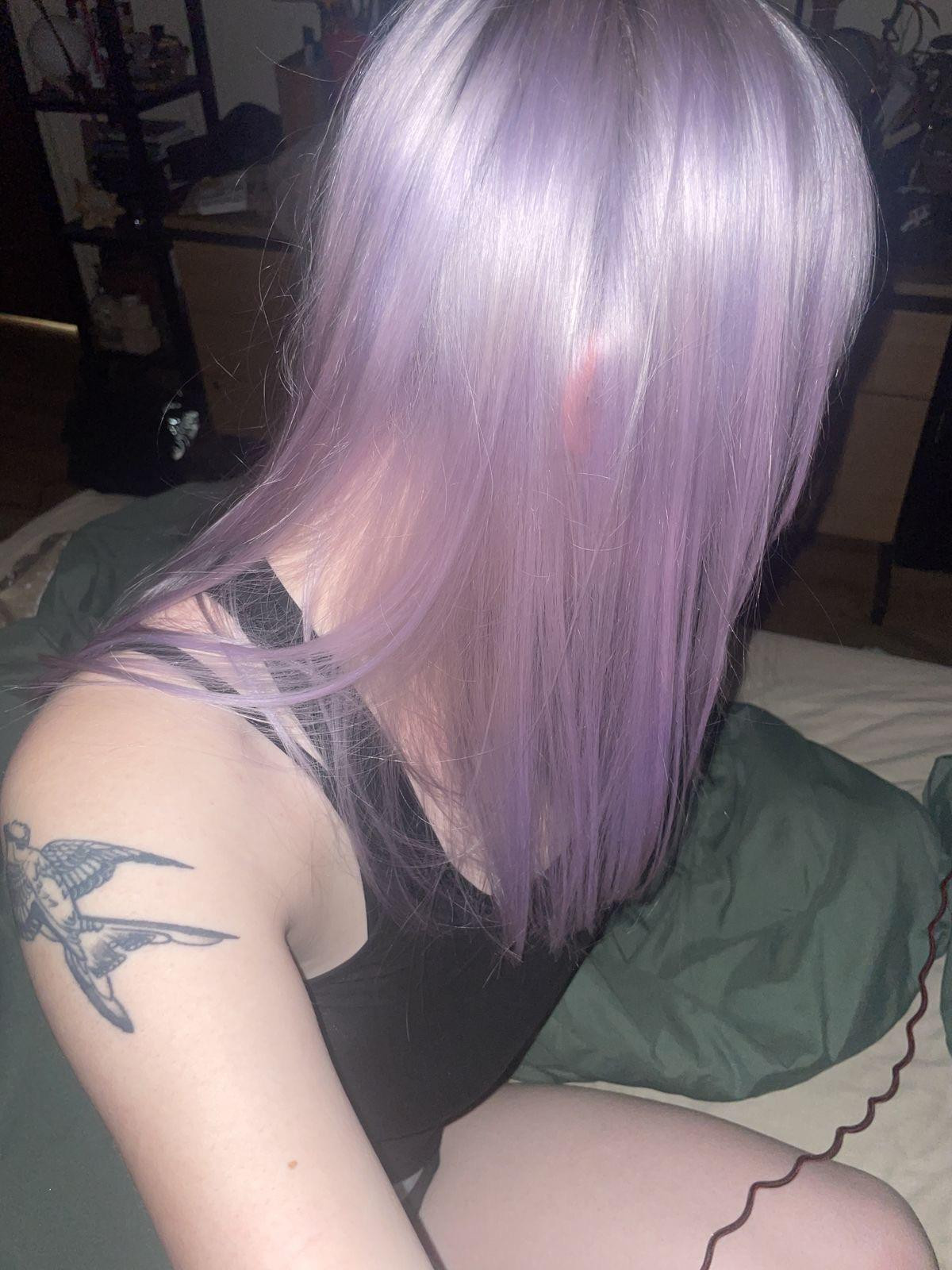
That pale pastel lavender is doing all the work here, and the straight, unlayered cut lets it speak without interruption. Shoulder-length, fine texture, a clean middle part, no layers to distract. The lighting is not doing it any favours, but the colour still reads as soft and deliberate. A straight cut on fine hair at this length keeps the shape neat without looking blunt or heavy. The pastel lavender stays delicate because there is no texture to break it up. Simple, and that is exactly the point.
Visual Idea — Featuring A Middle Parting And No Bangs
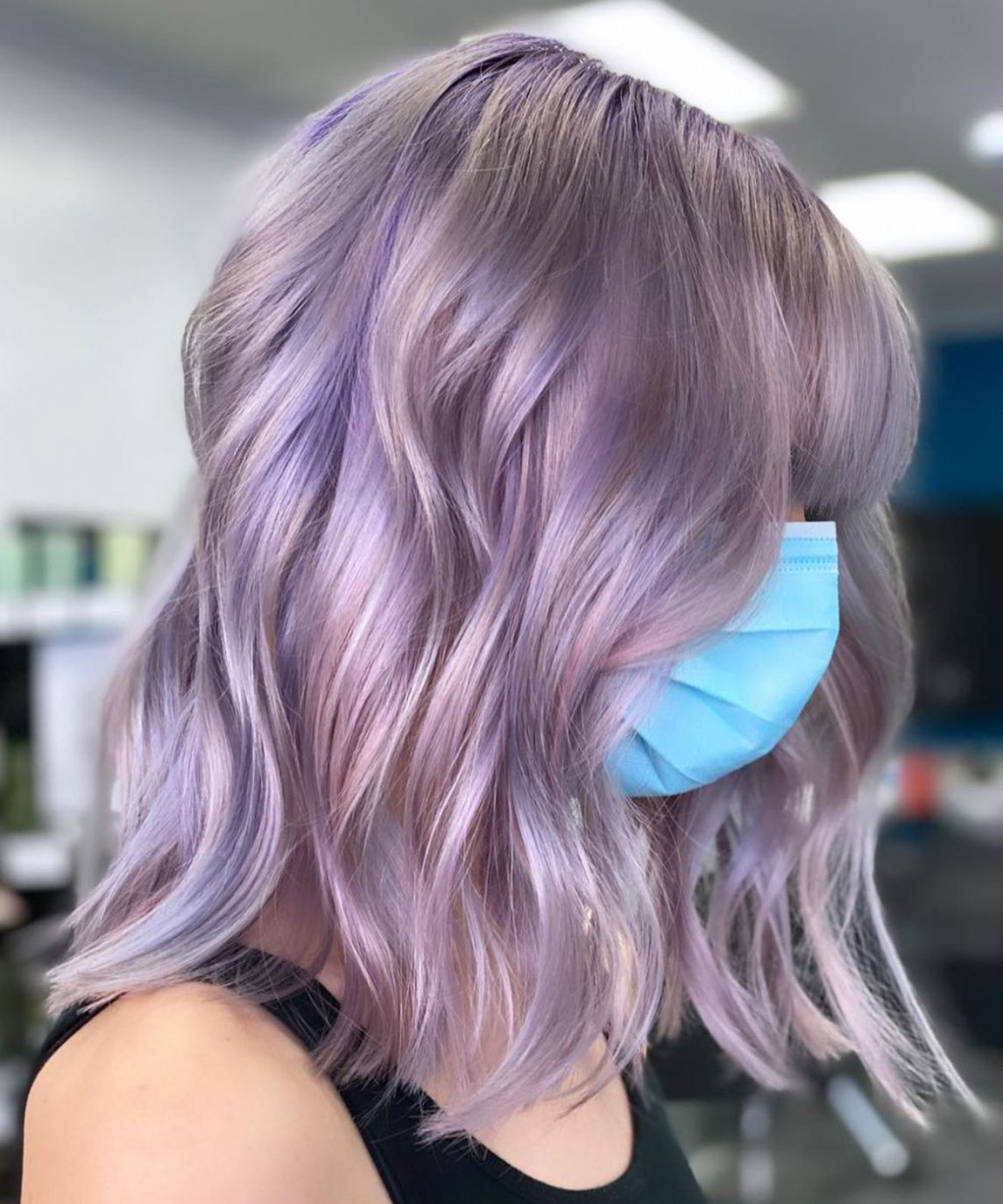
Who is this collarbone lob with pastel lavender and pink undertones actually for? Someone with a longer face or a strong jawline, because the middle parting and the soft waves add width around the cheekbones without covering the face. The loose waves keep the pastel lavender from reading as flat, and the no-bangs approach means you are not fighting a fringe that separates by noon.
The honest downside: pastel lavender with pink undertones fades fast, and warm undertones in your skin can make the pink read as muddy by week three. A purple shampoo with a cool tilt helps, but you will be back in the chair for a toner before the month is out. The lob itself is low-maintenance on the cut side, a trim every ten weeks, but the colour is not a set-it-and-forget-it situation.
Final Thoughts
After writing all of these, the one I keep coming back to is the smoky lavender with dark roots. It is the only one that buys me six calm weeks and still looks like I planned it. I booked it last Thursday.