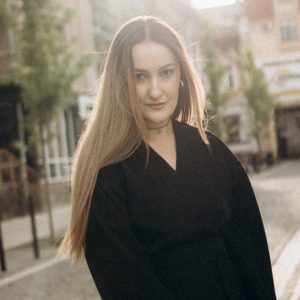
Two-tone hair pairs a base color with a lighter or darker contrast, usually at the face or through the lengths. In 2027, that contrast is showing up as soft face-framing layers, curtain bangs, and lived-in color that grows out without a harsh line.
This collection gives you 20 ways to wear Two Tone Hair 2027, from low-upkeep melts that fade gracefully to bold split dyes that demand a standing appointment. Whether your hair is fine and falls flat, or you are tired of a visible grow-out line, there is a version here for your length, texture, and patience level.
Mid-Back Updo With Blonde Face-Framing
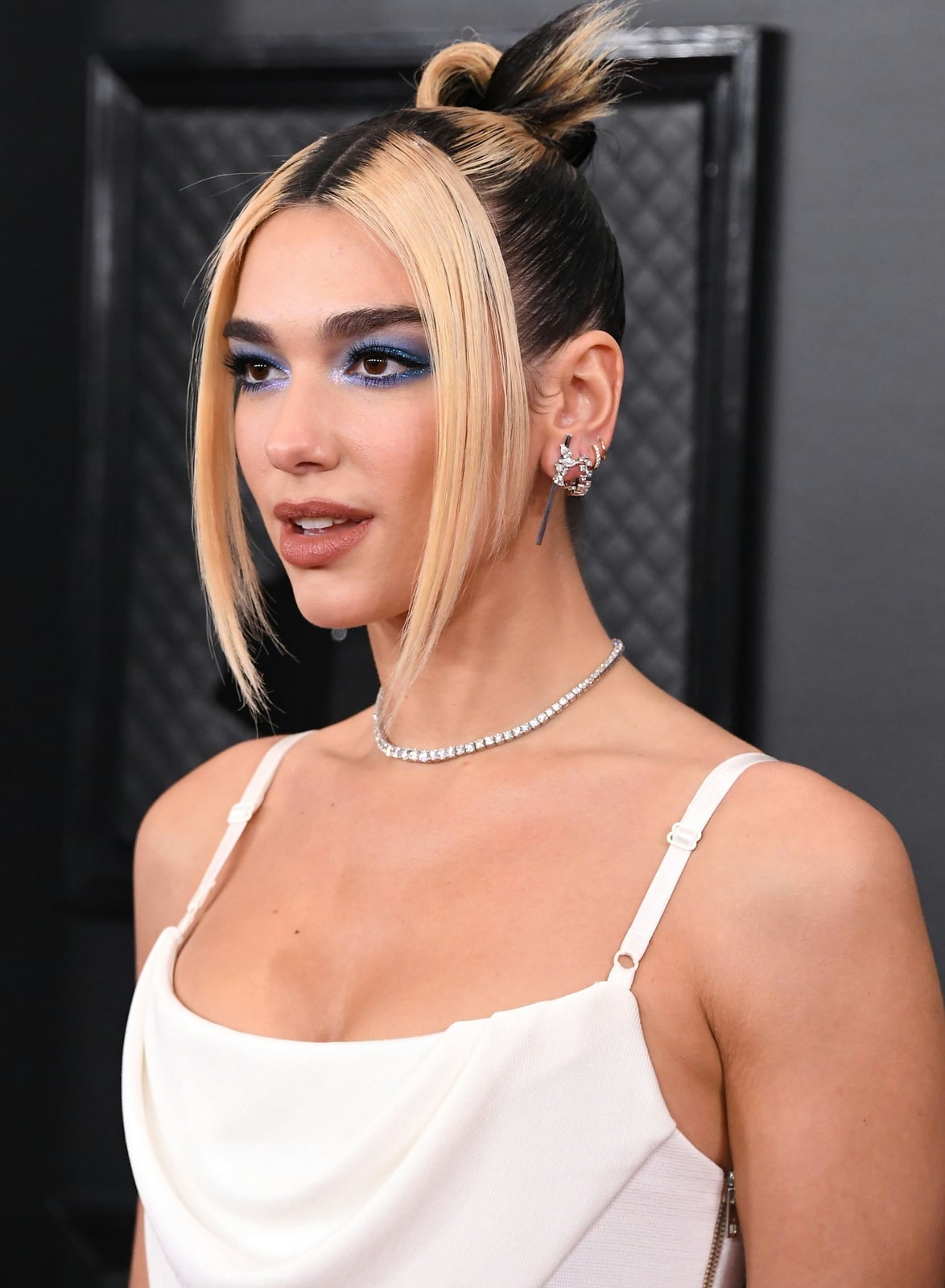
The genius of this updo is what it leaves out. The mid-back length is swept up, but the face-framing pieces stay down, straight and dark with blonde highlights that draw the eye without competing with the updo itself. It’s a two-tone effect that works because the contrast is concentrated where you look first.
Ask your stylist for: updo with face-framing pieces, dark base with blonde highlights. This suits medium-density hair of mid-back length, and the middle parting keeps the framing balanced on most face shapes. Style the face-framing pieces with a flat iron for a sleek finish, and trim split ends every 10-12 weeks to keep them clean. It works for formal occasions, but the loose pieces keep it from feeling like a ballet recital.
Mid-Back Layers With Face-Framing Highlights
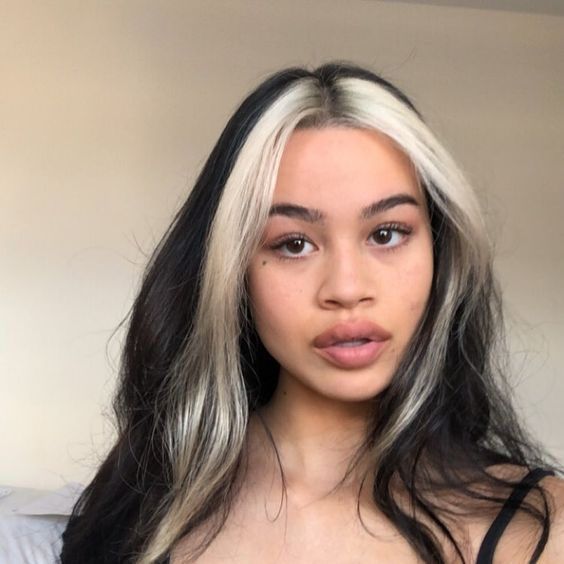
Long layers do the structural work here, but the blonde face-framing highlights are the reason this mid-back style doesn’t blur into every other air-dried mane. The wavy texture gives the layers movement, and the highlights trace that movement around the face instead of sitting flat.
This works well on medium-density wavy hair, and the face-framing placement softens square and angular jawlines. Skip it if you prefer a blunt, uniform shape, because the layers are the point. Ask your stylist for: mid-back long layers with blonde face-framing highlights. Air dry for a natural texture, and trim the layers every 8-10 weeks so they keep their shape rather than growing into a shapeless curtain.
Collarbone Lob With Curtain Bangs And Money Piece
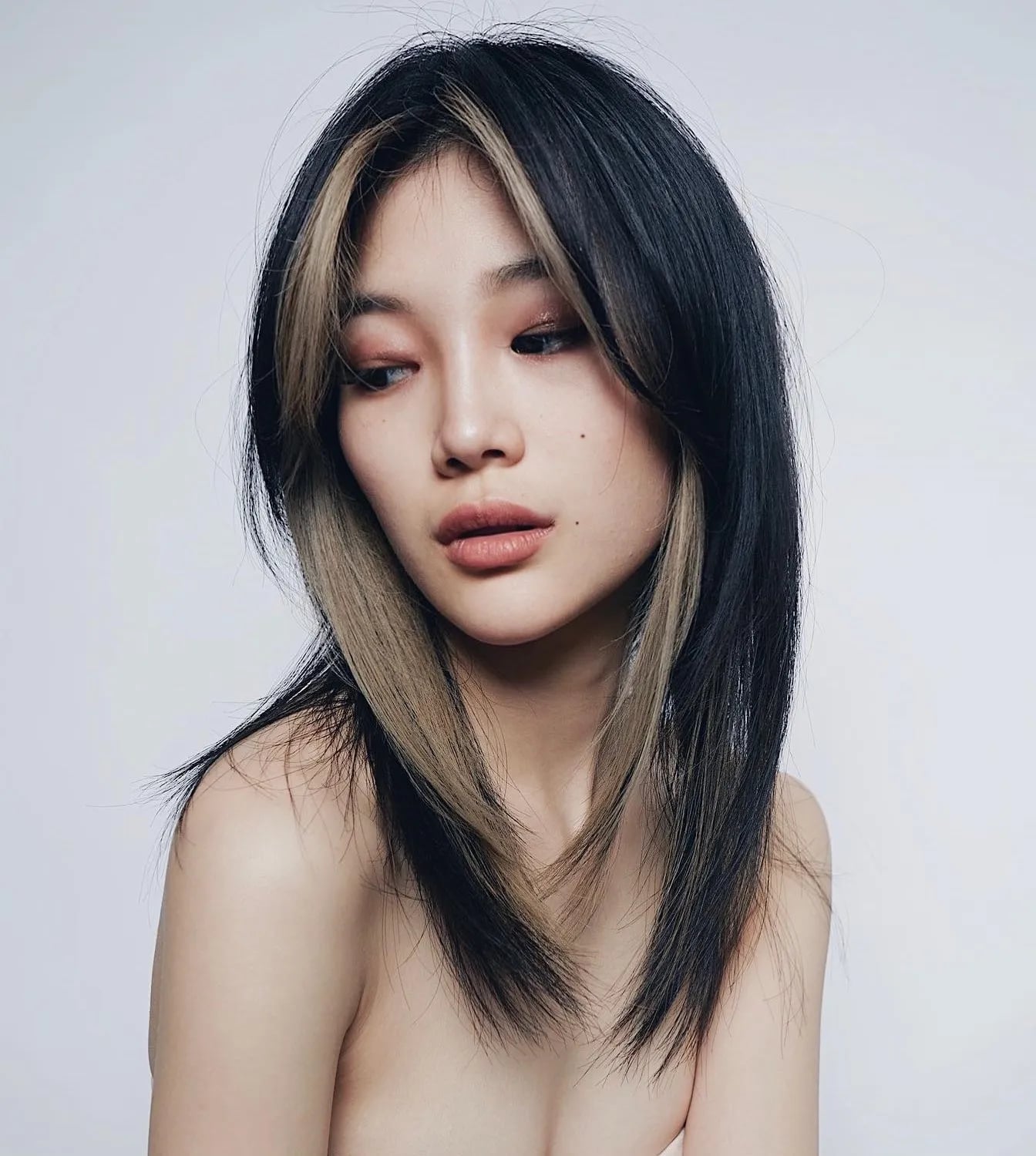
How do you ask for this without getting a mouthful of jargon? You walk in and say you want the collarbone lob with curtain bangs and a money piece, and then you clarify that the money piece should be blonde against the dark brown base, with long layers throughout so it doesn’t feel heavy.
Ask your stylist for: collarbone lob, long layers, curtain bangs, blonde money piece. The curtain bangs flatter round and oval faces, while the collarbone length suits medium-density straight hair. The blowout is what sells it, so ask for that finish too, and specify that the money piece should frame the face without being so wide it reads as a stripe.
Mid-Back Layers With Blonde Money Pieces
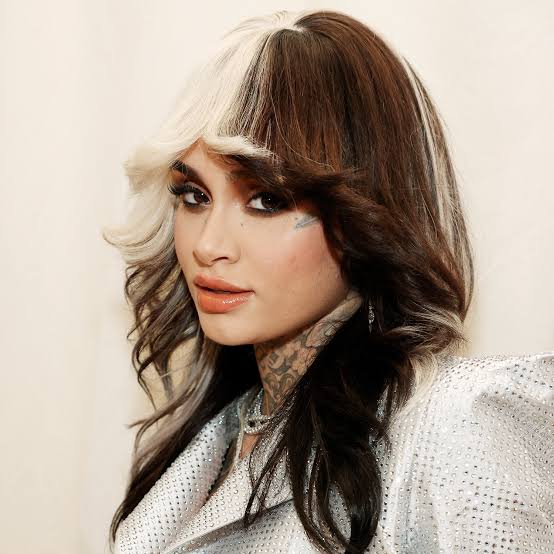
Set this against the subtler face-framing highlights in the earlier section and the difference is impact. Here the blonde money pieces are bolder, and on thick, straight mid-back hair they land with the confidence of a design choice rather than an afterthought. The curtain bangs soften the effect, so you get drama without a hard edge.
On thick hair, the contrast holds its shape and the blowout gives it that glossy, polished finish. On finer hair, the same money pieces can overwhelm the strands, so you’d want them thinner. Ask your stylist for: mid-back long layers, curtain bangs, blonde money pieces. The drawback is upkeep: those bright pieces show regrowth fast, so plan on a toner or root touch-up every 6-8 weeks, plus a baseline trim every 8-10 weeks.
Collarbone Lob With Straight Blonde Face-Framing
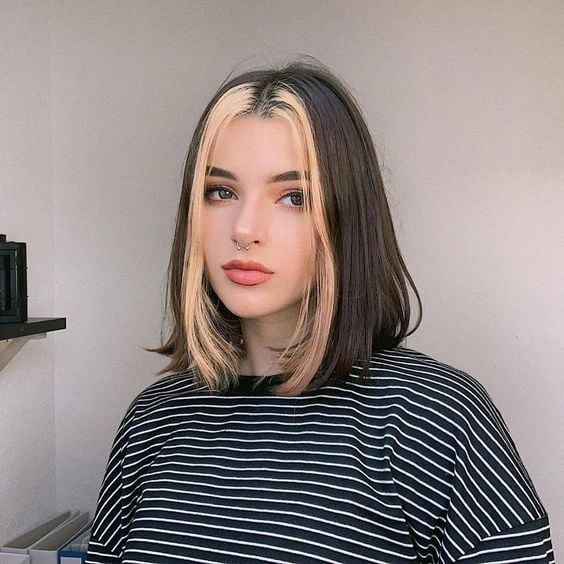
A lob that ends at the collarbone is a study in restraint, and the straight blonde face-framing pieces are what keep it from being plain. The dark brown base grounds the look, while those two lighter sections draw the eye forward without asking for a full color commitment.
Ask your stylist for: collarbone lob, straight style, blonde face-framing pieces. This suits medium straight hair of collarbone length, and the face-framing pieces complement most face shapes. Straight means styling: a flat iron is your daily tool to keep the sleek finish from going wavy by midday. Trim the baseline every 8-10 weeks to keep the lob from drifting into a shapeless middle length.
Mid-Back Wavy Layers With Copper Color Melt
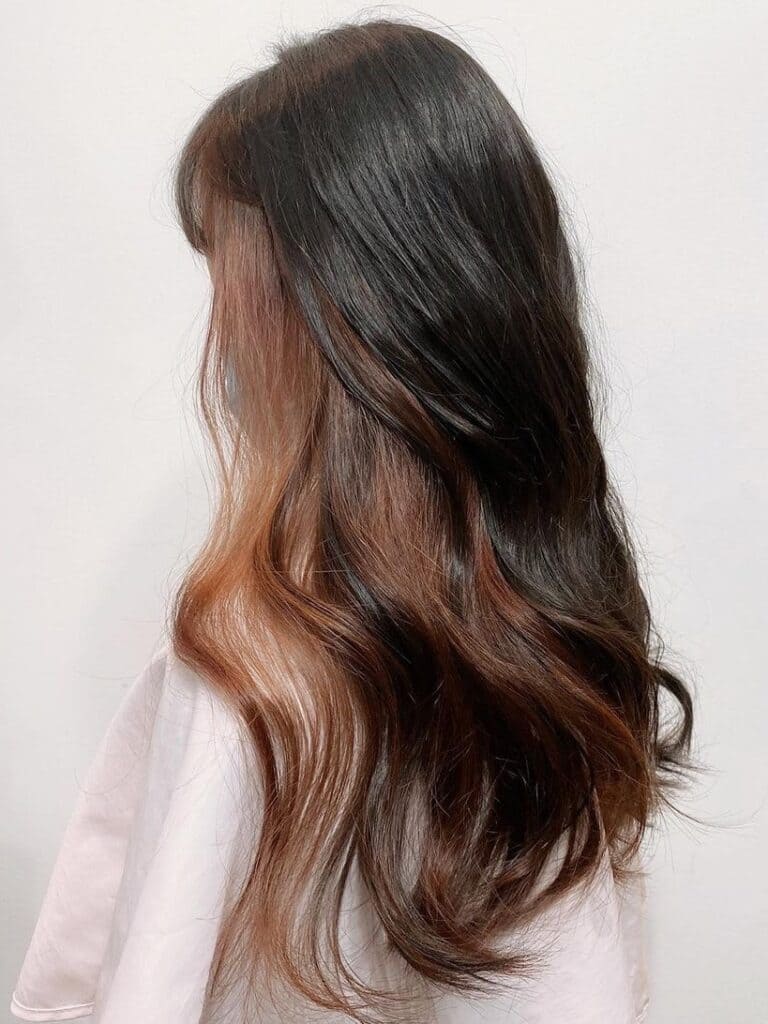
The copper melt depends on where the dark brown base decides to hand off to warmth, and here it happens gradually through the mid-back length. Face-framing layers catch the transition first, so the color shift appears as a glow around the jaw, not a hard line. A middle parting lets each side mirror the other, which keeps the effect balanced even when the waves go their own way.
This cut suits medium wavy hair that air dries into shape, since the layers do the work of holding the melt visible without styling. Ask your colorist for: mid-back layers, face-framing layers, dark brown to copper melt. The technique paints the lighter shade onto the ends and blends upward in soft strokes, which is why it lands so naturally on wavy texture. Expect to refresh the copper tone every six to eight weeks to keep it from dulling. It is an everyday, casual option that still looks deliberate when you let it dry loose.
Mid-Back Wavy Hair Platinum Blonde To Black
The contrast here is not subtle, and that is the point: platinum blonde claims the top and sides while black takes over the ends, with no bangs to soften the handoff. Long layers keep the mid-back length moving, and the loose waves let the two tones catch light from different angles. A middle parting makes the split look deliberate.
This works on medium density wavy hair because the texture gives the color depth that straight hair would flatten. Ask your colorist for: mid-back wavy hair, platinum blonde top, black ends. The real drawback is upkeep, since platinum needs toning every four to six weeks to avoid brassiness, and the black ends will fade toward brown without a gloss. Root touch-ups land around eight to ten weeks. It is a statement for everyday wear, but only if you accept the salon rhythm.
Mid-Back Ponytail With Two-Tone Highlights
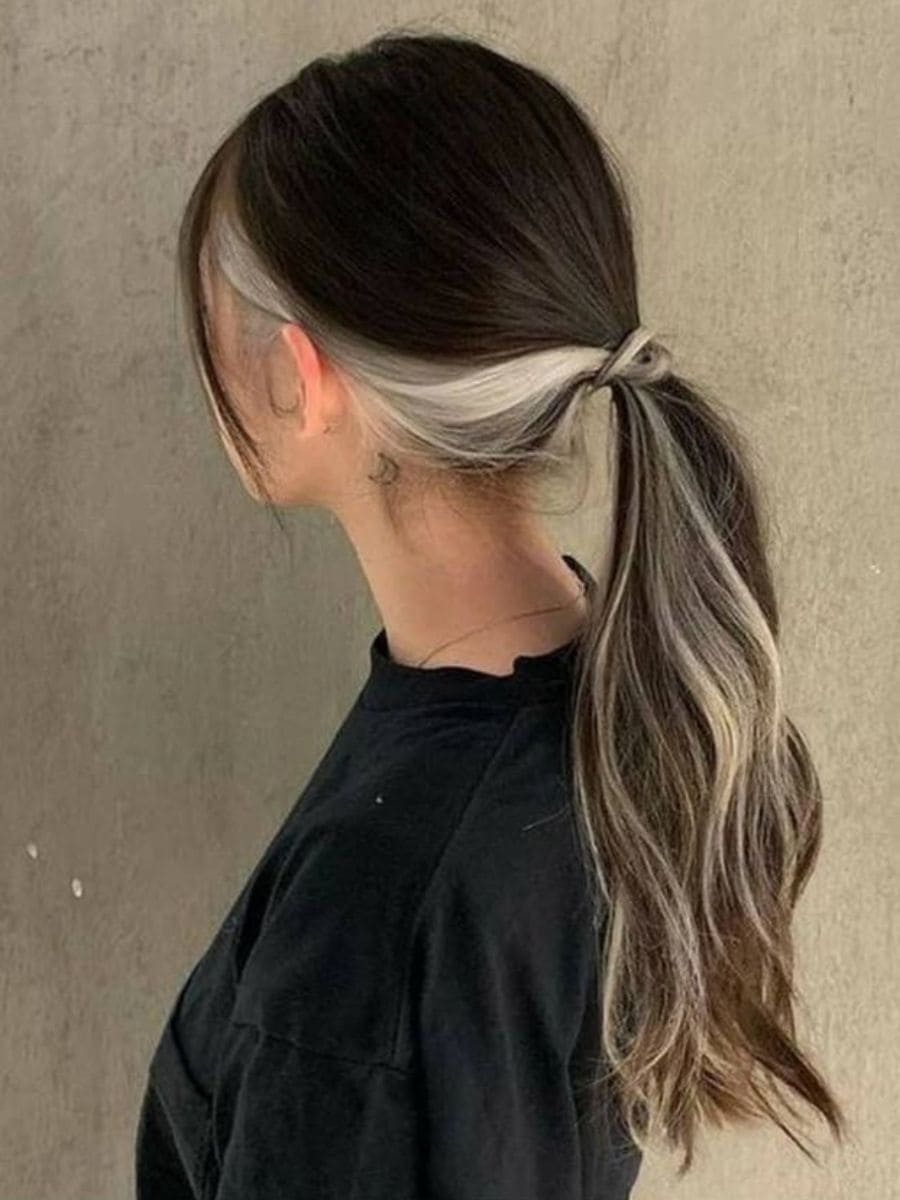
Two-tone color shows in a ponytail when woven highlights are placed through the mid-back length instead of chunky streaks. The dark brown base carries the blonde pieces from the middle parting down to the ends, and the wavy texture keeps them from reading as stripes.
This suits medium wavy hair that spends time pulled back, since the highlights are visible from the back view without needing to be styled forward. Ask your stylist for: mid-back ponytail, dark brown with blonde highlights. The key is asking for fine weaves instead of wide sections, so the two-tone effect stays subtle when worn down and distinct when tied up. Secure the ponytail with a strong elastic, and trim the ends every ten to twelve weeks to keep the layers from splitting.
Mid-Back Shag With Curtain Bangs And Two-Tone Color
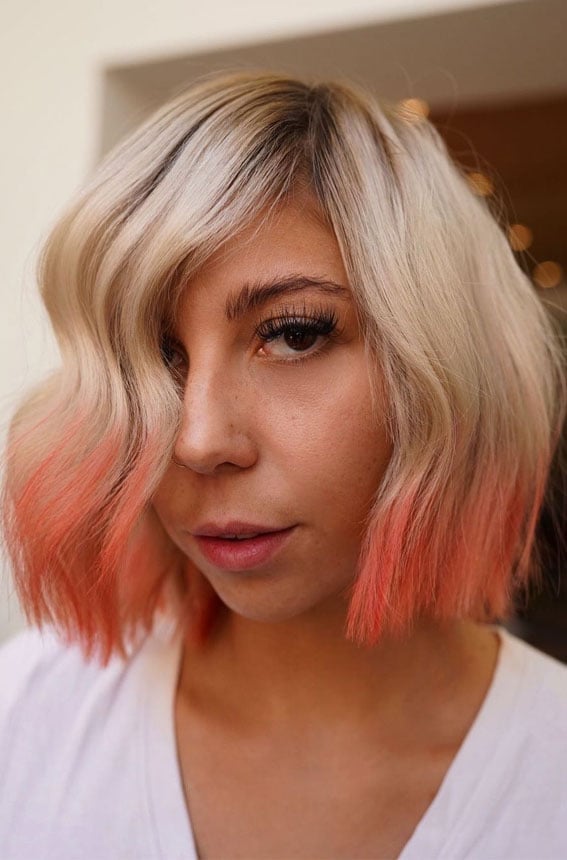
The shag’s layered construction gives the two-tone color somewhere to live: dark brown roots melt into blonde highlights through the mid-back length, and the curtain bangs frame the face without committing to a full fringe. This cut is built for medium wavy hair, where the layers create movement and the color shift adds depth. Curtain bangs soften round and heart faces, while the shag’s texture keeps the whole thing low maintenance. Ask your stylist for: mid-back shag, curtain bangs, dark brown to blonde highlights. A texturizing spray brings out the lived-in waves, and the shag needs a trim every eight to ten weeks to hold its shape.
Mid-Back Straight Hair Black And Platinum Split
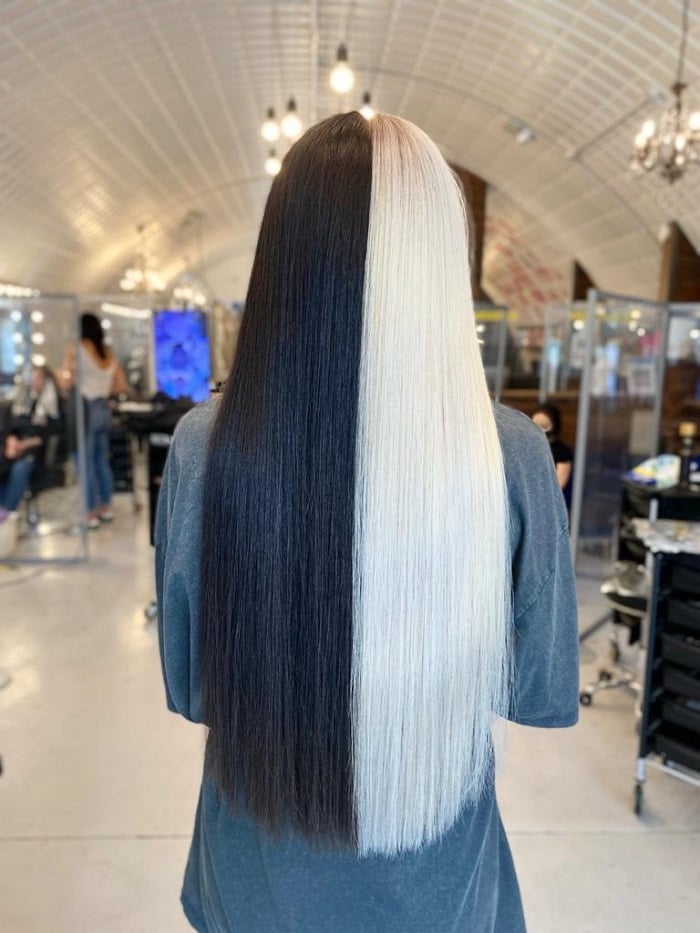
The split runs straight down the middle, black on one side, platinum blonde on the other, and the clean part makes the division feel like a deliberate choice. Thick, straight hair at mid-back length carries the contrast best, since the weight of each side keeps it sleek and separate. No bangs means nothing distracts from the stark color boundary.
This suits most face shapes because the vertical line elongates, and the symmetry works with a center part. Ask your colorist for: mid-back straight hair, black and platinum split. Doing this at home is not realistic, since the platinum side needs a full bleach and toner, and the black side needs to stay glossy to keep the contrast sharp. A smoothing serum keeps the finish sleek, but expect a high-maintenance color that requires root touch-ups every six to eight weeks and a toning appointment in between.
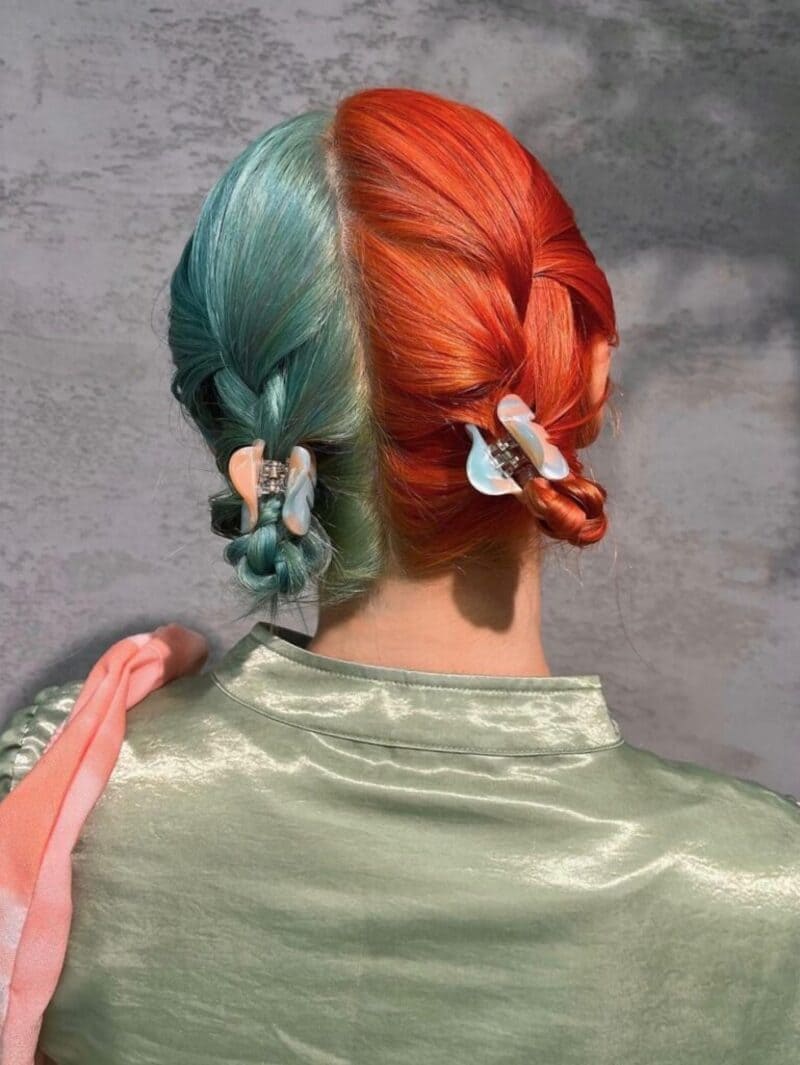
Shoulder Length Braids Teal And Orange Split
Forget the usual single-color braid situation; this style splits the difference, literally. The hair is parted straight down the middle, with one side dyed a vivid teal and the other a bright orange, then pulled into two braids that end in low buns. It’s a bold, festival-ready look that works best on thick, straight hair at shoulder length, since the braids stay tidy when secured well. Ask your stylist for: shoulder length braids, teal and orange split color. Secure the braids tightly so they hold their shape, and plan on a trim every eight to ten weeks to keep the ends clean.
Shoulder Length Waves Black And Silver Contrast
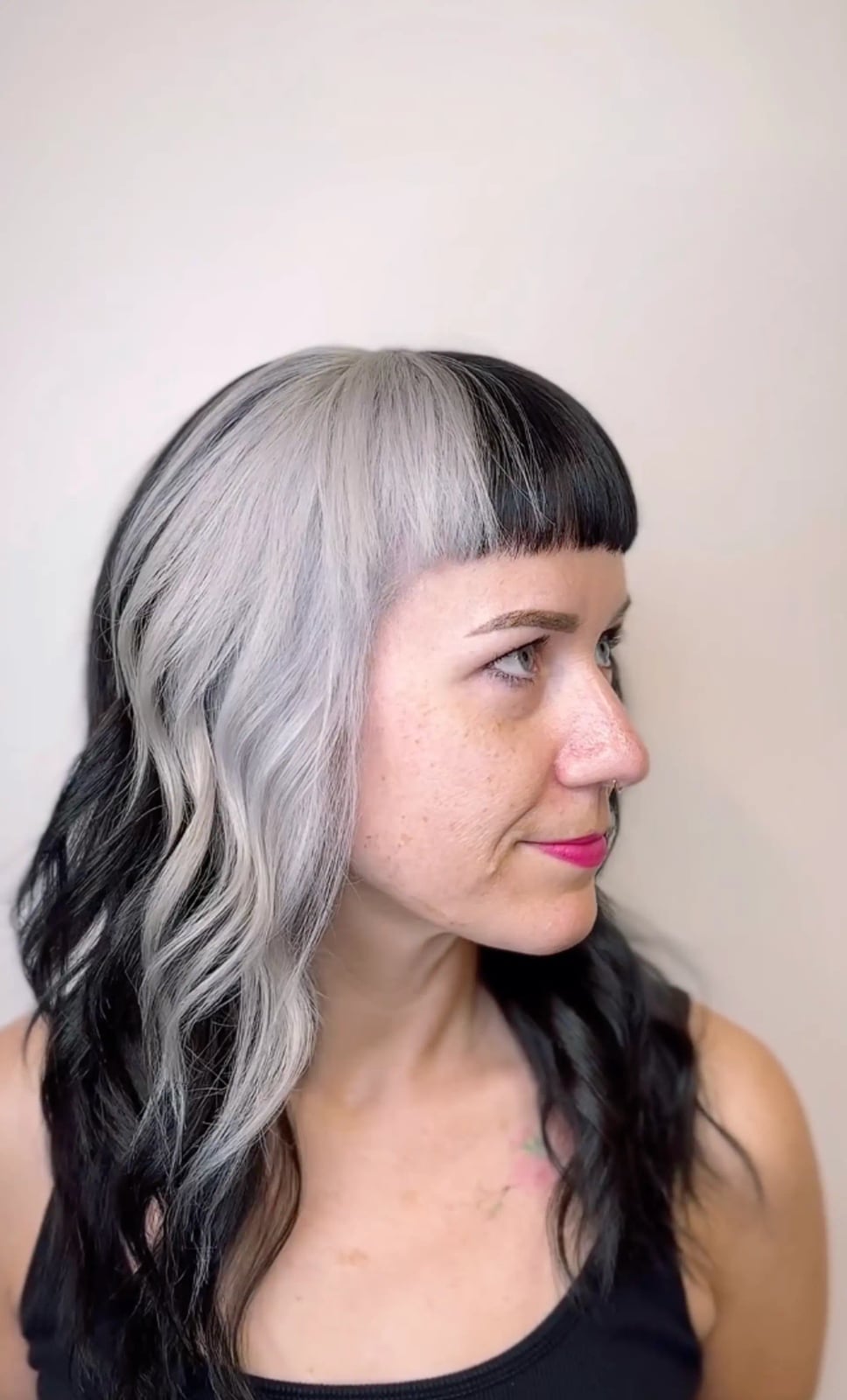
This design hinges on a precise side parting that separates the black and silver halves into a deliberate split. Long layers give the shoulder length cut movement, while micro bangs add a sharp, graphic edge that matches the stark color contrast. The wavy texture and medium density carry the two tone effect well, keeping both shades visible. Ask your stylist for: shoulder length long layers, black and silver side contrast. The silver side will need a purple shampoo and a toning visit every four to six weeks to stay bright, and the micro bangs require trims every two weeks to keep their shape.
Collarbone Lob Pink And Teal Split Dye
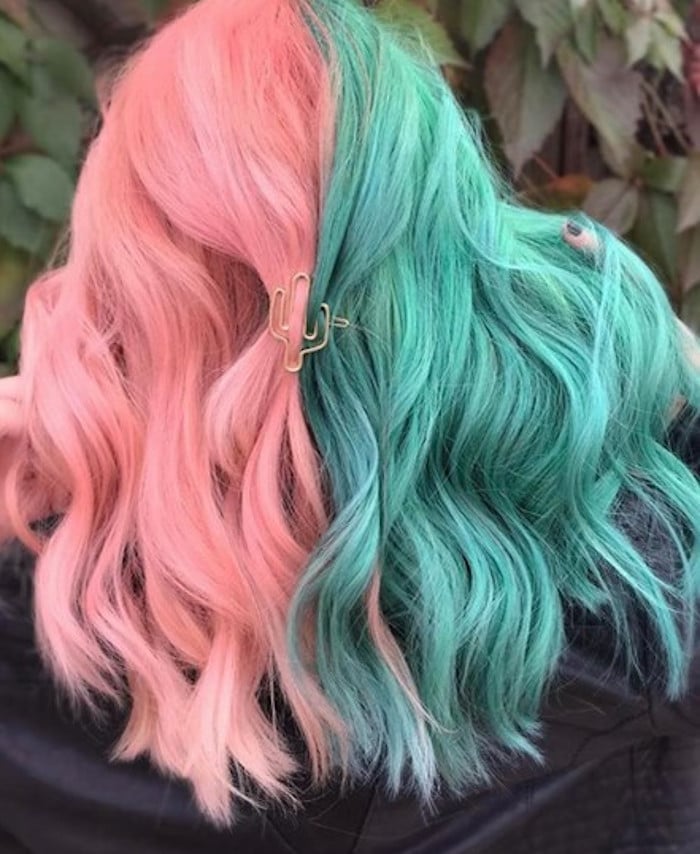
How do you get a split dye to look this clean? It starts with a lob cut to collarbone length, so the two colors have enough surface to show off. The middle parting divides the hair into a vibrant pink half and a teal half, styled in loose waves that soften the hard line between them. Ask your stylist for: collarbone lob, pink and teal split dye. Be specific that you want the color to start at the roots and stay true to the parting, not blend into a melt. For the best effect, ask for a gloss over both shades to seal in the vibrancy.
Chin Bob With Curtain Bangs And Hidden Two-Tone
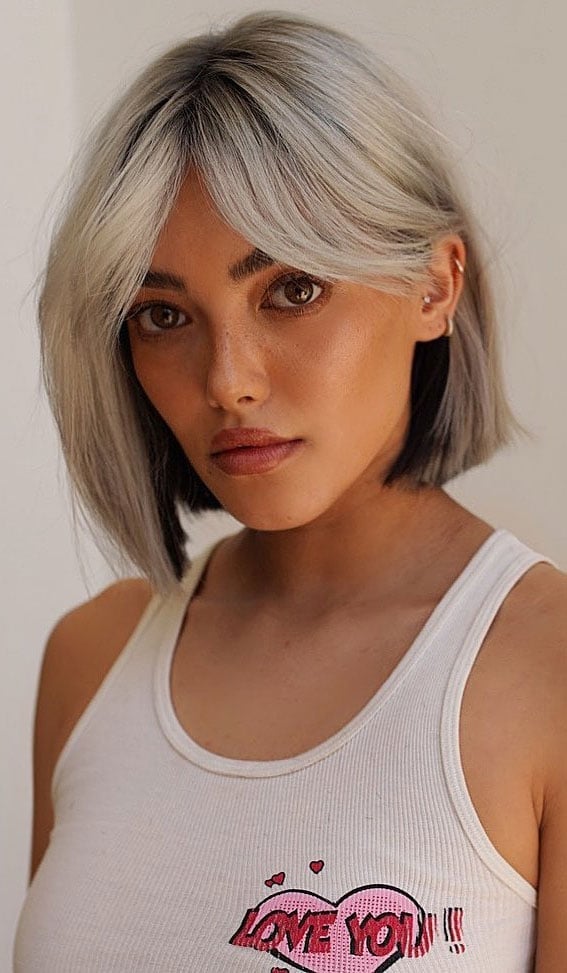
A full split dye is a statement, but this bob keeps its second color as a quiet secret. The chin-length cut is ash blonde on top, with a dark tone layered underneath that only peeks out when the hair moves. Curtain bangs part in the middle, drawing attention to the layered ends that make the hidden color visible. Ask your stylist for: chin length bob, curtain bangs, hidden dark two-tone. This works best on thick, straight hair where the layers will hold the dark color in place. To keep the reveal sharp, trim every six to eight weeks and use a volumizing spray at the roots to lift the top layer.
Chin Bob Dark Brown And Blonde Side Split
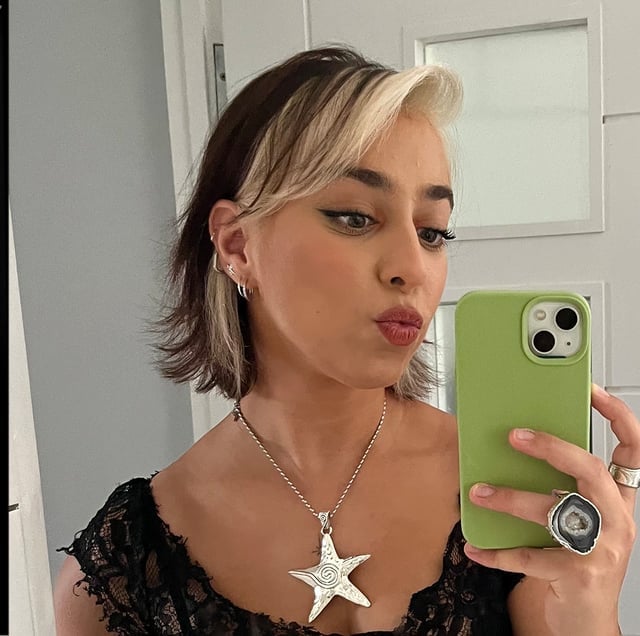
The trick to this half-and-half bob is the precision of the side parting. Dark brown occupies one side, blonde the other, and the blunt bangs extend the split across the forehead. The chin-length cut is styled straight with ends flipped slightly outward, which gives the fine texture a bit of swing. Ask your stylist for: chin length bob, blunt bangs, dark brown and blonde side split. This one is best done in a salon, since keeping the two sides perfectly even on fine hair takes a steady hand. A flat iron will sharpen the line between colors, and the bob and bangs both need a trim every four to six weeks.
Chin Bob Blonde And Pink Color Blocks
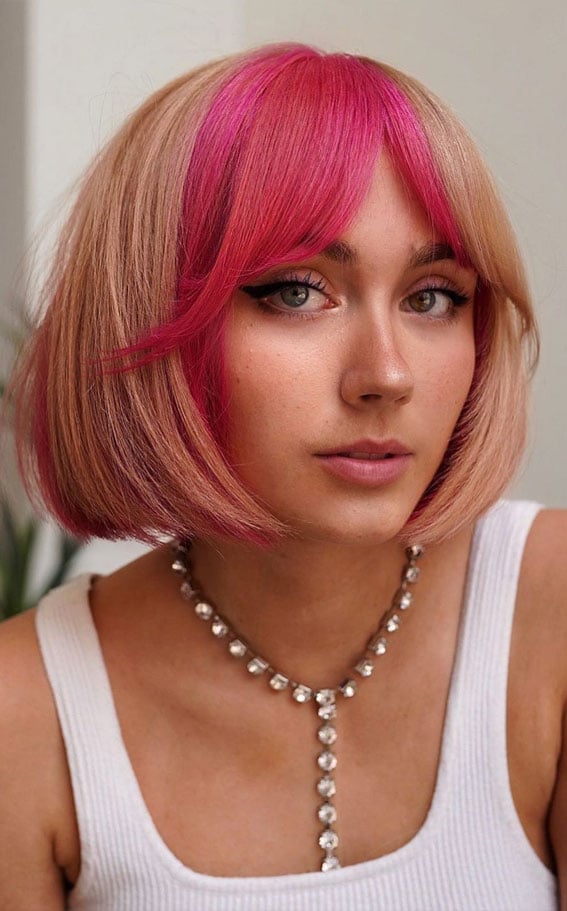
A chin-length bob with blunt bangs and a middle parting splits into two distinct color blocks, blonde on one side and pink on the other. This is a design that asks for commitment, and it suits fine, straight hair best because the sharp lines show off the color contrast clearly. Ask your stylist for: chin length bob, blunt bangs, blonde and pink color blocks. On fine hair, the blunt bangs can fall flat and need frequent trims to keep their edge, so plan for a visit every four to six weeks.
The straight, sleek styling keeps the color blocks crisp, but it also means any frizz or bend shows immediately. A smoothing serum helps maintain the polished finish between trims. This is a playful, statement cut that demands attention, and it delivers.
Ear Length Bob Half Orange Half Lighter Orange
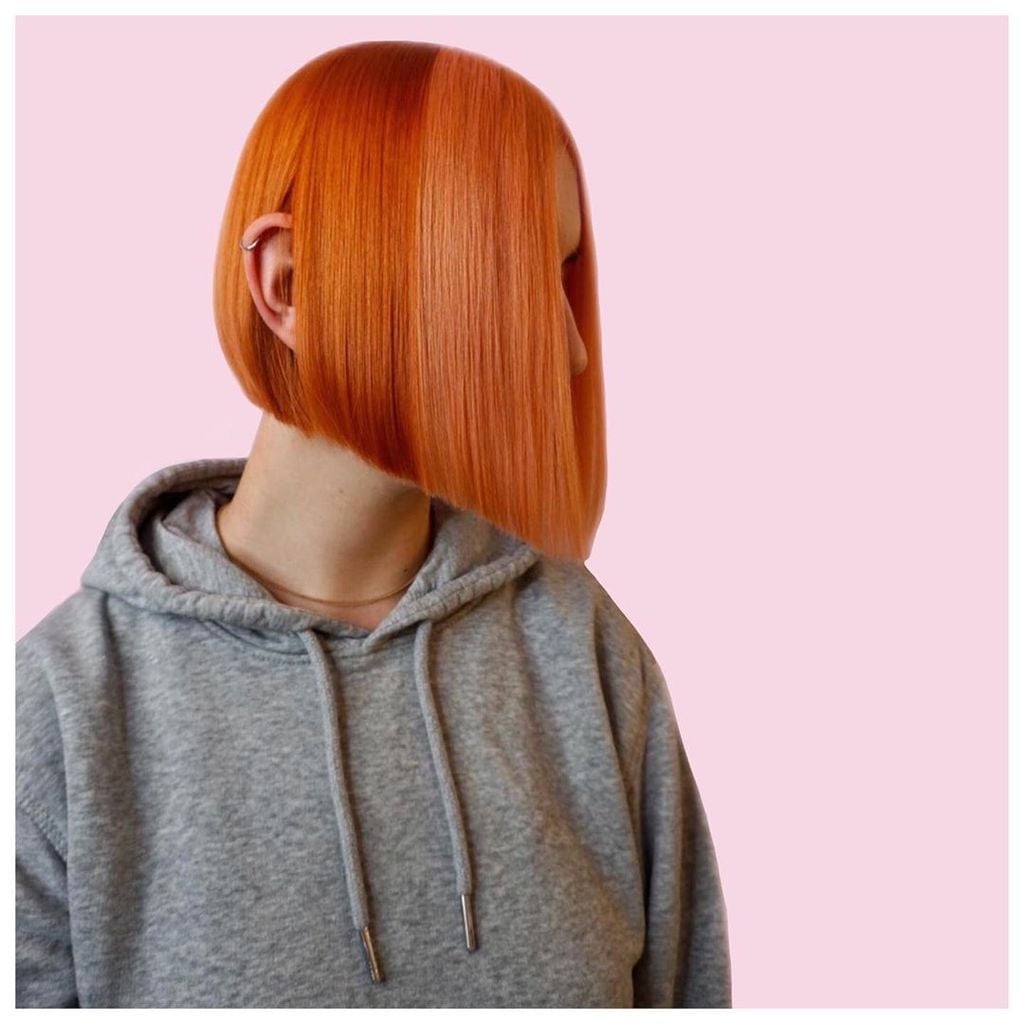
The half-and-half effect here is subtle in technique but bold in result, with one side of this ear-length bob in vibrant orange and the other in a lighter orange, divided by a middle parting. Straight and fine, the cut keeps the two tones distinct, and the sharp bob shape makes the color change look deliberate. Ask your stylist for: ear length bob, half orange half lighter orange. Since both shades are warm, they fade fast and can muddy into a single tone, so expect to refresh the color every six weeks and use a color-depositing conditioner at home to keep the two sides separate. A texturizing spray adds grip so the straight finish doesn’t look too flat.
Pixie Dark Brown And Platinum Blonde Split
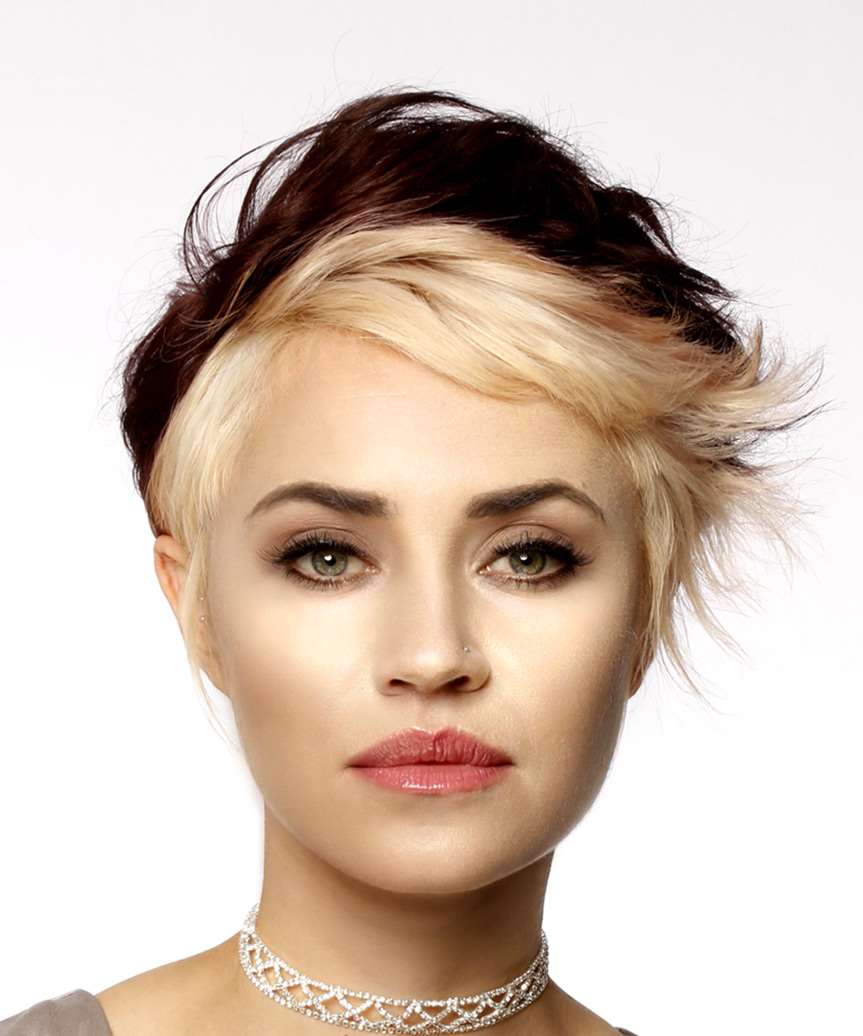
Building a clean split between dark brown and platinum blonde on a pixie cut takes precision, because the two shades meet along a sharp vertical line that runs from the hairline back. The cut is styled with textured, side-swept bangs and a side parting, which softens the contrast and keeps the line from feeling harsh. Ask your stylist for: pixie cut, dark brown and platinum blonde split, side-swept bangs. The platinum side needs a purple shampoo once a week to stop it yellowing, and the dark side will show regrowth quickly, so expect a root touch-up every four weeks. The drawback is upkeep: this is a high-maintenance split, not a set-and-forget color.
Pixie Dark Red And Blonde Contrast
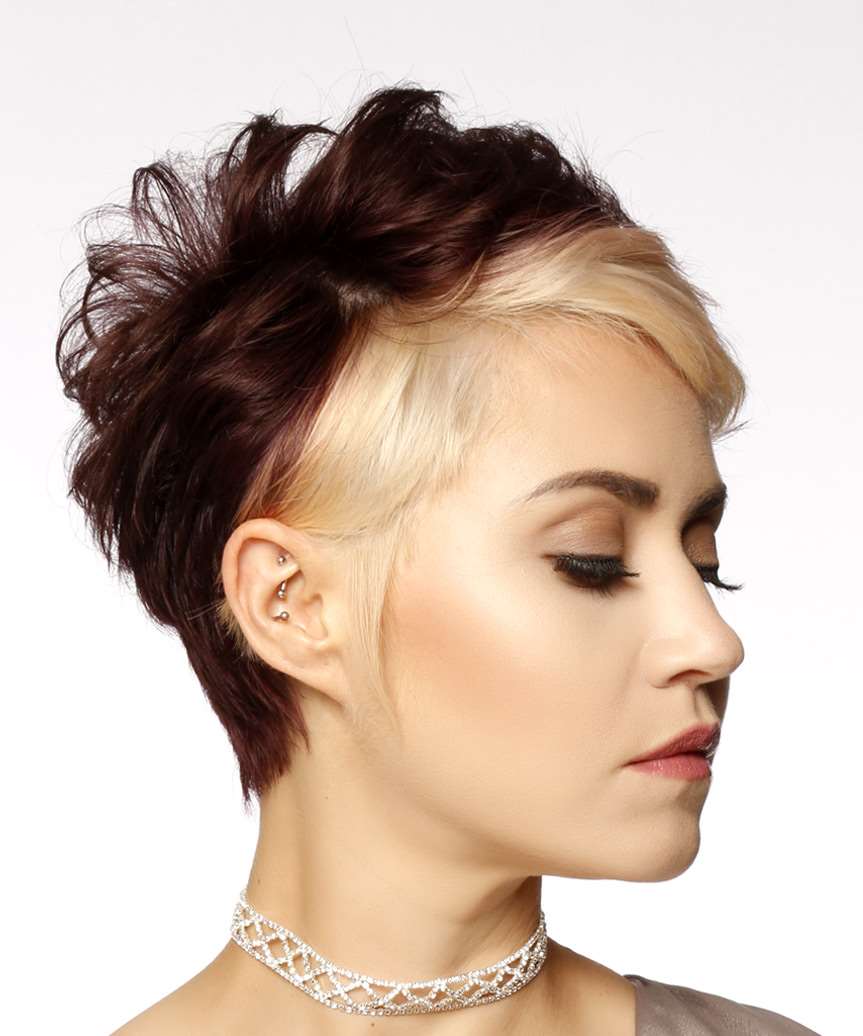
On a pixie cut that ends around the ear, the contrast between dark red and blonde reads as a bold artistic choice, with the blonde section sweeping across the side to catch the eye. The textured, side-swept bangs and side parting give the cut movement, and the fine, straight texture keeps the two tones from blending into a muddy mess. Ask your stylist for: pixie cut, dark red and blonde contrast, side-swept bangs. The dark red is rich and glossy, but it fades faster than most shades, so a color-depositing conditioner every other wash keeps it from turning rusty. The blonde section needs toner to stay bright, and a texturizing spray helps the layers hold their shape.
Short Pixie Black And Blonde Finger Waves
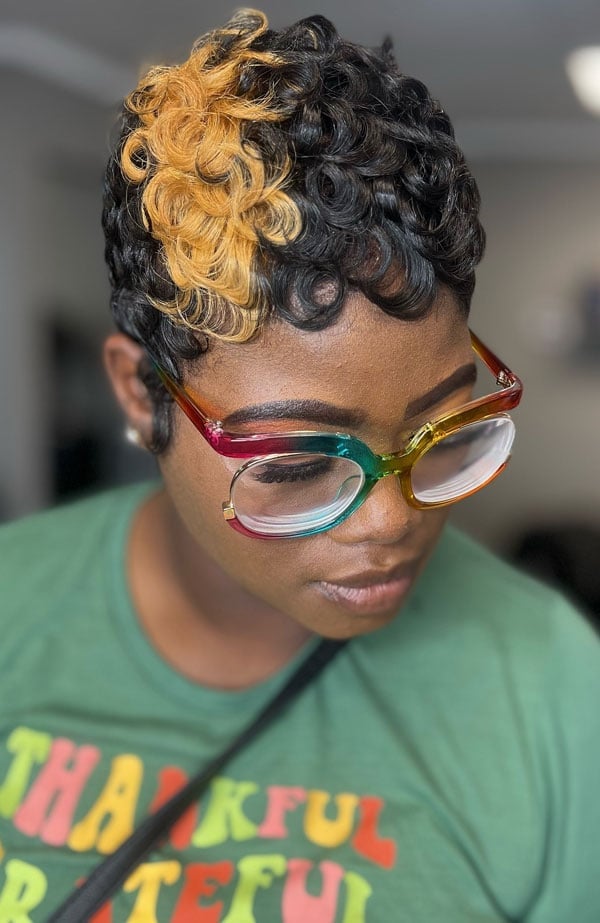
The finger waves are sculpted into the hair, not just styled, so the color contrast follows the wave pattern instead of fighting it. Ask your stylist for: short pixie, black and blonde finger waves. To keep the waves defined, use a curl-defining cream on damp hair and let it air-dry before touching the curls. The blonde needs a purple shampoo weekly to stay bright against the black.
Final Thoughts
Choose your two-tone strategy based on how much time you want to spend in the salon. Face-framing highlights and color melts grow out softly and need less frequent attention, while split dyes and bold color blocks deliver drama but ask for a touch-up every six weeks or so.
- Schedule salon touch-ups every 6-10 weeks, depending on color placement.
- Use color-safe shampoos and conditioners to preserve vibrancy.
- Minimize heat styling to prevent color fading and damage.
- Consider a toner every 4-6 weeks to maintain specific tones.
Two-tone hair is a canvas for creativity. Pick the contrast that speaks to you.