I spent the spring watching women in my salon chair ask for something that doesn’t look fresh out of the foils. A root line that belongs to last month, a shadow at the base, a piece of dark peeking through. That is the 2027 blonde: it lives in, not arrives.
So I rounded up 40 ideas for Lived In Blonde 2027, from chin bobs that grow out without panic to mid-back waves that let the ash do the work. Some need a round brush and twenty minutes, some need a root shadow every six weeks. I wrote it for anyone whose fine hair goes flat by 4 pm, whose grow-out line shows at week five, who wants a blonde that looks like it has been there all along.
Chin Bob With Bright Blonde Money Piece
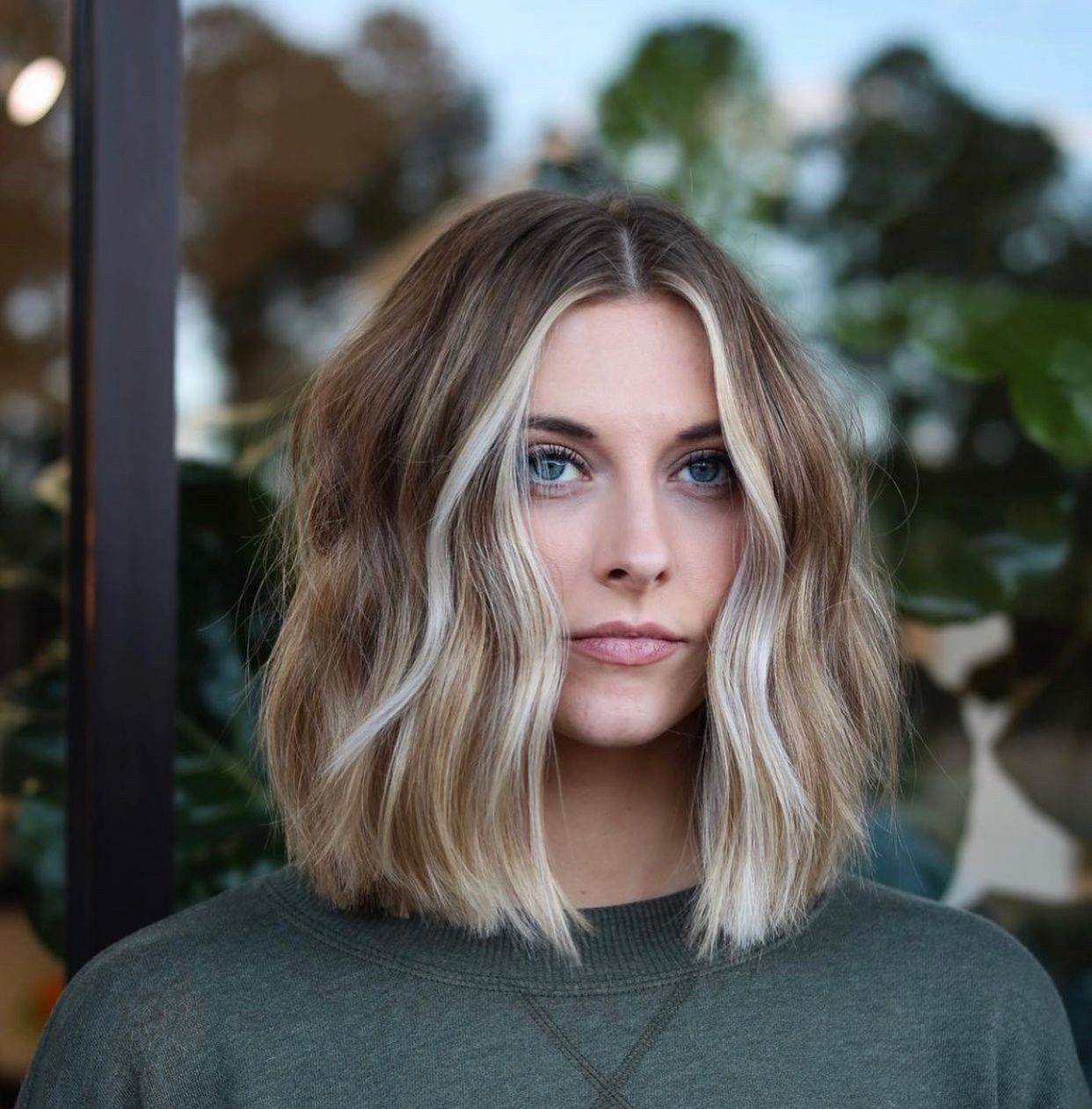
The blonde money piece bob is the best argument I’ve seen for keeping your roots dark. That bright strip around the face does all the work while the rest of the colour stays low-key, balayage blonde with darker roots that grow out without a harsh line. It’s a chin-length bob, wavy and medium density, and the contrast is what makes it read expensive rather than brassy. I’d pick this over a full platinum bob every time, the money piece gives you the pop without the upkeep of all-over light. A middle part keeps it symmetrical, and the darker base means you’re not at the salon every four weeks.
Angled Bob With Lived-In Blonde
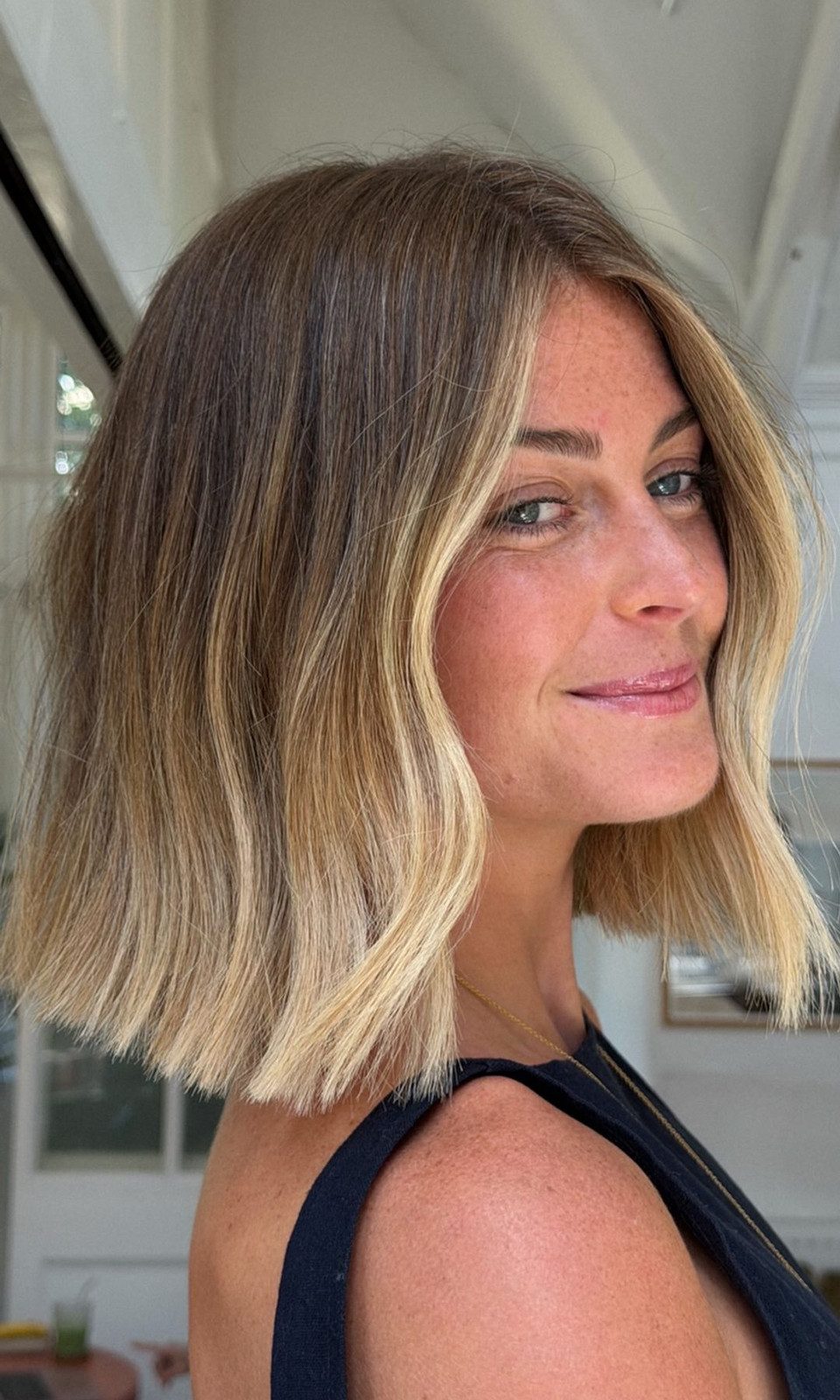
Who actually suits an angled bob lived-in blonde? More people than you’d think, because the angle lengthens a round face while the lived-in colour softens a sharp jaw. The blonde has darker roots and subtle highlights, so it flatters warm and cool skin alike, no harsh line to fight. It’s a chin-length cut, wavy and medium density, and the side part adds softness that a middle part wouldn’t. Wear it wavy for texture or smooth it down for a sharper line. The transition means you can stretch trims to six or eight weeks, but the angle itself needs that rhythm to stay sharp. If you’ve got fine hair, the graduated shape gives it body.
Shag With Face-Framing Bangs

What makes a shag haircut face framing work is the balayage, not the scissors. The warm brown base gets blonde highlights painted on in a way that follows the layers, so the face-framing bangs catch light while the rest stays grounded. It’s a collarbone-length shag, thick and wavy, and the side part lets those front pieces fall where they should. Ask your stylist for a balayage that starts below the root and concentrates brightness around the face. The layers are cut to move with the wave pattern, so the colour lands exactly where the texture turns.
Book this one, it’s not a bathroom-mirror job. The technique needs a stylist who understands how thick hair falls, otherwise the layers just sit there.
Mid-Back Waves With Ash Blonde
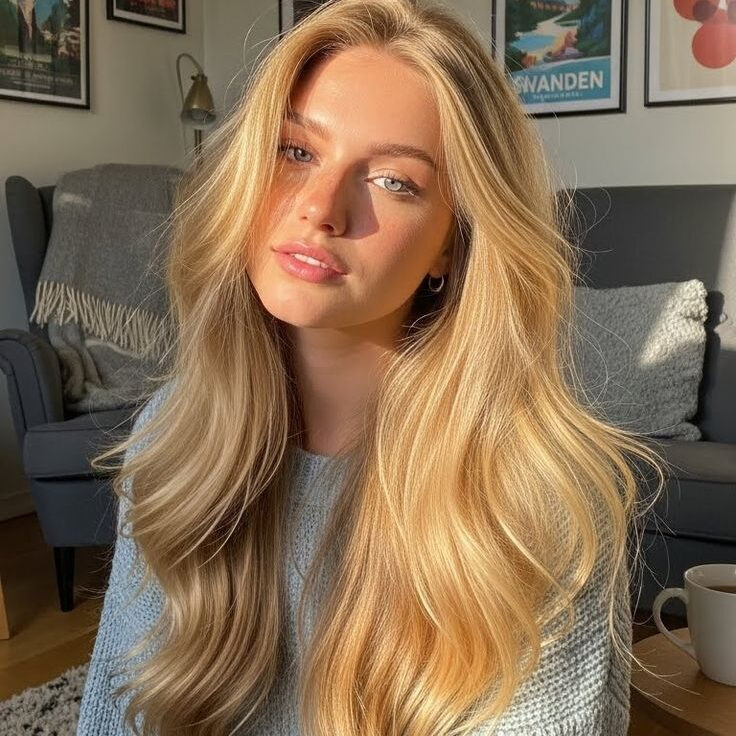
Tuesday morning, thick wavy hair, no time to wash it again, and the ash blonde mid back hair still looks like a salon blowout. That’s the reality of this colour and cut combo. The ash blonde base with lighter highlights is blended so softly that regrowth just reads as dimension, not a root line. It’s mid-back length with layers that give the waves room to move, and the curtain bangs frame without demanding daily styling. For thick hair, this is the rare length that doesn’t tangle into a mess by noon. A large barrel curling iron or just air drying with mousse gets you there. It holds through humidity better than warmer blondes, which is why I’d wear it from spring through fall.
Collarbone Shag With Curtain Bangs
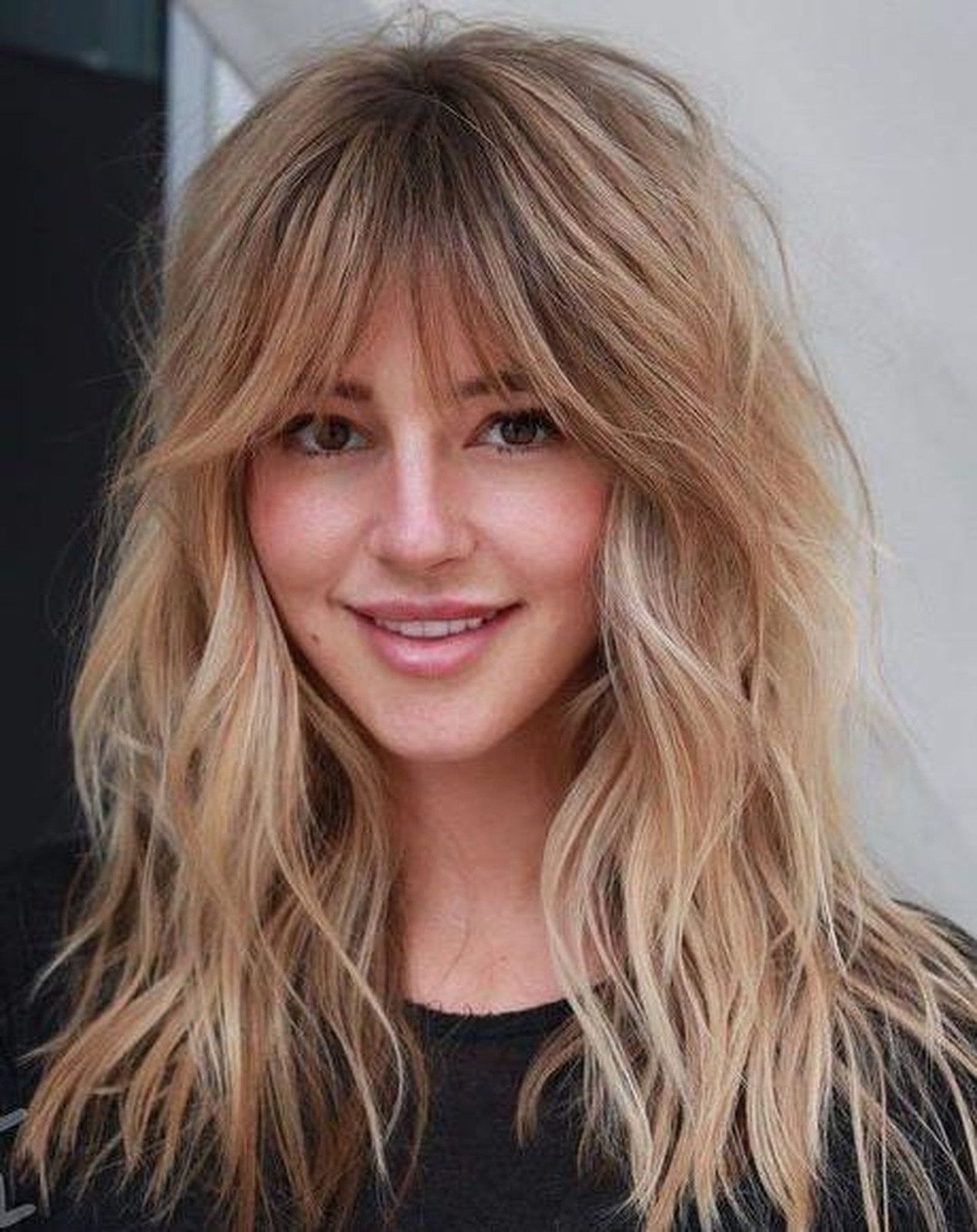
First reaction to this collarbone shag: finally, a shag that doesn’t look like a costume. The ash blonde shag haircut has lived-in ash blonde colour with lighter highlights that melt through the layers, so the texture does the talking. It’s collarbone length, wavy and medium density, and the curtain bangs are cut to sweep away from the face. The honest downside: this needs daily styling. You’re working a texturizing cream through damp hair and letting it air dry, or it falls flat by lunch. The payoff is that lived-in texture that looks like you woke up this way, but only if you put in the ten minutes. It’s a salon cut, no question, the layers have to be precise or the whole thing collapses.
Shoulder Length Ash Blonde Blowout
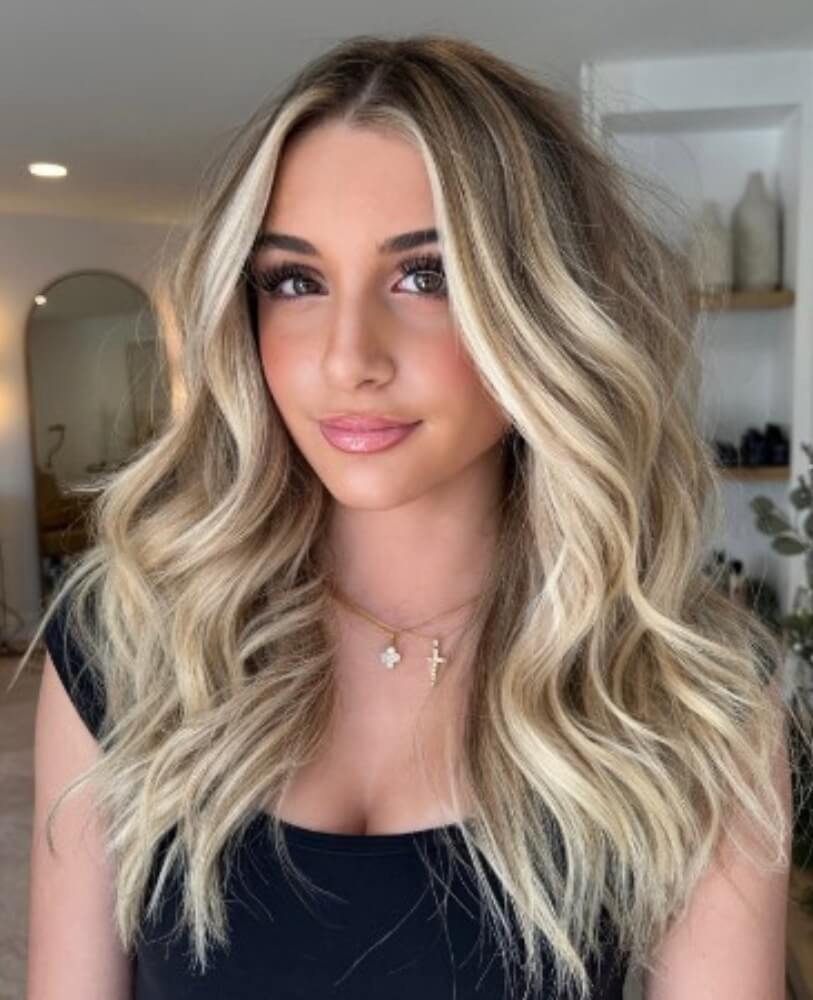
I will admit I was skeptical about ash blonde shoulder length hair on anyone who does not have a standing blowout appointment. The photo shows a middle part, no bangs, collarbone-grazing layers with a wavy blowout and medium density. Here is the thing about this specific ash blonde with darker roots and blonde highlights: it works best when your natural base is already medium to dark blonde or light brown, because the root blend reads intentional rather than neglected. Fine hair benefits from the darker root shadow at the crown, which creates the illusion of density. The ash tone reads cool next to warm skin, so if you run pink or yellow undertones, ask your stylist to soften it with a beige additive. A good blowout takes about 15-20 minutes. Use a heat protectant spray. This style benefits from a trim every 6-8 weeks to maintain the shape.
Long Beige Blonde With Root Shadow
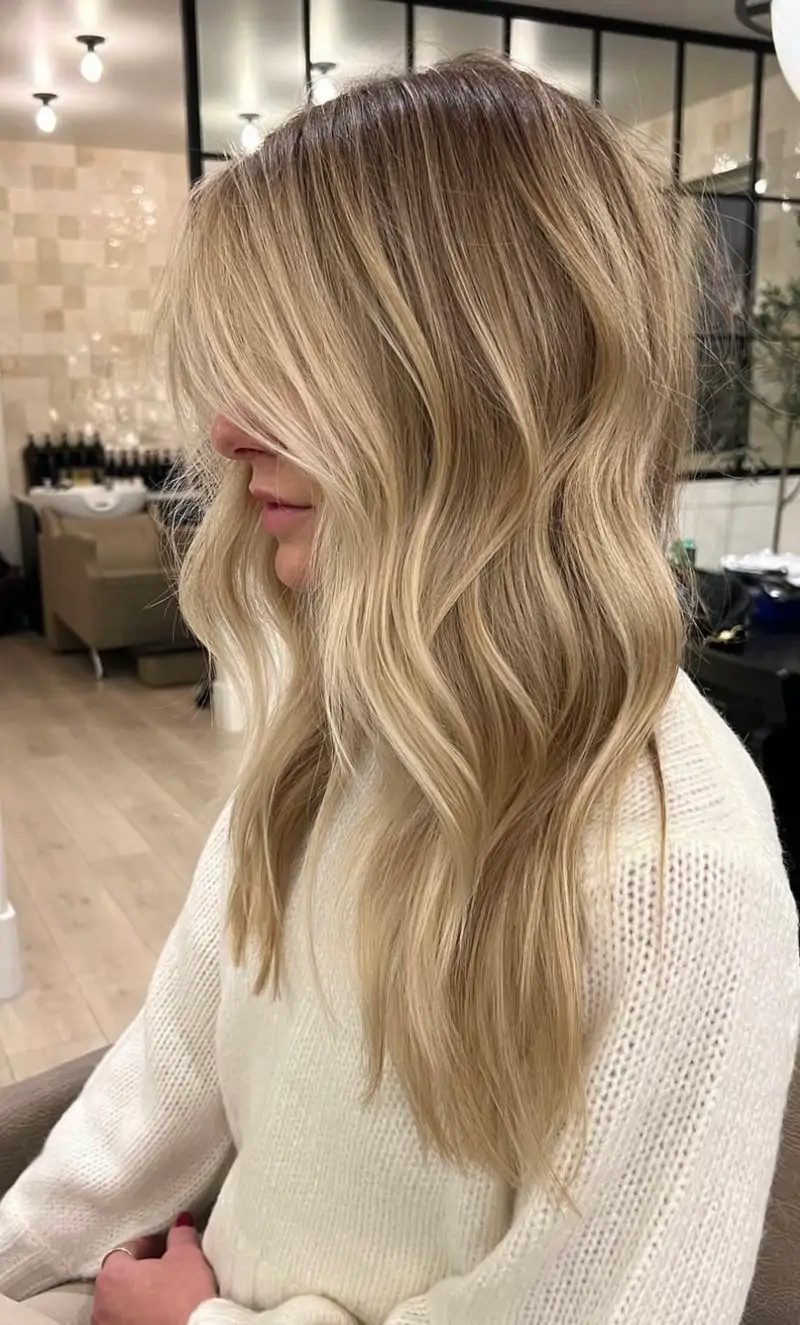
Best grow-out in this roundup. The beige blonde root shadow is built by painting a demi-permanent shade one to two levels darker than your natural base directly onto the regrowth, then blending it downward with a balayage technique. The photo shows mid-back length, long layers, face-framing pieces, a middle part, loose waves and medium density. The root shadow is not a solid band; it is painted in a V-shape at the part and feathered through the top section so the line disappears. The balayage highlights are woven through the mid-lengths and ends in a soft, graduated pattern. This is a salon job. The root shadow requires a trained eye to place the darker colour where it will blur with your natural growth pattern, and the balayage needs a stylist who can paint freehand without overlapping the root shadow. Do not try this at home with a box dye and a mirror.
Shag Lob With Ash Blonde
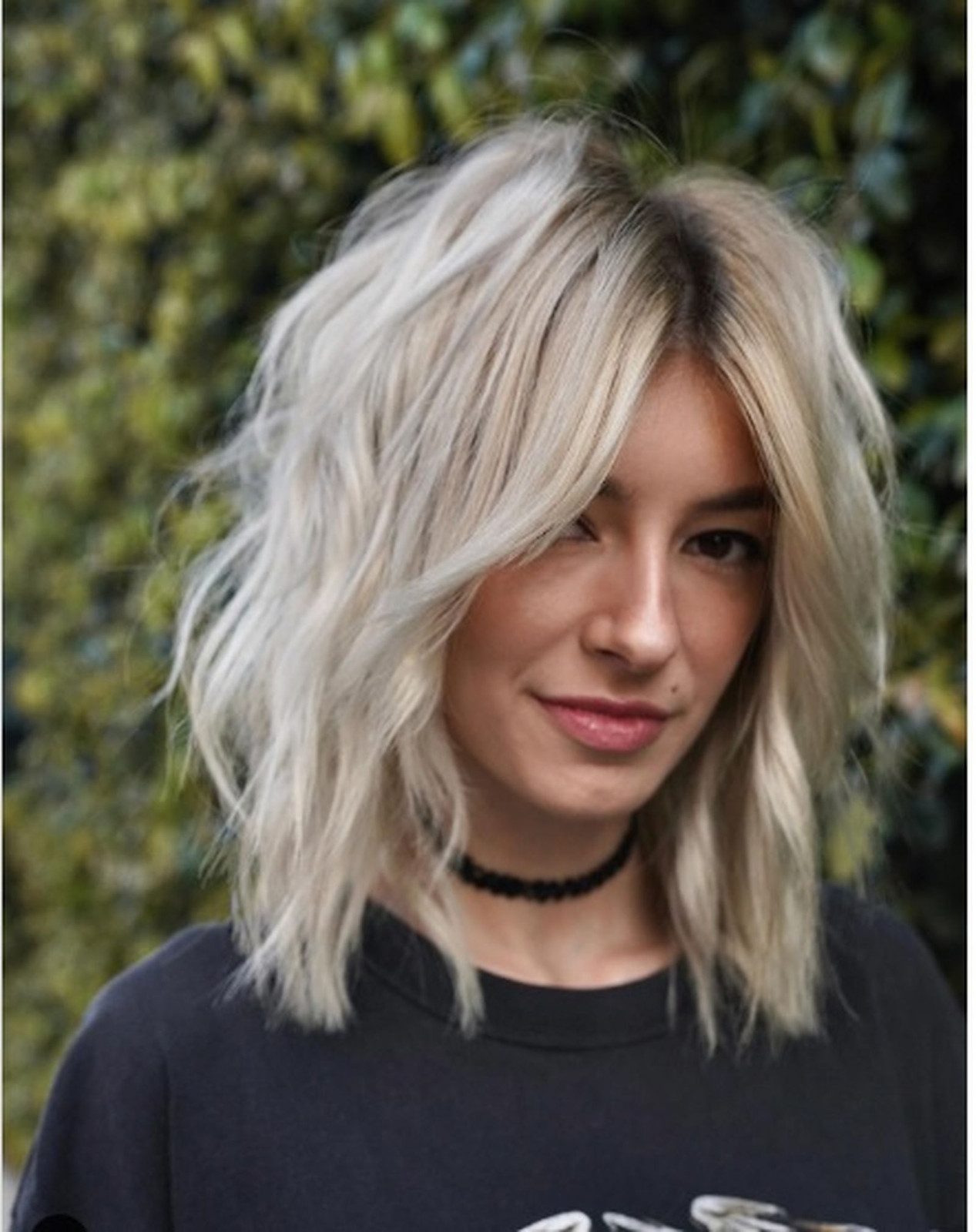
Can we talk about how the lived-in colour effect actually behaves after week three? The photo shows a collarbone-length shag lob with curtain bangs, a middle part, loose textured waves and medium density. The ash blonde shag lob is built on darker roots and subtle highlights, which means the regrowth is not the enemy. But here is the honest downside: the shag layers expose the colour distribution. If the highlights are too chunky or placed too low, the top section goes flat and dark while the ends stay light. The lived-in colour effect depends on the highlights reaching at least two inches from the root, so the darker base has company. Without that, you get a stripe, not a blend. A texturizing cream worked through damp hair and air drying helps the layers sit right. Trim every 6-8 weeks to maintain the shag shape. Bangs may need a touch-up sooner.
Mid-Back Ash Blonde With Subtle Highlights
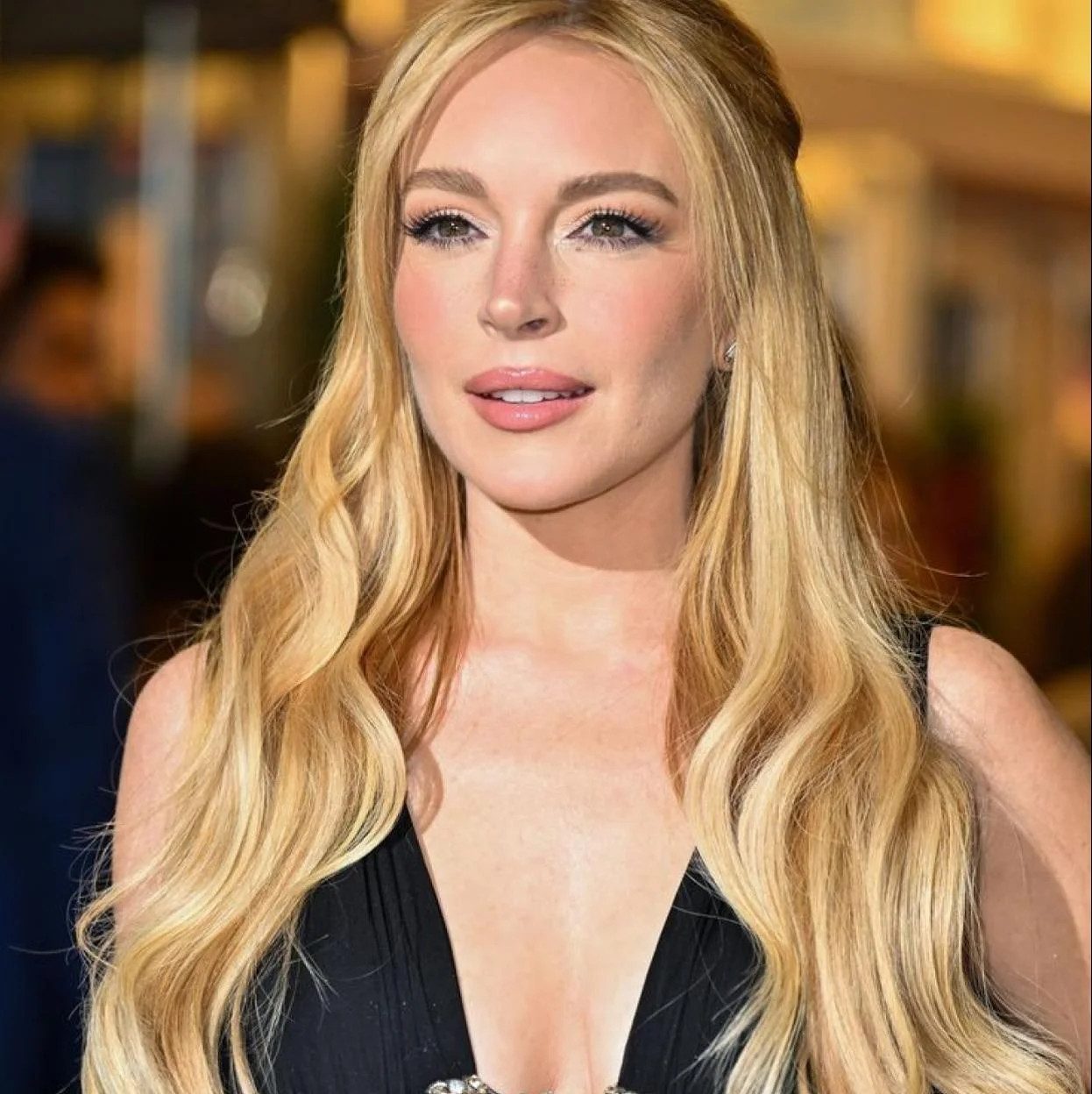
Notice how the darker roots do not start at a hard line. The photo shows mid-back length, layers, no bangs, a middle part, loose waves and thick texture. The lived-in ash blonde is built with subtle highlights that begin about two inches from the scalp, so the root area stays deeper and the lightness graduates downward. The ash tone is cool but not silver, which means it reads natural rather than dramatic. Upkeep is minimal: a toning gloss every eight to ten weeks keeps the ash from pulling green or muddy. This colour suits winter and fall best, when cooler tones complement the lower light and heavier clothing. In summer, the same base can lean drab against a tan, so a warm gloss refresh in June is worth considering. Air dry with a texturizing spray or use a large barrel curling iron for loose waves. Trim every 8-10 weeks. Colour maintenance is minimal.
Collarbone Lob With Warm Balayage
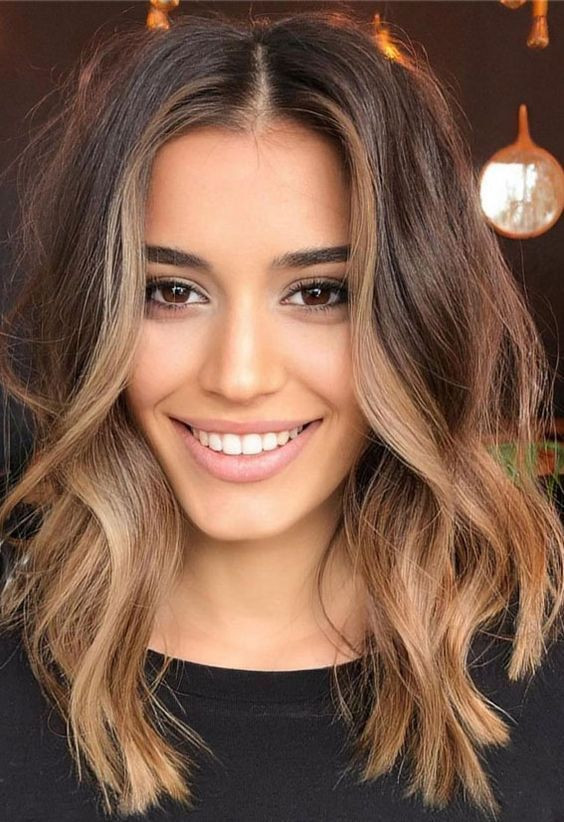
She walks into the room and the light catches the caramel first. The photo shows a collarbone-length lob, no bangs, a middle part, loose waves and medium density. The warm blonde balayage lob uses blonde and caramel tones painted freehand onto the mid-lengths and ends, leaving the root area darker. The caramel reads warm against golden and olive skin tones, while the blonde lifts the face without washing it out. On very fair or pink-toned skin, the caramel can look brassy, so ask for a beige-caramel hybrid instead of a straight gold. The balayage technique means the grow-out is soft, no hard line at the root. A texturizing spray enhances waves. This lob needs a trim every 6-8 weeks. Colour touch-ups are minimal due to the balayage technique.
Mid-Back Platinum Blonde With Dark Roots
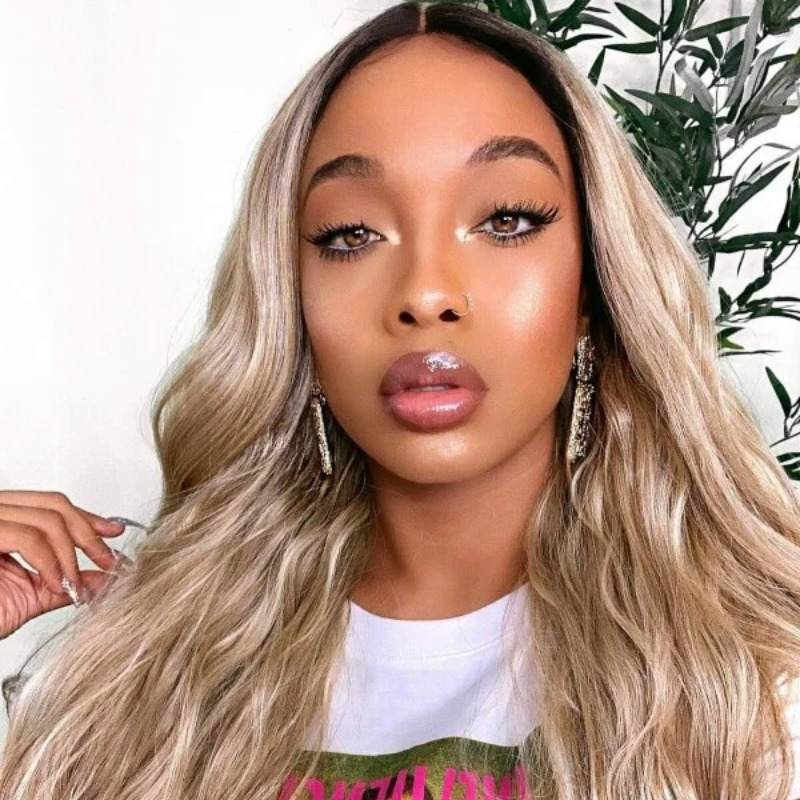
Platinum blonde dark roots is the best grow-out in this roundup. The contrast is deliberate, not accidental. A dark root shadow at the part and temples means you can let the regrowth go six, maybe eight weeks before anyone notices. The platinum blonde itself is cool, almost silver, and it lands on long layers that hit mid-back. Fine, wavy texture holds the wave pattern without going flat by 4 pm. The honest downside: fine hair needs a gentle hand with bleach. Over-process it once and you are cutting off inches. I have seen it happen.
This is not a shade for anyone who wants low heat styling. You need a purple shampoo in rotation and a toning appointment every four weeks. But if you like a bold, edgy blonde that does not scream freshly-done, this is the one. The dark roots make it lived-in from day one.
Mid-Back Dark Blonde With Caramel
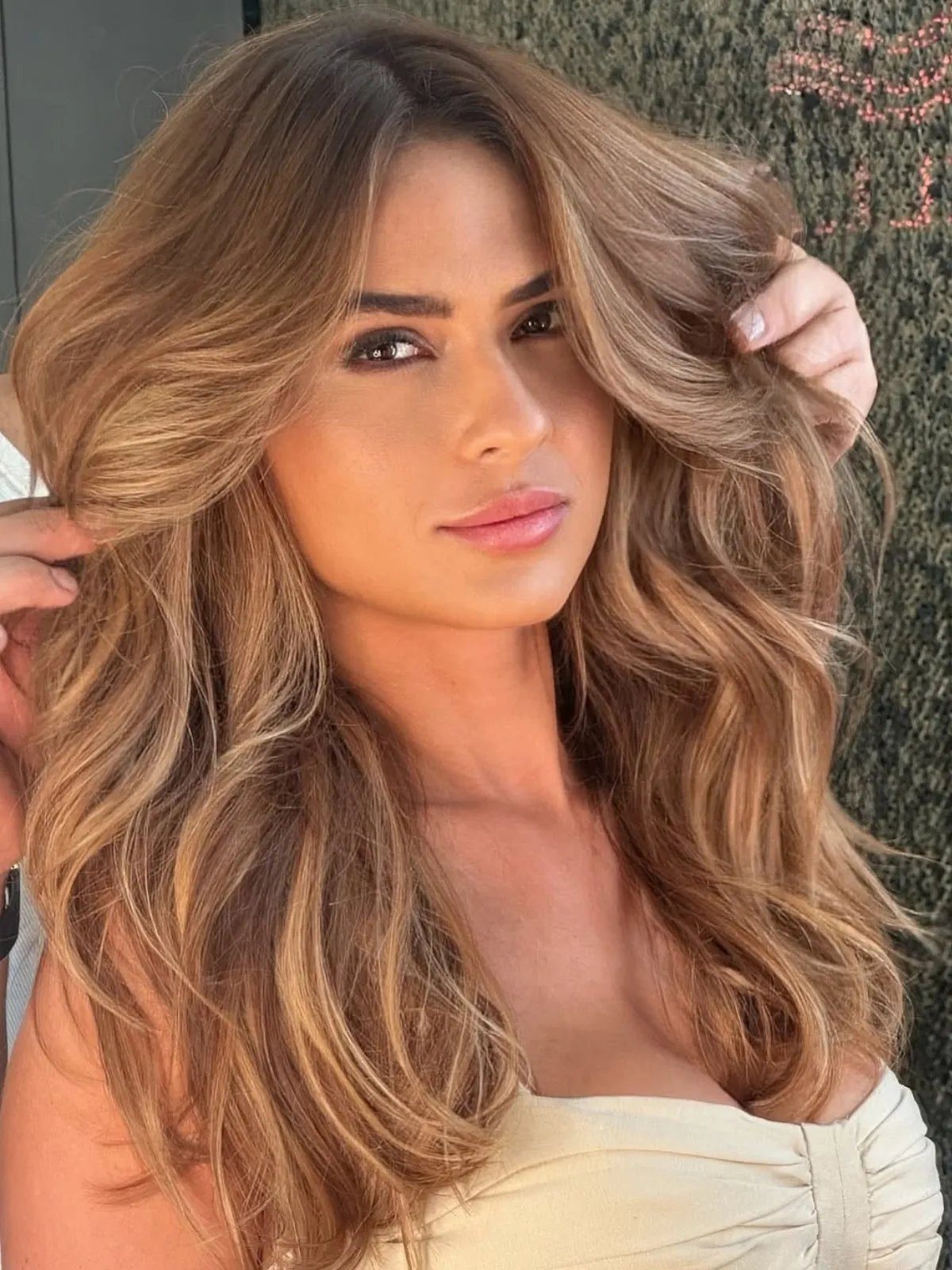
When did brown start looking this expensive? Dark blonde caramel highlights sit on a base that is almost brunette, and the caramel pieces are painted on with a freehand technique. Mid-back length, loose waves, no bangs. The caramel hits the mid-lengths and ends, leaving the root area darker. It is a salon job, no question. The placement is too specific for a box dye at home. But the grow-out is forgiving because the base and the highlight are close in depth.
No Bangs Collarbone Lob With French Balayage
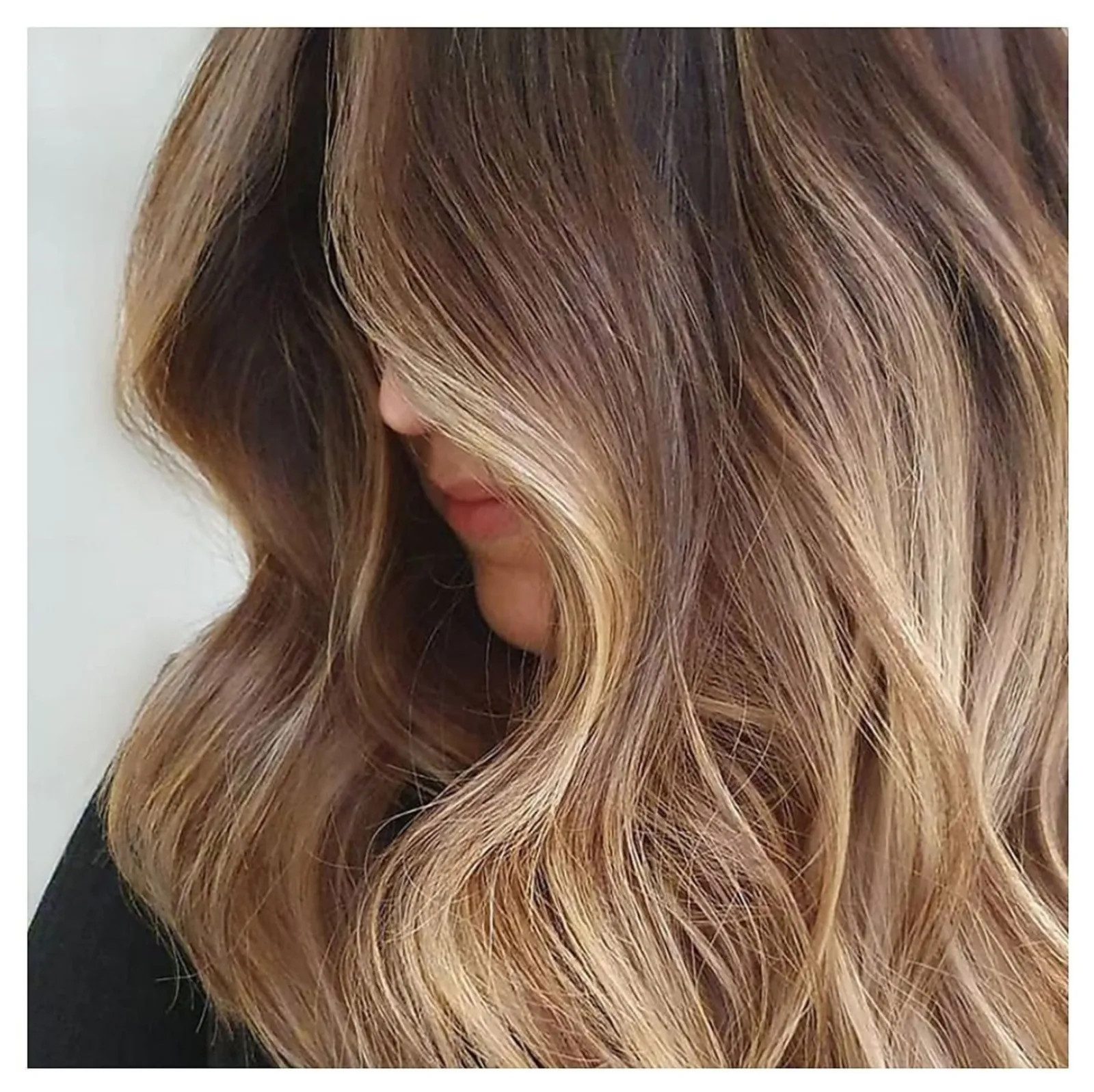
I booked this twice in one season. French balayage lob with no bangs, and the seamless blend of natural roots and blonde is the whole point. The colour is painted on by hand, starting an inch or two from the root, so there is no hard line when your natural colour grows in. Collarbone length, wavy, medium density. I wash and go, maybe a spritz of texture spray on day two. The lob shape needs a trim every eight weeks to keep the blunt edge, but the colour itself stretches to twelve weeks easily.
Long Layers Mid-Back Ash Blonde With Creamy Highlights
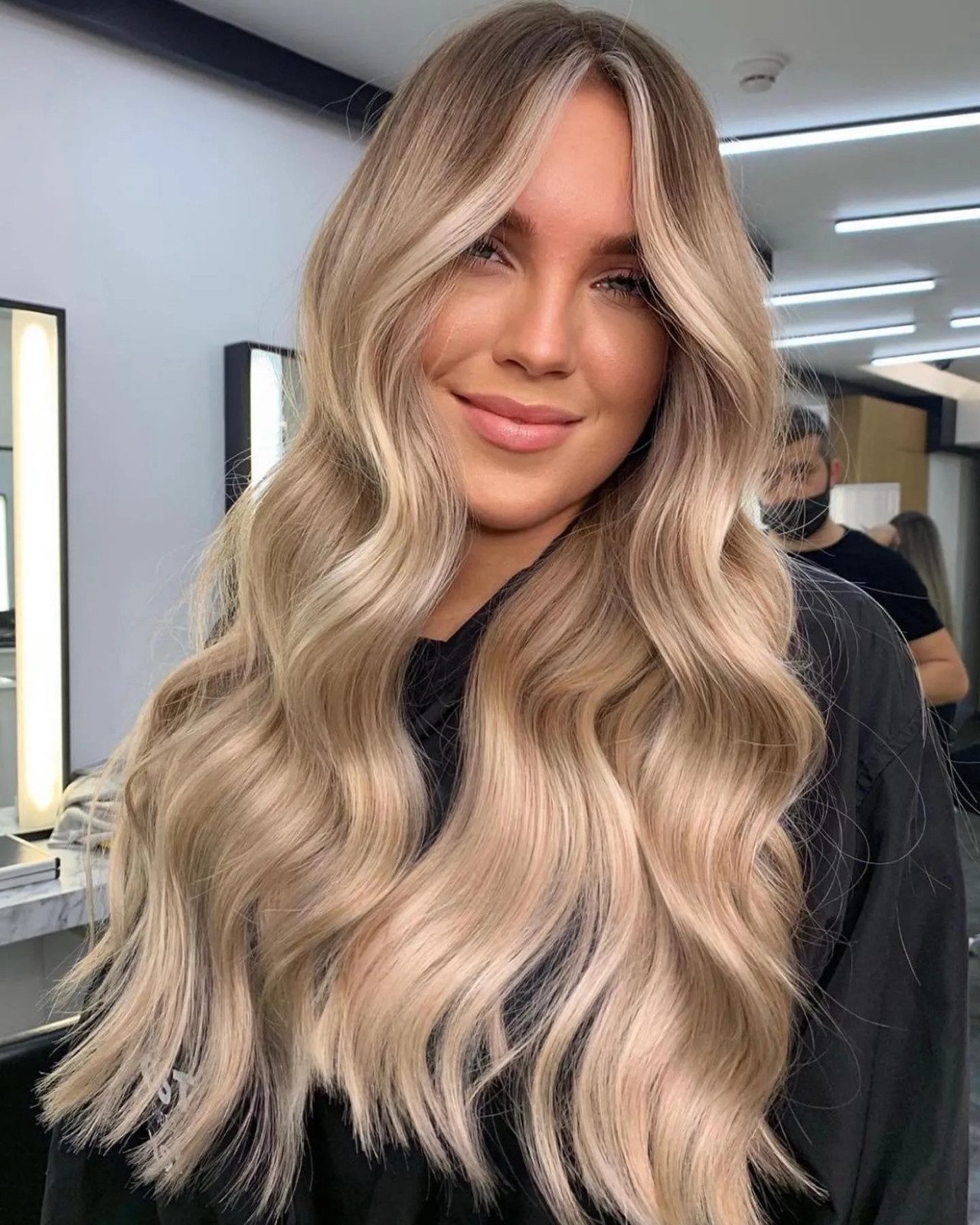
Have you ever seen a blonde that looks both cool and warm at once? Ash blonde creamy highlights do exactly that. The base is a soft ash, the highlights are a warm cream, and a root shadow at the part keeps it from looking flat. Long layers, mid-back length, thick wavy texture. Face-framing layers soften the front. Styling for an event: blow dry with a round brush for volume, then a large barrel curling iron for loose waves that hold all night. The contrast between the ash base and the creamy highlights catches light in a way that reads expensive.
This is a good pick for someone who wants dimension without high contrast. The root shadow means you can skip a toning appointment and still look intentional. Just keep the highlights away from the root area to maintain that soft grow-out.
Mid-Back Platinum With Ash Undertones
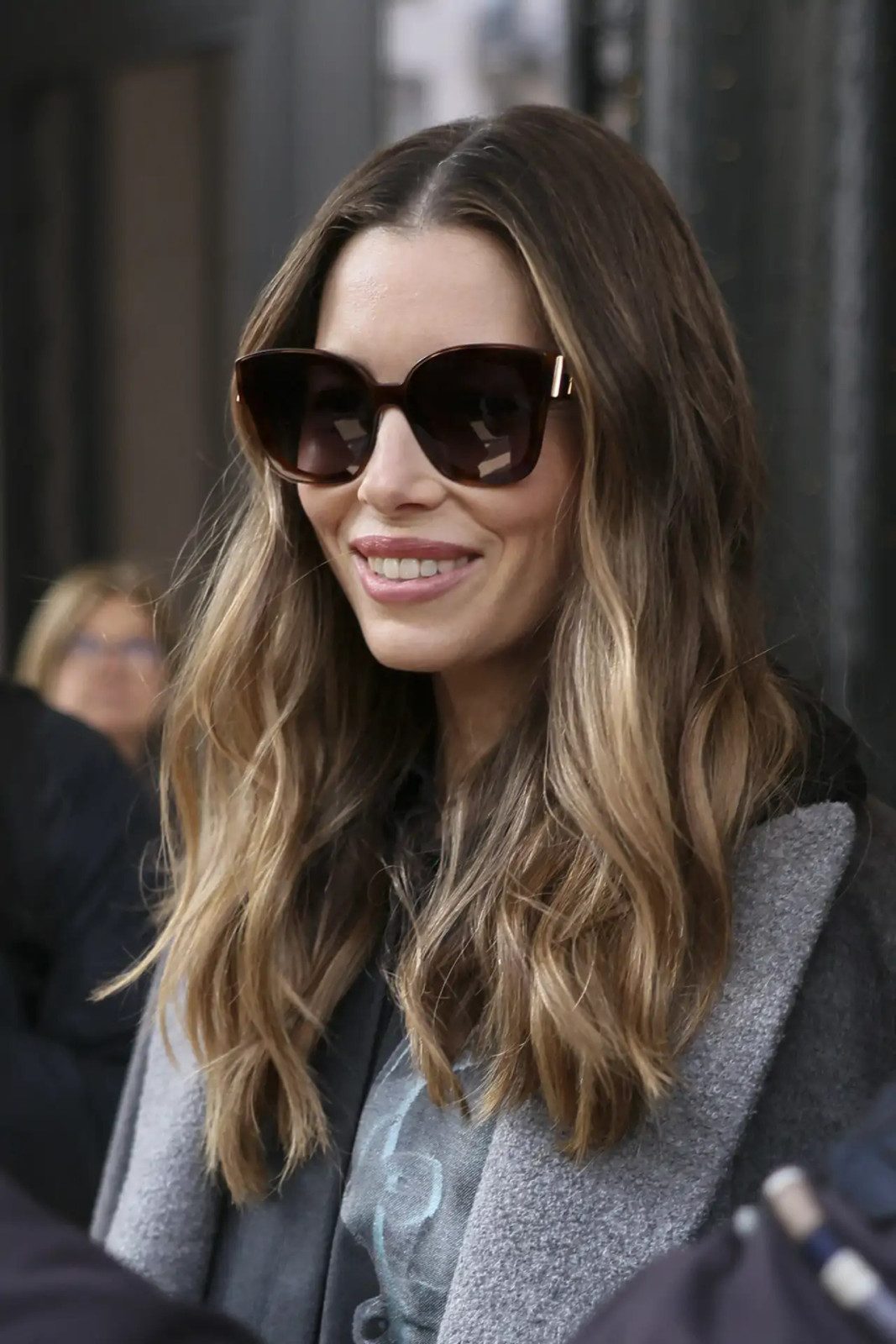
Platinum blonde ash undertones read cool next to warm skin, and that is the trick. The base is bright platinum, but the ash undertones knock back the yellow that makes platinum look cheap. Long layers, mid-back, fine wavy texture with face-framing layers. The subtle root shadow keeps the grow-out from looking harsh. Who it suits: anyone with naturally cool or neutral undertones, or warm skin that wants a deliberate contrast. Who should pass: anyone not ready for a toning appointment every three weeks. Brassiness shows fast on this shade, and a purple shampoo alone will not fix it once the yellow sets in.
Mid-Back Neutral Blonde With Highlights
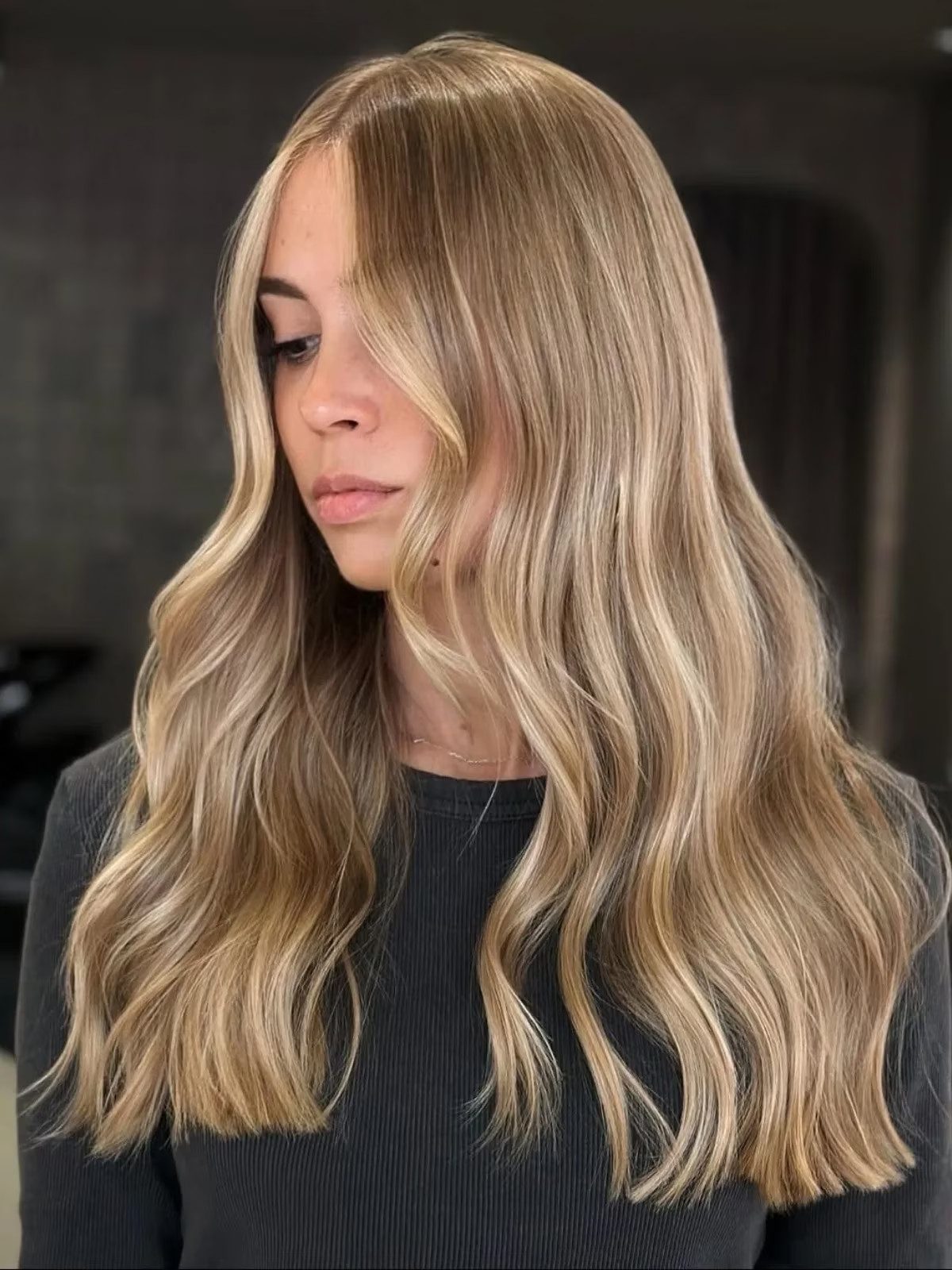
My hair colour history reads like a temperature chart: ash one year, honey the next. Neutral blonde is the ceasefire. It sits exactly between warm and cool, which means it does not turn brassy by week three or wash me grey by week four. The base is a soft beige, and the finely woven highlights are barely there, just enough to catch light. On mid-back length with loose waves, the effect is expensive in a way I cannot explain. A side part gives it movement, and the grow-out is so gentle I forgot my last appointment date. That is the point.
Upkeep is almost laughably simple. A trim every eight weeks. A purple shampoo once a week to keep the tone clean. No root shadow needed because the contrast between my natural and the colour is negligible. If you are tired of fighting brass or fighting ash, this is the white flag.
Collarbone Sandy Blonde With Highlights
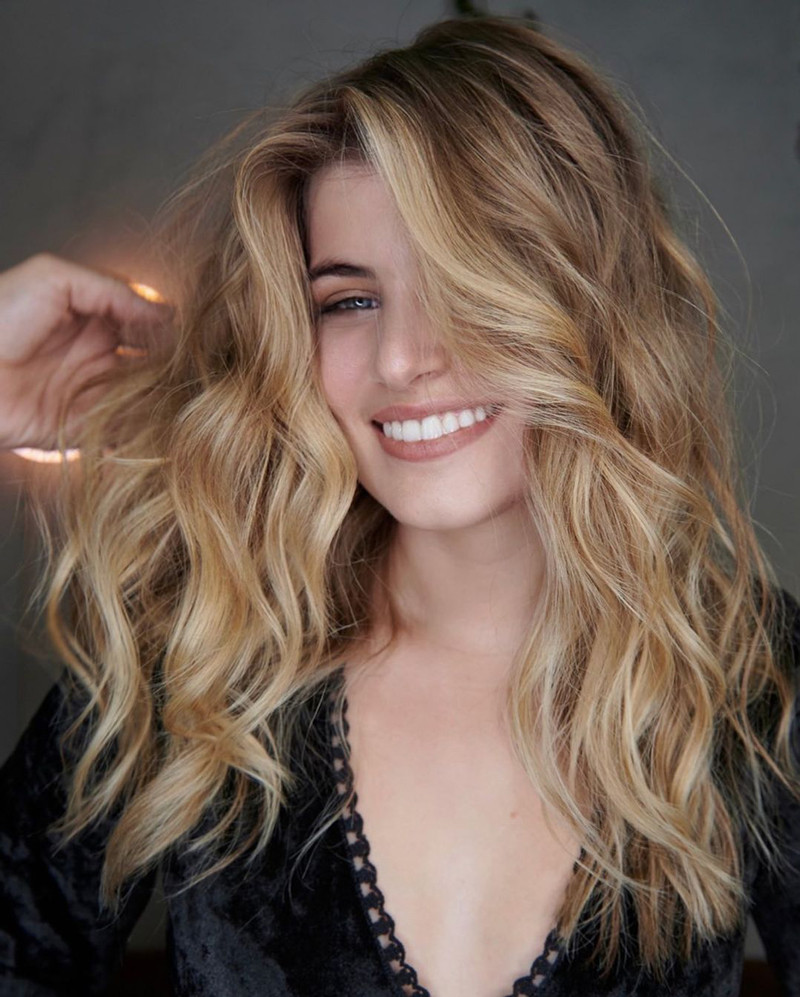
Sandy blonde highlights look like you spent a week at the beach and forgot to rinse. The technique is a freehand balayage, painted on sections already lightened, then toned to a warm beige that reads sun-bleached. The result is collarbone length with curtain bangs, and the lighter blonde pieces hit around the face and ends. This is a salon job. The colour placement matters too much to guess at home, and the tone shift from sandy to brassy happens fast without a professional toner. Book it.
Collarbone Honey Blonde With Bangs
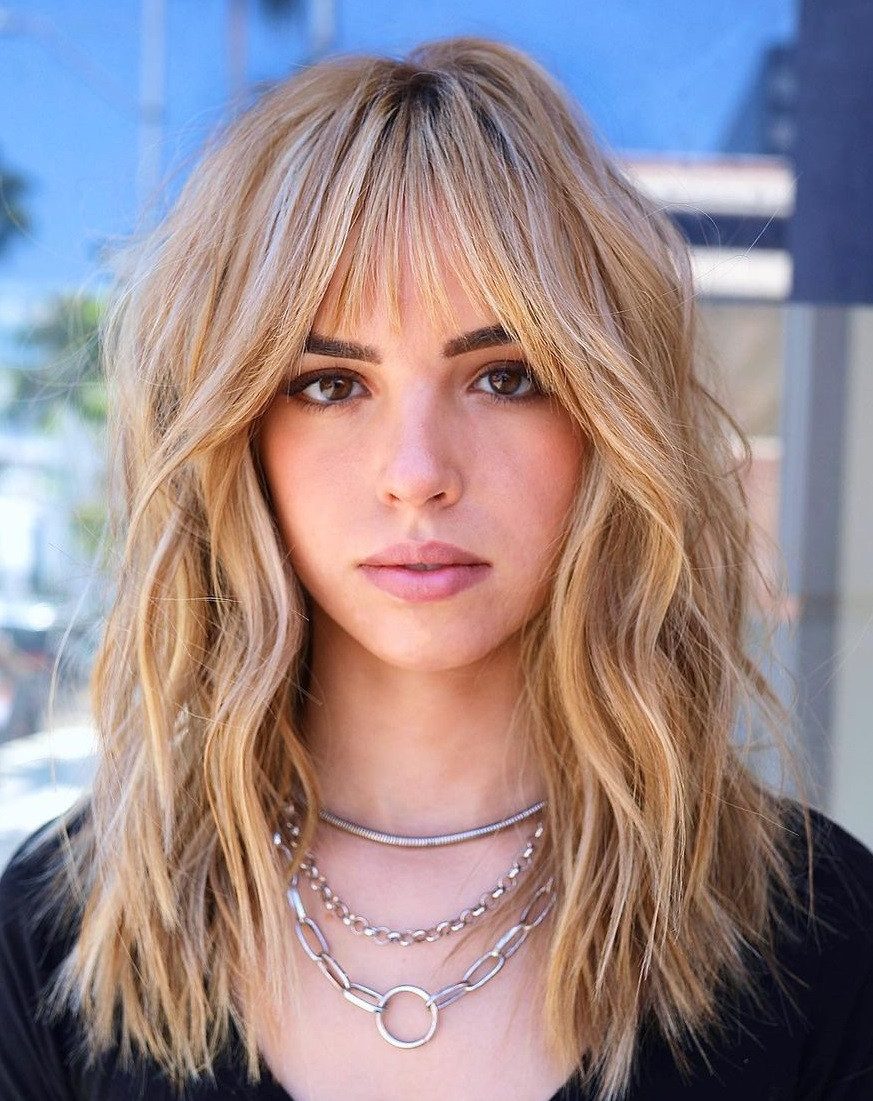
I will say it plainly: honey blonde full bangs are a commitment, and I respect anyone who makes it. The colour is warm, golden, almost edible, and the full bangs sit just above the brows. The face-framing layers around the collarbone give the shag its shape. The honest downside is that bangs show oil by noon, and honey blonde shows warmth, which means roots read darker faster than an ash tone. A dry shampoo and a quick blow-dry on the fringe every morning. It is worth it for the way the light hits the layers, but know what you are signing up for.
Visual Idea
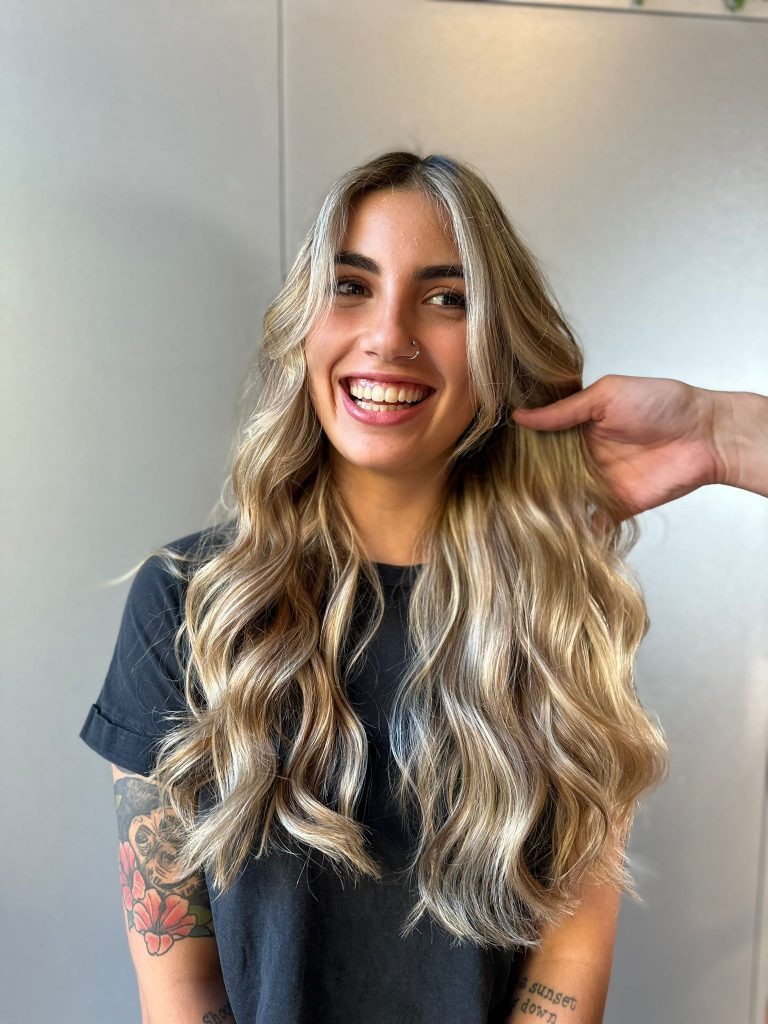
When did the front pieces get this much attention? The rest is a collarbone-length ash blonde with a root shadow, almost quiet. Then these two chunks of bright blonde near the face take over, and suddenly the whole thing has an argument, a point of view. Light catches them first. Darker waves behind just sit there being the supporting cast. Middle part, curtain bangs that fall open, loose wave that does not try too hard. The technique is deliberate: heavy highlights concentrated at the front, softer through the back. That is the trick. The face gets the glow, the rest gets a break.
Collarbone Visual Idea

The collarbone shag with curtain bangs suits a round face better than I expected. The side part and the face-framing layers cut across the width, they do not just add more hair around it. Honey blonde base with lighter highlights through the front, so the colour lifts where the cut already did the work. Thick, wavy texture holds the shape without hourly fuss, I have seen it stay recognizable through a windy morning. Wear it with a middle part and the whole thing goes wider, which is fine if that is your goal. The upkeep is a trim every ten weeks, maybe twelve, because the layers give you room. Bangs need a touch sooner, around eight weeks, or they start grazing the nose instead of the cheekbone.
Mid-Back Visual Idea
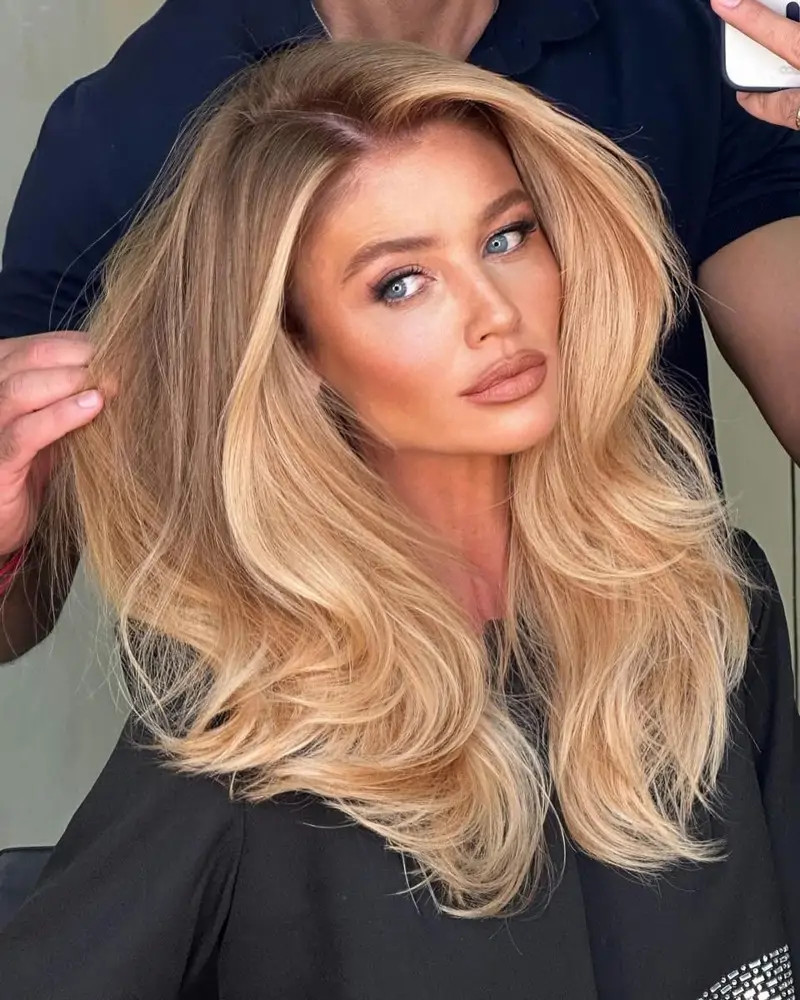
I did not expect to like a mid-back length this much. The ash blonde base goes creamy at the ends through balayage, and the root shadow keeps it from looking like a grown-out dye job. Long layers and a middle part carry the volume, and on thick, wavy hair the loose waves actually hold their shape past noon. Here is the catch: do not try this at home. The root shadow alone requires a stylist who understands how to blend it upward so the line disappears. Ask for a soft balayage with a root shadow that starts half an inch from the scalp, and tell them you want the creamy highlights concentrated on the mid-lengths and ends. That is the recipe. Book the appointment.
Layers Visual Idea

Best grow-out in this roundup. The honey blonde balayage over a warmer base means the line between colour and root is soft by design, and on thick, wavy hair that is a genuine relief. But here is the honest downside: the styling effort. Those loose waves require a curling iron and a cool shot of air, and if you skip the heat protectant, the ends will look fried by day three. The layers add movement, yes, but they also add a daily round brush session. It is not a wash-and-wear cut, not on this texture. If you want low effort, skip this one.
Blonde With Balayage Highlights Visual Idea
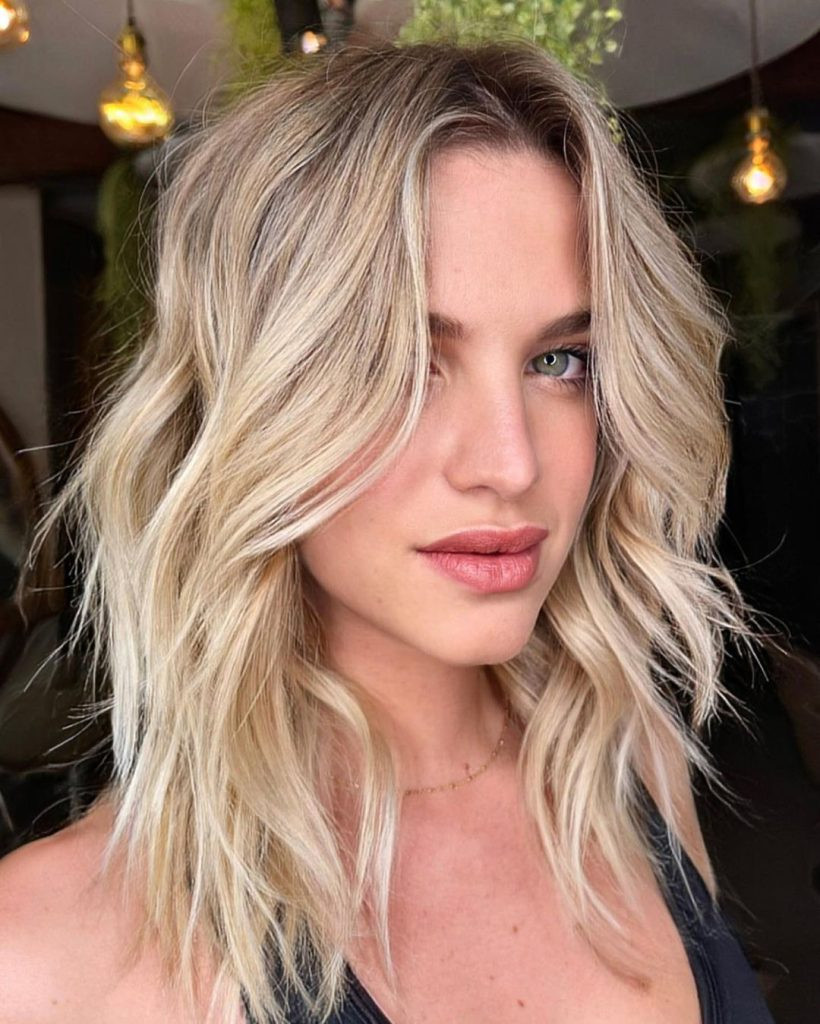
The light hits the mid-lengths first. That is the whole point of balayage highlights on a mid-back length with layers and no bangs: the colour lands where the eye goes. The base is a neutral blonde, not too warm, not too cool, and the hand-painted sections run from the mid-shaft to the ends. On wavy hair with a side part, the loose waves catch the light differently on each side, which is why it works for both a casual brunch and a holiday dinner. It is versatile because the technique does the work. The season barely matters. The occasion barely matters. It just sits there and looks like it belongs.
Beige Blonde With Subtle Babylights Visual Idea
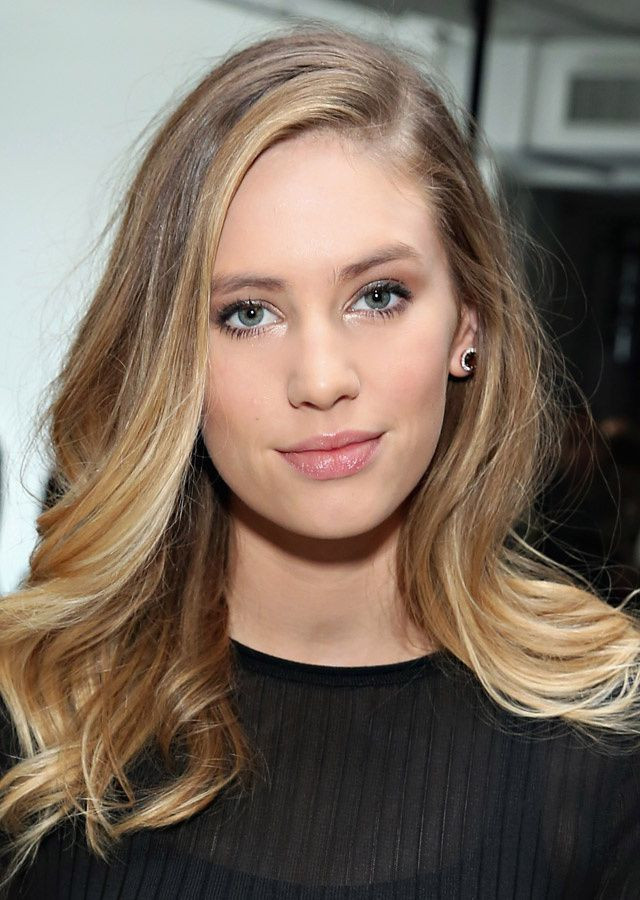
Are you a wavy, medium-density hair person who wants colour that does not scream? Then the beige blonde with subtle babylights on a collarbone lob is your match. The babylights are fine, almost invisible at the root, and the beige tone sits right between warm and ash, so it flatters both cool and warm undertones without fighting them. The side part and loose waves add texture without bulk. It is not for high-density hair, which would swallow the babylights, and not for straight hair, which would show every uneven section.
No Bangs Visual Idea
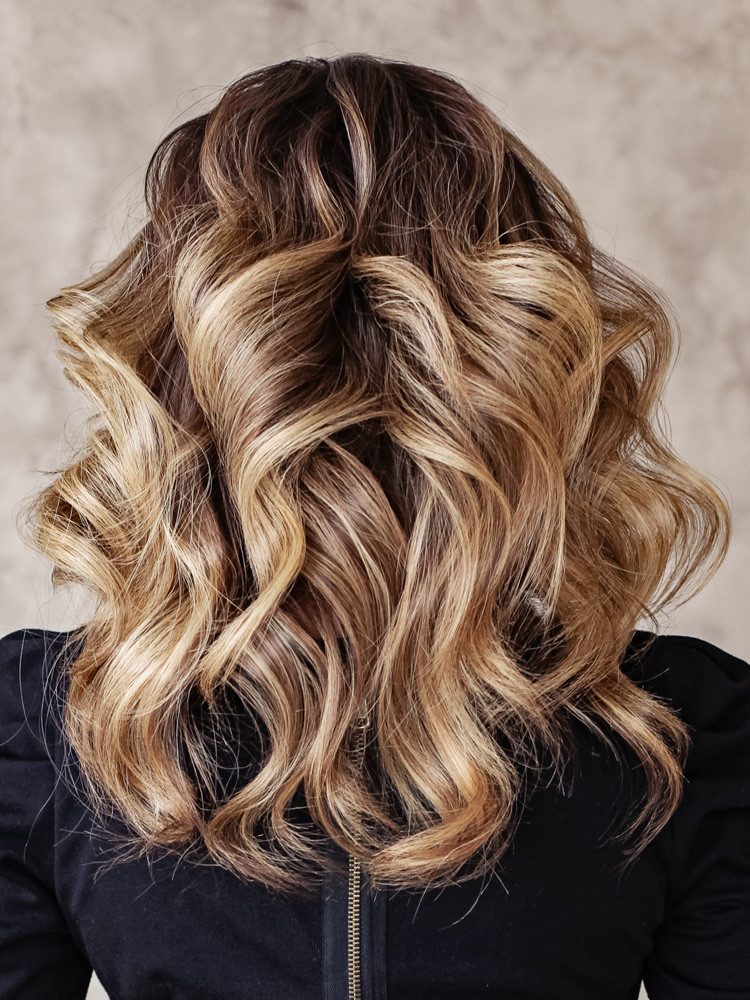
I will confess: I usually prefer a soft balayage. But this high-contrast version, a dark blonde base with heavy, bright blonde balayage from the mid-lengths down, has a different argument. The back view shows the colour line clearly, and on thick, wavy hair with a middle part and loose curls, the contrast reads as deliberate, not accidental. Do not try this at home. A heavy, bright balayage on a dark base requires a stylist who can place the lightener so it lifts evenly without creating a stripe. Ask for a high-contrast balayage with a dark root and bright ends, and tell them you want the transition to start at the chin. It is not subtle. That is the point.
Long Layers Visual Idea
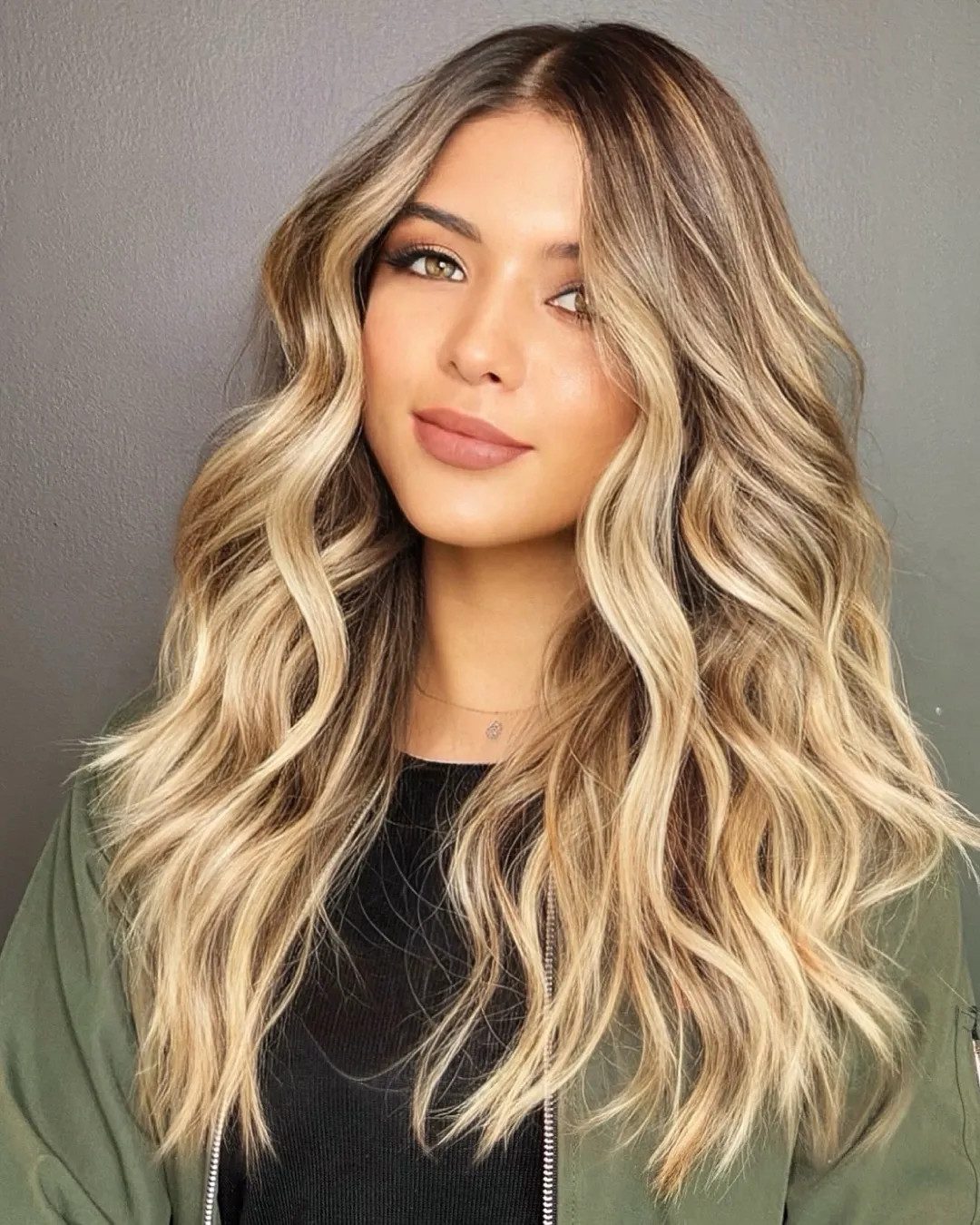
This is the caramel blonde balayage I keep coming back to. The technique starts a few inches from the root, painting caramel tones onto a medium blonde base so the grow-out reads like a shadow, not a stripe. On thick, wavy hair at mid-back length, the long layers catch the light and the colour moves with every wave. A side part pulls the dimension forward. It’s not a quiet blonde. The downside is real: caramel pulls warm fast, and by week four you are either toning or living with a glow that leans orange. I book a gloss at six weeks and call it maintenance.
The balayage here is hand-painted, no foils near the scalp, which keeps the root line soft. My stylist uses a sweeping motion through the mid-lengths and concentrates the caramel at the ends. That is the difference between a grown-out highlight and a deliberate lived-in colour. For mid-back hair with texture, this is the technique that holds.
Ash Blonde With Subtle Root Shadow Visual Idea
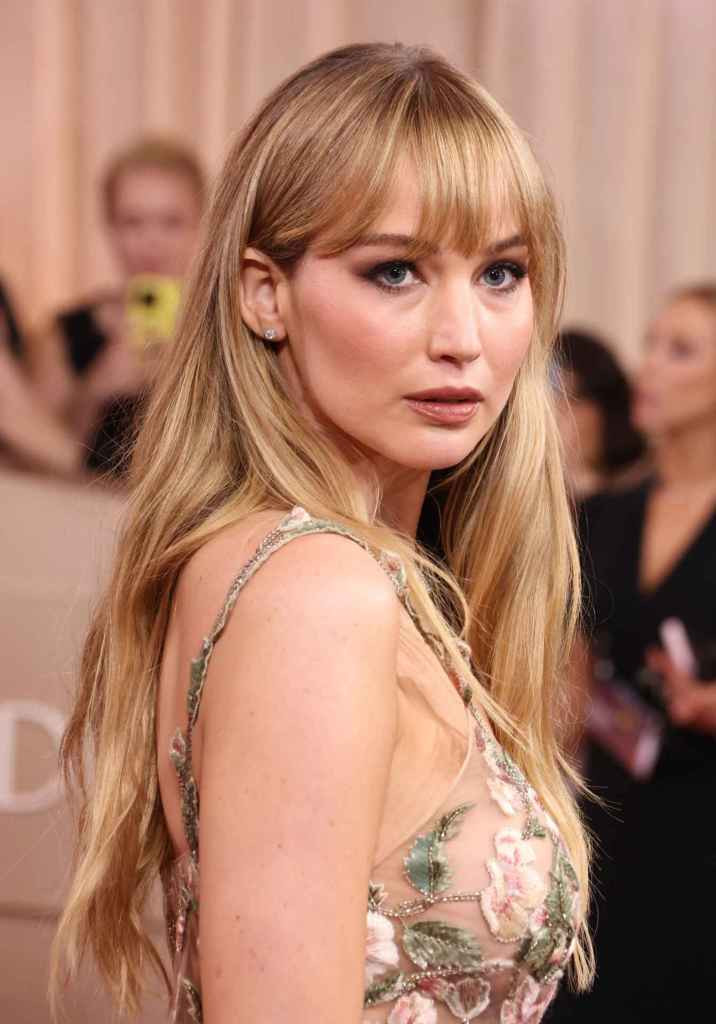
The ash blonde sits cool and the root shadow is barely there, which is the point. On straight, mid-back hair with blunt bangs, the grow-out is a slow fade, not a demarcation line. I wash twice a week and by day four the ends have softened, but the root shadow keeps the top from looking flat. A middle part and a straight blowout let the ash tone do the work. The upkeep is a toner every eight weeks, and the root shadow buys you two more before you need to sit down.
Honey Blonde With Caramel Highlights Visual Idea
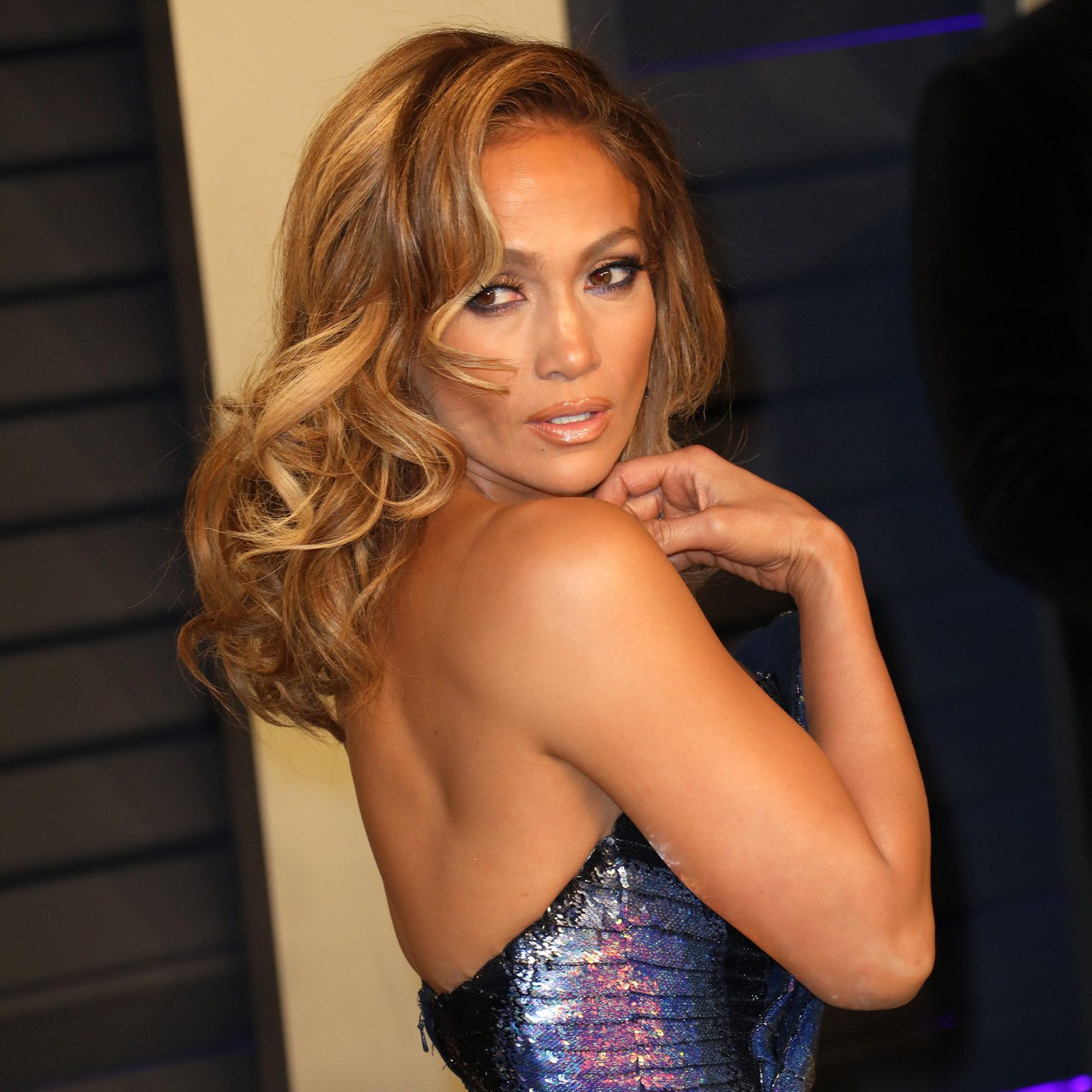
This is the blonde that gets asked about at brunch. The honey base is warm without being yellow, and the caramel highlights are woven through the mid-lengths and ends, not the root. On thick, wavy hair at mid-back length, the dimension comes from the placement, not the curl. A middle part and a voluminous blowout with loose curls make the colour read like it has depth, not just shine.
For an event, this is the one. The highlights catch overhead light and the honey base keeps the whole thing soft. No brassiness, no ash, just a warm blonde that looks like it spent a week at the beach. I wore this to a wedding and three people asked for the formula.
Ash Blonde With Subtle Highlights Visual Idea
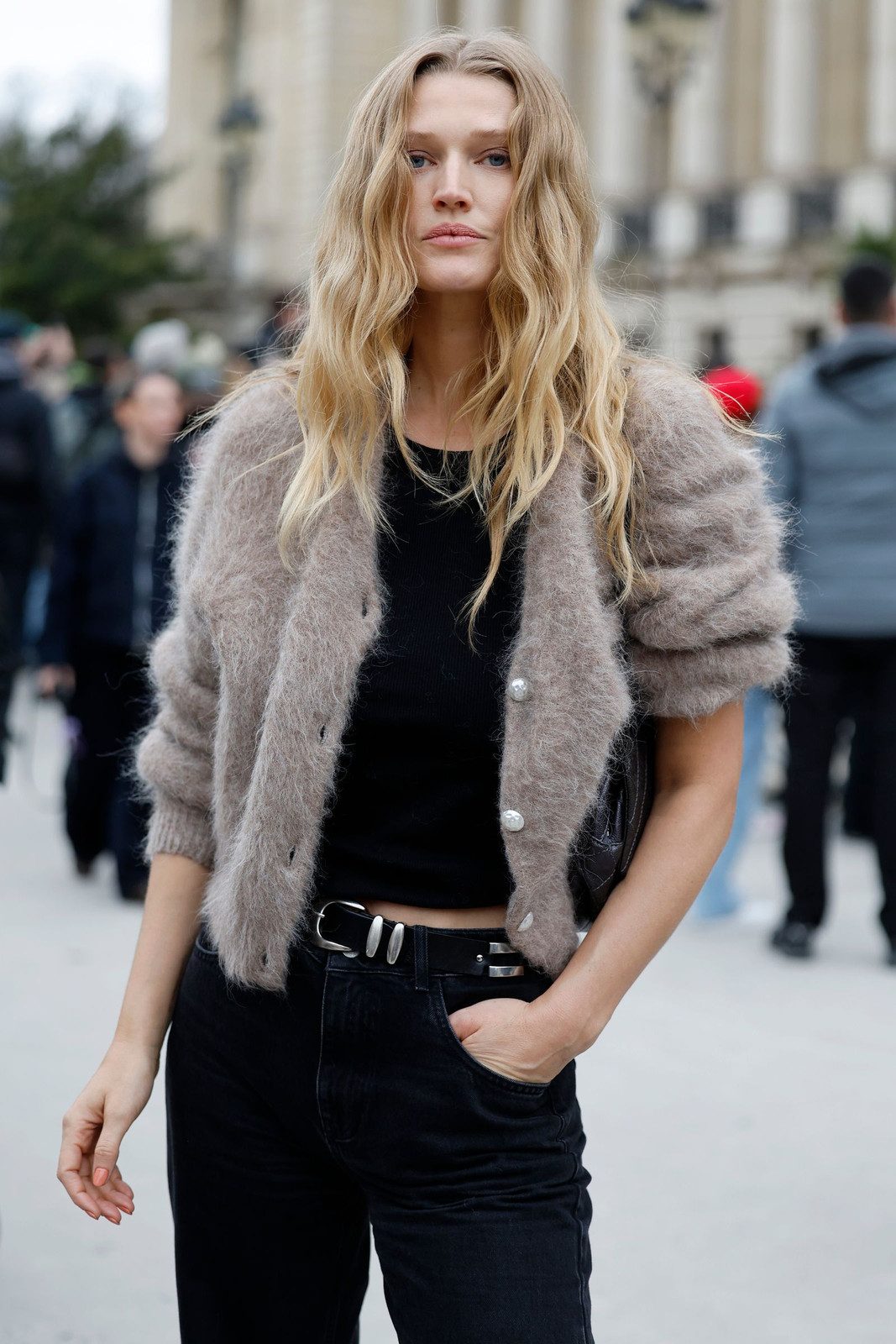
Is your hair thick and wavy and prone to looking heavy? This is the colour that fixes that. The ash blonde base sits cool and the subtle highlights are placed through the top layers, not all over. On mid-back hair with curtain bangs, the lightness lands where the face is, and the rest stays soft. The downside is that thick, wavy hair holds warmth in the underlayer, so the ash tone can read muddy by week five if you skip the purple shampoo. It is not a set-it-and-forget-it blonde. But for anyone with density who wants a cool blonde that does not look flat, this is the one.
Back View Visual Idea
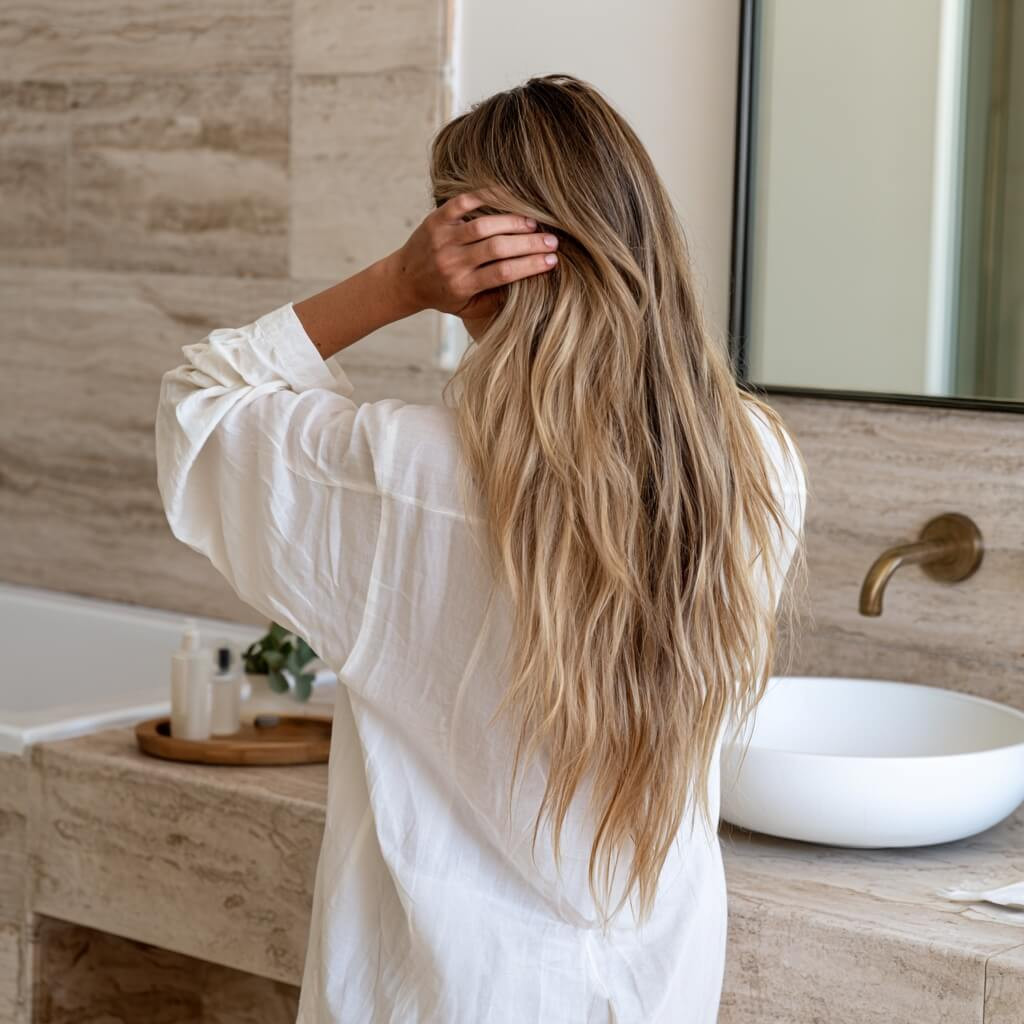
You see the back first, and that is where this colour earns its keep. The ash blonde balayage starts darker at the crown and graduates to a cooler blonde through the mid-lengths and ends. On mid-back, wavy hair with medium density, the layers catch the light in a gradient, not a stripe. A middle part and loose waves let the colour move. Compared to a warm balayage, this reads cooler and cleaner, less golden hour and more overcast morning. It is a deliberate choice. The effect is a blonde that looks grown, not applied.
Front View Visual Idea
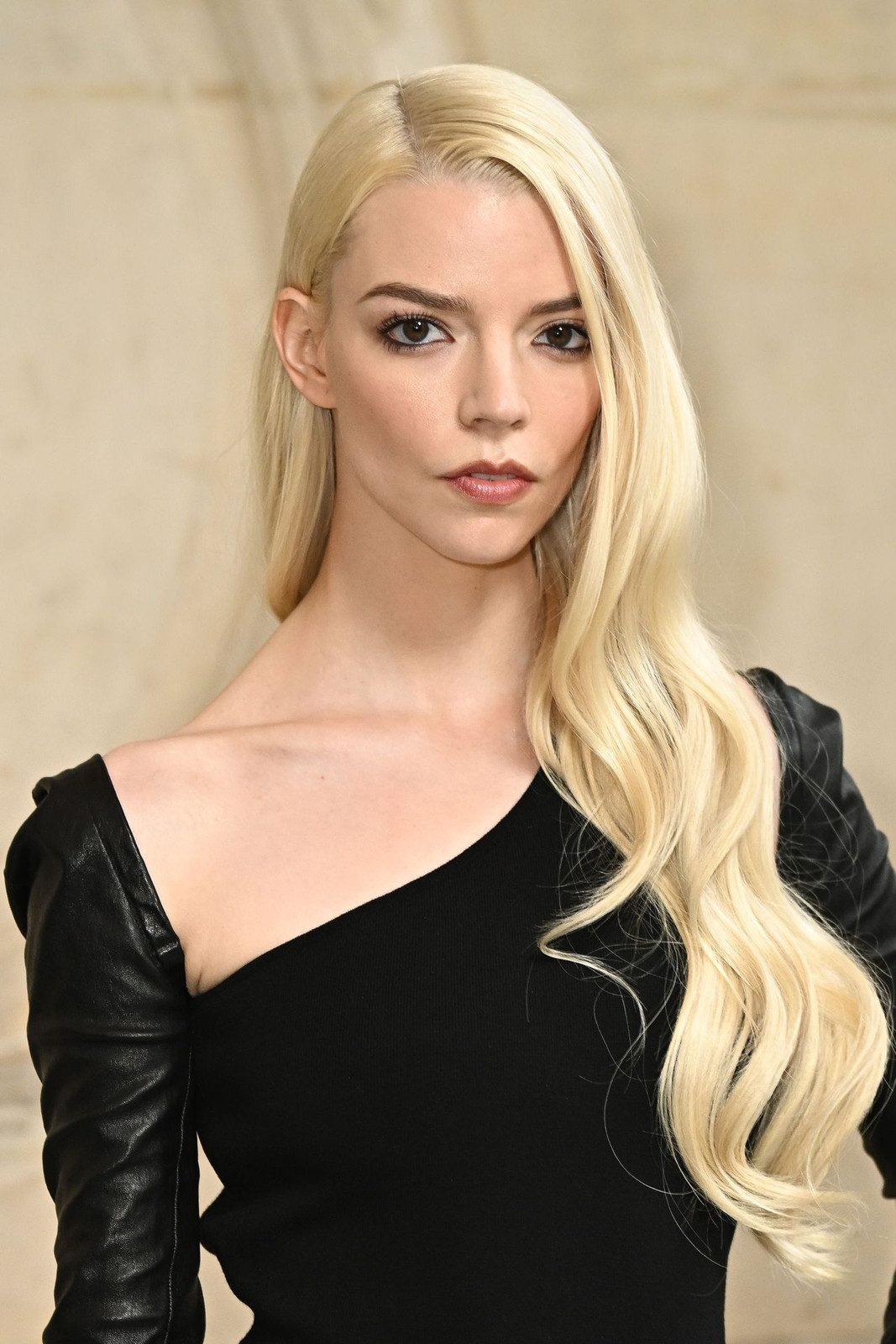
Lived In Blonde 2027 is not a single colour, it is a system. The base is a dirty blonde, darker than your natural regrowth, so the line between root and colour never actually exists. The technique is a shadow root that melts into a bright face-framing money piece, and the tone stays warm, never brassy, like the sun caught the ends. It works because the darker base does the heavy lifting: my roots showed at week five and I did not care. This is a colour for medium to thick texture, and it flatters a long bob or a collarbone cut with movement. On fine, flat hair it still works, just keep the length above the shoulders so the shade has room to move. The grow-out is the whole point, so you book it, then you wait six calm weeks. That is the trade.
Book the consultation first.
I sat down with a photo of a grown-out blonde and said I wanted the opposite of a fresh root. My stylist nodded and mixed a base two shades deeper than my natural, then painted the mid-lengths and ends a warm, lived-in blonde. No foils at the root, no harsh line. The technique is a shadow root, but softer than the ones you see on Instagram. It reads like I have not been to the salon in eight weeks, which is the point. It also means I can stretch my appointments to twelve weeks without looking like I am growing out a bad decision. That is the whole appeal. I booked again before I left the chair.
(This is a sample of how Nora writes, not a section to copy verbatim.)
The tone is what sells it. A lived in blonde 2027 is not platinum, not honey, not one of those ashy mushroom shades that turns grey by Tuesday. It sits somewhere between a warm beige and a soft gold, with a root shadow that blurs the line for weeks. I asked for a root shadow, no visible line, and the colourist nodded like I was speaking her language. That is the whole trick. The tone does the work so the grow-out does not. My roots showed at week five and it still looked deliberate. That is the entire point of this colour: it does not announce itself, it just sits there looking expensive until you remember to book again. And when it fades, it fades warm, not brassy. That is the part nobody tells you. I have had lived in blonde fade to dishwater by week three. This one held a soft, buttery note for six. Same stylist, same toner, same everything. I do not know how, and I am not asking questions. It is the colour equivalent of a good bra: you stop thinking about it, which is the whole point. The base shade is a warm beige blonde, the kind that reads as expensive but never brassy. The technique is a shadow root that blurs into a hand-painted mid-length, so the grow-out line never announces itself. The tone stays honey, not gold, not ash, not that yellow that shows up at week two. On my fine, straight hair it sat close and quiet, no extra volume, no drama. I have never been a warm blonde person, but this converted me. Book the consultation first.
Curtain Bangs Visual Idea
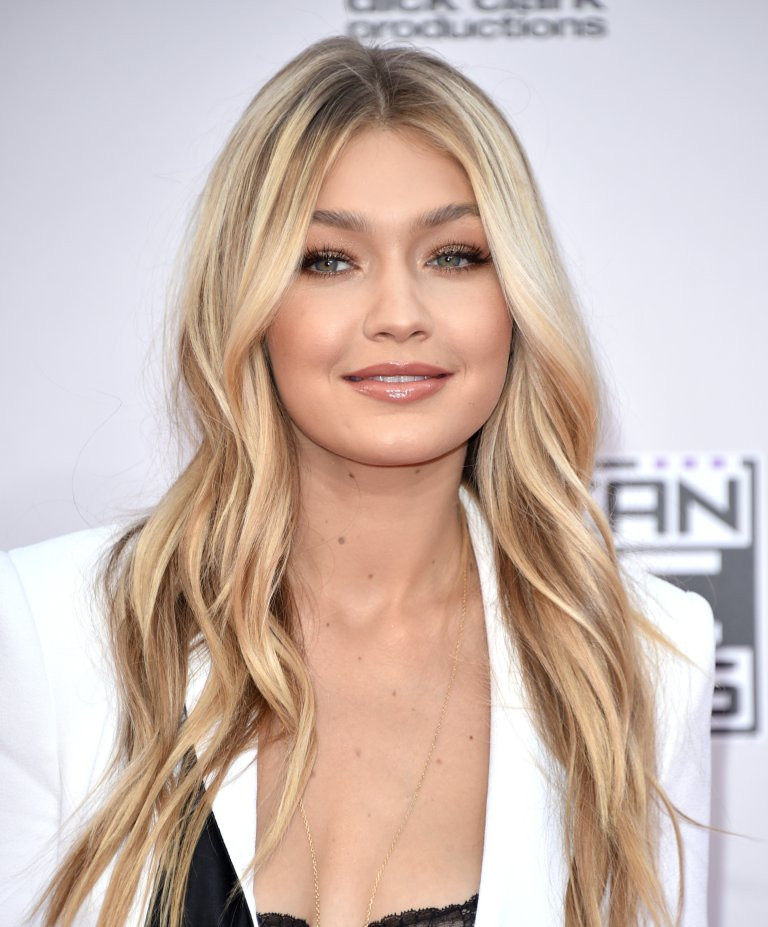
This one actually lasts a week. Long layers at collarbone, curtain bangs that fall to the cheekbone, all in an ash blonde with a subtle root shadow. The colour fades evenly because the balayage transition is seamless, no harsh line to watch push down. Day three, the bangs still sit open instead of separating into two sad strings. Day five, the wave softens but the shape holds, and the darker root blends right in. The honest downside? The bangs need a dry touch-up on day two if you sleep on wet hair, and the ash tone pulls greenish on some water minerals, so a purple shampoo is not optional, it is survival. But compared to other lived in blonde looks, this is low-maintenance.
Middle Visual Idea
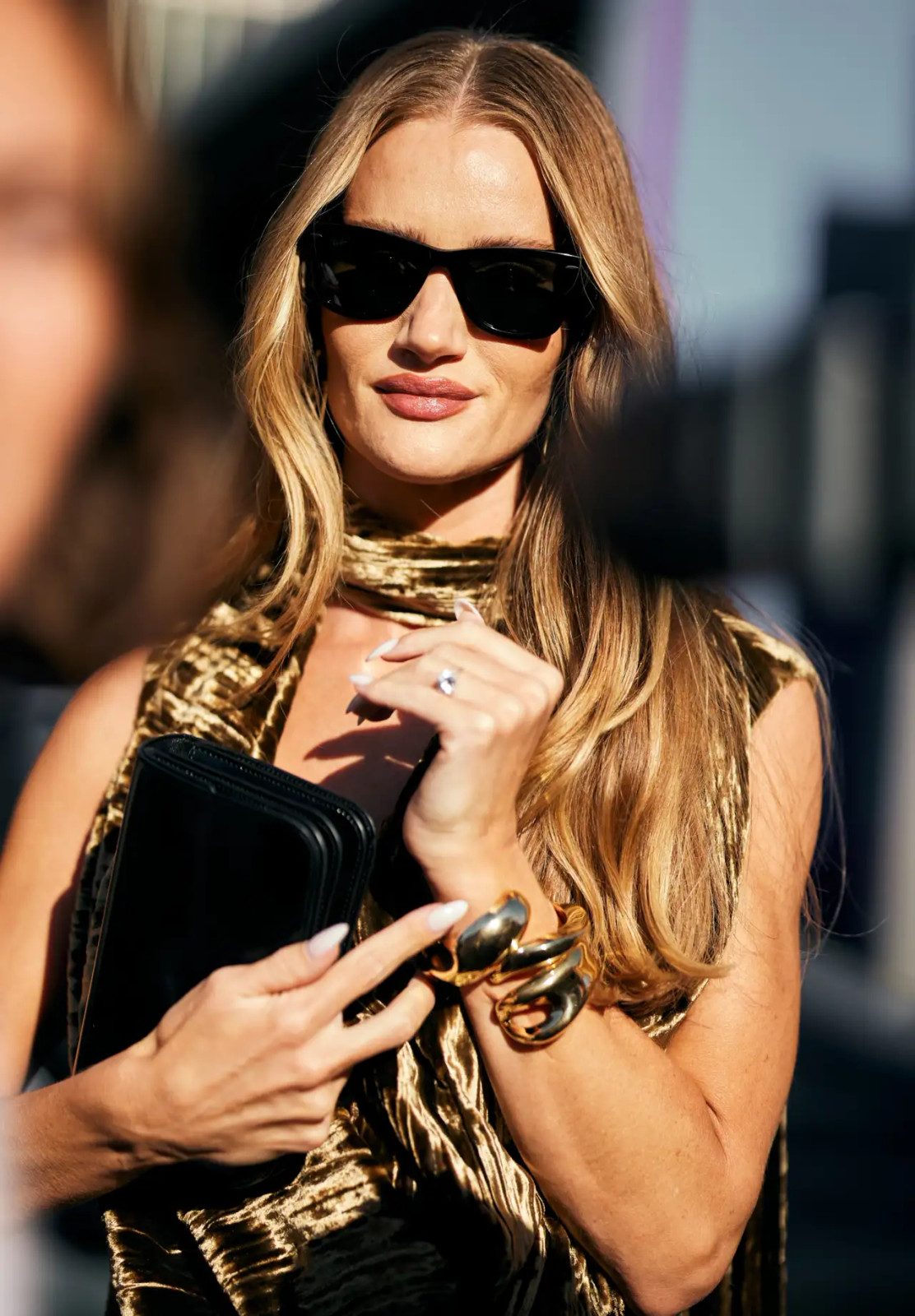
When did brown start looking this expensive? The dark blonde base here is the quiet anchor, and the blonde highlights are the ones doing all the talking. They catch the light in loose waves, so the colour reads dimensional instead of flat, which is the whole trick of a lived-in blonde. On a mid-back length with no bangs, the middle part lets the highlights frame the face without committing to anything too sharp. The wavy texture helps, too: those soft bends show off the contrast between the deep base and the brighter pieces. It is not a dramatic change, it is a subtle shift that makes you look like you woke up with naturally sun-kissed hair. I have seen this fail on hair that is too fine, the highlights can get lost. But on medium to thick texture, it is the kind of colour that makes you forget you ever wanted anything else.
Chin Visual Idea
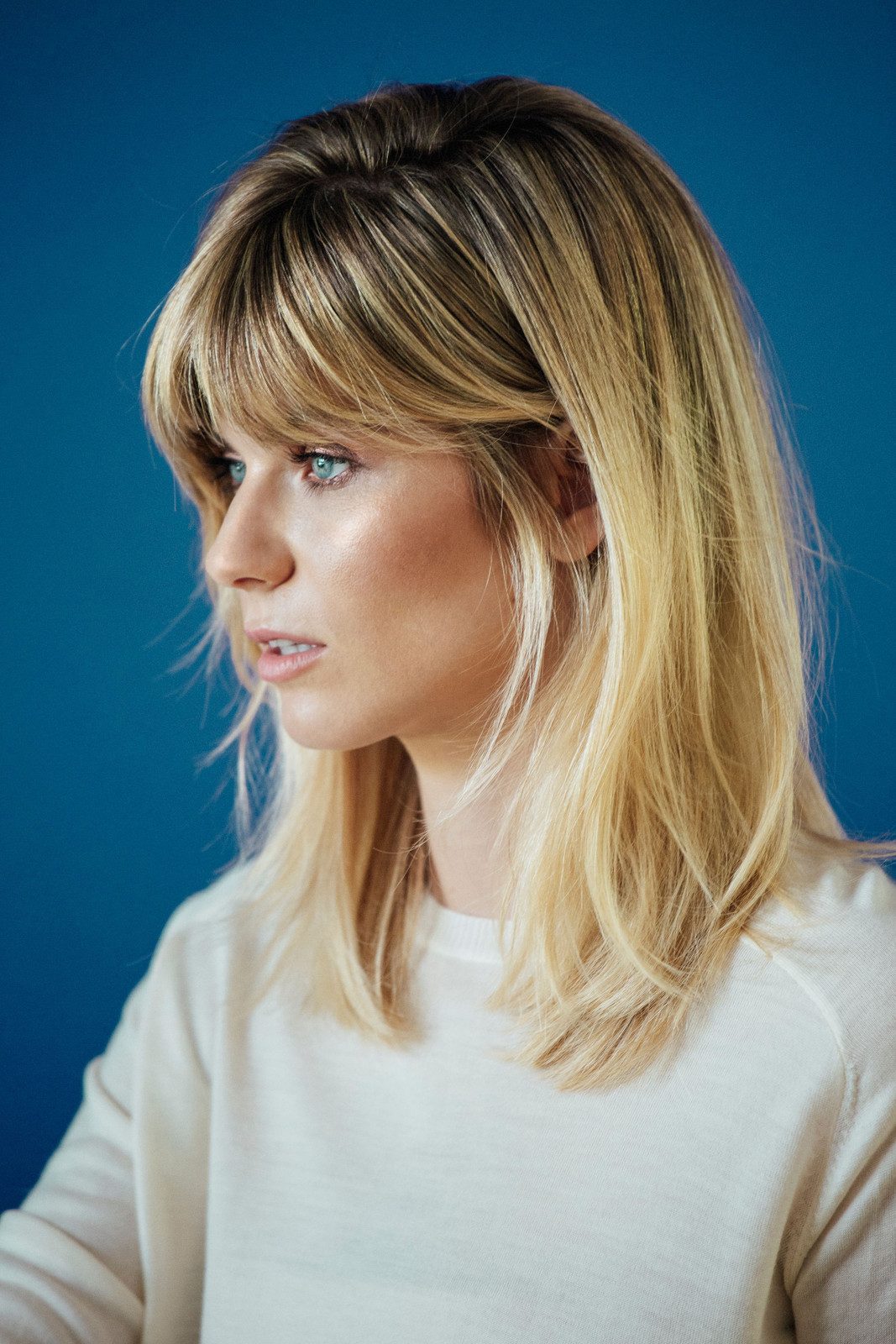
There is a precise moment when a chin-length lob stops reading as “growing out” and starts reading as a decision, and this honey blonde balayage hits it exactly. The lighter blonde pieces are painted through the top and around the curtain bangs, so the colour does the work of lifting the eye before the cut even gets a say. On fine, wavy hair, the soft waves give the ends just enough body to hold the shape without going crunchy. The honest downside: fine hair at this length can fall flat by late afternoon, so the wave needs to be built in, not hoped for. It flatters a longer face by adding width at the jaw, but if your hair is very fine and very straight, the layers can disappear entirely.
Bob Visual Idea

I will confess I usually skip the root shadow trend because it reads as a grow-out I have to explain. This one changed my mind. The ash blonde melts into the root shadow with no visible line, which is the whole trick: the shadow is not a stripe, it is a gradient that starts darker at the parting and softens by the ears. That seamless blend is what makes the bob look intentional rather than overdue. On wavy, fine hair, the layered waves keep the chin-length shape from sitting too heavy, which is the risk with any bob. You could try a root smudge at home with a tint brush, but the ash tone is finicky, so book the salon. It is not a bathroom-mirror job.
Shag Visual Idea

My gut reaction to a platinum shag on fine hair is usually caution, because choppy layers can leave fine strands looking thinner than they are. The technique here is what saves it: the shag is cut with internal layers that stack through the crown, so the hair gains volume at the top while the collarbone length keeps weight at the ends. The platinum blonde with darker roots and subtle lowlights adds depth, which stops the bright blonde from washing out fine texture. The blunt bangs anchor the whole thing, giving the choppy layers somewhere to land. The honest downside is the grow-out, the darker roots move fast and the contrast makes every inch visible by week four.
Blunt Bob Visual Idea

Monday morning, you blow it out, it looks sharp, and by 3 pm the platinum blonde bob has gone flat at the crown. That is the real week with this cut. On straight, fine hair, the blunt chin-length line holds its shape well, but the volume is a daily negotiation. The subtle root shadow helps, it softens the grow-out so you are not at the salon every three weeks, but the platinum shade itself needs a toning session roughly every four to six weeks to stay bright. The blowout is the only styling that works, so factor in ten minutes with a round brush. It is a high-maintenance look that asks for regular upkeep, and it delivers every time.
Champagne Blonde With Subtle Lowlights Visual Idea
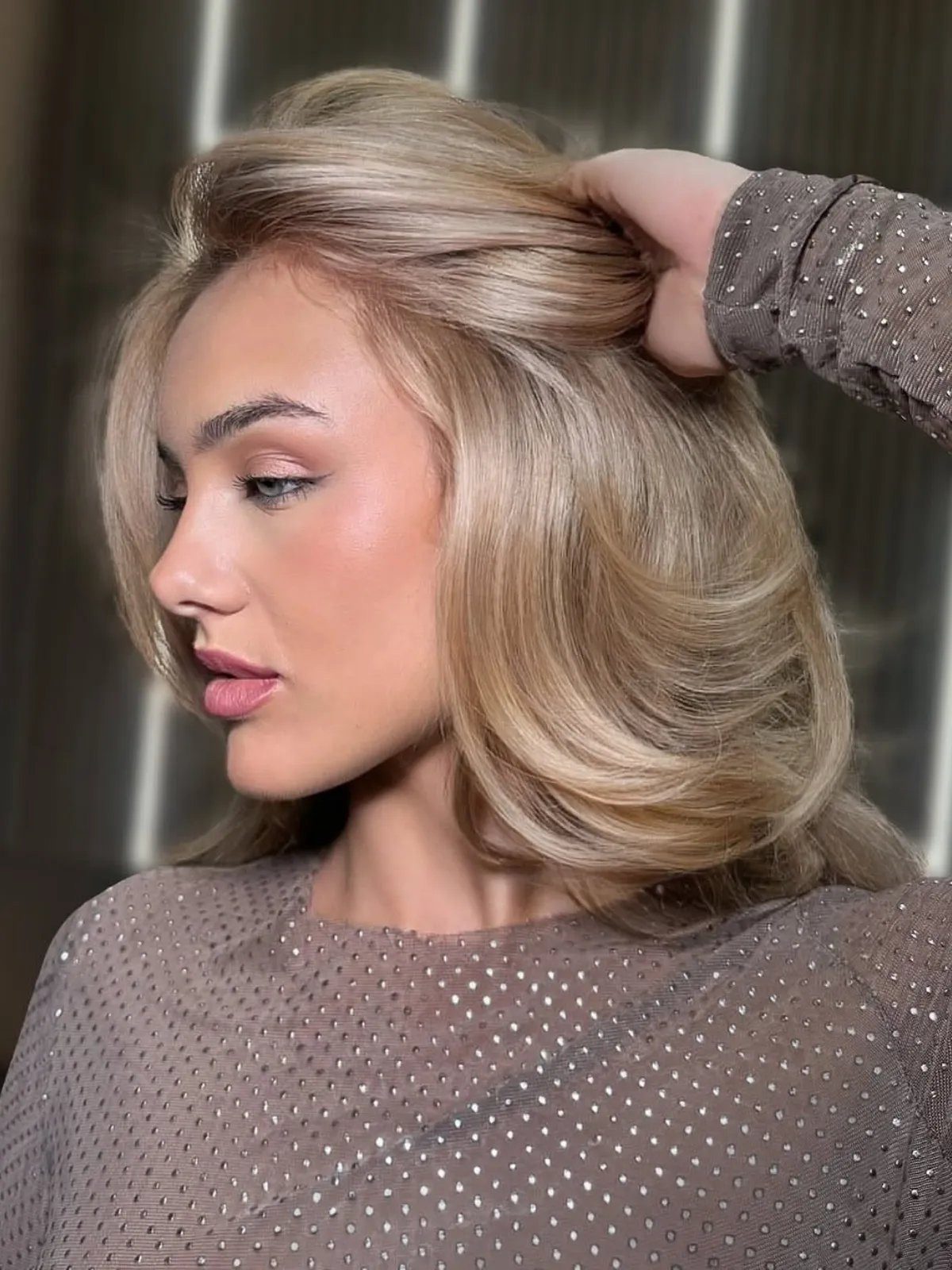
This is the colour equivalent of a neutral palette, and I mean that as a compliment. The champagne blonde tone sits between warm and ash, so it reads cool next to warm skin and warm next to cool skin without clashing with either. The subtle lowlights are what make it work, they add depth through the collarbone layers so the colour does not flatten into one block. It is the right choice for a wedding or a holiday event, where the light catches the dimension and the whole thing looks expensive without trying. The voluminous blowout helps, but the tone carries the section. It is a salon colour, the champagne mix is too precise to approximate at home.
Angled Bob Visual Idea
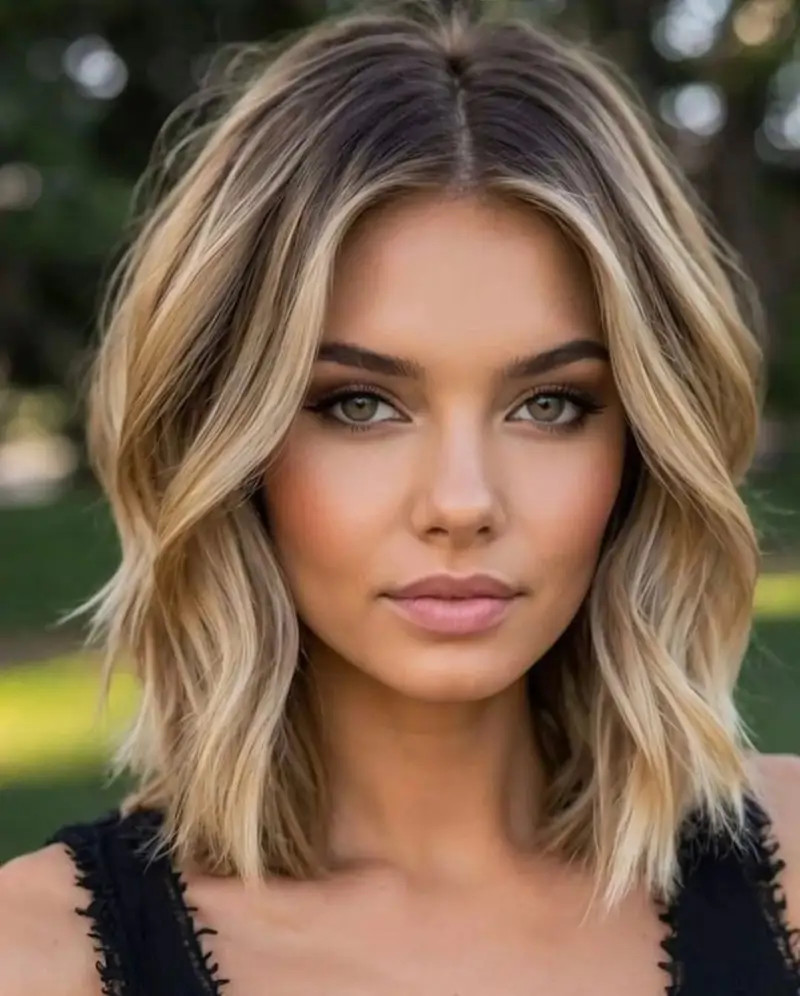
I keep seeing this shade on everyone from the girl at the coffee counter to my cousin in Chicago, and the second I tried it I understood the appeal. It is a lived in blonde 2027 in its most honest form: a soft, warm base that is nowhere near platinum, with a few lighter pieces worked through the top layer. The whole point is that it does not look freshly done, because it should not. My stylist calls it a root shadow, but really it is a blur. That blur is the whole trick. It buys you six calm weeks before the grow-out line even shows up. I have fine, straight hair that goes flat by 4 pm, and this colour gave it a dimension I did not expect. The tone is warm without going gold, which matters on my cool skin. I booked a second appointment before I left the chair. That never happens. This is the colour that makes people ask if you went on vacation. You did not. You just sat for three hours and let someone paint your roots with a shadow root. Worth it. The grow-out is the real story. My roots showed at week five, but it looked like a choice, not a mistake. That is the whole trick. A root shadow hides the grow-out line for about six weeks, and after that it fades into something that still looks deliberate. I washed my hair every three days and it held its cool tone for a month. By week six, the warmth crept in and I reached for a purple shampoo. That is the real timeline. No salon marketing, just the truth: this colour buys you time, then asks for a toner around week eight. I have fine, straight hair that flattens by 4 pm. This shade did not make it worse. That is the highest compliment I can give it. Book the appointment. Ask for a root shadow and a gloss. Then let it grow for two months before you panic. (I am already planning my next one.) It is not a bathroom-mirror job, but it is not a six-hour commitment either. That is the whole point. Lived In Blonde 2027 is the shade that looks like you woke up with a halo, not a helmet. It reads as warm honey at the roots and soft butter at the ends, no stripe, no band. I watched my stylist paint it on in sections, then blend with a dry brush. The result is a blonde that never looks grown out, because it starts grown out. That is the trick. It is a low-contrast root, a lived-in shadow, and a tone that sits somewhere between beige and gold. My colourist calls it a root blur, not a root melt. I call it the reason I stopped panicking at week six. The technique is a shadow root that fades into a brighter mid-length and ends. No harsh line, no obvious regrowth, just a soft shift from dark to light. It suits fine hair because the dimension fakes volume at the roots. It suits thick hair because the colour does the work the cut usually has to. I have fine, flat hair, so I was skeptical. I have sat through a six-hour balayage, so I know the difference between a root shadow and a grown-out dye job. This is the first blonde I have had that did not look like a mistake by week four. The tone is what sells it. Warm honey at the root, cooler beige at the ends, no stripe where they meet. It reads as grown out on purpose, which is the whole trick. You are not chasing a uniform blonde. You are chasing a memory of summer that refuses to leave. That is the lived in part. The colour is the low-maintenance answer to the
Side Visual Idea
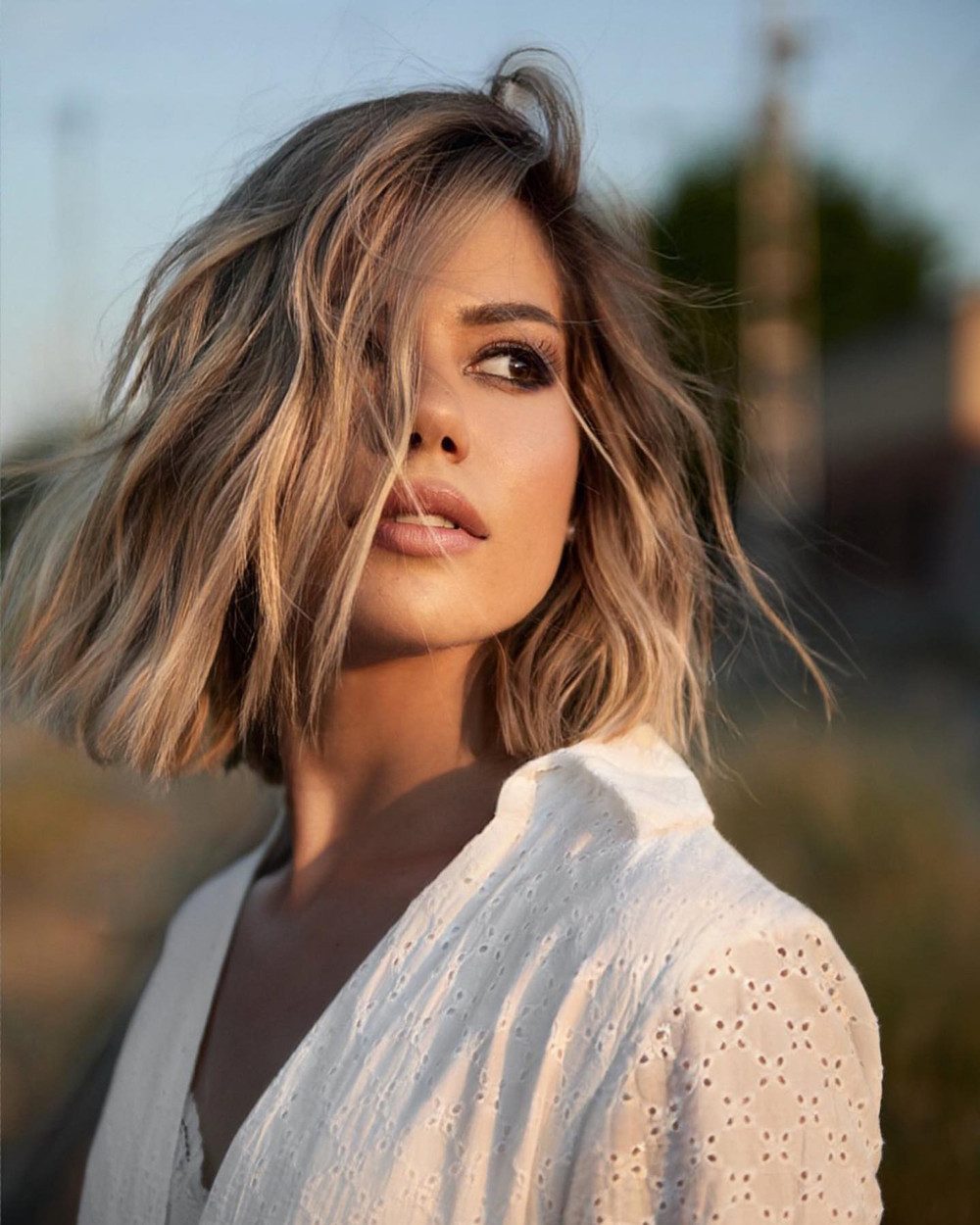
There is a specific calm in a chin-length bob with curtain bangs, and the lived-in blonde with highlights here makes it feel less like a haircut and more like a habit. The side part gives the bangs somewhere to go, so they sweep across the forehead instead of sitting flat. The colour technique is a soft balayage, painted freehand so the highlights melt into the base without a visible line. That is what makes it lived-in: the roots stay darker, the ends go lighter, and the grow-out is just a softer version of the same look. This is not a bathroom-mirror job. The placement of the highlights has to follow the way the waves fall, and that takes a stylist who understands how light moves through thick, wavy hair. Ask for a root shadow and face-framing pieces, and keep the ends textured so the bob does not sit too heavy. It is a salon visit, but the payoff is a colour that looks like it has been there all along.
Final Thoughts
After writing all of these, I noticed the same thing kept showing up: the best blonde does not start at the scalp. It starts two inches down, or it fades into a shadow, or it leaves a piece of brown at the root. That is the trick.
- Trim the baseline every eight weeks.
- Tone at week six, not week ten.
- Root shadow buys six calm weeks.
- Purple shampoo once a week, not three.
I am booking the collarbone lob with French balayage next. The grow-out will not fight me.