The cornrow bun starts 2027 with cleaner lines and more deliberate geometry than last year. High placements and precise partings dominate, while low buns lean into natural texture for a softer finish.
This collection of 27 looks spans both directions: sleek crown buns for days when you need hair out of the way and textured nape buns that let your curl pattern show. Each section covers the styling, length, texture, color and hold so you can figure out which version fits your wash day and your schedule. The focus keyword Cornrow Bun 2027 appears once here naturally, no emphasis needed.
High Cornrow Bun With Middle Part
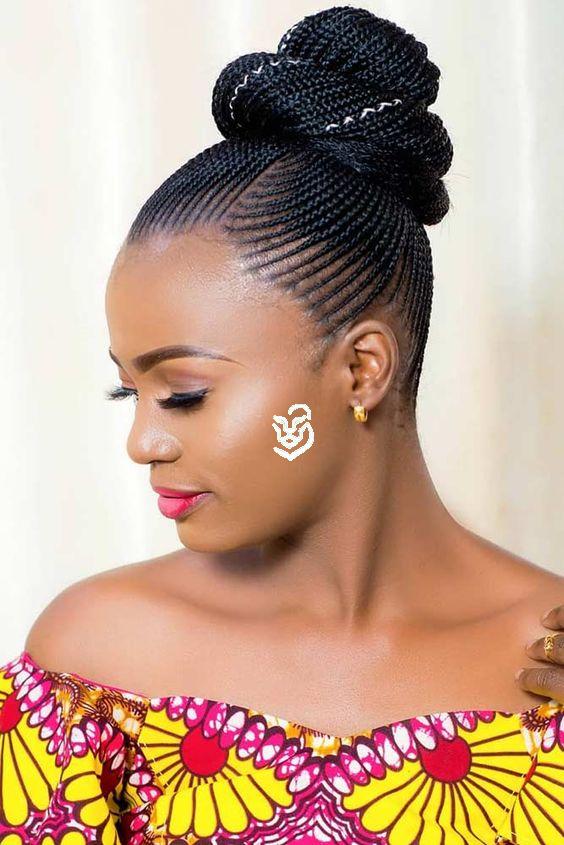
The geometry starts before the bun does. Precisely laid cornrows begin at a middle parting and sweep upward in clean, parallel lines, so the bun reads as the logical conclusion of the pattern. The black braided texture keeps the whole structure looking deliberate, and the side view is where the architecture shows. This high cornrow bun suits medium to thick hair that can hold a tight braid without the scalp showing through. Ask your stylist for: high cornrow bun with middle part. A light oil spray along the part every few days keeps the braids from looking dusty and maintains the shine that makes the lines pop.
Neat Crown Bun With Radiating Cornrows
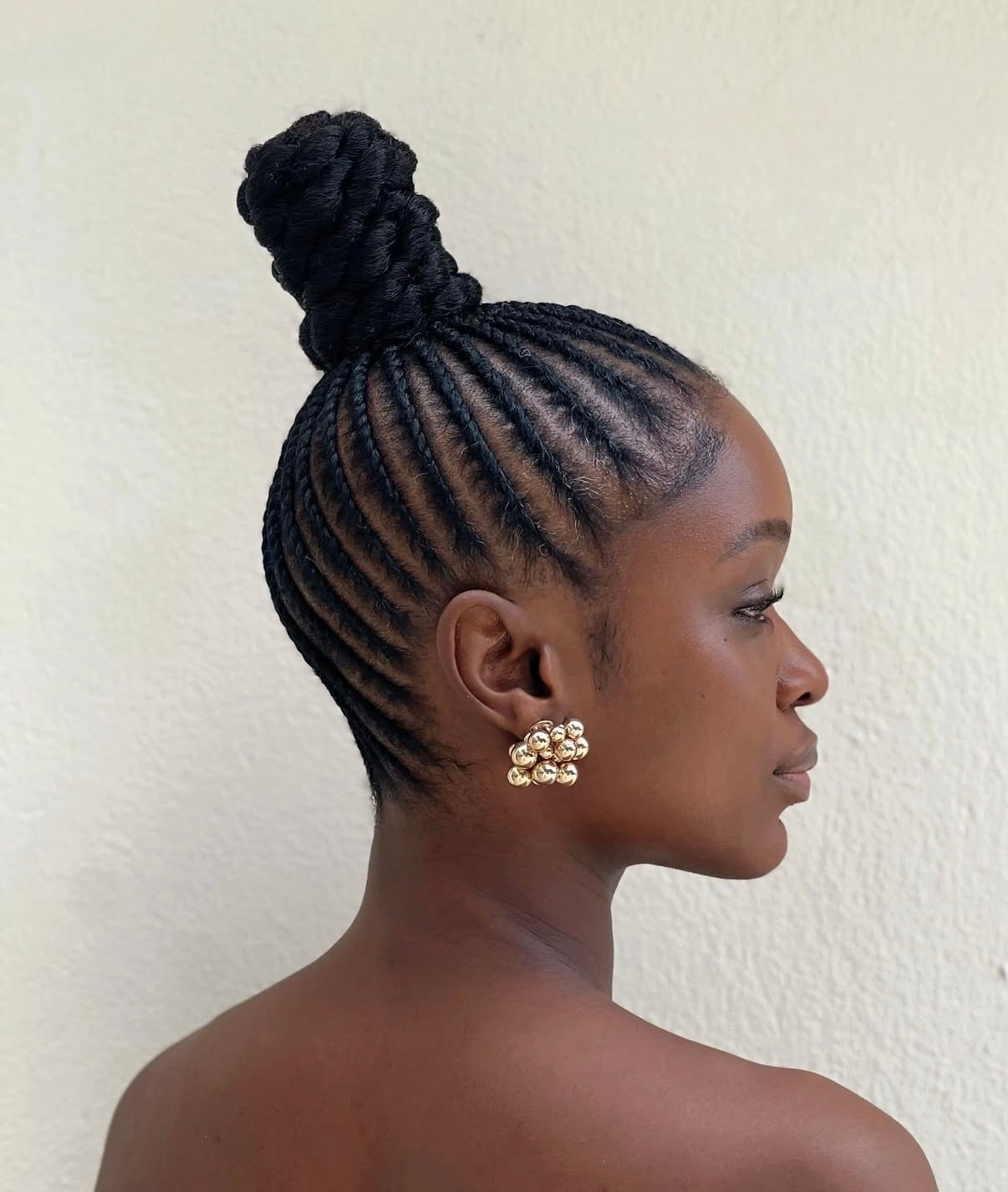
The bun sits high at the crown, but the volume comes from the base. Tightly braided cornrows radiate outward from a central middle parting, each one feeding into the bun so the whole shape looks grown rather than gathered. This neat crown bun braids style needs medium to thick density and enough length to wrap into a full circle at the top. Ask your stylist for: neat crown bun with radiating cornrows. A boar bristle brush along the part before you leave the house smooths any flyaways that escaped the braid, and the flat-against-the-scalp base means the hold is mostly structural, not product-dependent.
Thick Brown Braided Bun With Cornrows
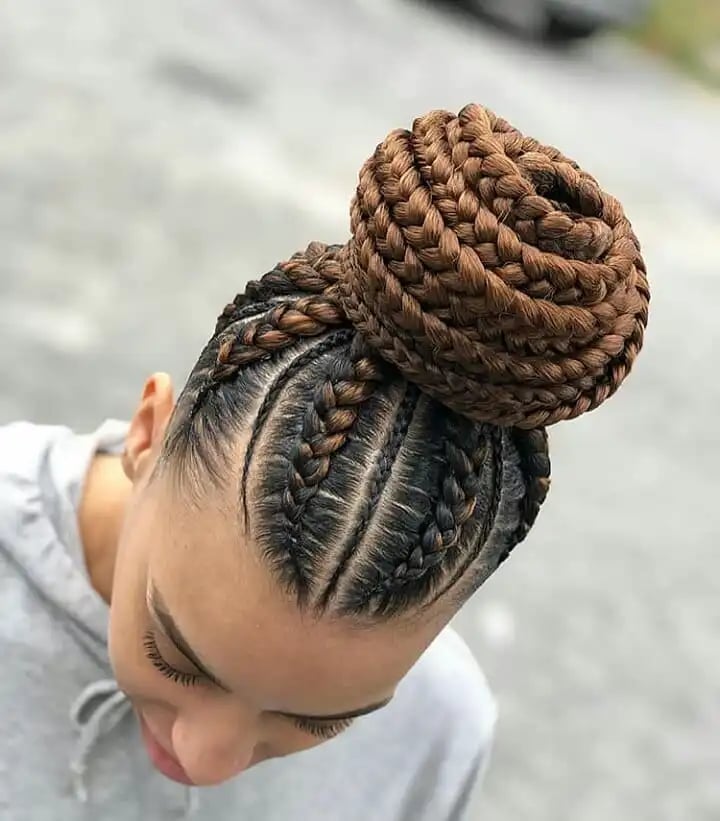
Is your hair on the thicker side and prone to feeling heavy in an updo? This one uses that weight as an asset. The large braided bun sits at the top of the head, built from thick brown braids that start as neat cornrows from a middle parting. The density is what gives the bun its rounded, substantial shape, so fine or thin hair would need added bulk to replicate it.
Oval and heart-shaped faces get the most out of the height, since the volume sits above the ears without widening the sides. Ask your stylist for: thick brown braided bun with cornrows. A braid balm worked into the cornrows keeps them smooth and stops the brown tone from looking ashy as the style settles in.
High Bun With Defined Cornrows
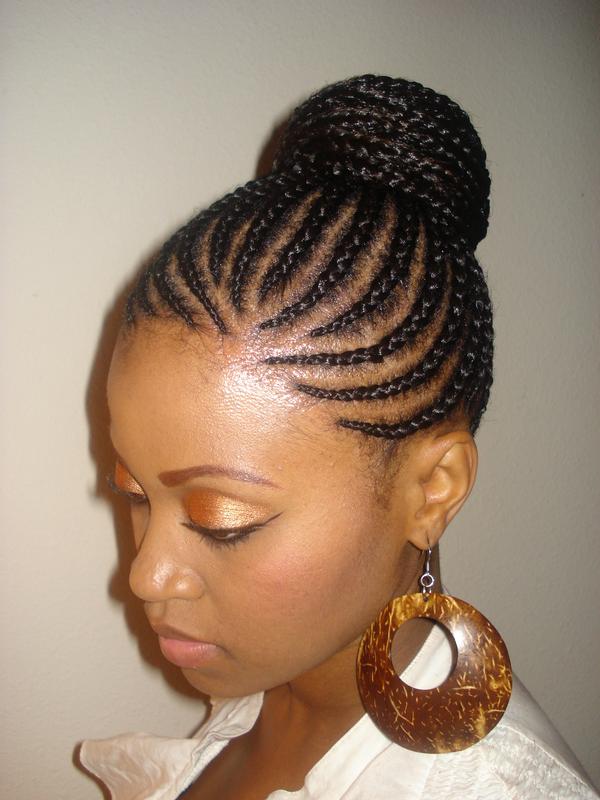
Compared to a low, relaxed bun that lets the nape breathe, this high bun with defined cornrows is the more alert option. The cornrows start at the front hairline and run neatly toward the crown, where the hair gathers into a substantial, rounded shape. The braided texture keeps the bun from looking like a casual ponytail twist, and the medium density means it holds its silhouette without extra padding. Ask your stylist for: high bun with defined cornrows. Shoulder-length hair is the practical starting point for the cornrow base. A light mist of hairspray over the scalp keeps the rows lying flat through a full workday.
Geometric Cornrow Bun
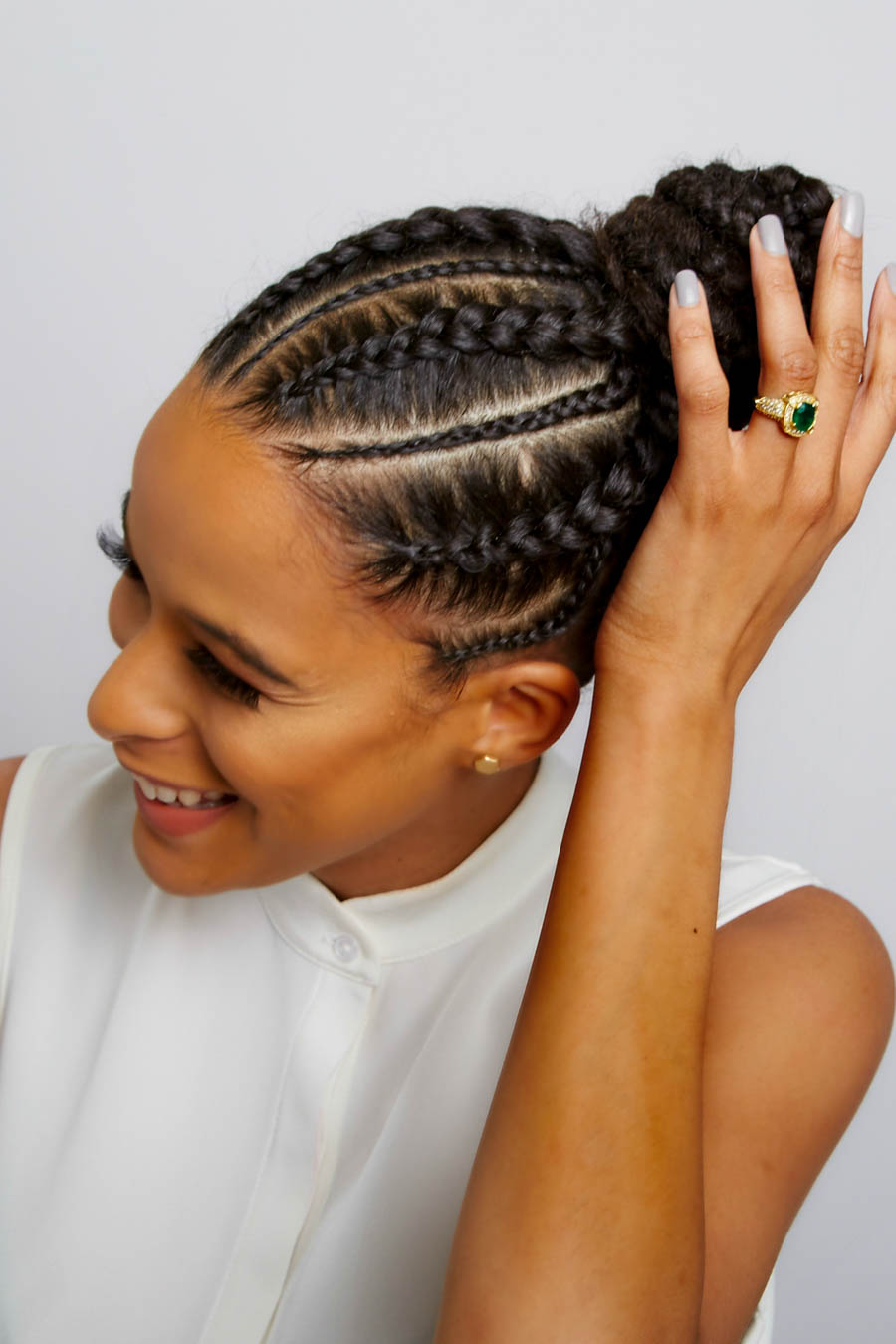
The pattern does the talking before the bun gets a word in. Tightly braided cornrows form a distinct geometric arrangement from a middle parting, with straight, precise lines that transition directly into the high rounded bun. The black straight texture makes each angle visible, so this is not a style for rushed braiding. It suits medium to thick hair that can hold a sharp part without frizzing at the edges, and the pulled-up shape works well across different face shapes. Ask your stylist for: geometric cornrow bun. A clean, dry scalp before braiding is what lets the pattern adhere, and a satin scarf at night preserves the lines longer.
Textured Bun With Radiating Cornrows
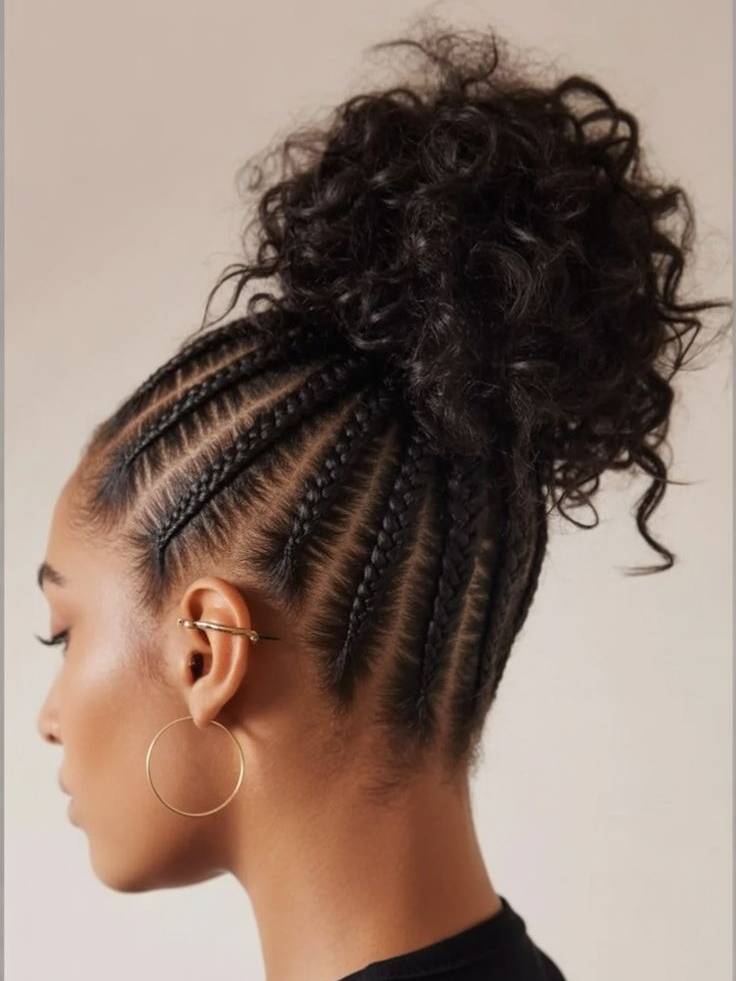
Can you ask for a textured finish on a cornrow bun without it looking like an afterthought? Absolutely, as long as you give the right direction. The base is a clean middle part with straight cornrows radiating toward the crown. For the bun itself, request a textured, slightly rounded shape rather than a smooth, polished one. Ask your stylist for: textured bun with radiating cornrows from a middle parting. That way the braids feed into a finish that looks deliberately undone, not messy.
Voluminous Bun With Intricate Cornrows
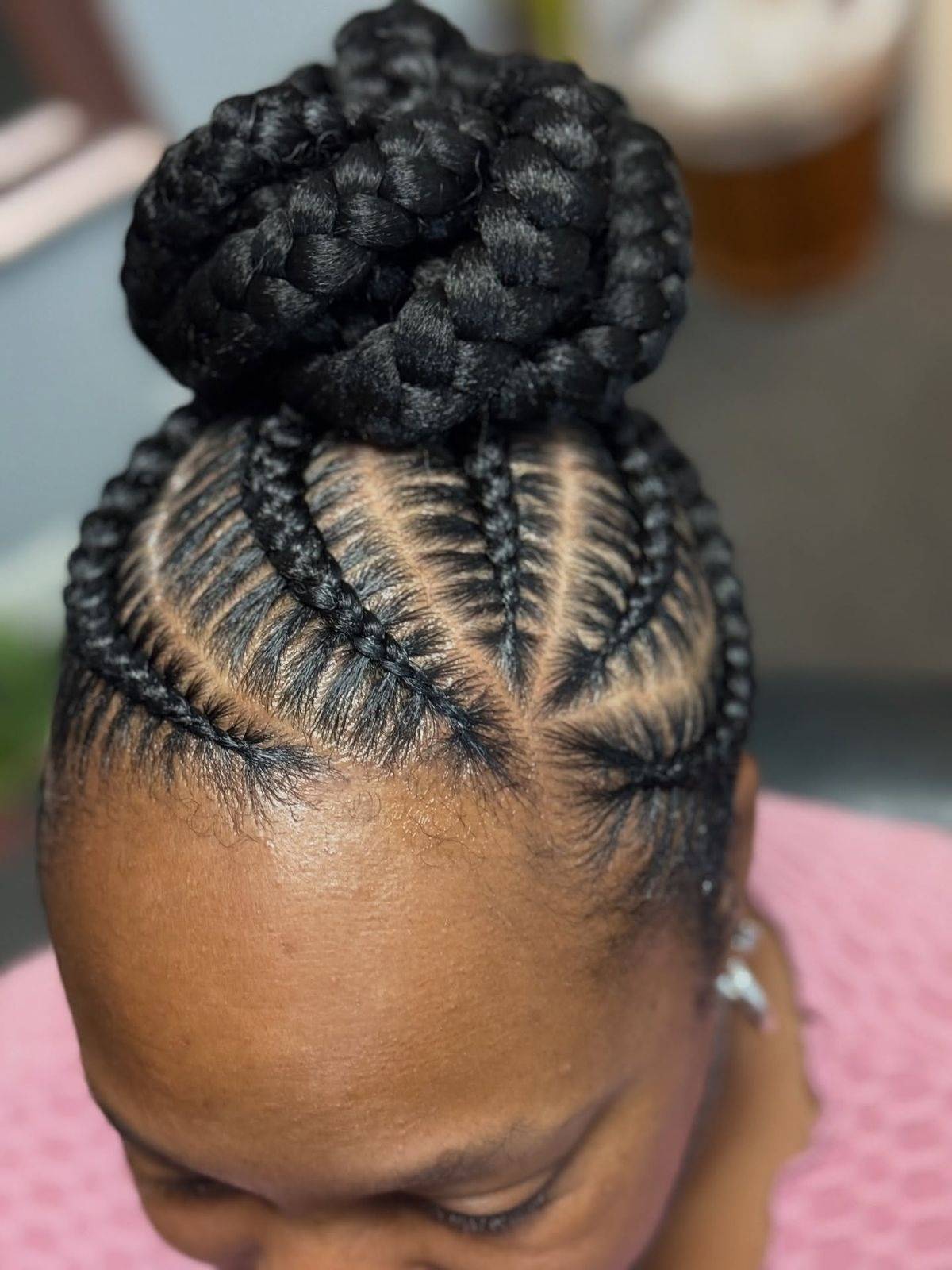
The intricate cornrow pattern on this style is built with sharp, angular parts that radiate from a middle parting. Each braid is carefully mapped out before any hair is sectioned, which is why the design looks crisp and deliberate. The bun itself is voluminous and high, created by gathering the braids into a rounded shape.
To keep the pattern defined, apply a styling spray after braiding to set the parts and add a light shine to the bun. Sleep with a satin scarf to prevent frizz along the edges. The hold is strong enough for a full day of wear, but you will want to refresh the parts after a few days if you plan to keep the style longer. Ask your stylist for: voluminous bun with intricate cornrows and sharp parts.
Brown Top Knot Bun With Cornrows
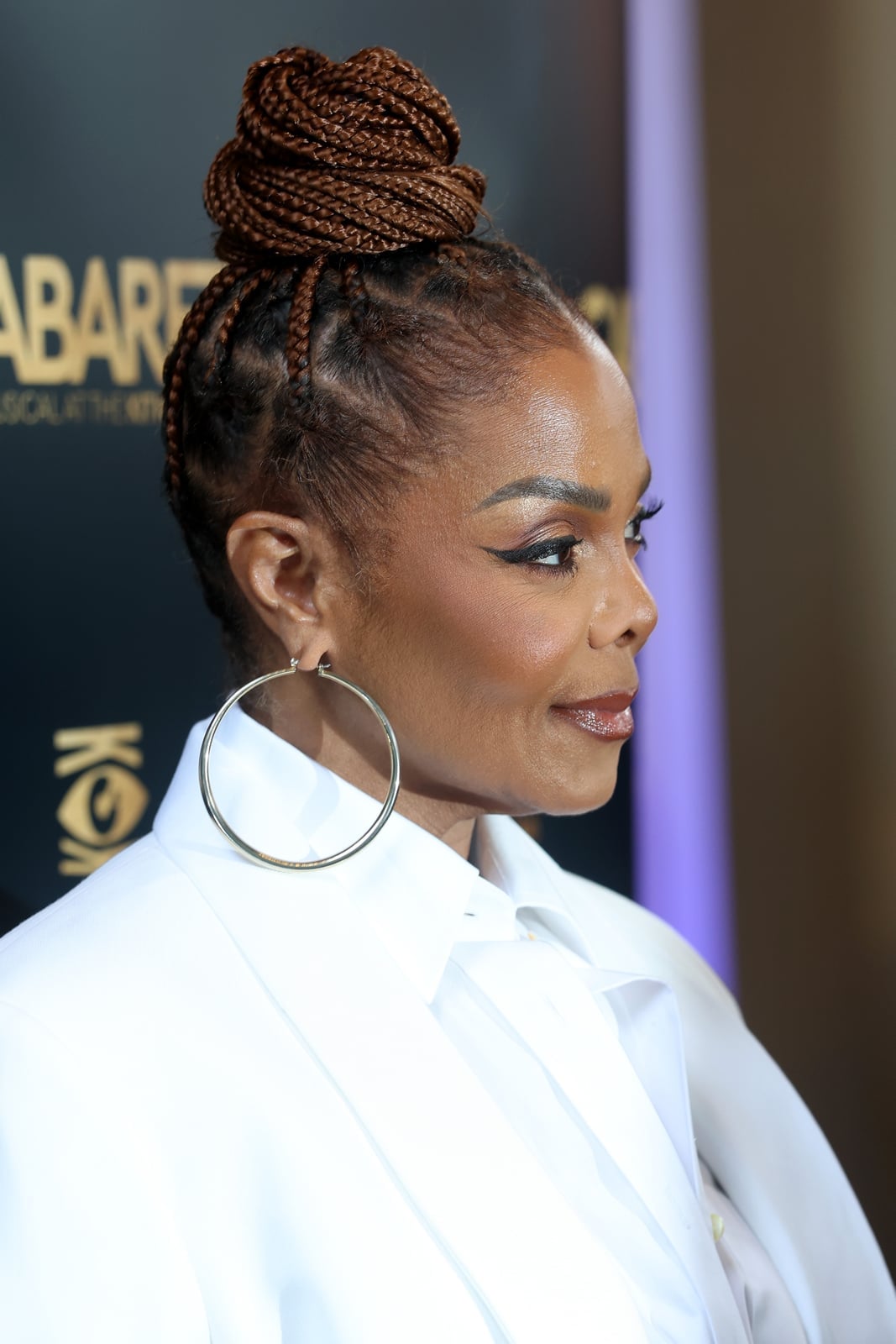
The neat top knot bun here starts with cornrows that begin at the hairline and travel toward the crown, meeting at a central point. Because the hair is shoulder length, the braids are compact and the bun sits tightly on top of the head. The brown hue is uniform, which lets the braided texture stand out without distraction.
This style wears well for several days, provided you wrap the bun in a satin scarf overnight. The cornrows maintain their tension, but the bun itself may loosen slightly by day three, so a few bobby pins can reinforce the shape. To keep the braids looking fresh, apply a lightweight oil to the scalp every other day. The hold is secure enough for work or daily activities, but if you have fine hair, the cornrows may slip faster. Ask your stylist for: brown top knot bun with shoulder-length cornrows.
Back View High Bun With Thick Cornrows
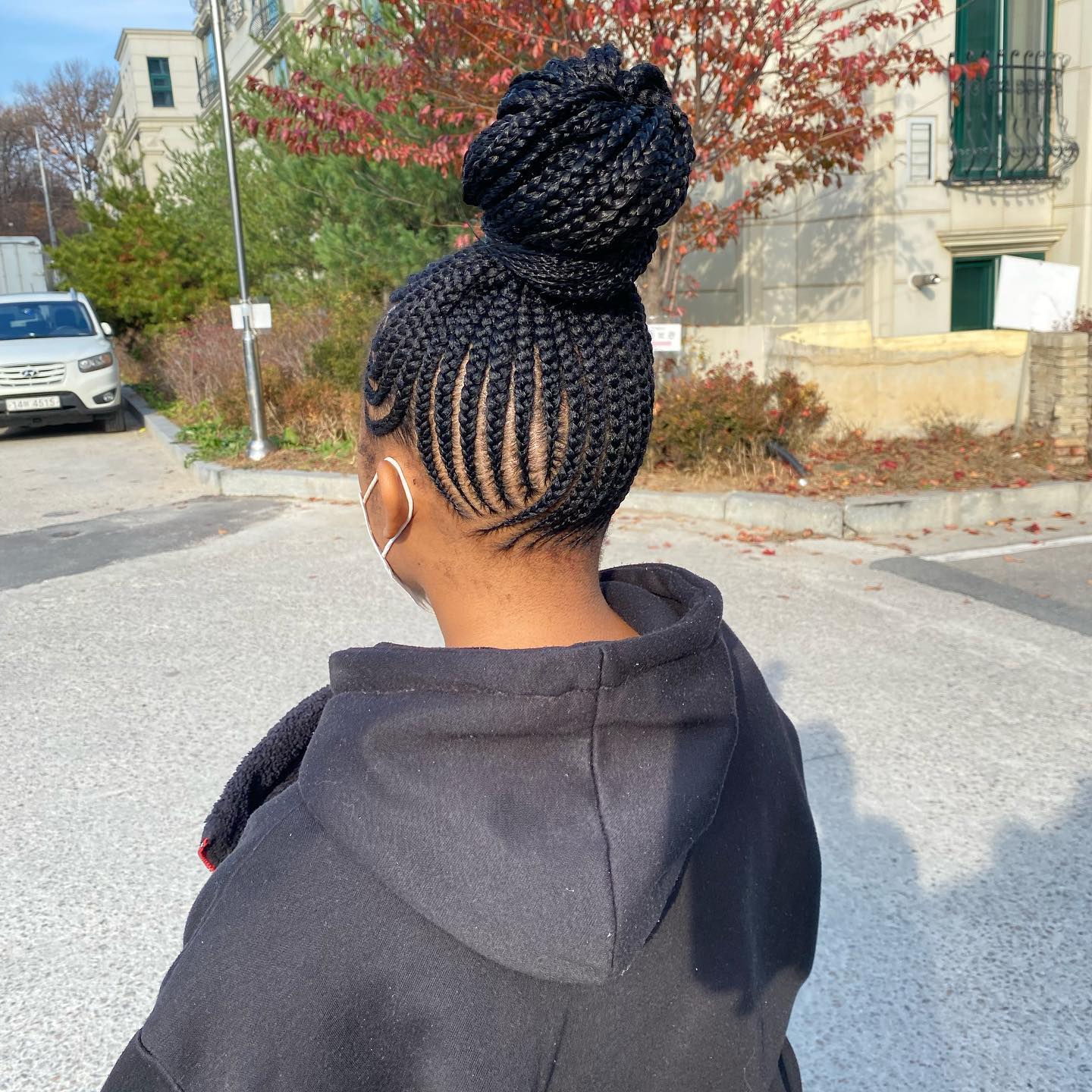
The back view of this high bun shows the cornrows radiating from the hairline in a smooth, symmetrical pattern. Each braid is thick and evenly spaced, feeding into a tightly wound bun that sits at the crown. The middle parting is visible even from behind, adding to the geometric precision. This angle makes the style look both polished and substantial. Ask your stylist for: high bun with thick cornrows radiating from the hairline.
High Textured Bun From Nape Cornrows
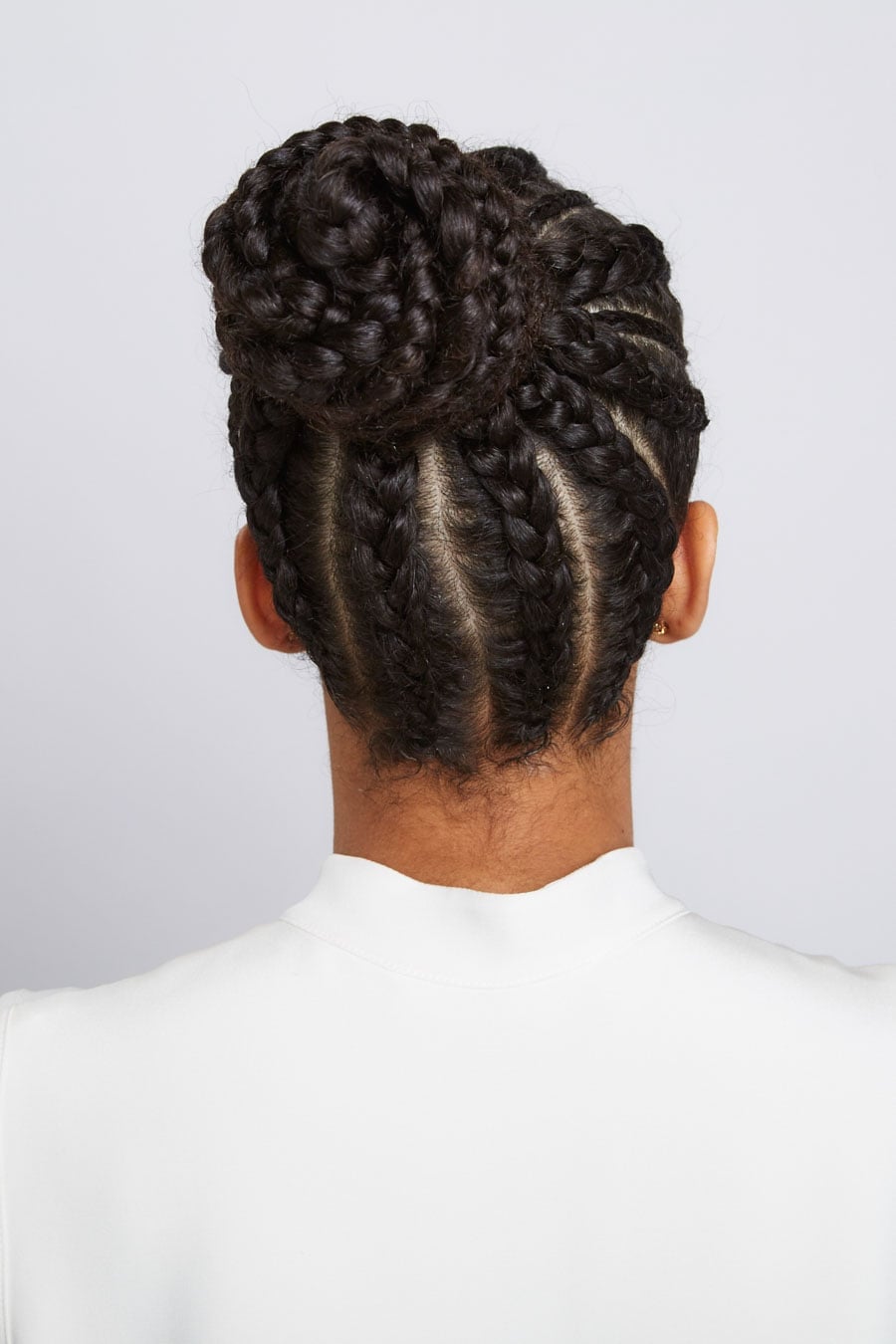
If you want cornrows that start at the nape and flow upward into a high textured bun, book a stylist who specializes in even tension. The nape is the most sensitive area, and incorrect tension can cause discomfort or breakage. The drawback is that this style takes longer to install, often an extra hour for the nape section alone. But when done right, the result is a seamless transition from fine nape braids to a voluminous, textured bun at the crown. Ask your stylist for: high textured bun with nape-to-crown cornrows.
Curved Cornrows Into Large Textured Bun
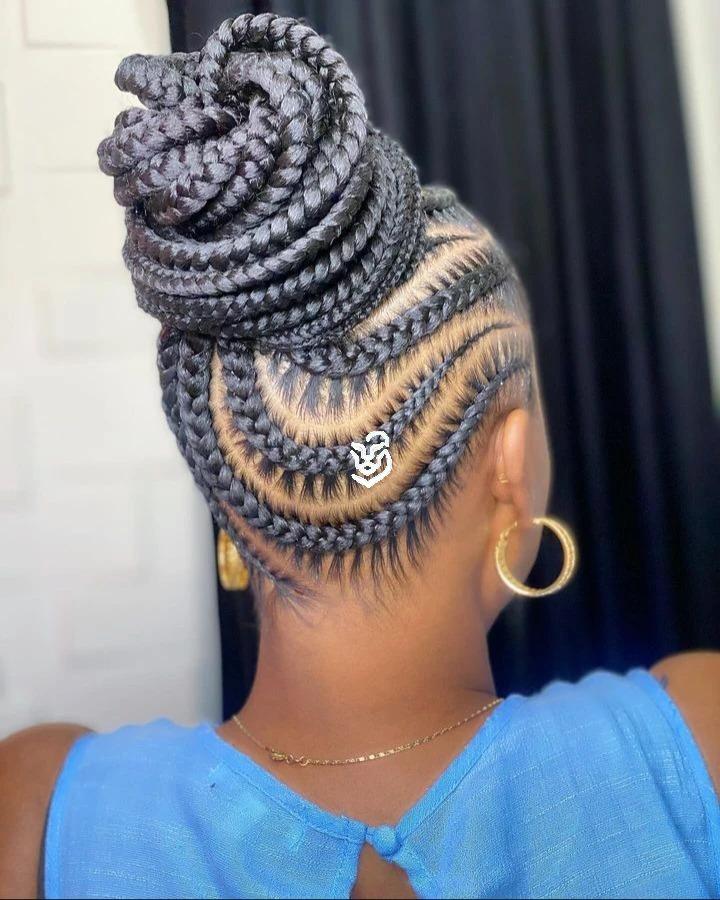
From the back, the curved cornrows sweep in arcs that meet at the crown, where they feed into a large, textured bun. The middle part splits the pattern cleanly, so the eye travels from the nape straight up to the braided mass. This is a style built on geometry as much as braiding skill: each row has to follow its curve without breaking the line. Thick hair braided from shoulder length holds the bun’s volume best, since fine strands tend to flatten the shape. Ask your stylist for a large textured bun with curved cornrows. A finishing spray over the bun keeps the braids smooth and the silhouette intact for the evening.
Voluminous Bun With Curved Cornrows
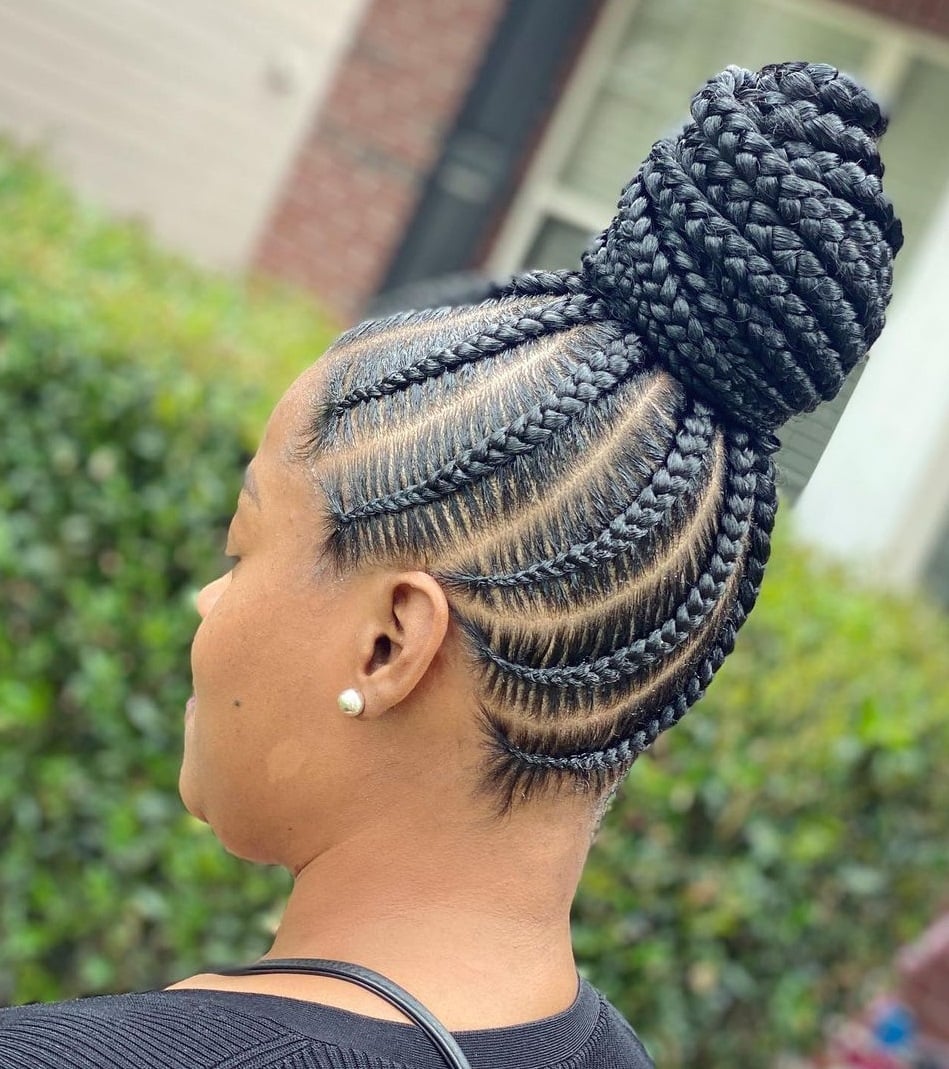
Where a sleek high bun reads as minimal, this one leans into contrast. The curved cornrows start at a middle parting and climb in thick, deliberate lines, while the bun above is loose and full. That mix of tight braid work and soft volume is what makes the updo feel current rather than formal. Medium to thick hair takes the shape best, giving the bun enough weight to sit high without slipping. Ask your stylist for a voluminous bun with curved cornrows. A lightweight serum smoothed over the braids keeps the part crisp and the finish polished.
Side Profile Cornrow Bun
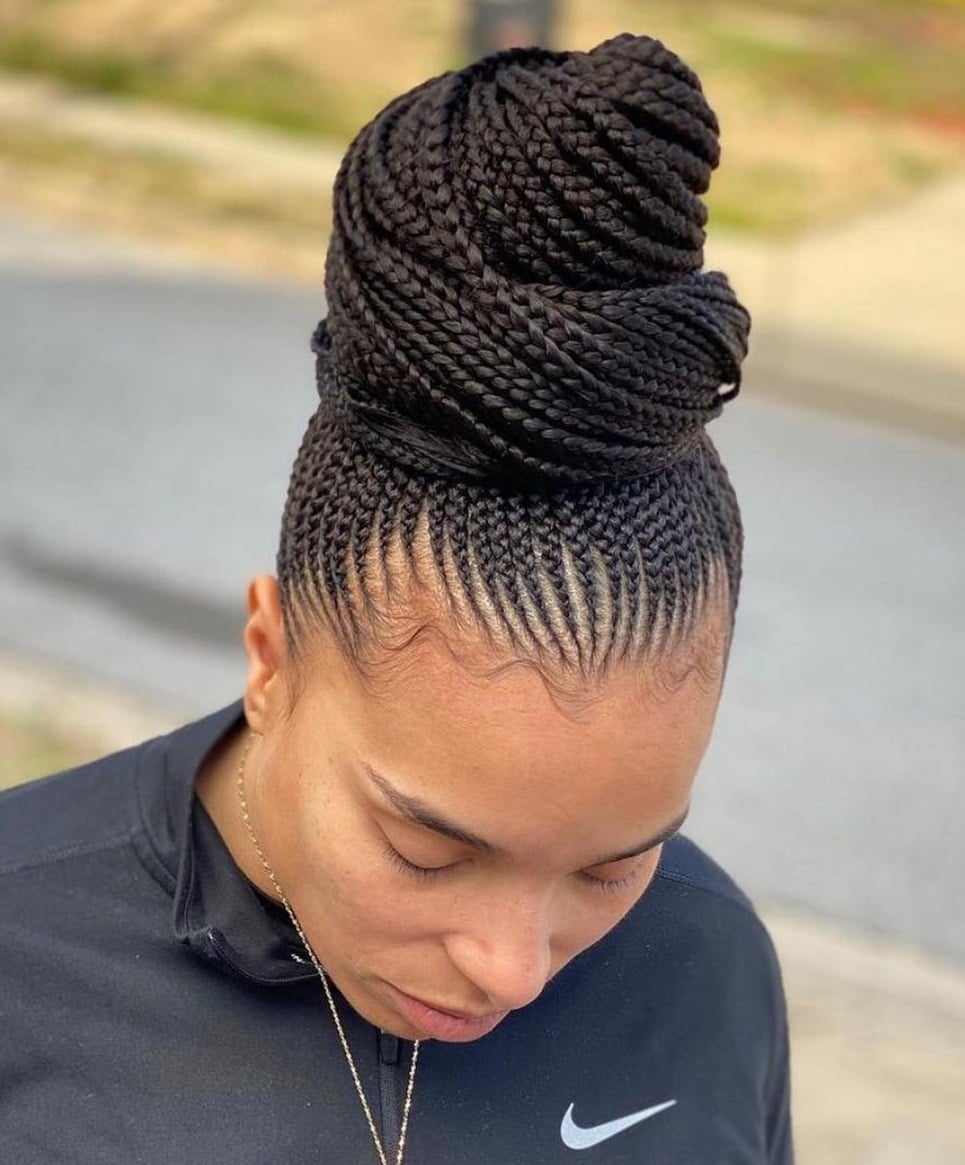
Does a high bun work for a long face? Yes, when the braids are fine and the crown sits high, as this one does. The middle part draws the eye outward, while the precisely laid cornrows and rounded bun add width at the top. Fine braids still carry intricate patterns, so you are not trading detail for a smaller scale.
Medium to thick hair braids cleanly into this shape, and the baby hairs along the hairline soften the whole effect. Ask your stylist for a side profile high cornrow bun. A light oil spray on the scalp keeps the braids from looking dry, which matters more than the braid size when it comes to how polished the style reads.
Cornrow Bun With Swirls and Curls
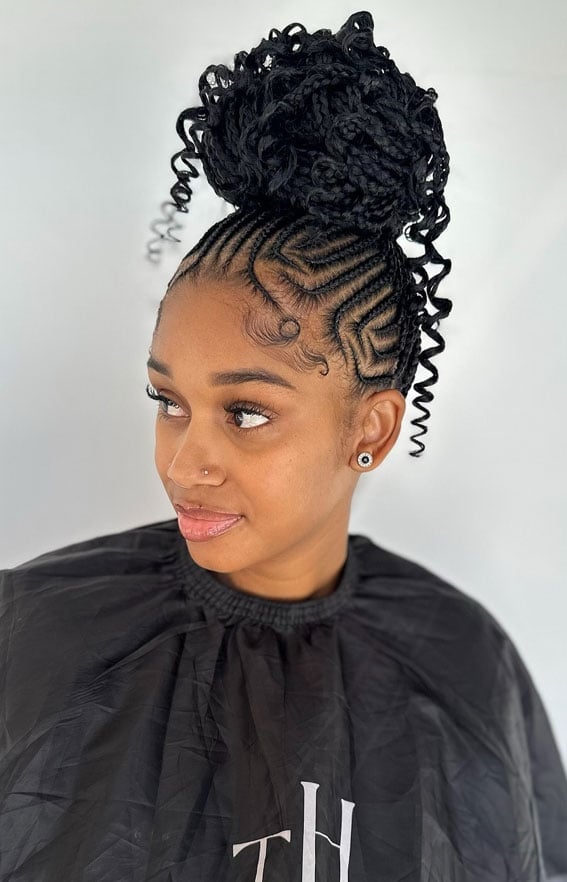
The design works because the cornrows do the structure and the curls do the softening. Geometric swirls braid from a middle part up to a high bun, while loose curly tendrils frame the face and break up all that precision. The black braided and curly extensions blend together, so the texture change feels built in. Medium to thick hair carries the bun’s volume, and the curls add movement near the jaw to suit most face shapes. Ask your stylist for a high cornrow bun with geometric swirls and face-framing curls. A curl-defining cream on the tendrils keeps their shape and cuts frizz, which is the upkeep that keeps the softness looking deliberate.
Geometric Cornrows With Curly Tendrils
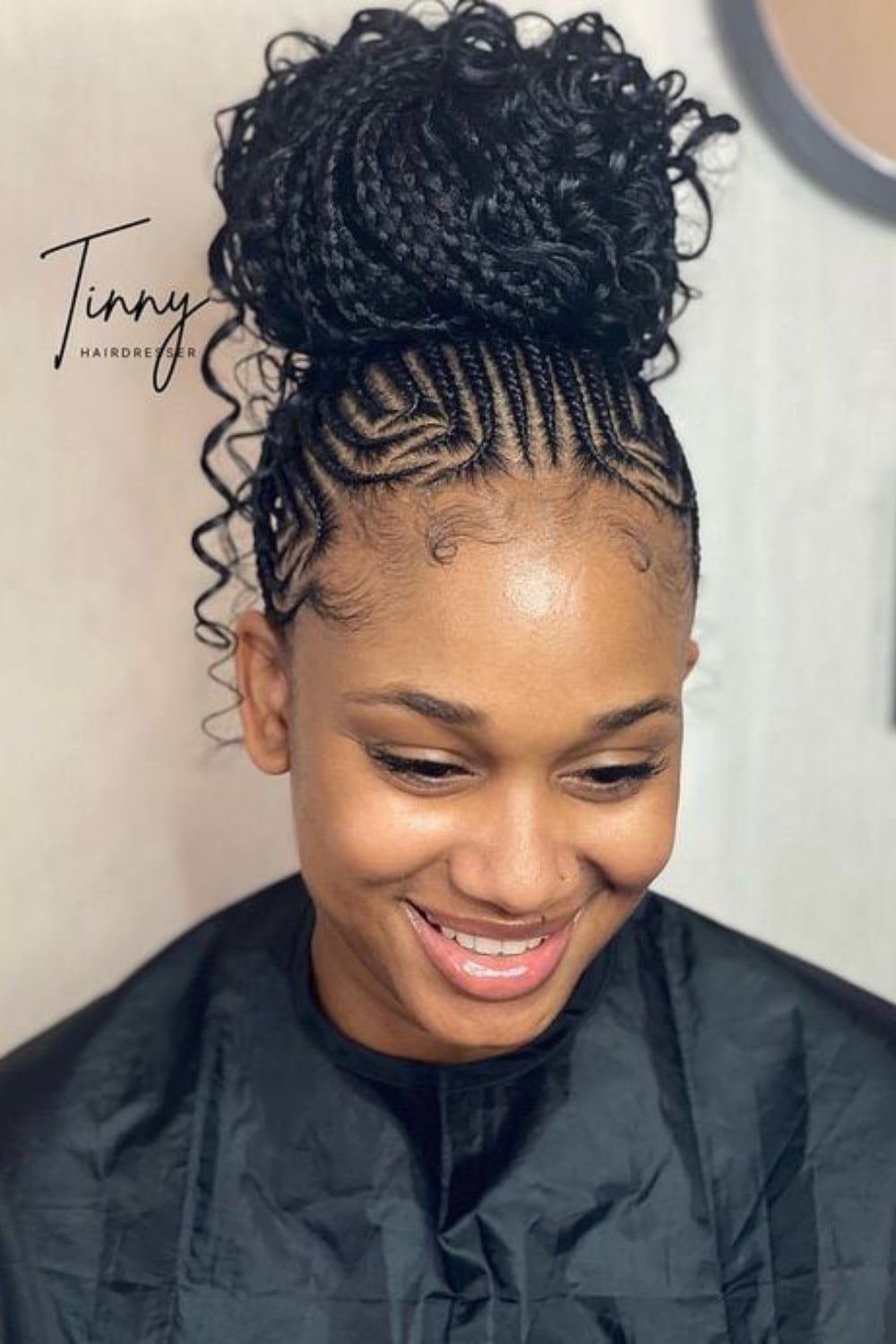
The geometric cornrows anchor this style, braided in sharp lines from a middle parting up into a high, voluminous bun. On mid-back length hair, the pattern has room to travel, so the braids create a deliberate design instead of a simple pathway to the bun. Loose curly tendrils frame the face, adding a soft layer that contrasts with the precise rows above.
Thick, curly hair carries both textures well, since the bun needs weight and the tendrils need natural body. Ask your stylist for geometric cornrows with a high bun and face-framing curls. To refresh the tendrils between wears, mist them with water or a leave-in conditioner, then let them air dry. That keeps the curls defined without flattening the braids.
Geometric Cornrow Pattern With Braided Bun
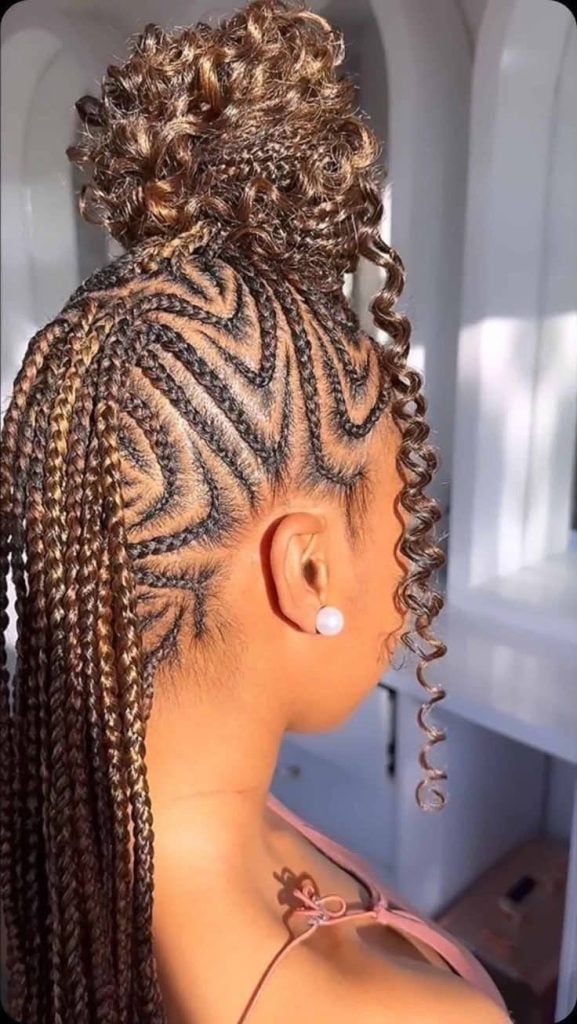
Geometry requires precision, so ask your braider to map the pattern on dry hair before a single section is started. This style builds a large, textured braided bun at the crown from a geometric cornrow pattern on the scalp, with black and brown highlights visible in the braids and loose curly tendrils left out at the front. It suits thick, wavy hair at mid-back length, because the density is what makes the pattern read and the bun hold its volume. Ask your stylist for: geometric cornrows with a large braided bun and loose curls.
The hold is strong for about two weeks with careful sleeping: a silk bonnet or scarf protects the curly tendrils from friction. The middle part keeps the geometric lines symmetrical from the front, top and back views. No bangs to interfere with the scalp art.
Low Bun With Cornrows and Face-Framing Strands
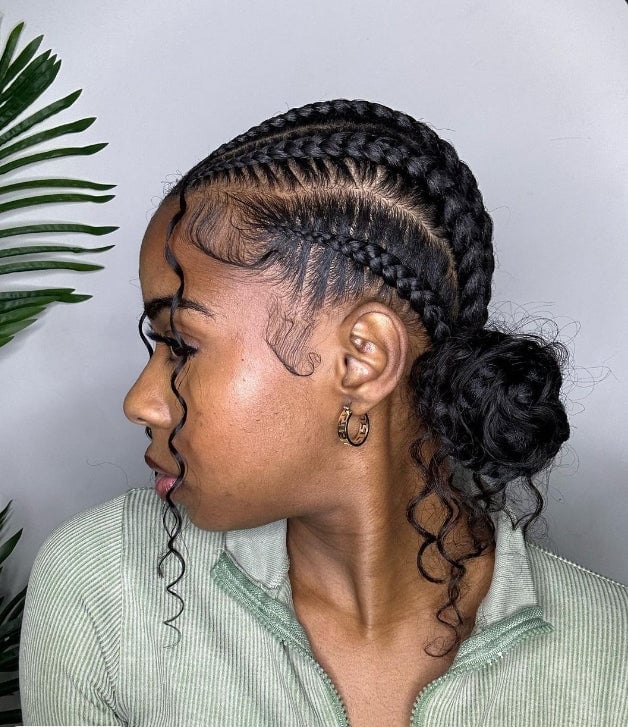
To get that low bun to sit exactly at the nape without pulling at the hairline, ask for cornrows that travel from the front hairline straight back, then taper into a textured low bun at the collarbone. The loose curly strands left out on either side soften the updo without breaking the braid line. This works on medium to thick hair starting at collarbone length. Ask your stylist for: low bun with cornrows and face-framing curls. A hydrating spray on the loose strands keeps them defined and prevents frizz, and the middle part keeps the cornrow lines clean.
Low Bun With Neat Cornrows and Baby Hairs
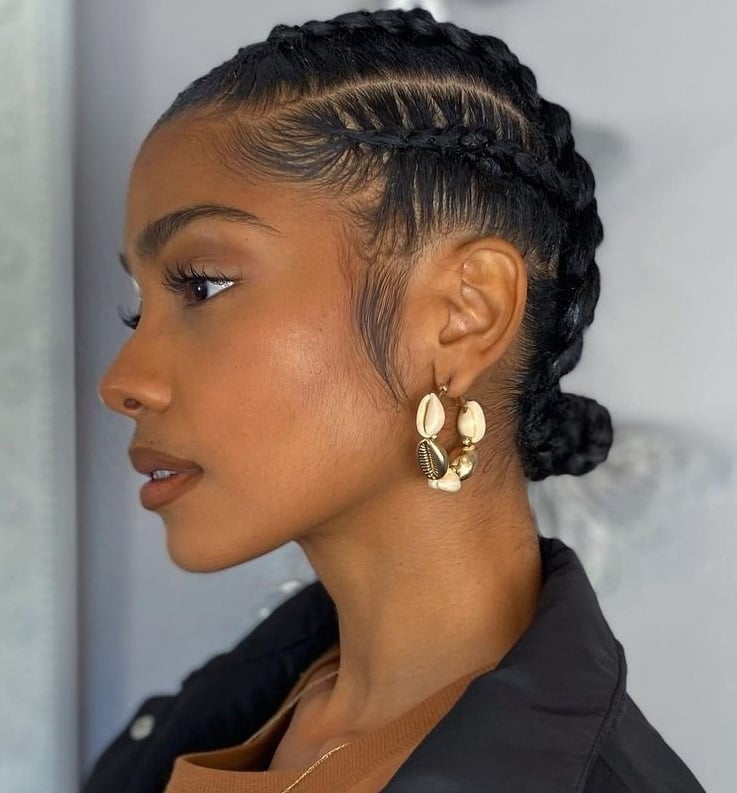
The precision here is the point: every cornrow is parted and laid in a straight line from the middle part to the nape, where they form a compact low bun. The side view shows a smooth transition from scalp braid to bun with no bumps or loose sections. Thick, shoulder-length or longer black hair gives the braider enough weight to work with. Ask your stylist for: low bun with neat cornrows and styled baby hairs. A toothbrush or edge brush with gel lays those baby hairs flat against the hairline. The bun sits low enough to avoid tension at the crown, which makes it comfortable for all-day wear at work.
Intricate Cornrows Into Nape Bun
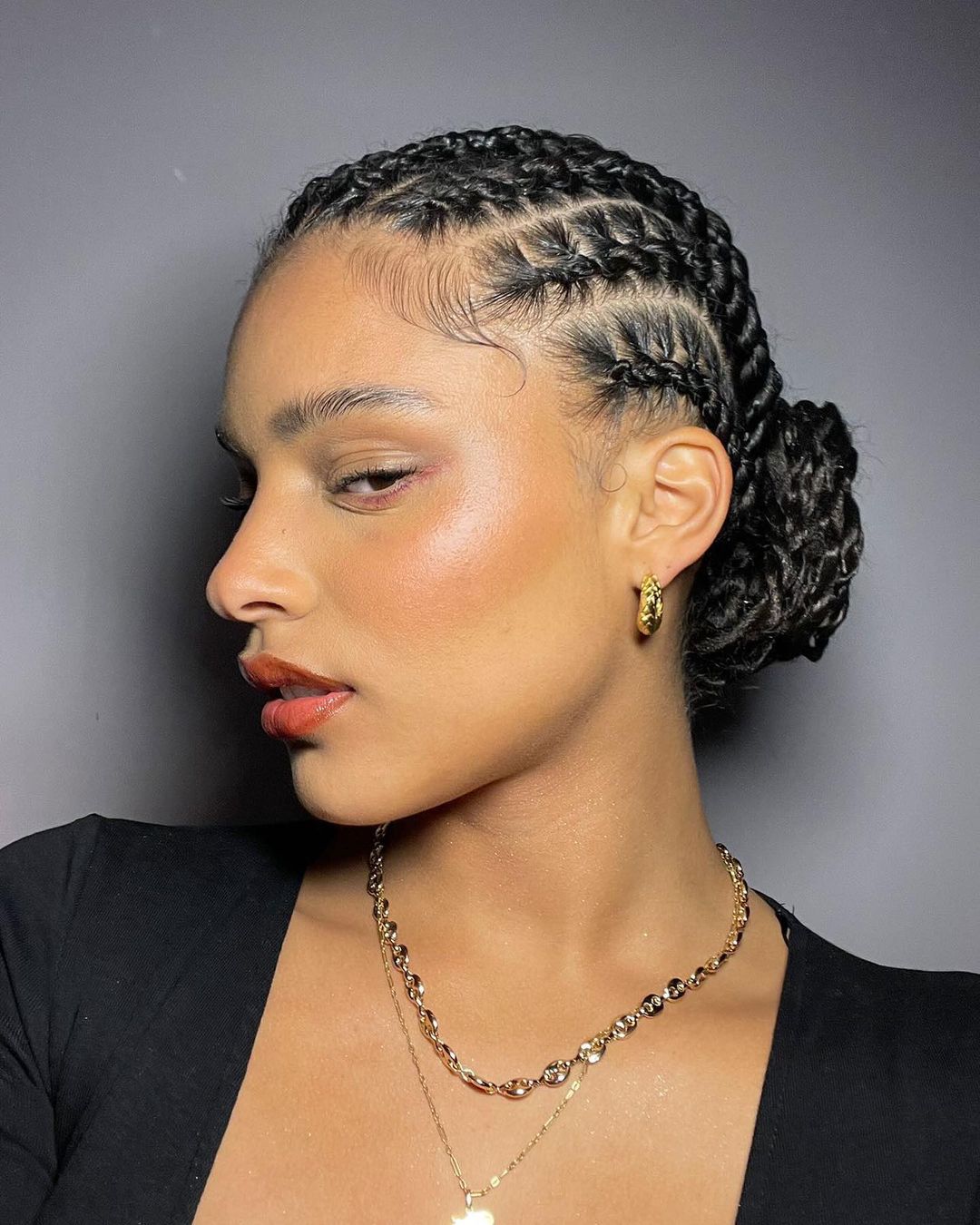
Intricate cornrows lead into a textured bun at the nape, and the side view shows the transition best. The hold depends on the tension at the nape: tighter braids here keep the bun from shifting, but they also mean a little more pull when you sleep on your back. Medium to thick hair at shoulder length or longer provides enough heft for the bun to look substantial. Ask your stylist for: intricate cornrows into a nape bun. A light holding spray brushed over the cornrows keeps them smooth against the scalp without stiffness. The style holds well for a week and a half before the nape sections start to loosen.
Sleek Bun With Neat Cornrows and Baby Hairs, Mid-Back
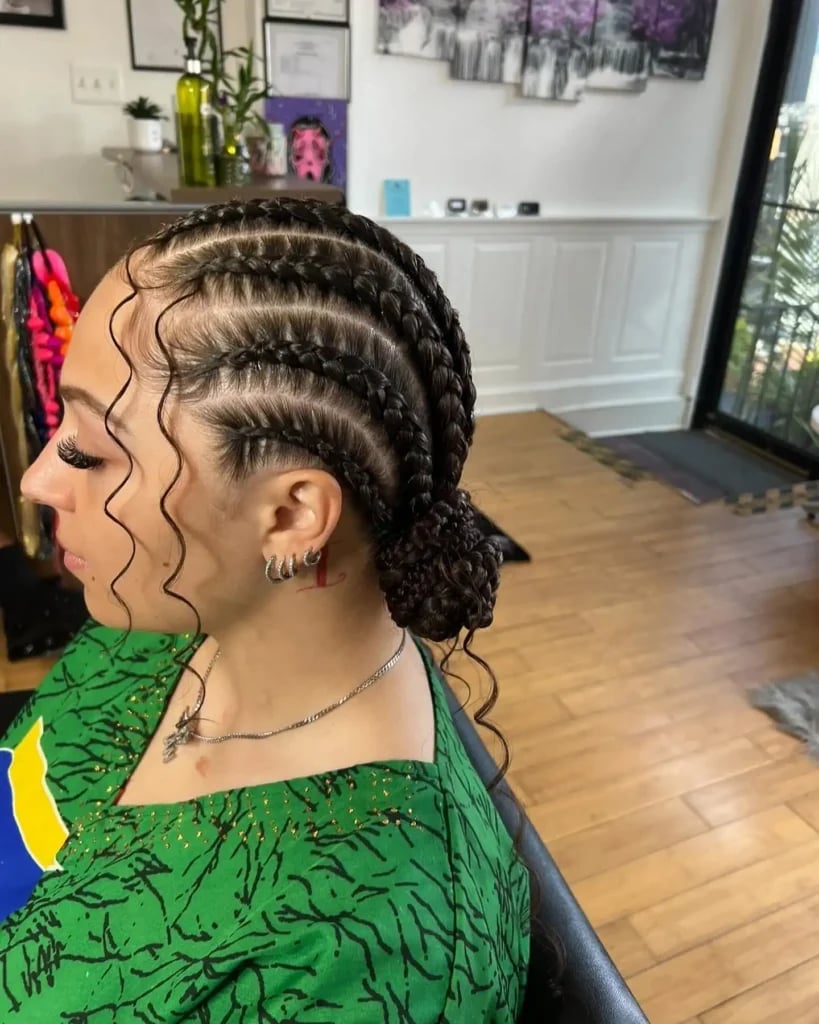
Neat cornrows that run from the hairline to a sleek nape bun look deceptively simple, but achieving that smooth scalp requires a salon visit. The cornrows must be the same width and tension from front to back, and the baby hairs along the hairline need a fine-tooth comb and gel to lie flat. Black, thick hair at mid-back length gives the braider enough length to tuck into a compact bun without bulk. Ask your stylist for: sleek bun with neat cornrows and baby hairs.
An at-home attempt with a hand mirror usually results in uneven partings and a bumpy bun, so leave this one to a pro. This style typically lasts two weeks with minimal adjustment, and the side profile stays crisp the whole time. No bangs means the cornrow lines run uninterrupted from the hairline to the bun.
Swirl Cornrows Into Low Bun
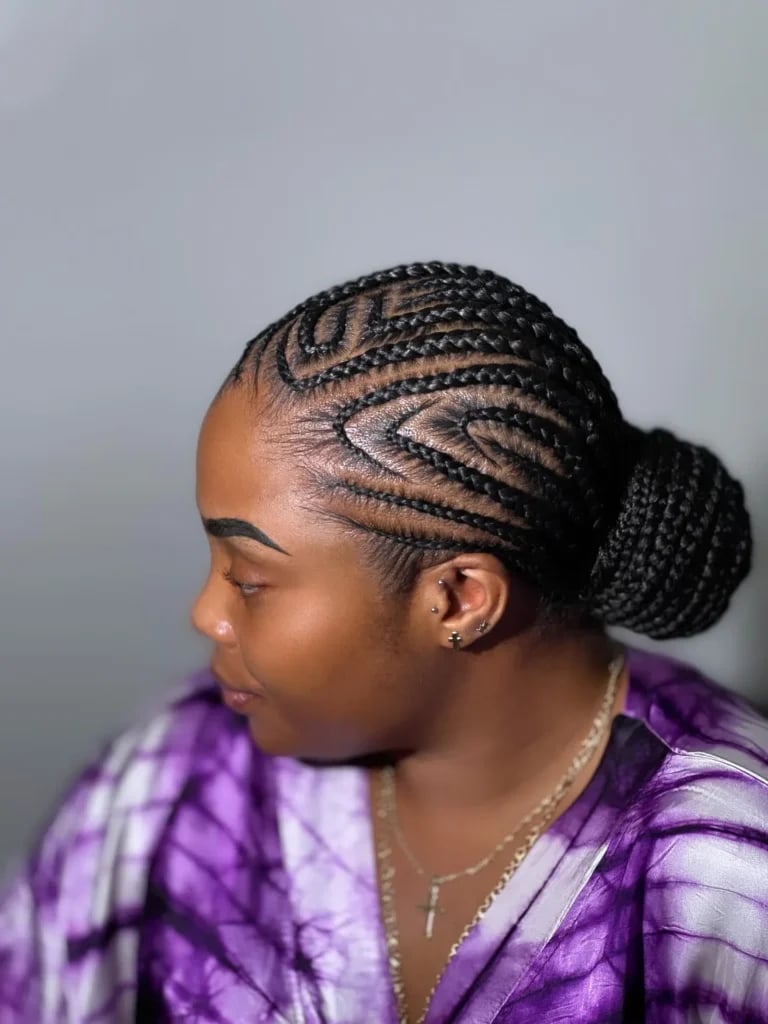
The swirl cornrows begin at the middle part and curve around the temples before meeting at a low bun. The pattern needs thick hair at least collarbone length so the braids stay full. The bun sits low and compact, and the cornrows hold the swirl shape firmly. Ask your stylist for: low bun with swirl cornrows.
Looped Bun With Cornrows
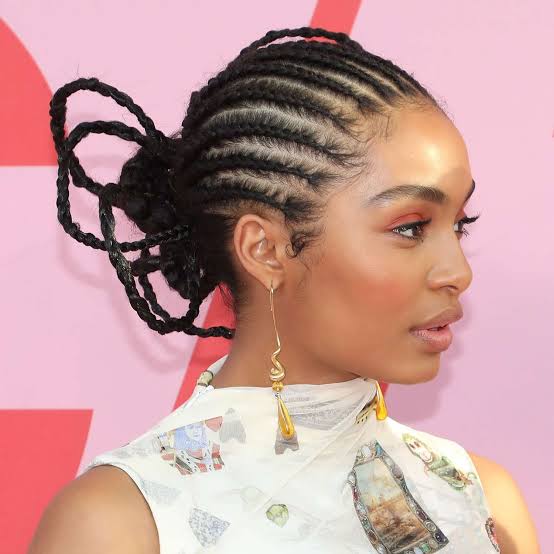
The key to a looped bun is extending each cornrow into a folded loop before securing it. The braids start at the hairline and travel toward the crown, where each one is bent into a U-shape and pinned in place. The result is a bun built from stacked loops rather than a single twist. A middle part keeps the front symmetrical, and the loops create a sculptural texture. This technique works best on hair of medium density that reaches at least the neck, because the loops need enough length to fold without becoming too short. Ask your stylist for: intricate looped bun with cornrows.
Braided Bun With Gold Cuffs
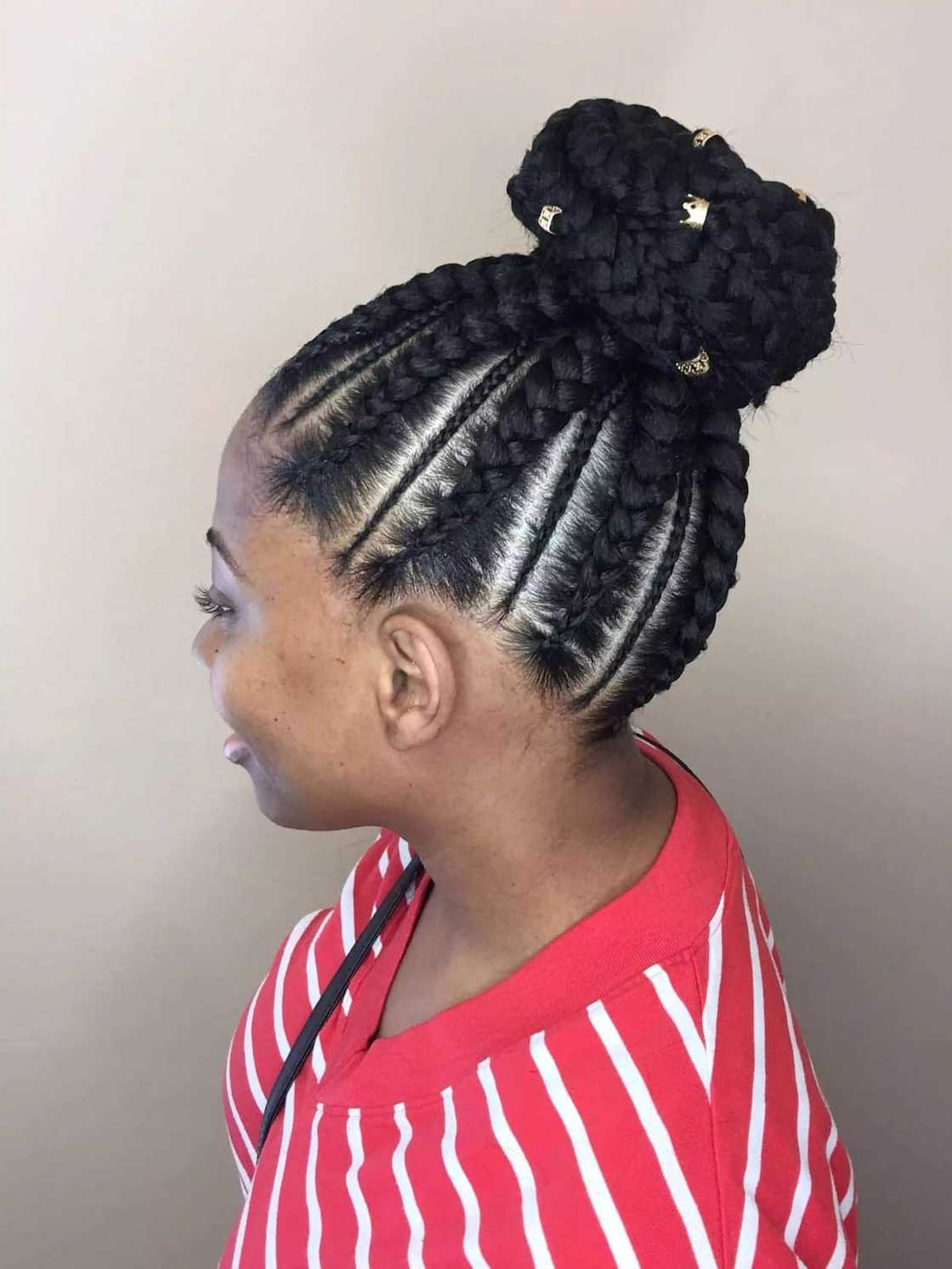
Unlike a plain high bun, this version uses thick braids and gold cuffs to add texture and shine. The cornrows run from the middle part to the crown, where they join into a dense braided bun. Gold cuffs are slipped onto several braids for a metallic accent. The cuffs are clamped securely so they don’t slide, and the braids hold the bun firmly all night. This is a style for weddings, galas, or any event where you want the hair to do the talking. It needs thick hair at least shoulder length to support the volume of the bun and the weight of the cuffs. Ask your stylist for: high braided bun with gold cuffs.
Fine Cornrows With Wrapped Coil Bun
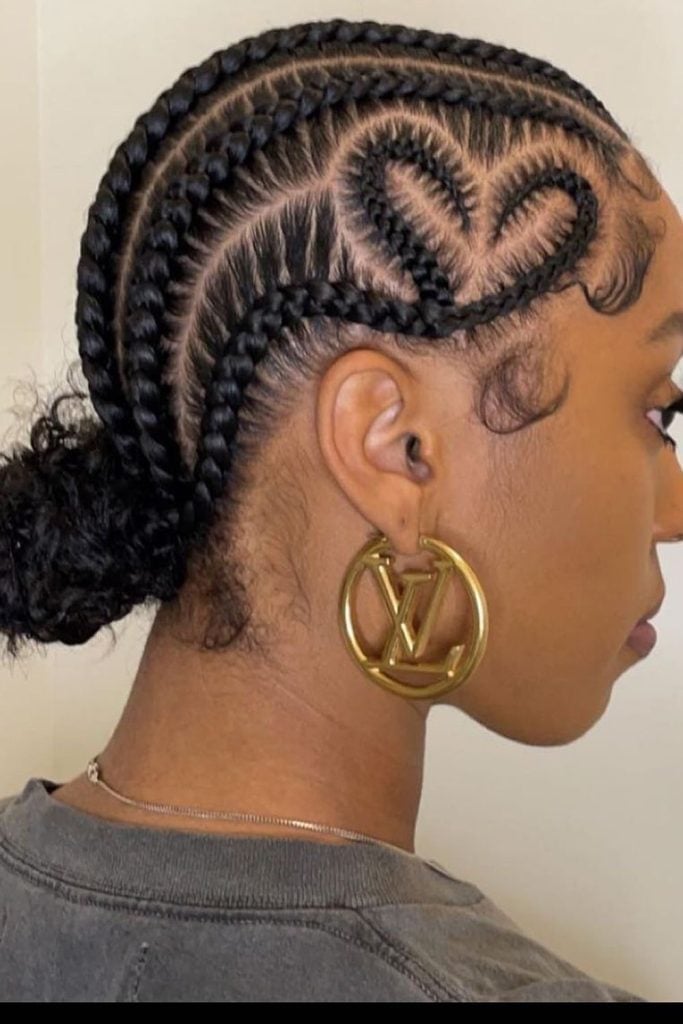
The heart-shaped cornrow pattern is a geometry puzzle: each braid must curve precisely to form the shape. Fine cornrows trace the heart outline on one side, then feed into a wrapped coil bun at the nape. Laid baby hairs frame the hairline. The drawback is that fine braids can loosen faster than thicker ones, so the pattern may need a touch-up after a week. This style suits thick hair that can be divided into fine sections. Ask your stylist for: bun with fine cornrows and laid baby hairs.
Crown Bun With Precise Cornrows
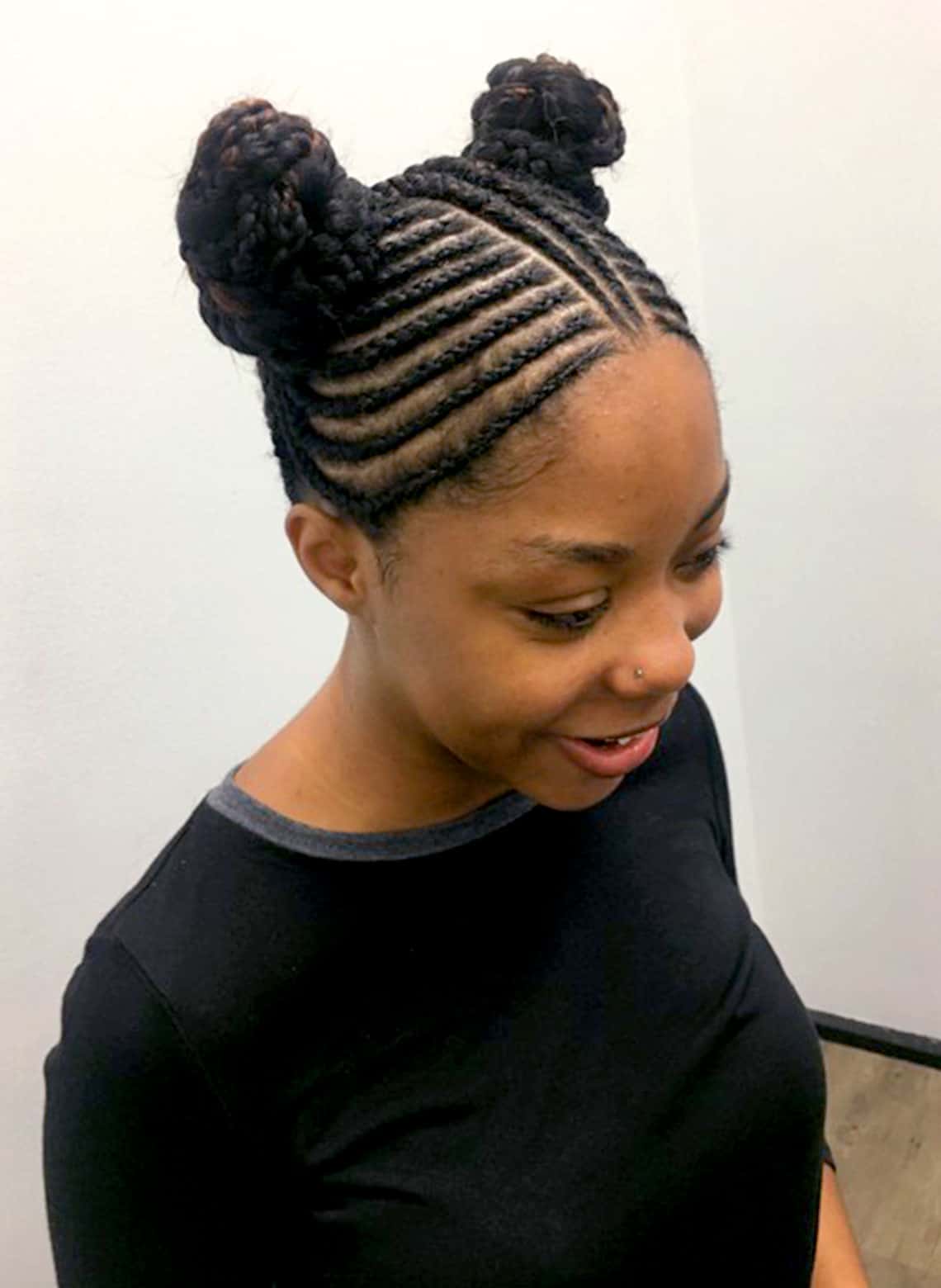
How do you ask for two symmetrical buns with cornrows? Two neat buns sit on top of the head, each fed by cornrows that start at a middle part. The cornrows lie flat against the scalp and converge at the crown, where each bun is formed from the braided ends. This works on hair from chin length, but longer hair gives fuller buns. The middle part keeps the front clean, and the buns sit side by side for a balanced look.
- Specify two buns at the crown, not one.
- Ask for cornrows that feed directly into each bun.
Ask your stylist for: two crown buns with precise cornrows.
Double Buns With Cornrow Leads
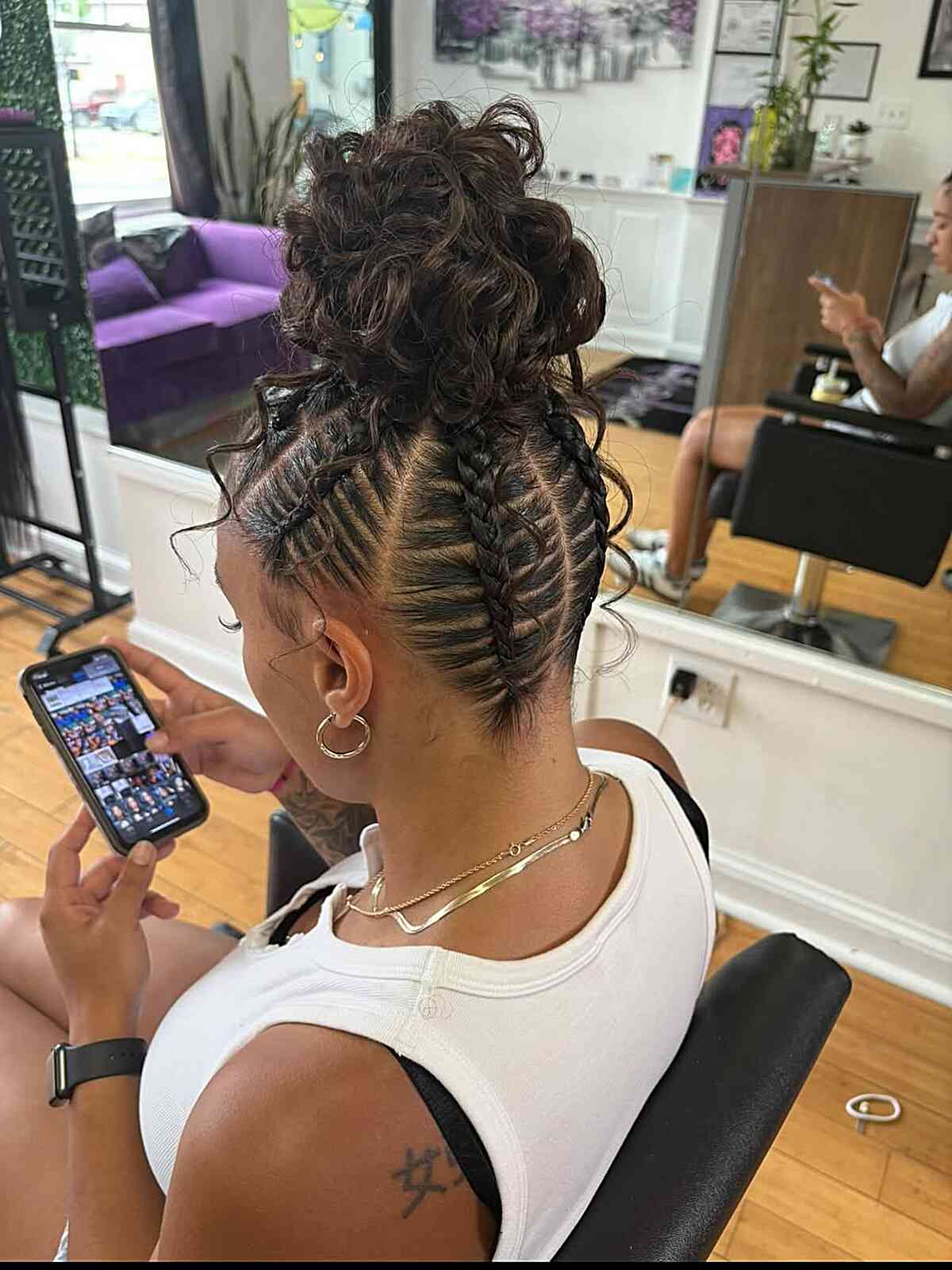
Two buns sit on top of the head, each fed by cornrows, and the symmetry does most of the work here. This double buns cornrow leads setup suits thick hair from chin length up, since the braids need enough weight to lie flat against the scalp while the buns hold their shape. Ask your stylist for: double buns with cornrow leads. The curly texture in the buns keeps them looking full, but it also means a few minutes with a pick or your fingers each morning to fluff them back into place. Cornrows stay neat for a couple of weeks with a satin scarf at night, and the buns themselves hold all day without pins slipping, as long as they are anchored into the braided base and not into loose hair.
Maintenance is about the scalp, not the style. Oil the parts every few days to keep the cornrows from feeling tight, and expect to redo the edges around week three when new growth softens the lines. The buns will frizz before the braids do, so a light water mist and a re-twist of the ends keeps them presentable longer.
Half-Up Bun With Side Cornrows
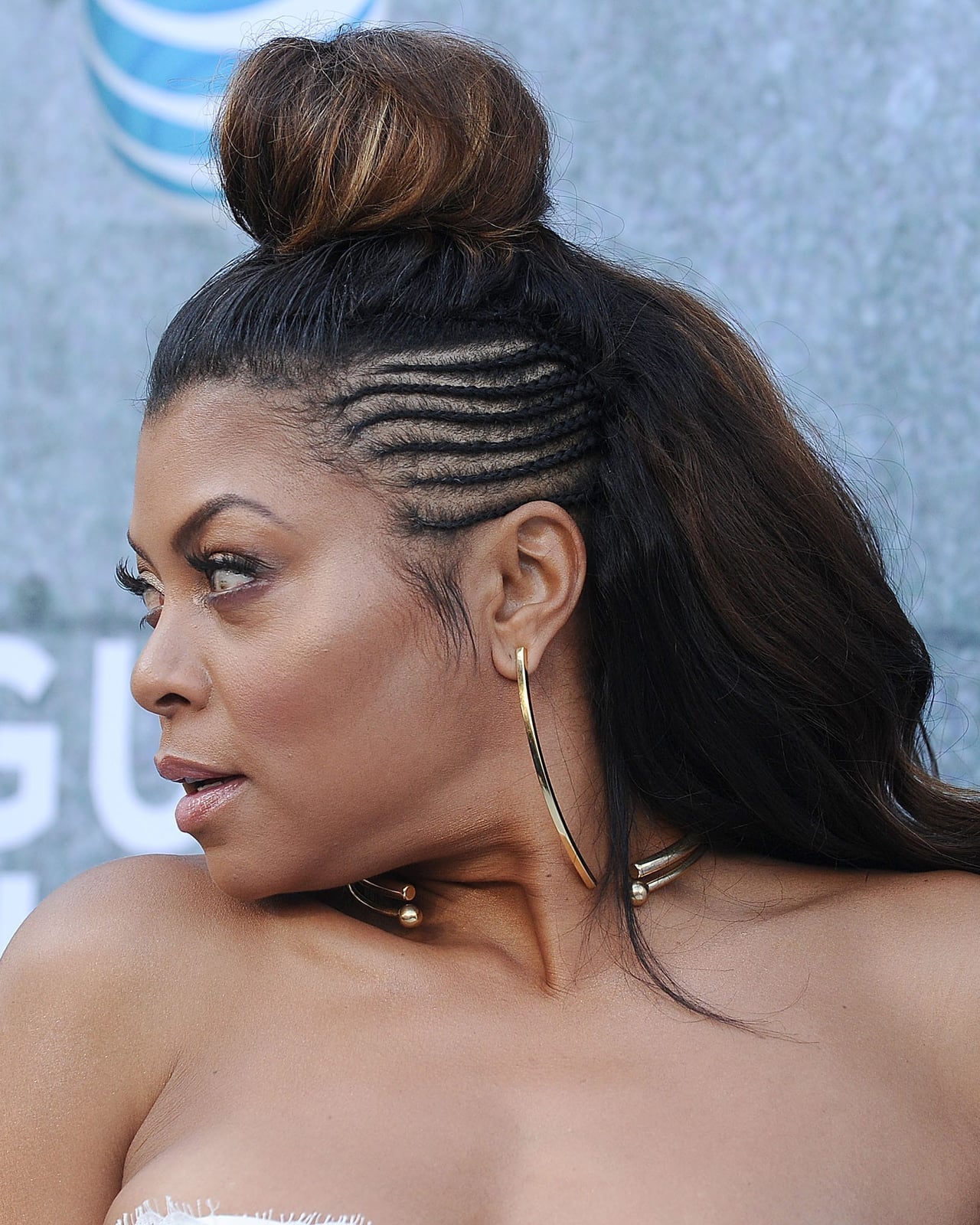
Cornrows sweep from a side parting into a half-up bun, leaving the rest of the hair down, and the contrast between the braided crown and the loose lengths is the focal point. This half-up bun with side cornrows works best on medium density hair at collarbone length, because the loose section needs enough weight to hang straight. Ask your colorist for: half-up bun with side cornrows and highlights. The blonde highlights break up the dark brown base, so the loose part keeps the dimension visible without looking stripey. The style takes about two hours in the chair, and the cornrows hold for a week or two while the bun stays put for the day with just two pins. Re-braiding the sides every couple of weeks keeps the lines crisp, and the highlights need a gloss or toner around eight weeks to stay bright.
Final Thoughts
For daily wear, a sleek high bun with straight-back cornrows keeps things polished and fast. For an event or a mood shift, swap in a geometric pattern or let a few curls break the line. The bun itself can sit high, low, or centered. Each placement changes the silhouette without changing the work.
- Maintain cornrows with a light-hold gel or mousse for neat edges.
- Protect braids from excessive dryness with a hydrating serum or oil.
- Avoid overwashing; cleanse scalp gently with a brush or cotton swab.
- Refresh the bun by re-wrapping or securing any loose braids.
- Consider retightening cornrows every 4-6 weeks depending on growth.
Embrace the versatility of the cornrow bun for a stylish and protective 2027.