Last year I sat next to a woman at the salon who asked for “not warm, not cool, just sort of there.” The stylist nodded. I knew exactly what she meant. That neutral zone between ash and gold is where beige blonde lives, and in 2027 it is the default, not a compromise.
Forty-three looks of Beige Blonde Hair 2027, from a root shadow that buys you eight weeks to a bright money piece that demands monthly toning. Short, long, wavy, straight, blunt, layered. Some you can air-dry and walk out the door. Some need the round brush. One took me three hours in the chair and flat by 4 pm anyway. Still worth it. Paler shade or deeper base, there is a version here that does not fight your texture.
Neutral Beige Blonde With Side Swept Fringe
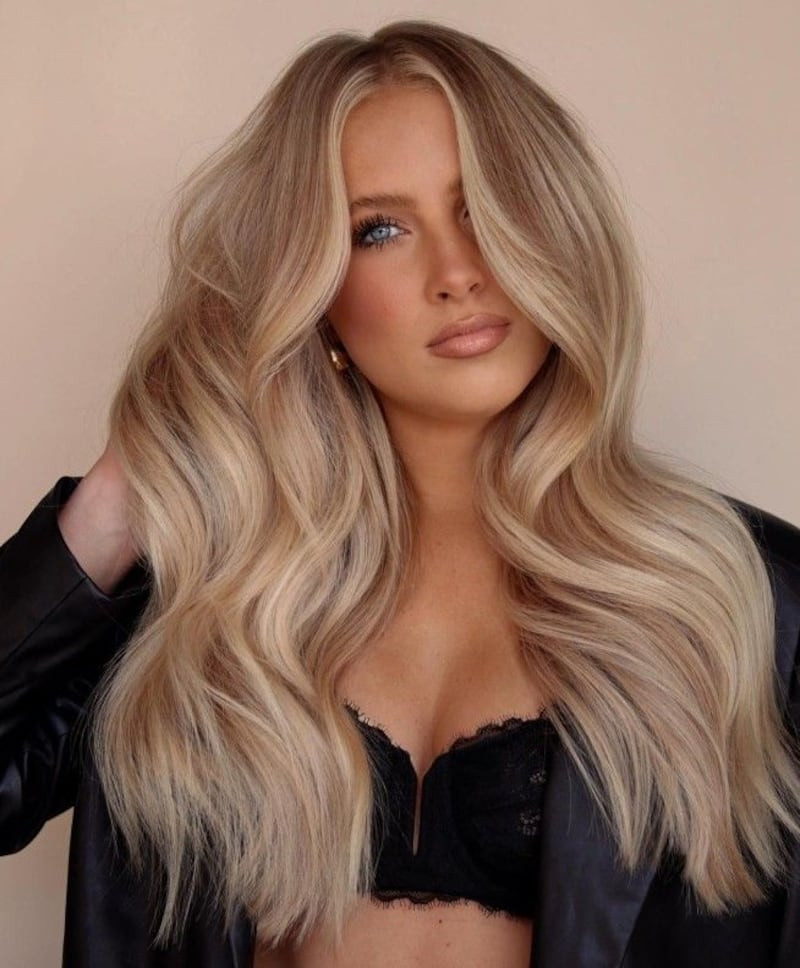
This is the one that made me stop scrolling. A neutral beige blonde long hair shade that reads warm without tipping into gold, and the side-swept fringe is doing the heavy lifting. The colour is a soft beige base with subtle highlights woven through the mid-back length, so it catches light in slices rather than one flat sheet. Thick, wavy texture gives the loose waves body, and the fringe lands just past the brow, which softens a strong jaw or a square forehead. The technique is a salon balayage with a root smudge, which means the grow-out is gradual, not a harsh line at week four.
Voluminous Blowout Balayage Waves
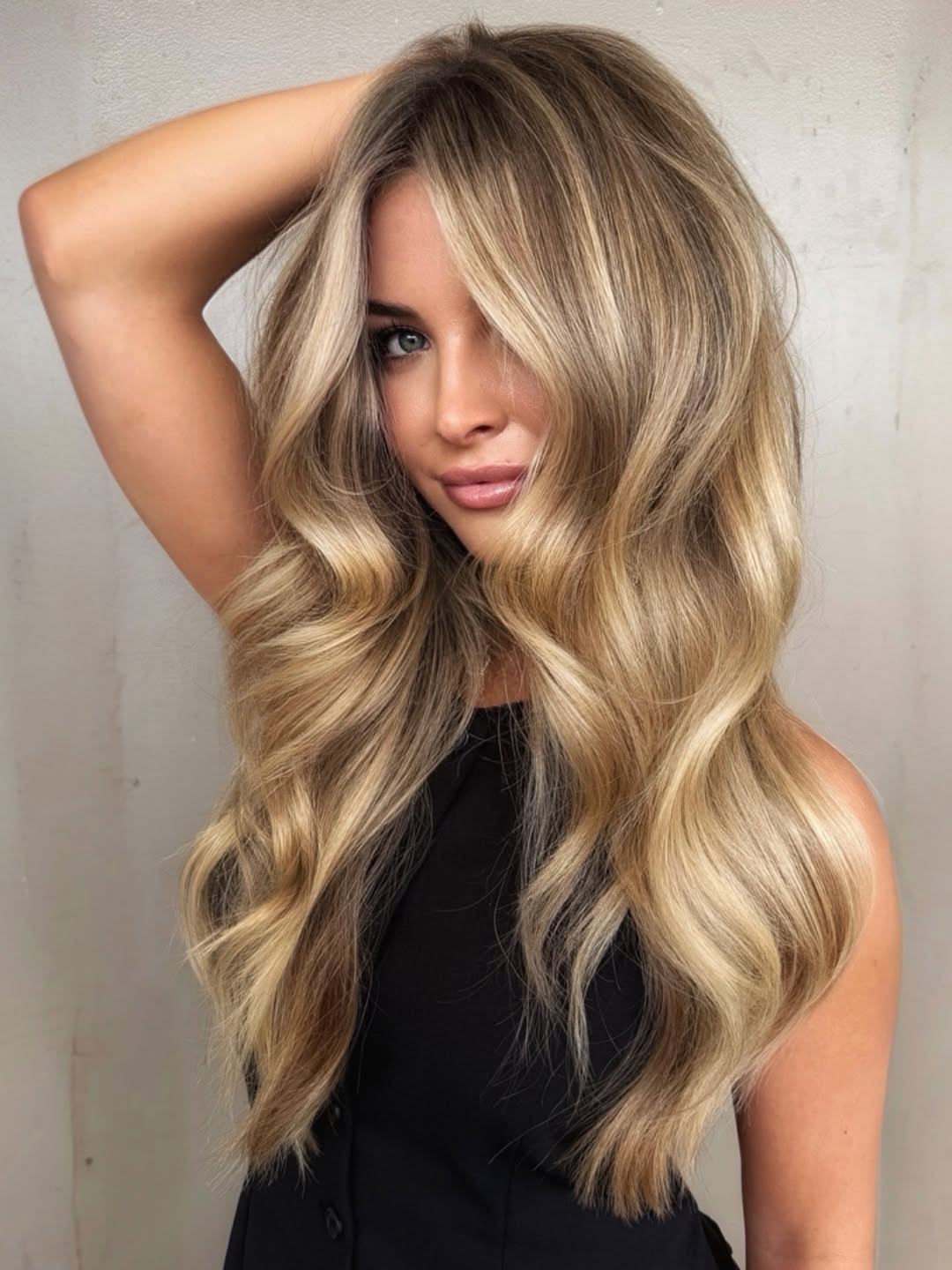
The lift starts at the root, not the midshaft. That is the detail that separates a beige blonde balayage blowout from a standard set of waves. The balayage technique paints the beige tone onto the surface of thick, mid-back hair, leaving the underlayers darker. This creates depth, and depth reads as volume when the hair is blown out.
Short list of what keeps it bouncy: a round brush blowout at the crown, velcro rollers set for thirty minutes of cooling time, and a trim every ten weeks so the ends do not go wispy. The tone stays neutral beige, not brassy, because the base was pre-lightened to a pale yellow before the toner went on. My hair goes flat by 4 pm, but this one held shape past dinner.
Creamy Babylight Mid Back Waves
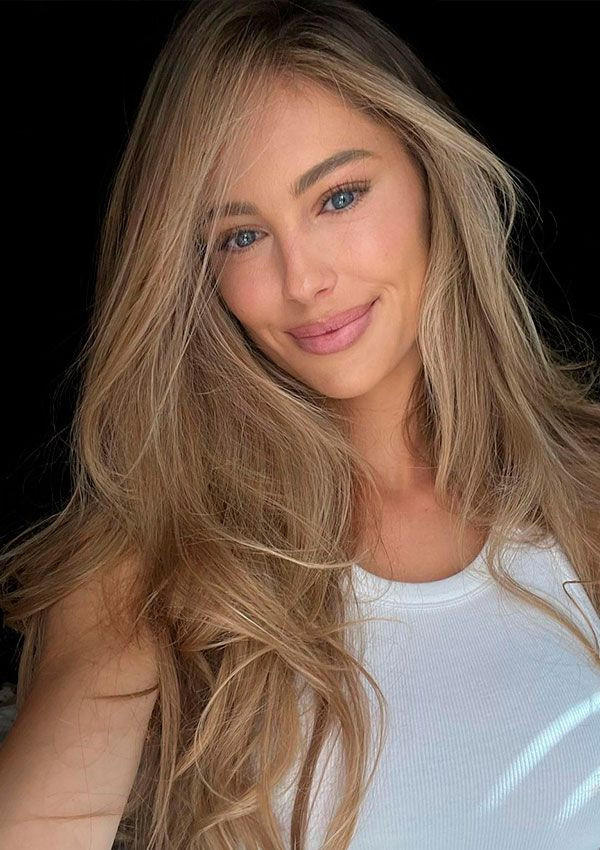
Who actually looks good with creamy beige blonde babylights? Medium density hair, for starters. The subtle babylights are painted at the part line and along the face, so they add brightness without the weight of full highlights. On fine hair, this technique can look sparse, but on medium density wavy mid-back hair, it reads as natural sun exposure. The tone is creamy, not ashy, which means it works on warm undertones. If your hair is very coarse or very dark, the babylights will need a double process to lift enough, and that is a longer chair day.
Voluminous Curtain Fringe Neutral Blonde
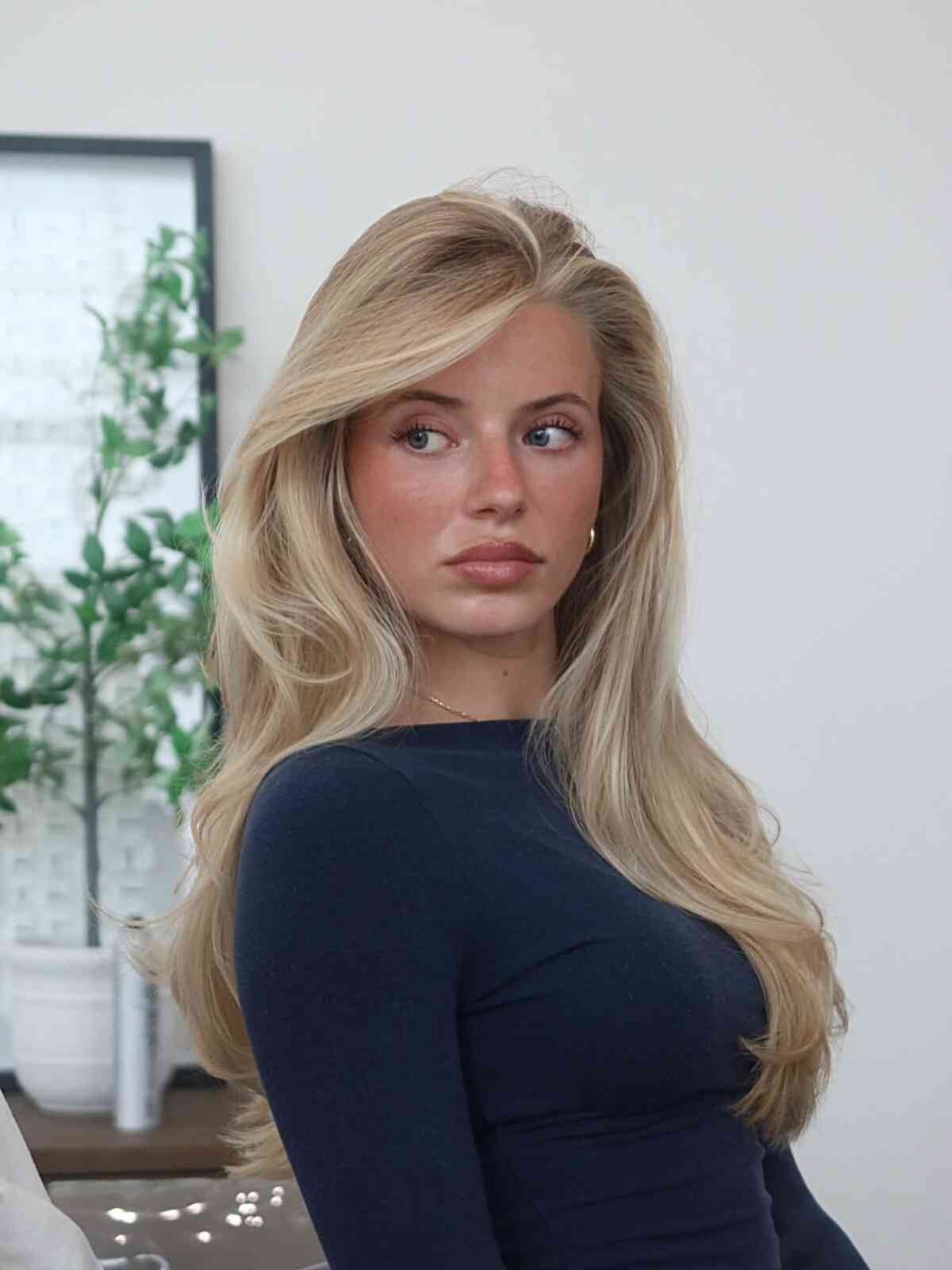
I will admit it: I did not think curtain bangs would work on thick, straight-to-wavy hair. They tend to separate by noon and look like two sad strips. But this cut has long layers that start below the chin, so the weight pulls the fringe forward instead of letting it drift apart. The neutral beige blonde curtain bangs are cut to graze the cheekbone, and the blowout adds volume at the crown, which balances a round or heart-shaped face. The honest downside: these bangs need a trim every four weeks. Skip them if you cannot commit to that rhythm, or you will be tucking them behind your ears by week five.
Bright Money Piece Beige Blonde
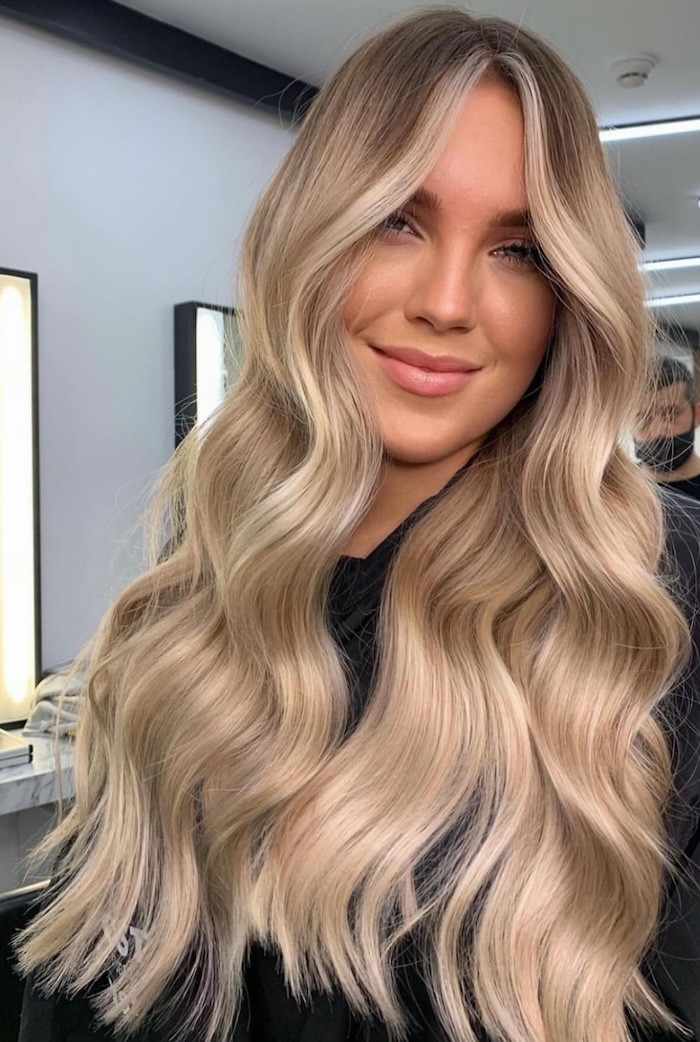
A beige blonde money piece beats a full balayage if you want maximum impact with minimum maintenance. The bright beige blonde is concentrated at the front, framing the face, while the rest of the mid-back length stays a softer beige. This means you get the lightest possible tone around your features without lightening everything. The technique is a foil highlight on the face-framing sections only, and the rest is painted freehand. Medium density wavy hair carries the contrast well, but if your hair is very fine, the money piece can look harsh, so ask your stylist to blend it with a few thin babylights behind the ear.
Seamless Balayage Curtain Fringe Waves
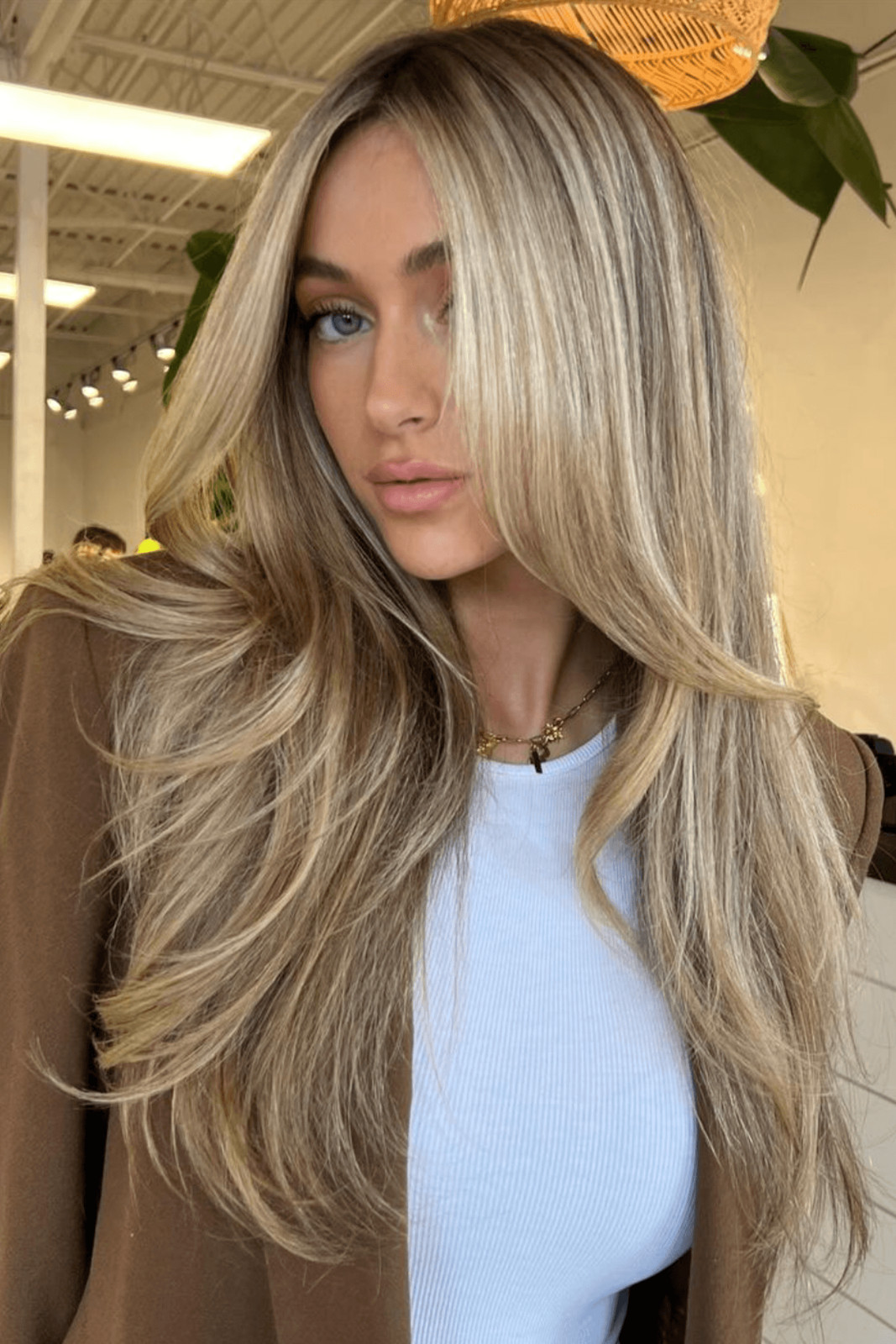
The curtain bangs land right at the cheekbone, and that middle part is doing the heavy lifting. This is thick, wavy mid-back hair with a seamless beige blonde balayage that starts subtle around the ears and builds to a soft, creamy tone at the ends. The balayage technique keeps the root line invisible for weeks, which matters when your hair grows fast and you hate booking a toner every month. The long layers give the waves room to move without collapsing into a triangle shape by noon.
You need a salon chair for this, not a bathroom mirror. The curtain bangs alone require a dry cut from someone who knows how a wave sits when it air-dries. Wash every three days to preserve the root blend, and break up the waves with your fingers after a large curling wand. The beige blonde balayage curtain bangs read dimensional in low light and bright in direct sun, which is the whole point.
Back View Layered Balayage Waves
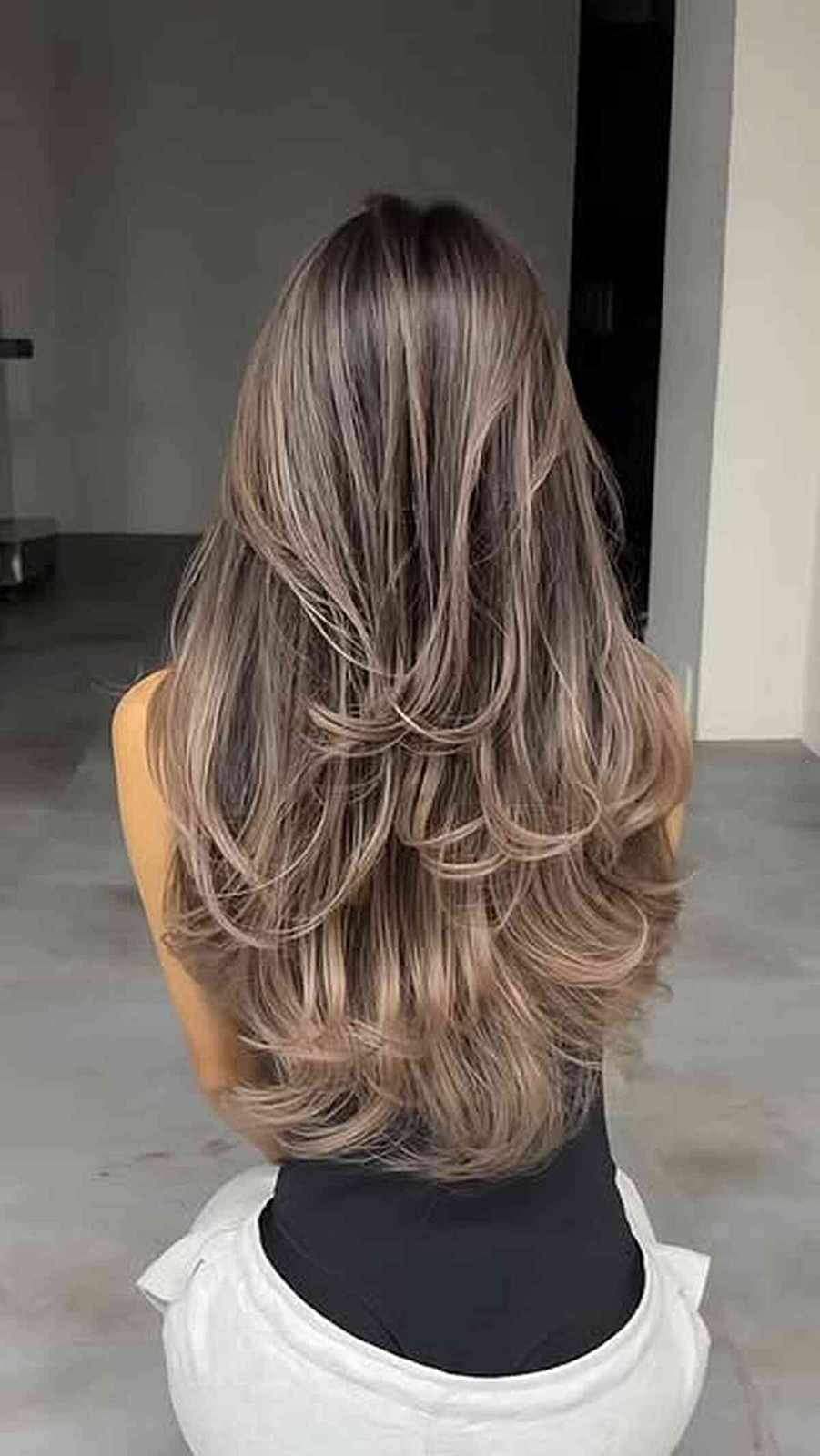
The back view beige blonde hair tells the real story: the balayage is painted in vertical sections, not horizontal bands, so the colour falls in ribbons rather than stripes. Medium density, wavy mid-back hair with long layers, and the beige blonde balayage starts darker at the crown and lightens gradually through the mid-lengths. No harsh line where the colour begins, just a soft transition that makes the layers read as one continuous piece. The back view is where most balayage fails, and this one does not.
Collarbone Soft Waves Curtain Fringe
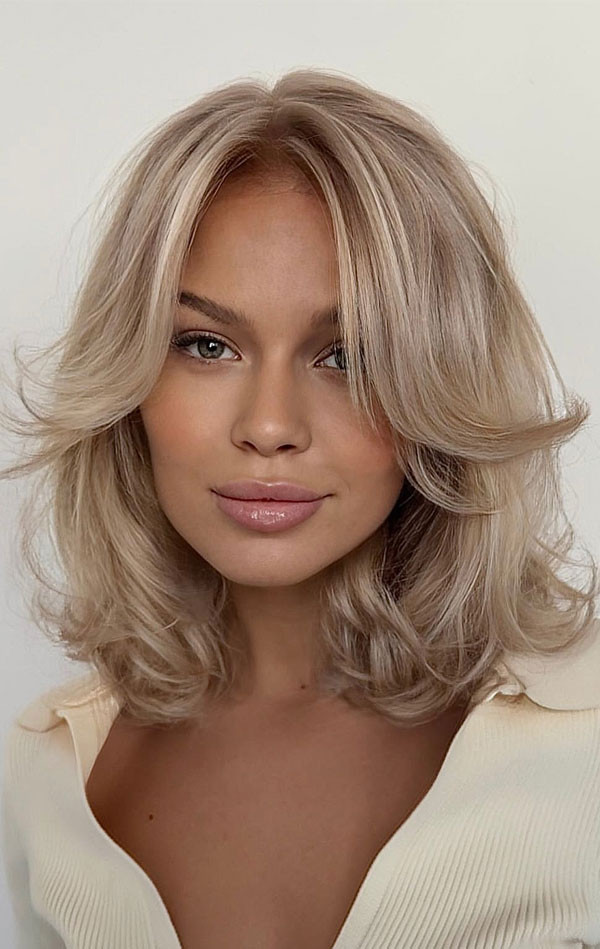
Does your hair go flat by 4 pm no matter what you do at 8 am? This collarbone length beige blonde with curtain bangs and soft waves might be the answer. The length hits right above the shoulder, so it swings instead of sitting, and the layers remove enough weight to keep a bend through the day. The soft beige blonde tone reads warm without tipping into gold, which works on medium-density wavy hair that tends to pull brassy. The curtain bangs soften a strong jawline without shortening the face, and the middle part keeps the volume balanced on both sides.
This is a summer-to-fall colour, not a winter commitment. The beige base needs a gloss every six weeks to stay neutral, and the collarbone cut needs a trim every eight to avoid that grown-out mullet moment. Medium texture holds the wave best; fine hair will need a smaller curling iron and more product.
Neutral Blended Mid Back Waves
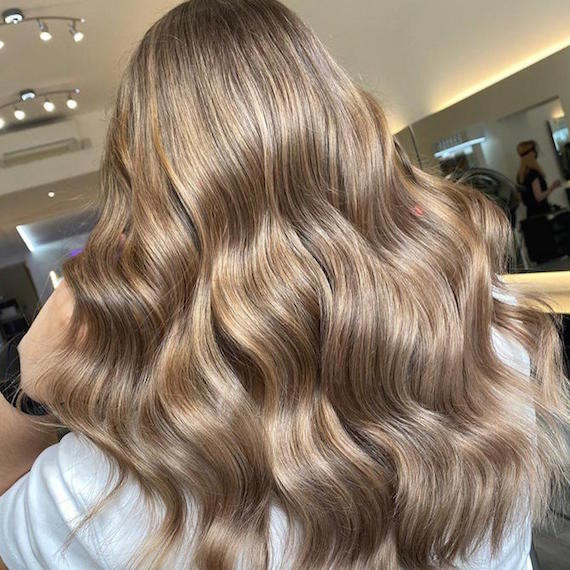
This is the one where you stop and ask how they got the blend that smooth. Medium density, wavy mid-back hair with no bangs, and the neutral beige blonde highlights are painted so finely they look like the hair grew that colour. The base is a warm beige, the highlights are a cooler sand, and the two tones meet without a visible line anywhere. The neutral beige blonde reads expensive because it does not lean yellow or ash, just sits in the middle and lets the texture do the work. Air-dry with a texturizing spray or add a loose bend with a flat iron, and gloss every eight weeks to keep the neutrality from drifting warm.
Dark Root Balayage Long Waves
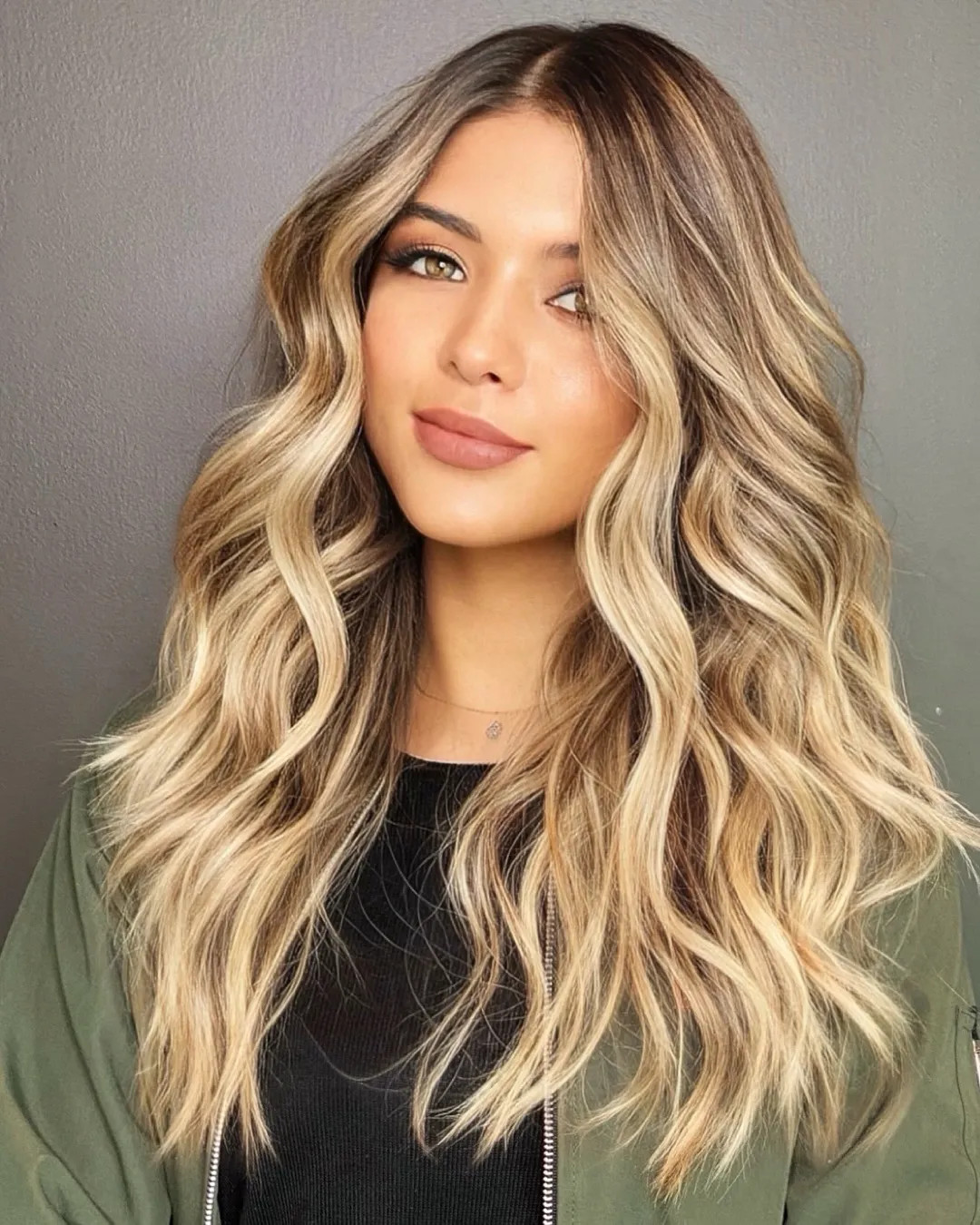
I will admit I was skeptical of the darker root on a beige blonde. Then I saw how it wears across a real week. The beige blonde dark roots start about an inch from the scalp, and the root shadow balayage blends that darker base into a soft beige through the mid-lengths. No harsh demarcation line, no stripe of dark scalp showing at week three. The colour technique here is a root smudge followed by a balayage through the lengths, and the tone stays neutral because the darker base cancels the warmth that usually creeps in by week two.
The honest downside: the dark root looks intentional for about six weeks, then the beige starts to fade and the root grows out darker than the rest. You need a toner at week eight to keep the beige from turning honey. Wavy, medium-density mid-back hair holds the gradient best; fine hair will show the root line faster because the colour lifts quicker.
Natural Dark Base Balayage Back View
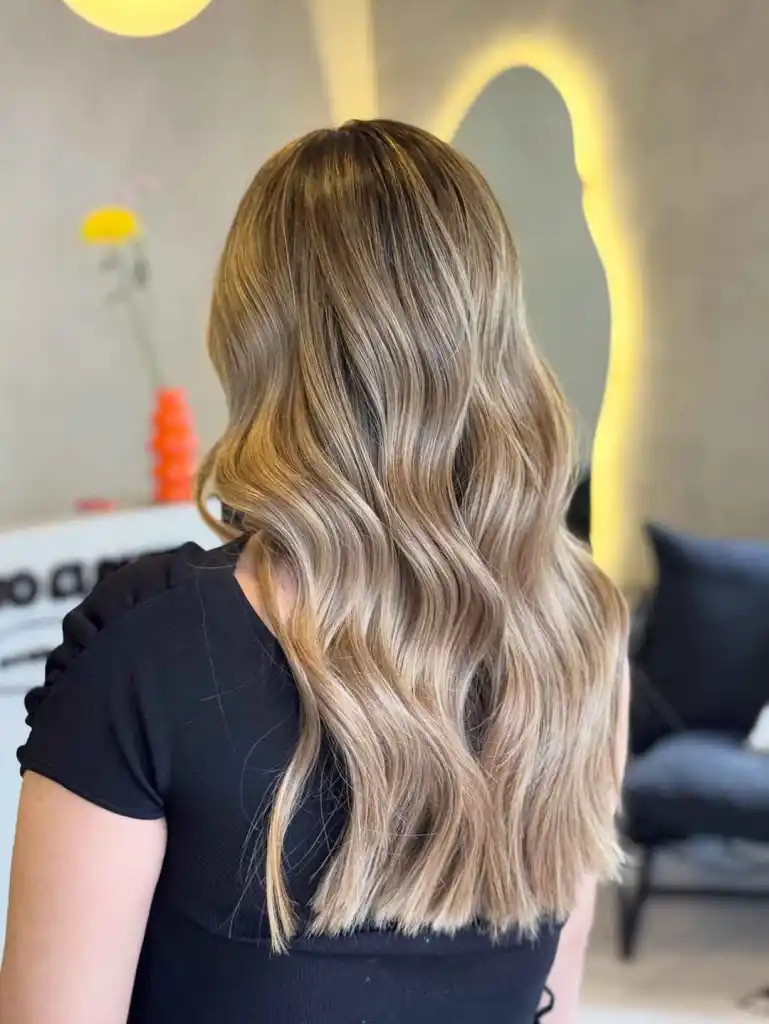
This is the one where you get the grow-out and the lightness in the same head. The dark base beige blonde balayage starts deep at the root, then the beige tone climbs each section in soft ribbons. The back view makes it clear: this is not a uniform blonde, it is a natural dark base with deliberate, sun-bleached strands. Medium density wavy hair at mid-back, middle part, no bangs. The colour does the work, the cut just stays out of the way.
Luxurious Creamy Voluminous Waves
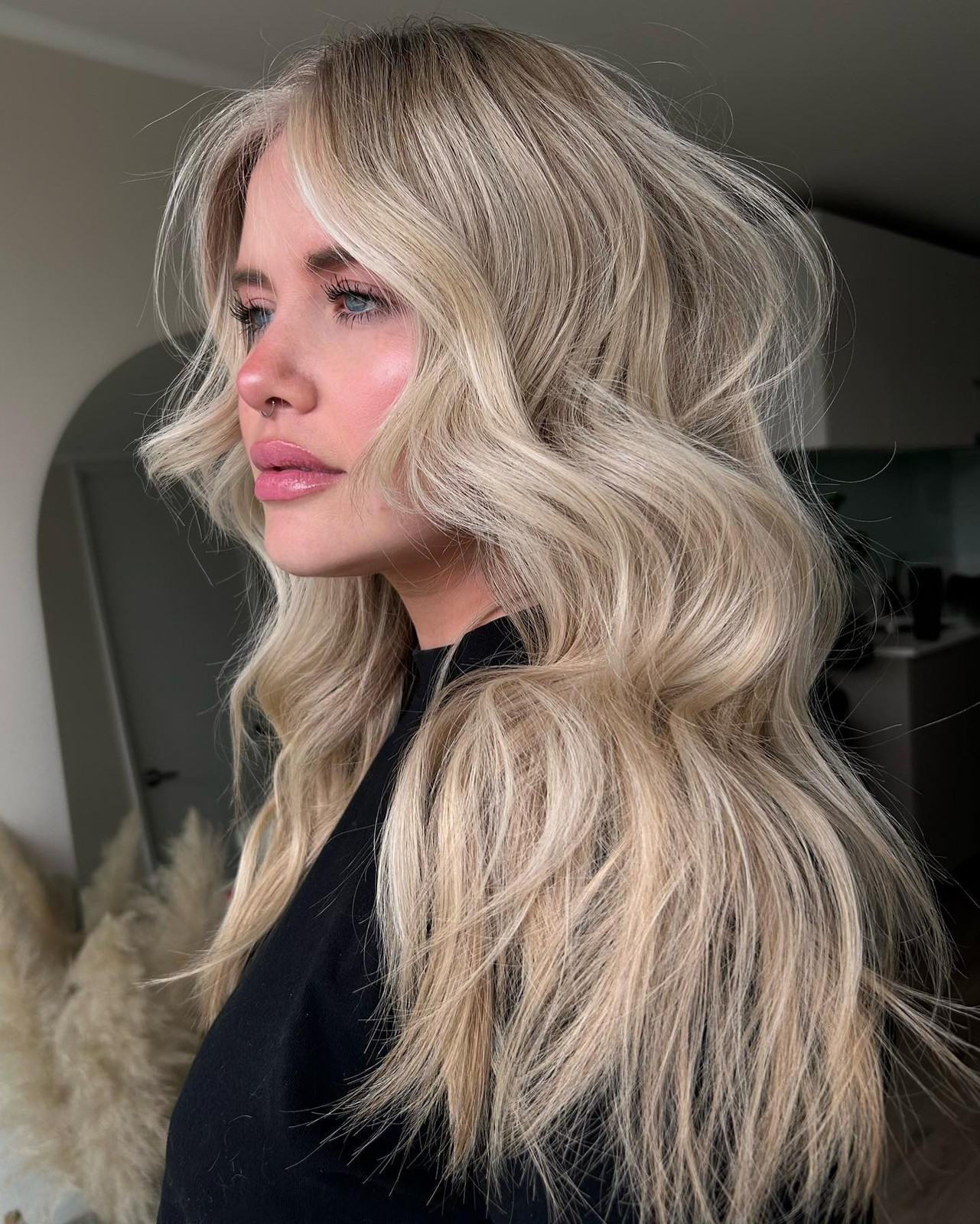
Thick wavy mid-back hair with curtain bangs and a full blowout. The creamy beige blonde hue reads warm but not golden, like sand in good light. I have seen this shade called expensive blonde and I get it. The creamy beige blonde highlights catch the light in ribbons, not chunks.
This is a holiday party or a wedding guest hair. It asks for hot rollers, a large round brush and a shine spray. The volume holds maybe six hours on fine hair, longer on thick. Book the salon, this is not a bathroom-mirror job.
Root Shadow Flowing Balayage Waves
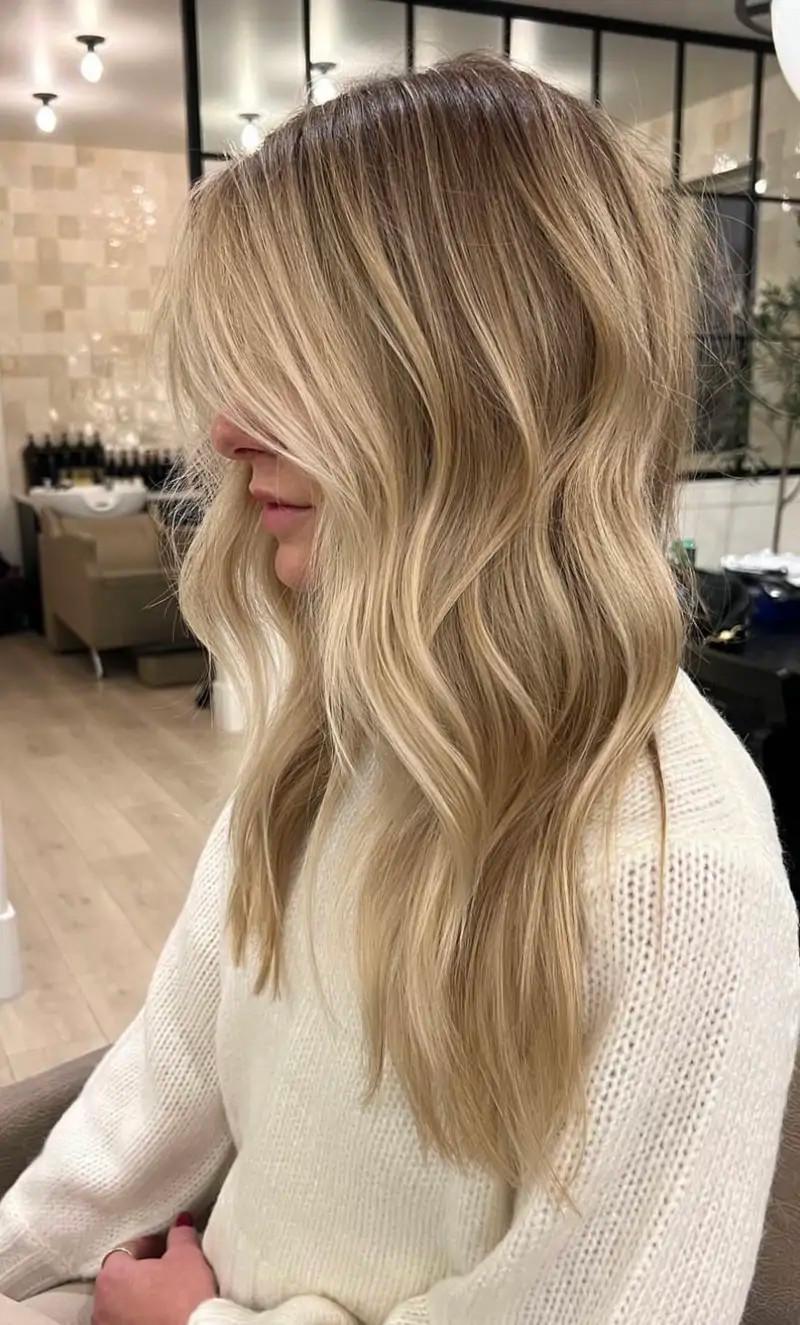
The root shadow is darker than you expect, almost a mushroom brown, and that is what makes the beige blonde root shadow read so clean. Medium to thick density wavy mid-back hair, middle part, face-framing layers. The colour moves from that shadow into a seamless beige blonde balayage that hits the ends in loose, flowing waves. No hard line anywhere. The root shadow balayage buys you six weeks before you need a toner refresh. That is the whole point.
Side Part Dimensional Blowout
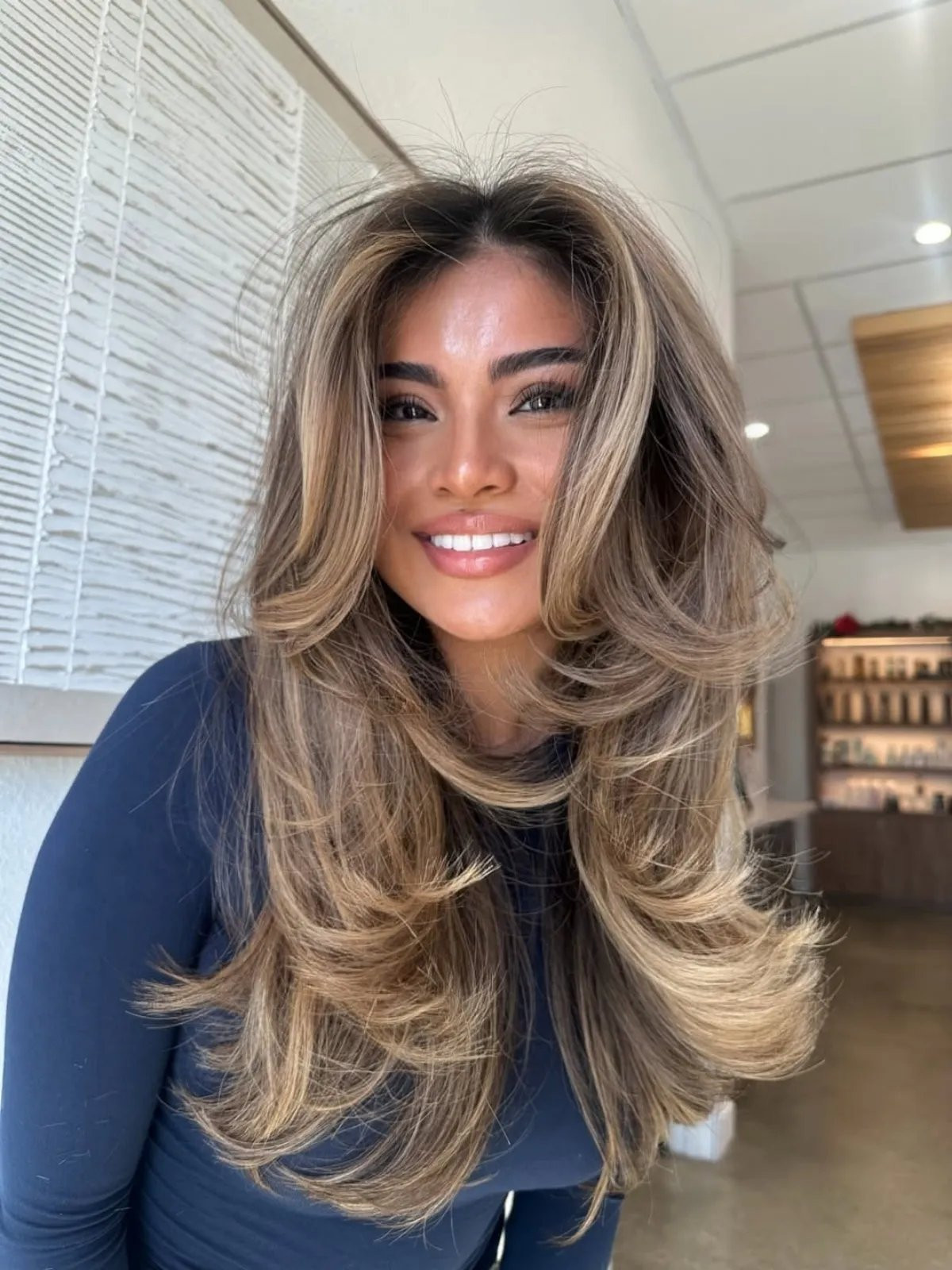
Why does a side part make the same colour look deeper? Thick wavy mid-back hair, no bangs, a deep side parting and a voluminous blowout. The side part beige blonde blowout stacks the highlights on one side, so the dimension reads like movement, not stripes. The colour is a dimensional beige blonde with subtle blended highlights, nothing chunky. The side parting alone adds lift at the crown, no teasing required. Trim every eight weeks to keep the ends sharp. This is a salon colour and a salon blowout. Do not try the foil work at home.
Collarbone Dimensional Side View Waves
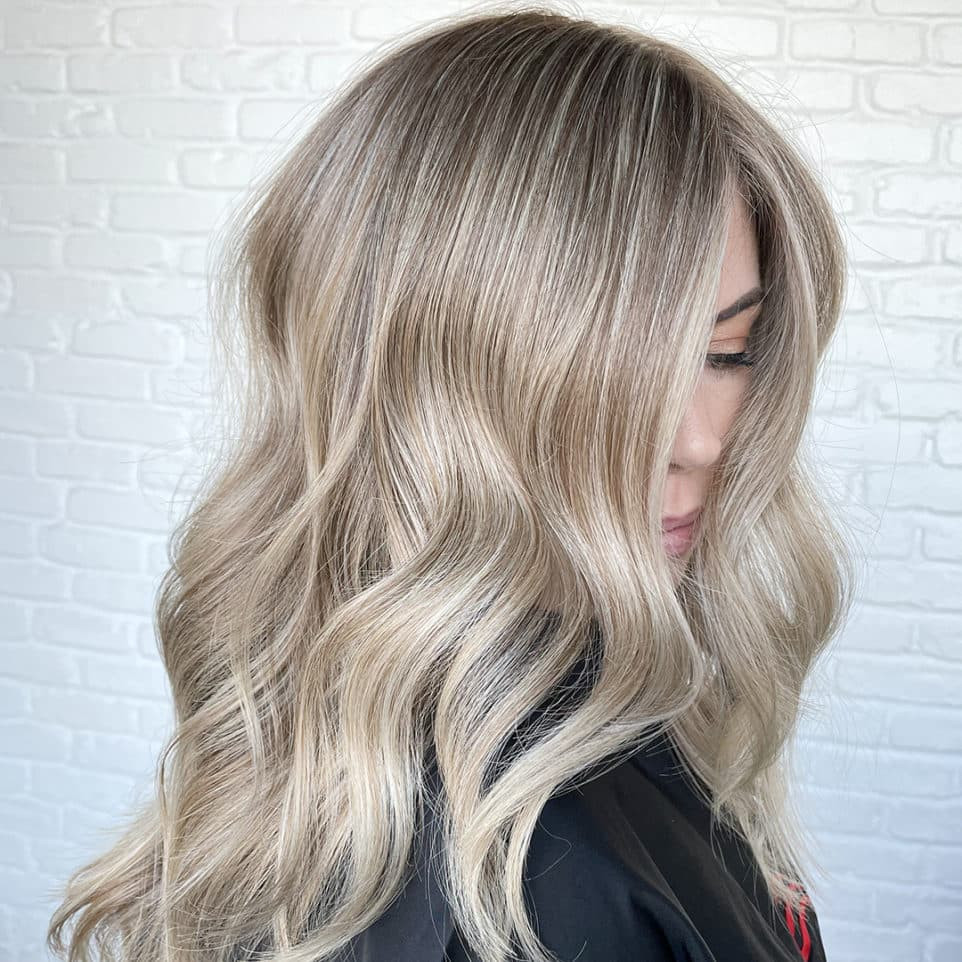
Collarbone length with no bangs and a middle part. The collarbone beige blonde waves sit right at the shoulder line, which is the sweet spot for medium density wavy hair. The side view shows the dimension best: subtle highlights that do not hit the root, just the mid-lengths and ends. This cut flatters a longer face because the weight falls forward, not down. The dimensional beige blonde colour stays low-maintenance because the root is barely lifted. Dust the ends every six weeks and call it done.
Layered Blowout With Curtain Fringe
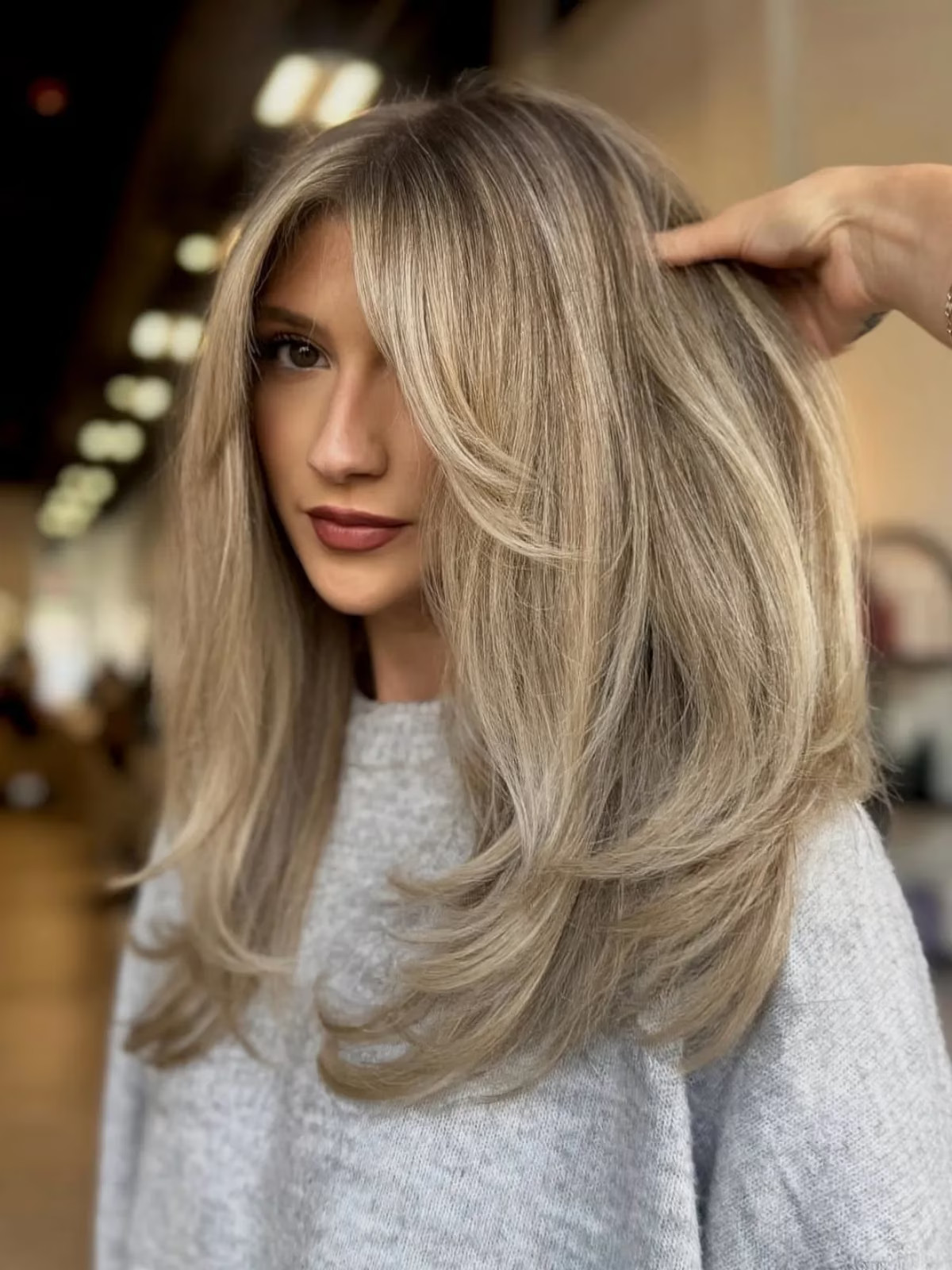
I’ll admit I was skeptical about curtain bangs on a layered beige blonde blowout. They looked like they’d separate by noon and leave me with two sad strings by dinner. But the mid-back length and soft waves actually hold the shape, the fringe frames without committing to full bangs. The colour is subtle highlights woven through a beige base, no harsh lines. The downside? You have to blow-dry that fringe forward first, then roll it back with a round brush. Skip that step and you get a middle part with stragglers. Trim every eight weeks or the layers lose their point.
Cool Ashy Beige Blonde Voluminous Waves
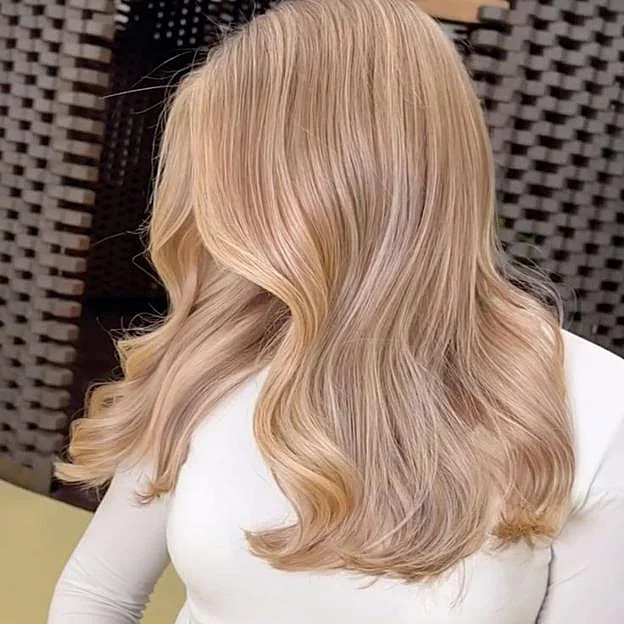
I’m picking the cool ashy beige blonde over the warm version every time. The ashy beige blonde waves on medium density mid-back hair read expensive, not brassy. The technique is a balayage that keeps the root darker so the ash tone lives in the mid-lengths and ends. No bangs, just long layers that catch the wave. It’s not a look you achieve in one wash — you need a purple shampoo once a week to stop the tone from turning muddy. Worth it for the colour that doesn’t scream “I highlighted in March.”
Shoulder Length Curtain Fringe Blowout
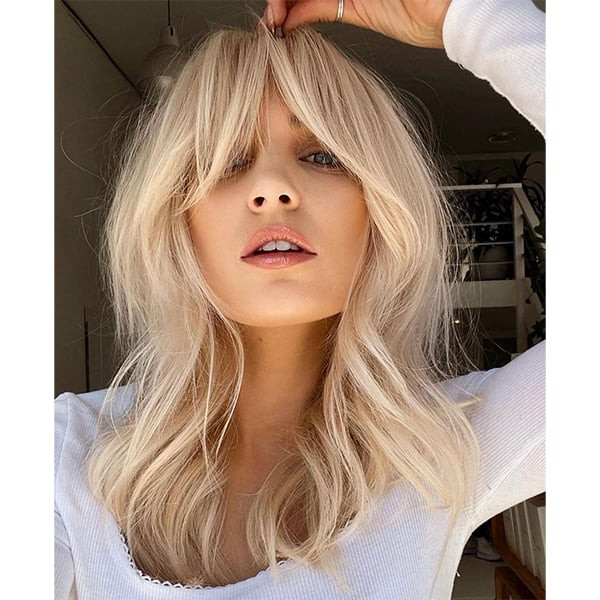
She walks in, collarbone-length layers, curtain bangs that sweep out like she was born with them. The colour is shoulder length beige blonde with lighter highlights, a blowout that makes the waves look intentional. I want to believe this is a 20-minute wash-and-go. It’s not. The curtain bangs need a round brush and a cool shot, and the mids need a curl that holds past lunch. On medium density wavy hair it works, but fine hair will flatten by 3 pm. The upkeep is real: a trim every eight weeks keeps the fringe from turning into a triangle. I’m still not convinced it’s worth the daily effort, but I keep looking at the photo.
Sandy Beige Balayage Back View
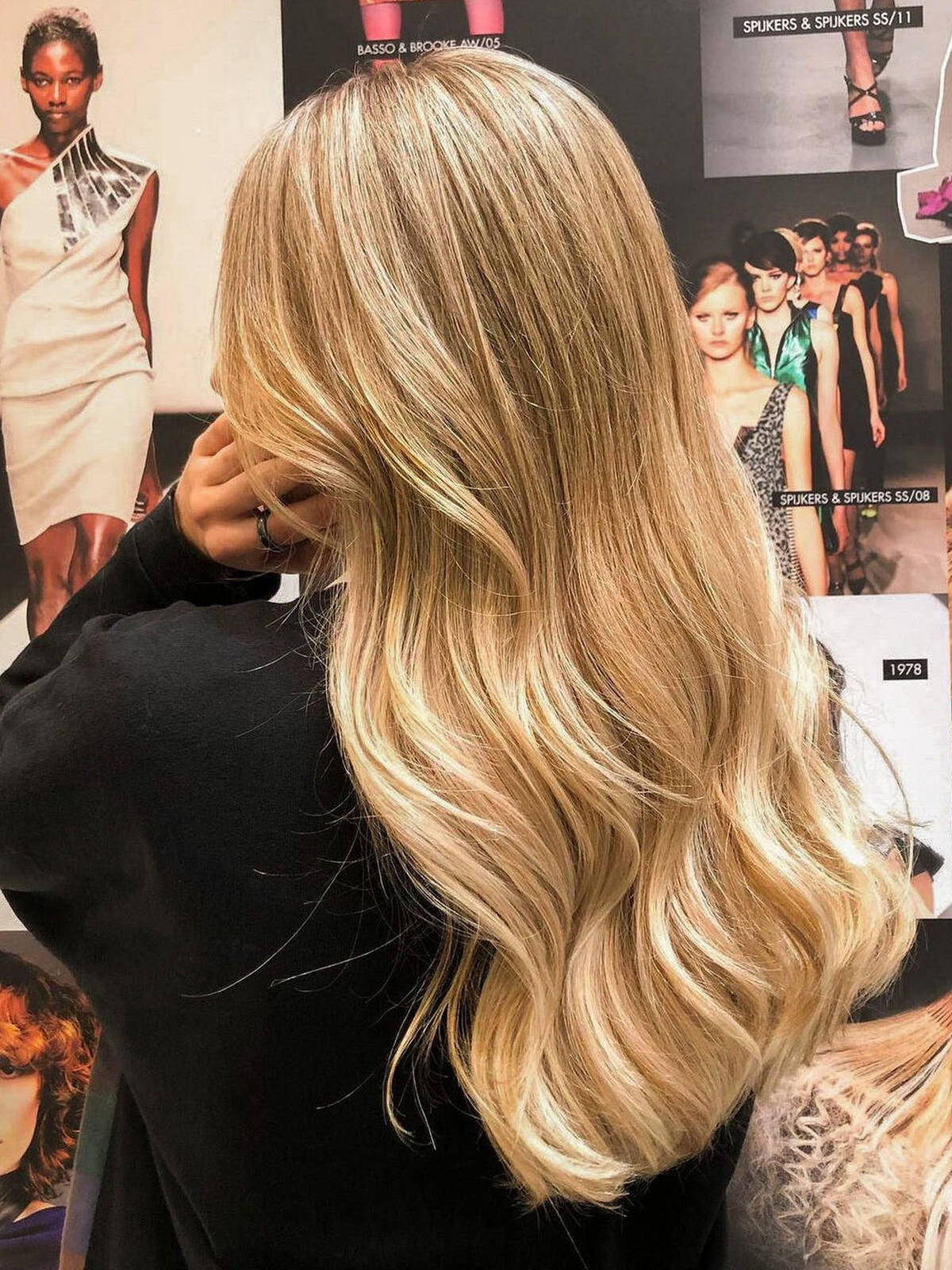
What catches me is how the sandy beige blonde balayage lands on the mid-back waves. From the back, the colour is a gradient, not a stripe — the sandy beige blonde starts darker at the crown and softens into a lighter, sunnier tone at the ends. No bangs, long layers, middle part. The technique is a hand-painted balayage that leaves the root untouched, so the grow-out is gentle. Medium density wavy hair carries it well. This is the colour you book when you want people to think you just came back from the coast.
Visual Idea
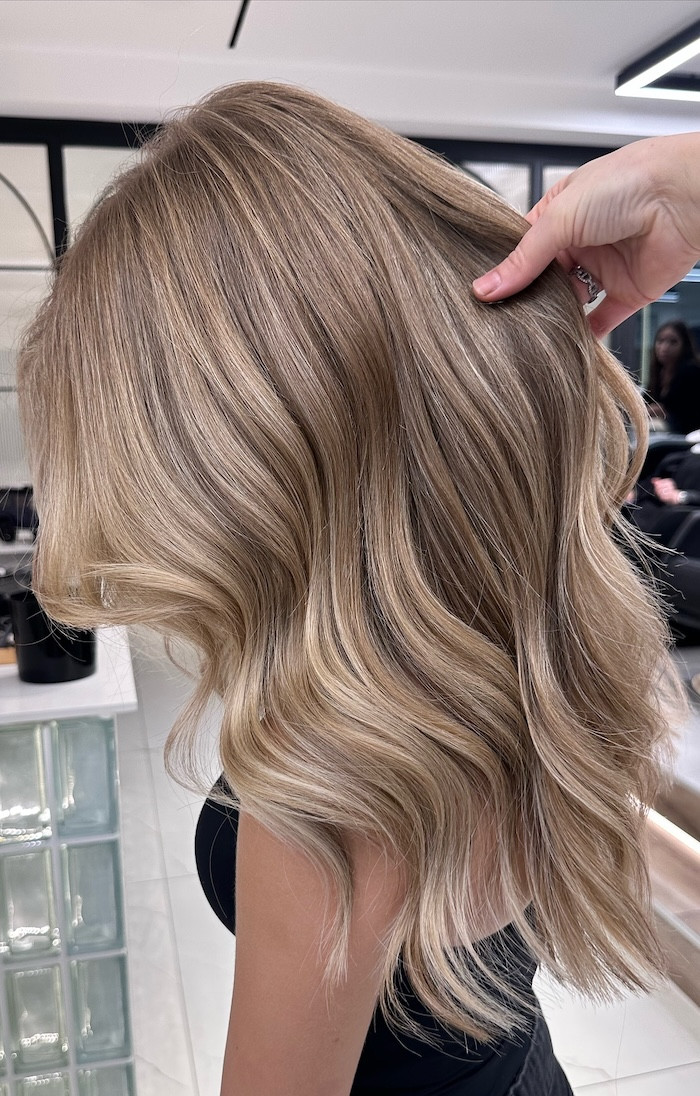
Ever notice how some balayage looks like two separate colours glued together? This one doesn’t. The creamy beige blonde balayage on mid-back wavy hair uses a seamless transition from a deeper root to a lighter end, no harsh line. The side part lets the colour fall in a way that shows the dimension. Medium to thick density helps the wave hold the shape. This is a salon job, not a box dye situation. The technique is a soft balayage that paints the mid-lengths and ends, leaving the root dark. For a special occasion or a season where you want to look polished without trying too hard, this is the one.
Mid-Back Visual Idea
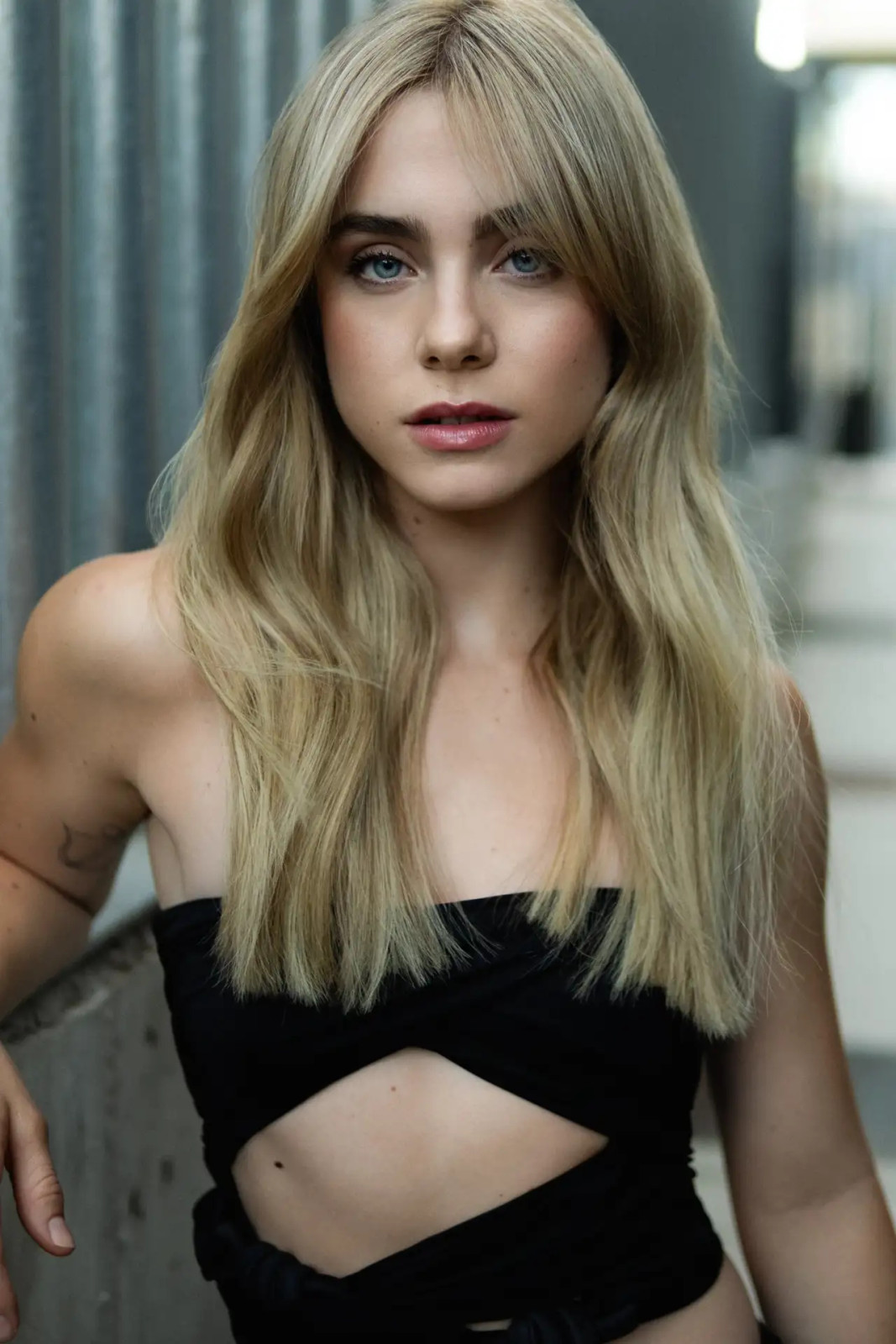
I keep coming back to this one. Mid-back length, medium density, wavy texture, and a neutral beige blonde that lands somewhere between warm and cool. The middle part and loose waves give it a relaxed rhythm. It is not trying to be dramatic. That is the point. The subtle highlights catch light without shouting, so the colour reads soft and intentional. Fine hair might find the length heavy, but medium to thick density carries the wave well. If your hair goes flat by 4 pm like mine, a texture spray at the roots buys the shape a few more hours.
Collarbone Visual Idea
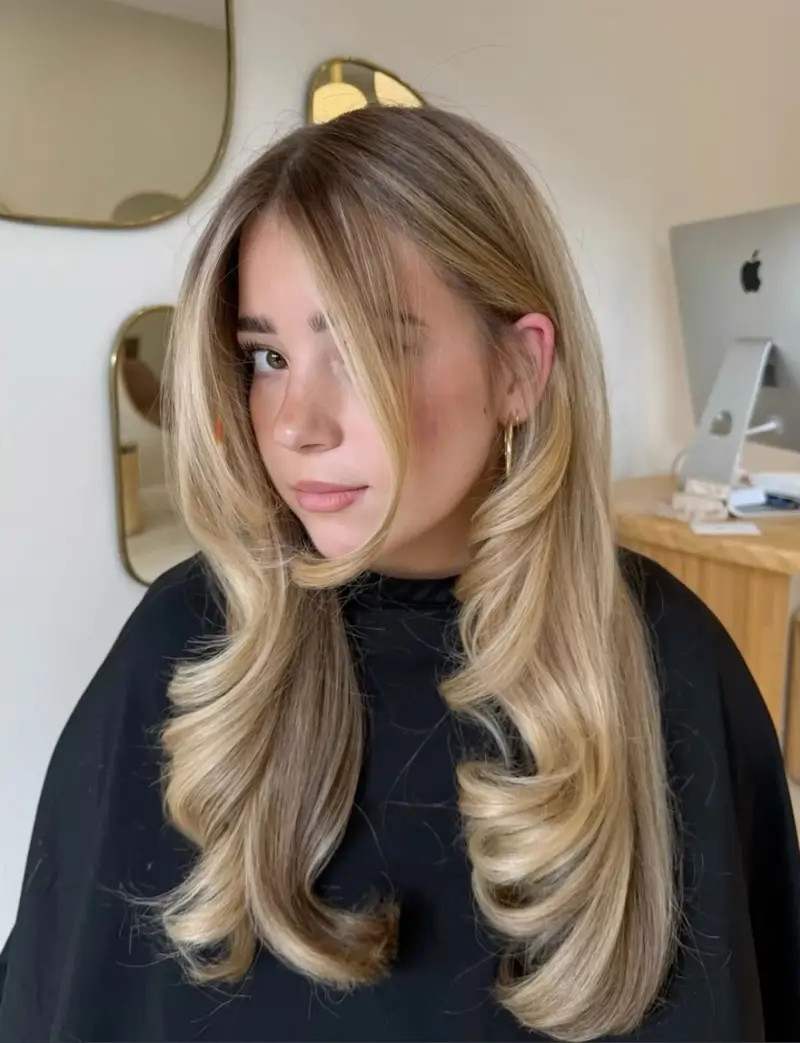
I will admit it: I was skeptical about collarbone length with a side part. Then I saw how the face-framing layers and soft curls actually hold across a real week. The beige blonde colour stays dimensional because the subtle highlights run through the mid-lengths and ends. The side part adds lift at the root, which is where my hair usually collapses first. By day three, the soft curls relax into a gentle wave. It still looks intentional. This is a salon booking, not a bathroom-mirror job. The layers need a stylist who understands how to cut for movement, not just shape. If you have medium density and wavy texture, this length hits the sweet spot between short maintenance and enough weight to keep the wave from frizzing.
Chin Visual Idea
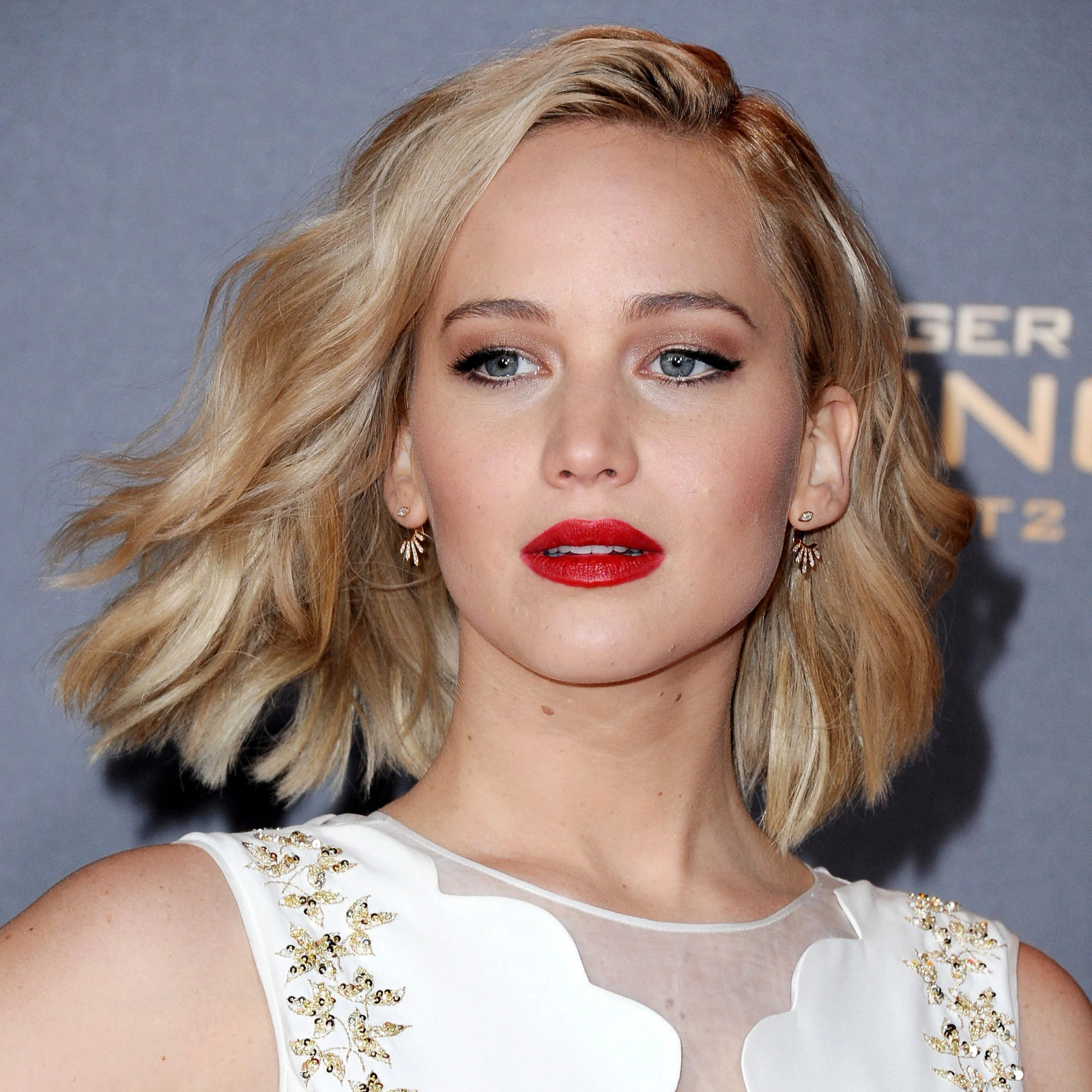
This is the one I would pick for fine, straight hair. Chin length, side part, sleek finish, and a clean beige blonde colour that does not need dimension to look expensive. The bob sits right at the jaw. It sharpens the line without adding bulk. Straight texture is the secret here. Wavy hair would fight the sleek finish and look messy by noon. Fine hair, though? It holds the shape. The colour is a single process, not a balayage, so the grow-out is more defined. That is the trade-off. You get a cleaner silhouette but a more visible root line at week five. Book it if you want a sharp, low-volume look that lands exactly where it should.
Long Visual Idea
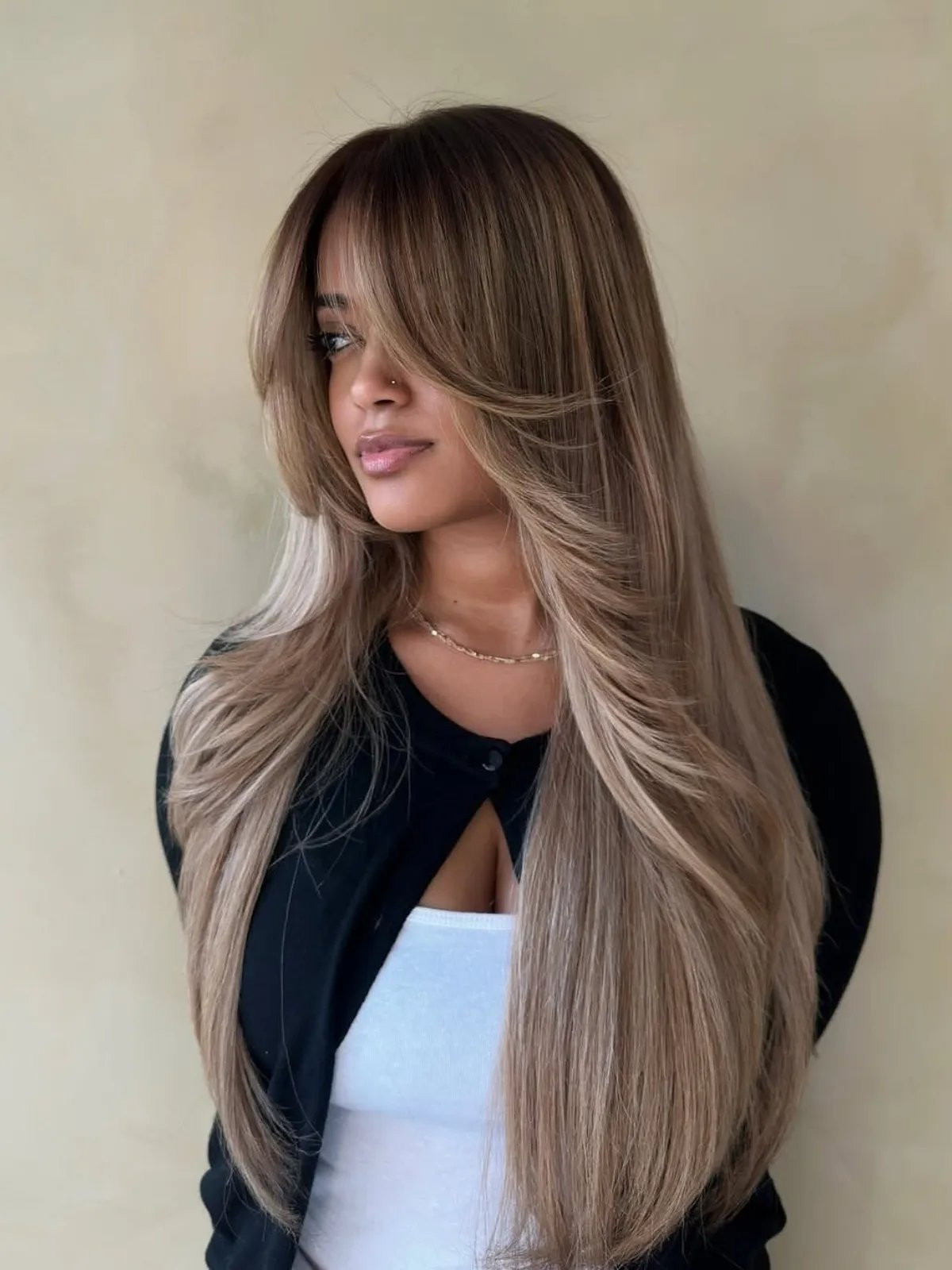
You walk into the room, and the first thing people notice is the curtain bangs. That is the power of a good face-framing cut. Long hair, straight-to-wavy texture, medium density, and a beige blonde that blends darker roots into lighter ends. The middle part lets the curtain bangs fall naturally to the sides. It softens the forehead without committing to a full fringe. This colour is a balayage, so the dark root grows out soft. No harsh line at week four. The blend buys you eight weeks between toning appointments. I would wear this in spring and fall. It reads neutral enough to work with a turtleneck or a tank top. The wave is loose, not curled, so it holds through a workday without re-rolling.
Long Layers Visual Idea
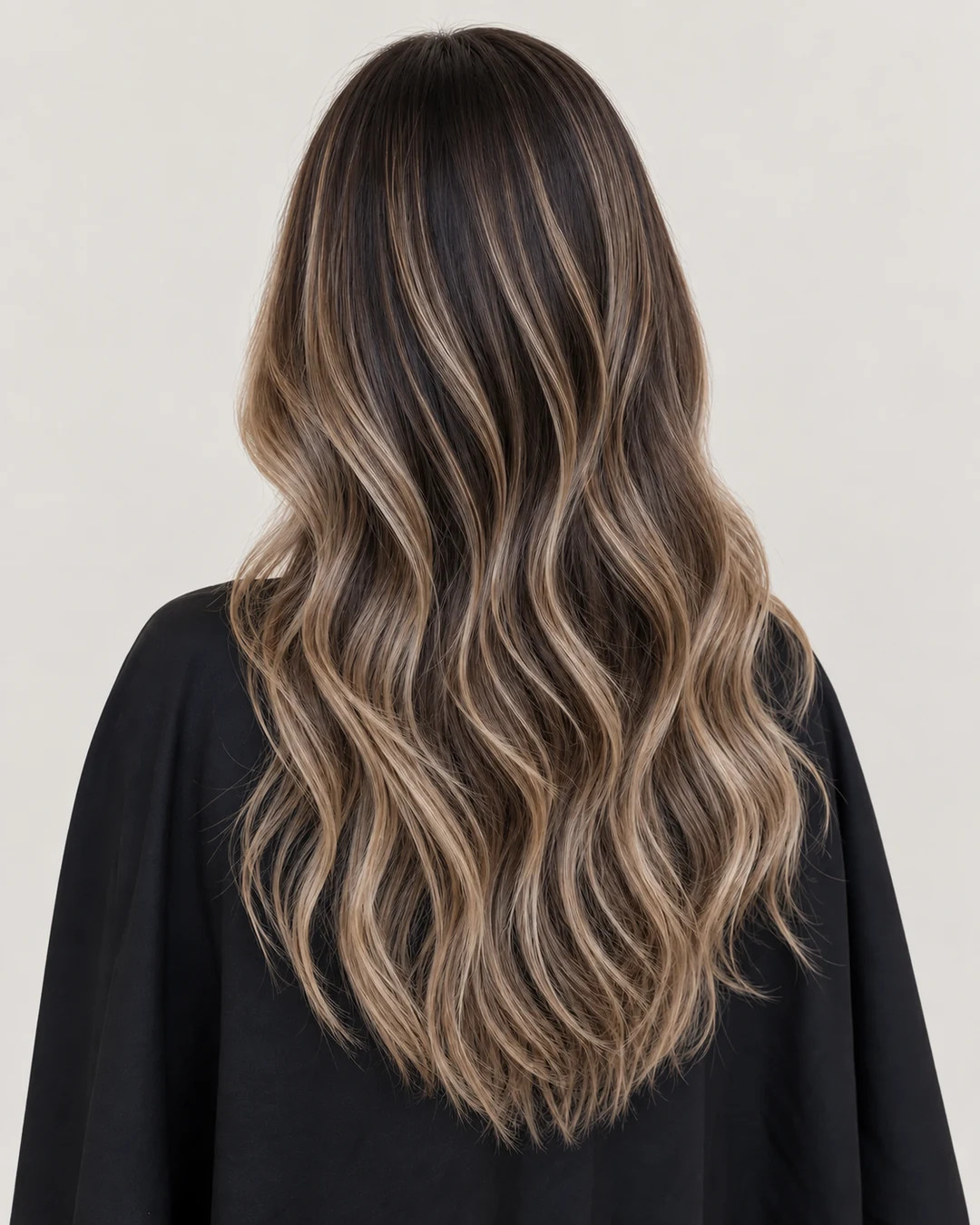
Look at the back view. That is where the blend earns its keep. Mid-back length, wavy medium to thick density, and a dark brown base that transitions into neutral beige blonde balayage. The long layers follow the wave pattern. They do not chop the shape into pieces. The dark base anchors the colour. It keeps the beige blonde from washing out the face. The technique is a seamless balayage, so the light pieces start below the ears and fade upward. No visible root line. The grow-out is a slow fade, not a stripe. This is a salon job. A stylist needs to map the placement so the dark base stays deep and the beige reads clean. Medium to thick density carries the layers without looking stringy.
Beige Blonde With Subtle Highlights Visual Idea
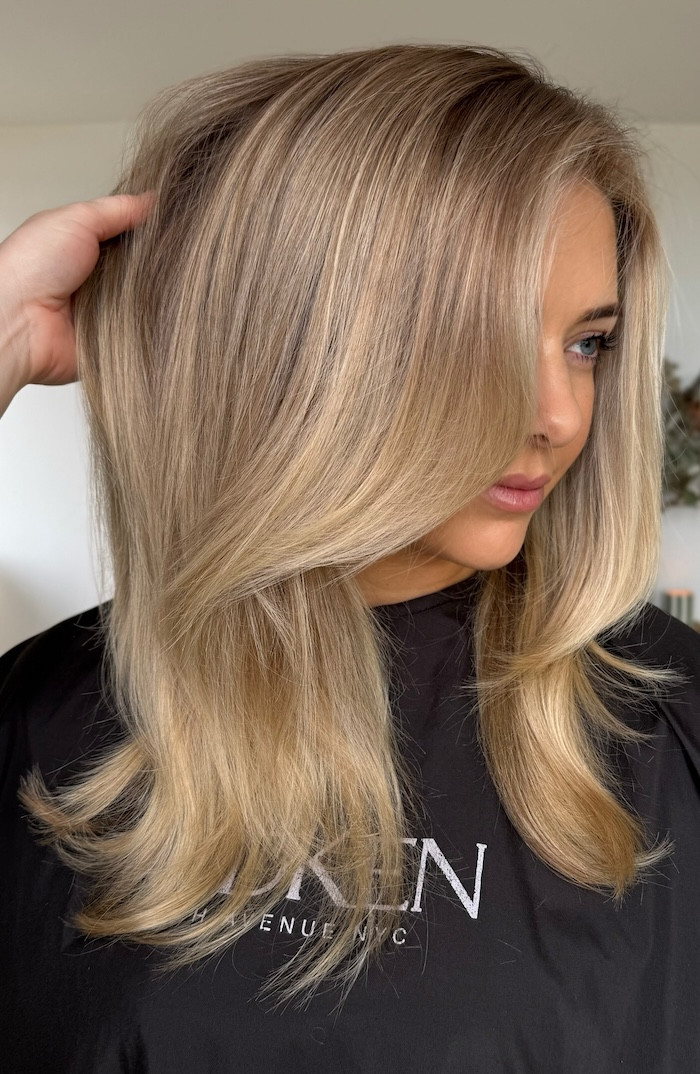
Have you ever seen a beige blonde so soft it looks like it was painted on? The colour is a warm neutral base with thin baby highlights woven through the front and crown, not chunky, not stripey, just a subtle lift that catches the light. The balayage technique keeps the line blurred and the tone stays warm beige without tipping into gold. On collarbone-length hair with curtain bangs and a middle part, the effect is loose and uncontrived. The blowout with soft waves gives it bounce. The medium-density wavy texture holds the shape without a lot of product. The honest downside? That tone needs a toner visit every four to six weeks. Let it go, and the beige drifts brassy.
Sandy Beige Blonde Visual Idea
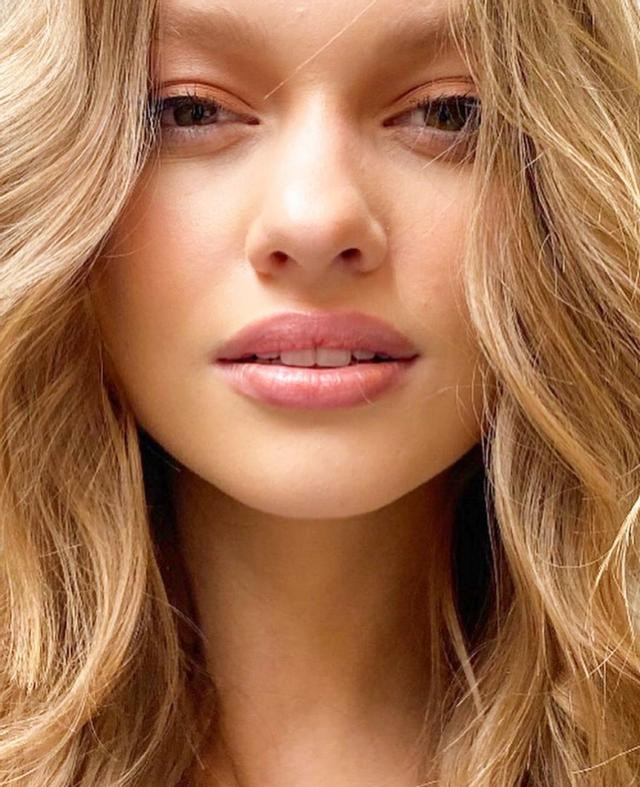
I looked at this and thought, okay, that might actually work on my fine straight hair. The sandy beige blonde tone is a muted brown-blonde blend, not as warm as caramel and not as ashy as a beige base. On medium-density wavy mid-back hair with a middle part and long layers, it reads like a natural grow-out colour. The loose waves catch the sandiness just enough. Here is where I get honest: if your skin runs very pink or very cool, this shade can read flat. It needs a little warmth in the complexion. The colour technique is a full balayage, soft and barely lifted at the root, which is why the grow-out buys you eight weeks easy.
Chin Length Visual Idea
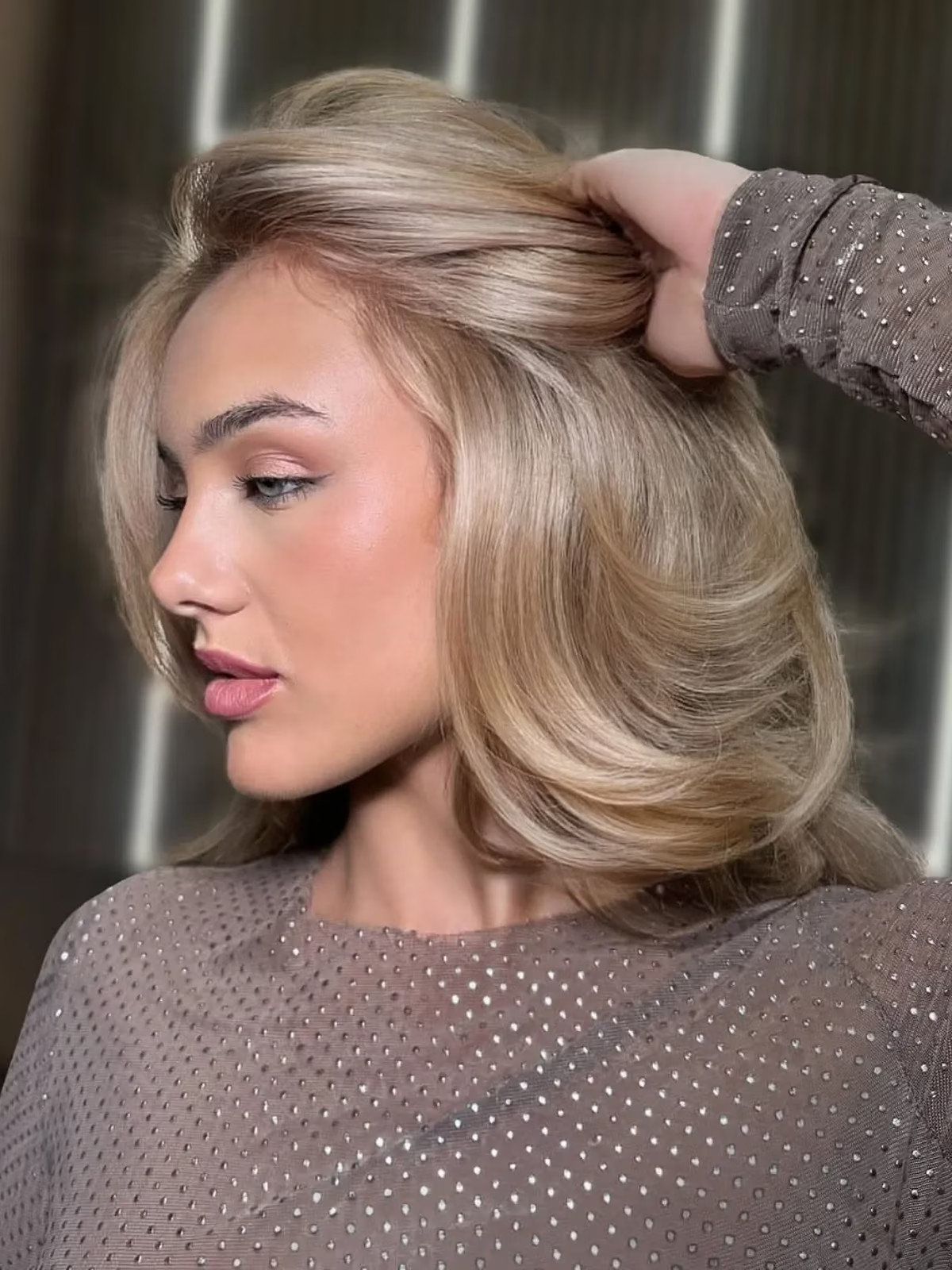
I will admit I was skeptical about a chin-length bob in champagne beige blonde. Then I saw the side view with side-swept bangs and smooth volume at the crown. The colour is a pale, buttery blonde with a cool champagne undertone, no yellow, no grey. On fine-to-medium straight hair, the bob sits clean and the side part adds movement where a blunt line could feel severe. It is a winter-to-spring shade for me, crisp enough for a heavy coat and light enough for a linen shirt.
No Bangs Visual Idea
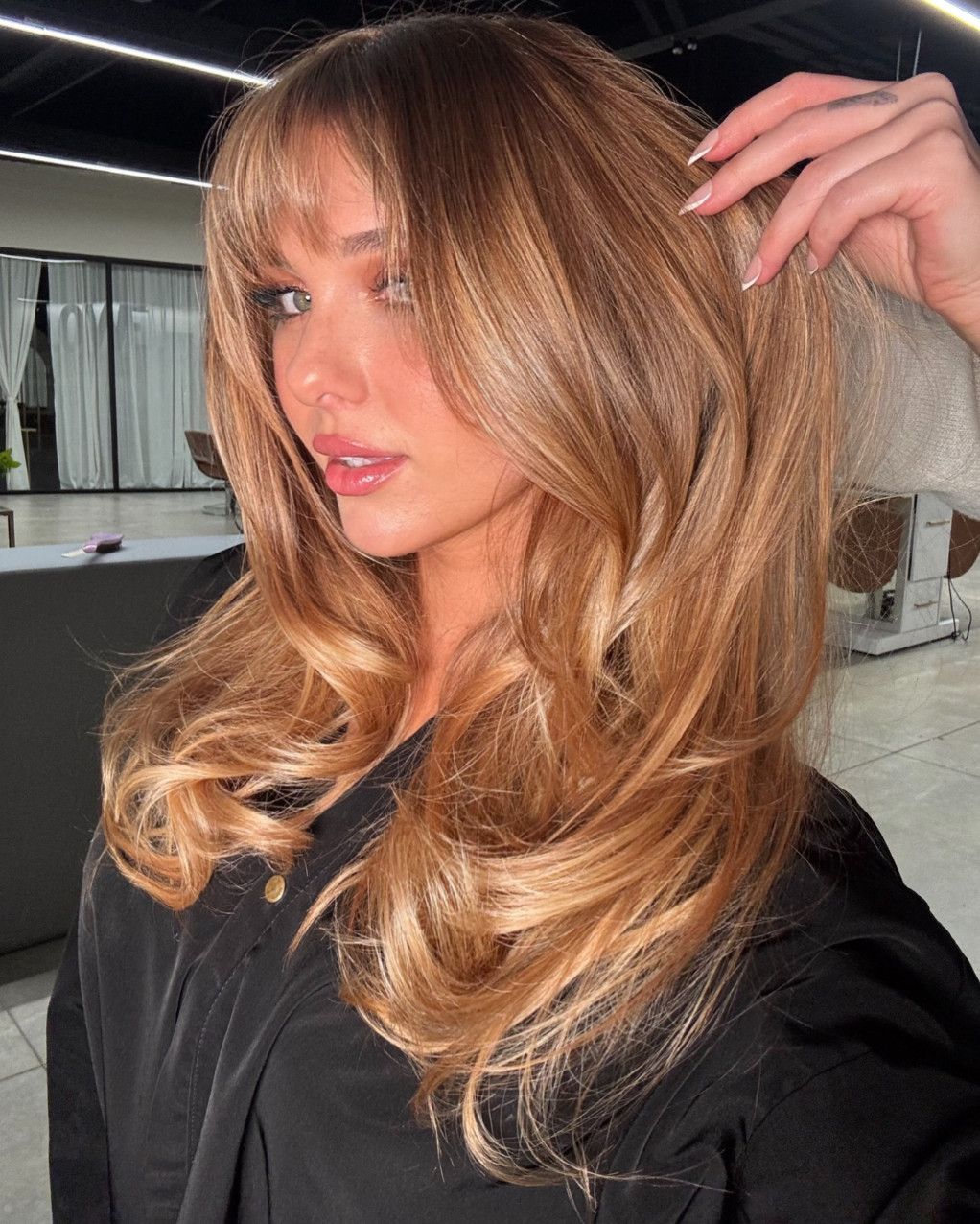
Here is the verdict: strawberry beige blonde on wavy mid-back hair, no bangs, and it works better than I expected. The tone is a soft pink-beige, not even a hint of copper or peach. On medium-density loose waves with a middle part, the colour looks intentional, not accidental. Compared to a warmer strawberry blonde, this version stays cooler and reads more grown-up. The long layers carry the tone without needing a heavy highlight panel. If your hair is fine or low density, the no-bangs silhouette keeps the colour as the star.
Shoulder Visual Idea
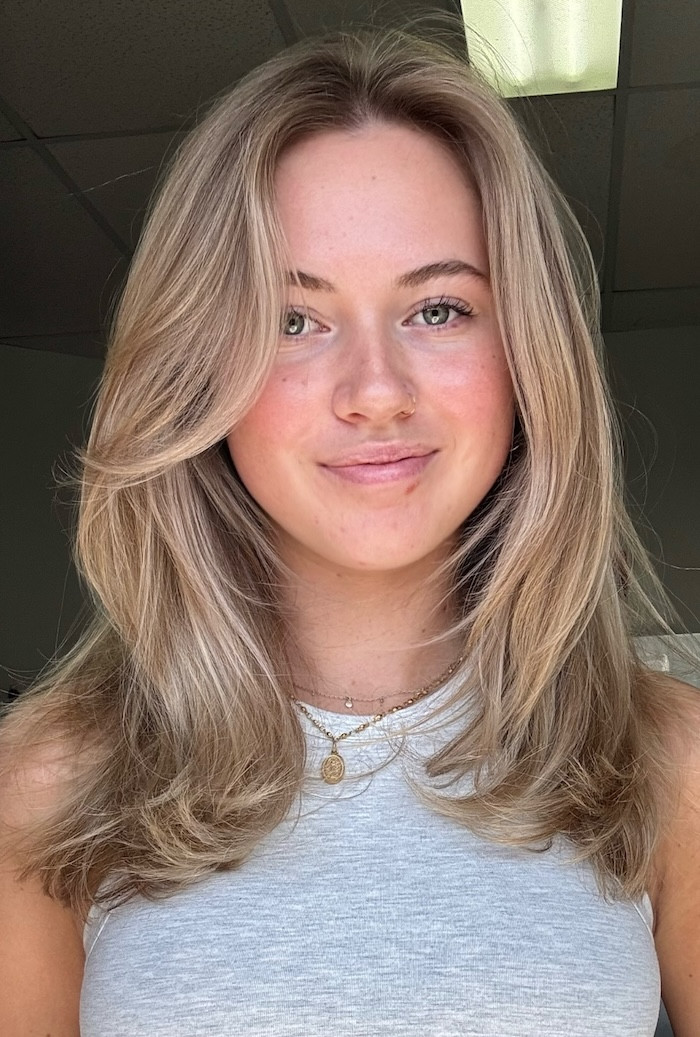
You walk into the salon, you show them a photo of shoulder-length beige blonde with curtain bangs and soft waves, and they nod. The colour is a warm neutral beige base with subtle face-framing highlights. The wavy medium-density texture means the curtain bangs fall naturally without a ton of round-brush work. Styling it at home takes maybe fifteen minutes with a blow-dryer and a large round brush. The upkeep is the part I flag: those face-framing pieces need toning every five weeks or they drift warm. The good news is the no-fringe shape hides a skipped toning better than a fringe does. If you want a low-mess beige blonde that still has dimension, this is it. Skip it if your hair holds heat poorly — the waves drop fast.
Side View Visual Idea
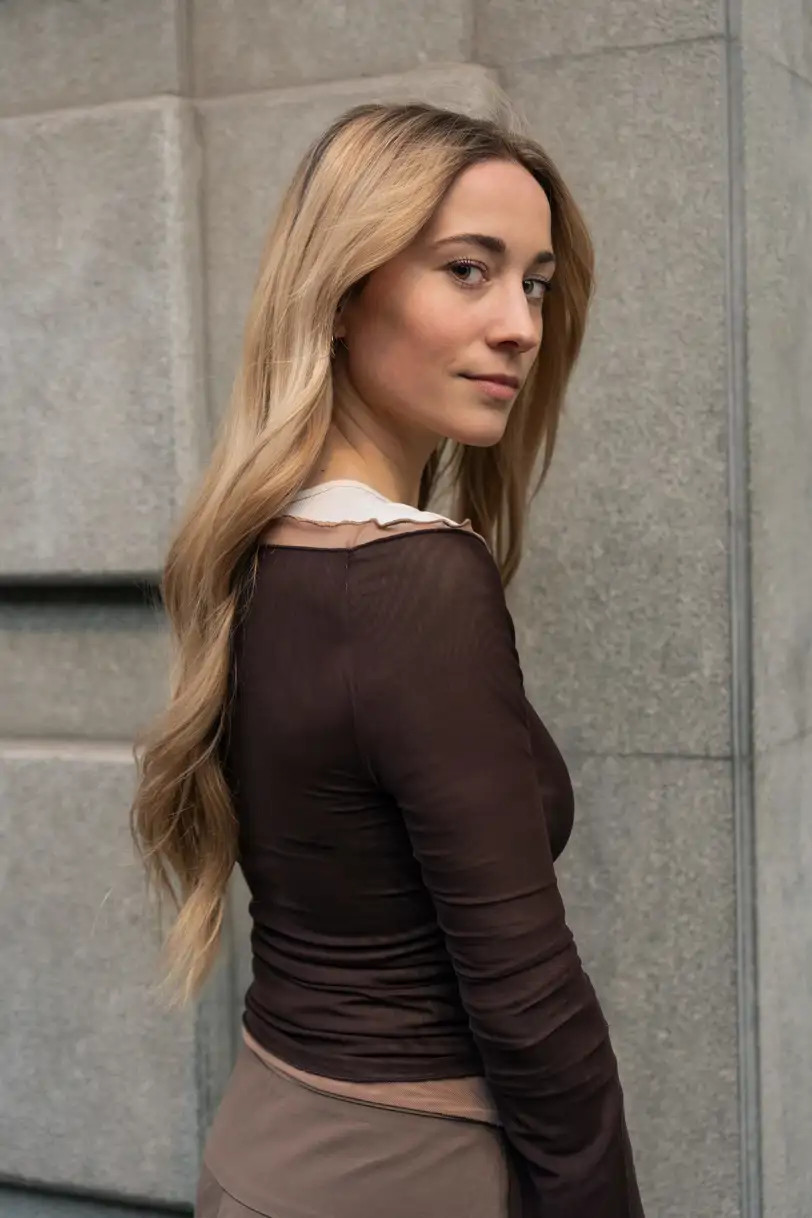
That side part does more work than you think. It breaks up the length on a mid-back wave so the hair doesn’t read as one heavy curtain. The neutral beige blonde tone here is what I call a quiet expensive: no brass, no ash, just a sand-warmed beige that catches light on the wave crests. Fine-to-medium density needs this kind of subtle dimension or it falls flat by noon. The layers are long and soft, cut to move with the wave pattern rather than fight it.
Beige Blonde With Root Shadow Visual Idea
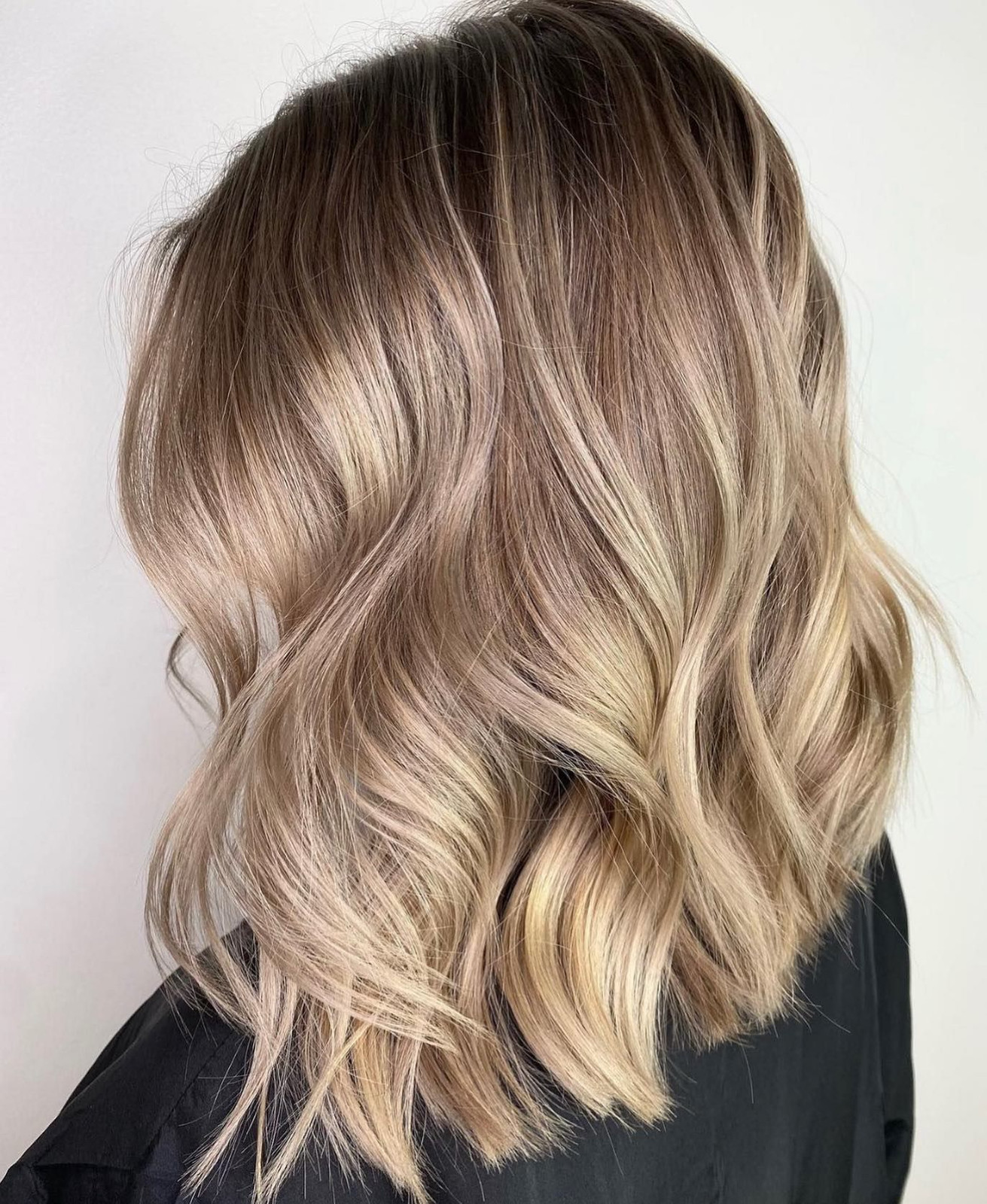
When did a root shadow start looking this deliberate? The lob hits collarbone with layers that keep the weight off the ends, and the beige blonde sits on top while the root shadow lives underneath. That dark base is the trick: it creates depth at the scalp so the lighter lengths pop without looking bleached. Middle part, loose waves, medium density hair that can hold a bend without product.
This is a fall-through-spring colour. The root shadow buys you eight weeks between appointments, and the beige tone warms up when the light drops early. It is a salon job, no question. The shadow needs a hand-painted application or it reads as grown-out dye.
Lob Visual Idea
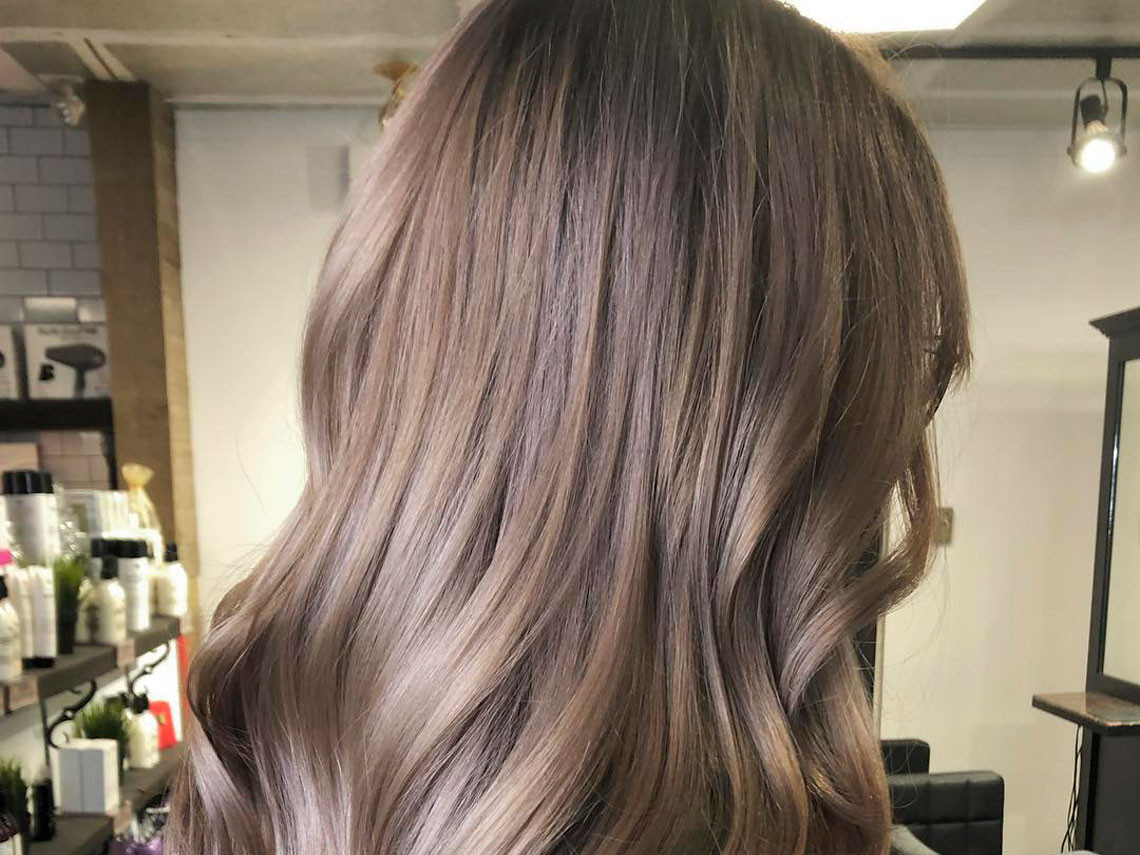
Fine straight hair finally gets its moment. The collarbone lob with a side part and straight blowout is a shape that relies on precision, not volume. The beige blonde with subtle balayage adds light without adding bulk, and the fine texture actually holds the clean line better than thick hair would. The smooth polished finish is the whole point: no wave, no texture spray, just a blunt cut that swings when you turn your head. This is a trim-every-eight-weeks commitment or the line goes soft.
Front View Visual Idea
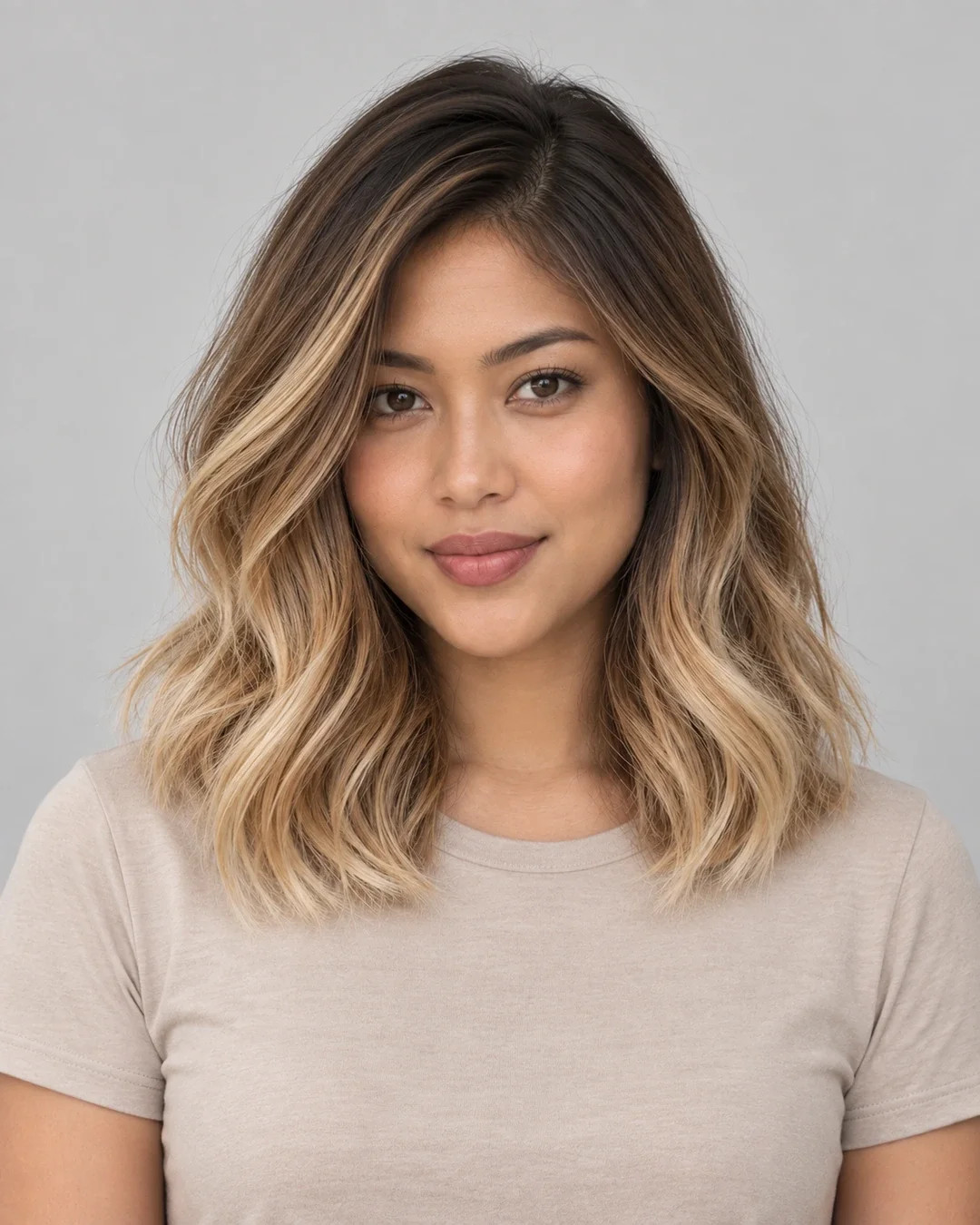
I will admit I was skeptical of a middle part on a collarbone lob. Then I saw how the dark blonde base anchors the beige balayage highlights. The dark base sits at the roots and the underside, while the balayage wraps around the front pieces so the lighter colour hits your face first. Medium wavy texture helps the transition look blended rather than striped.
Here is the honest downside: the waves drop by day two. You will need to refresh the bend with a round brush and a few minutes of heat. The balayage grows out softly, no harsh line, but the dark base does start to dominate after six weeks. A gloss treatment at week four keeps the beige from reading as dull.
Middle Visual Idea
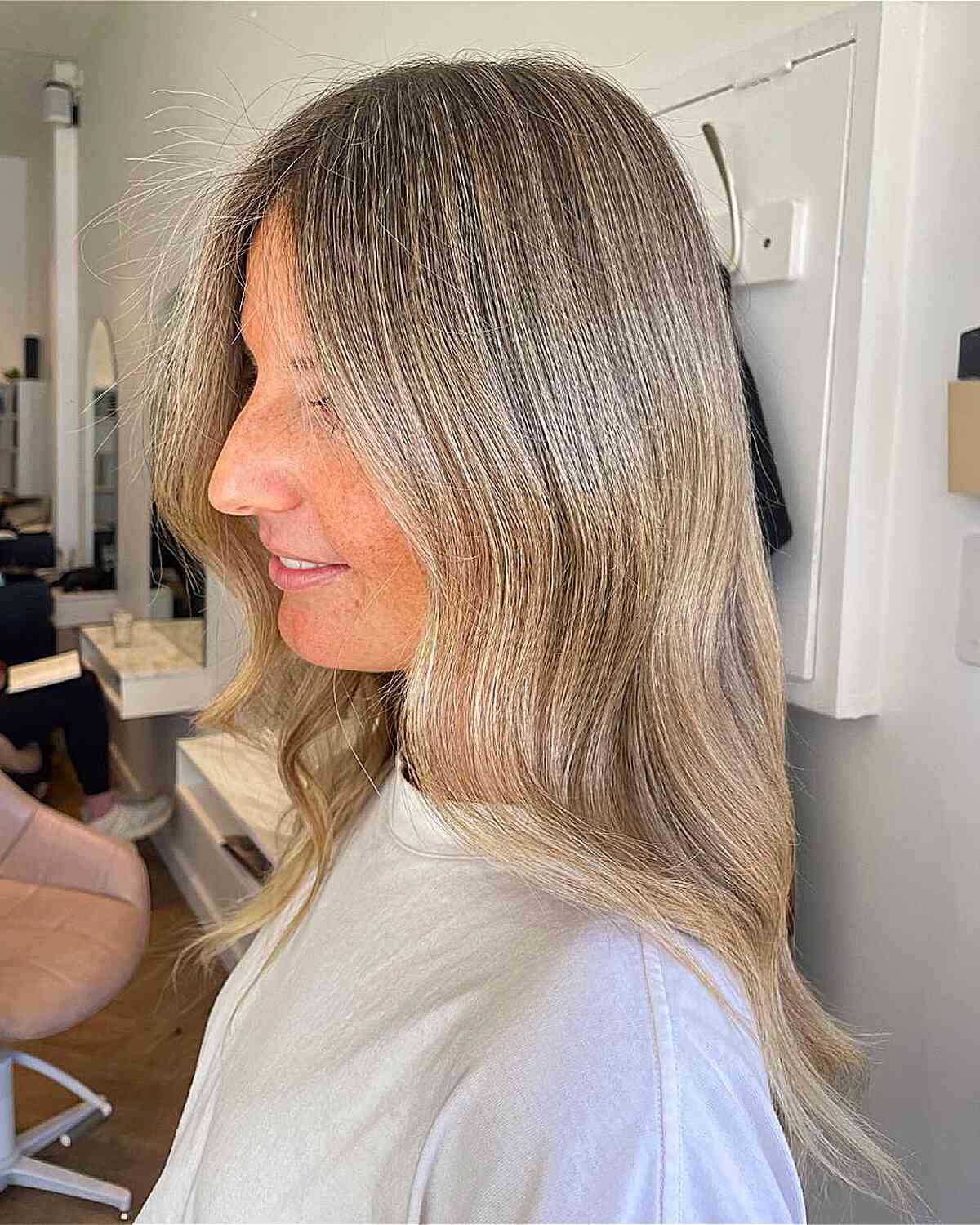
A middle part on collarbone wavy hair is the better bet over a side part. The side part stacks the wave on one side and flattens the other, while the middle part lets the wave pattern fall evenly on both sides. The beige blonde shade here reads as a true neutral, no yellow, no violet, just a sand colour that works with the medium density wave. Long layers keep the shape from getting heavy at the ends. This is the version that still looks good when you air-dry.
Back View Visual Idea
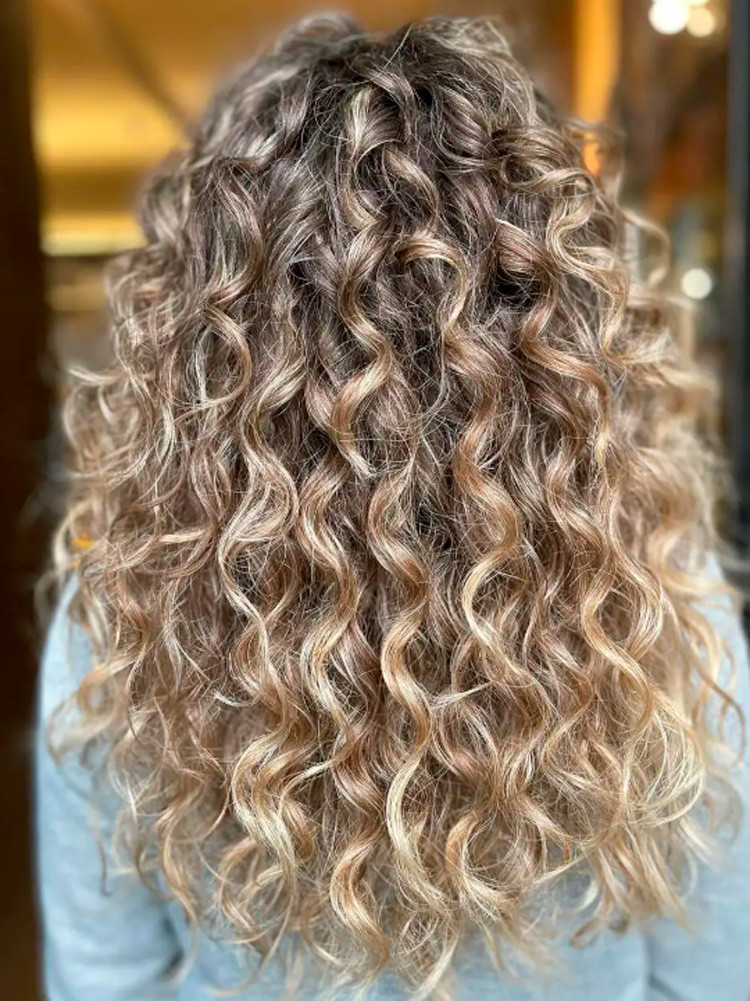
That is a lot of hair and it looks good. The rich beige blonde balayage hits differently from the back, where the defined curls catch every shade. The base is a warm beige, the balayage adds creamy ribbons from the ears down. The length hits mid-back. It is a curly, thick texture and the middle part splits it cleanly down the spine.
The technique here is a hand-painted balayage on unbleached roots so the line never gets harsh. The tone stays warm-beige, neutral enough that it does not go brassy fast. That is the full picture. Curls hold it, a middle part shows it off, and from the back it is just one smooth sweep of colour. No bangs, no distraction. The colour is the sentence.
Loose Waves Visual Idea
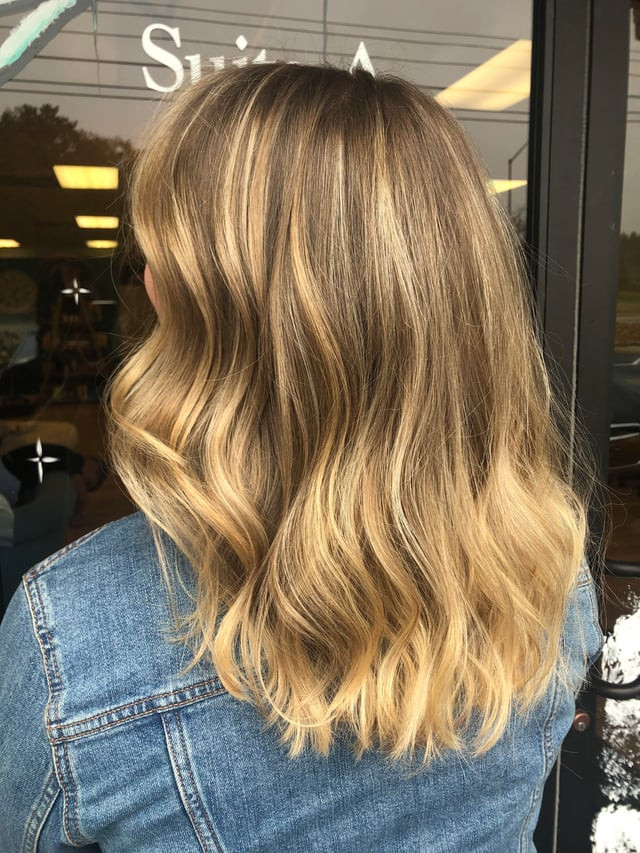
See how the balayage highlights catch at the collar. The base is a soft beige, the highlights are a shade lighter, painted from midshaft to the ends. The length stops at the collarbone. The loose waves, medium density hair, and a middle parting create a neat frame for the neck. No bangs, just the colour gradient moving with the wave. The colour is the interest.
Wavy Medium Density Visual Idea
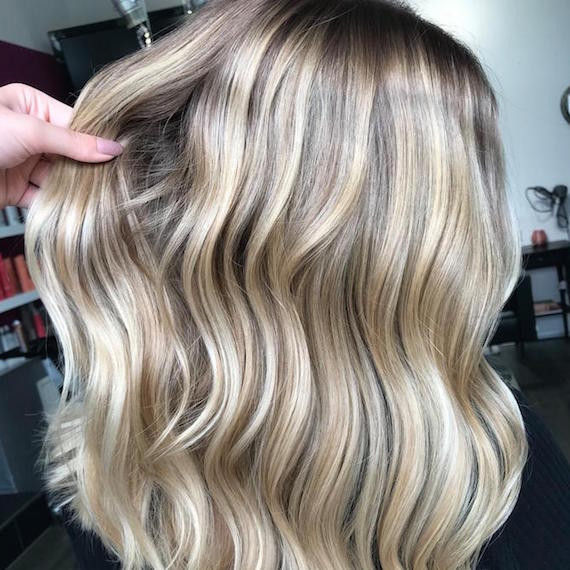
What does a money piece do for a beige blonde? It adds a frame. The front sections are lifted to a brighter beige, the rest of the length stays a shade darker. The mid-back length and loose waves, medium density texture, mean the lighter front pieces catch light separately from the back. The middle parting splits the money piece cleanly.
This is a salon colour. The money piece needs a foil, not a paintbrush, to stay precise. It grows out in eight weeks, the front fades first because it lifts more. The technique gives the illusion of bangs without cutting. Wear it wavy or blow it straight, the front stays the brightest part.
Air Dried Slight Waves Visual Idea
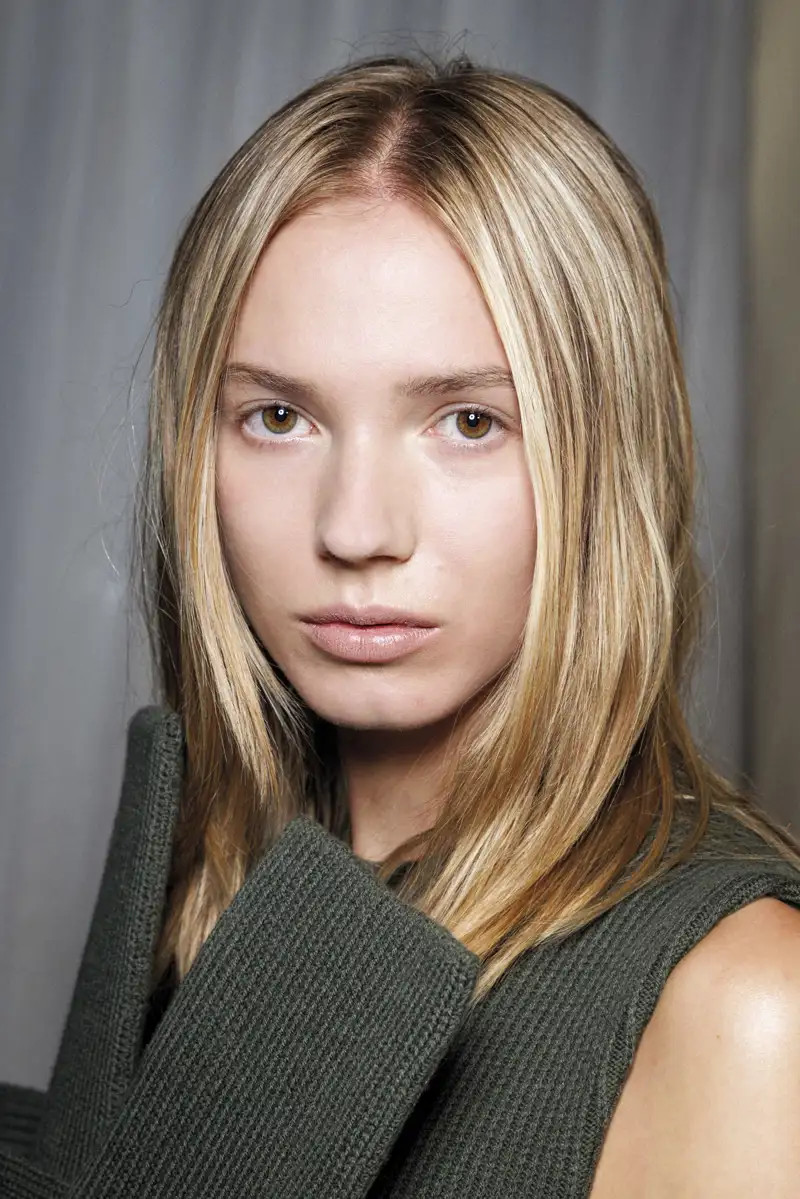
The first thing I noticed is the tone. The soft beige blonde base has no yellow, no ash, just a clean in-between that reads neutral and warm. The subtle highlights are barely there. The collarbone lob, middle parting and straight-to-wavy texture, air dried, means the colour does not need a blowout to look intentional. This flatters medium density, fine to medium strands. Thick, coily hair will eat the subtle highlights. It is a wash and go colour, but only if your texture plays along.
Curtain Bangs Visual Idea
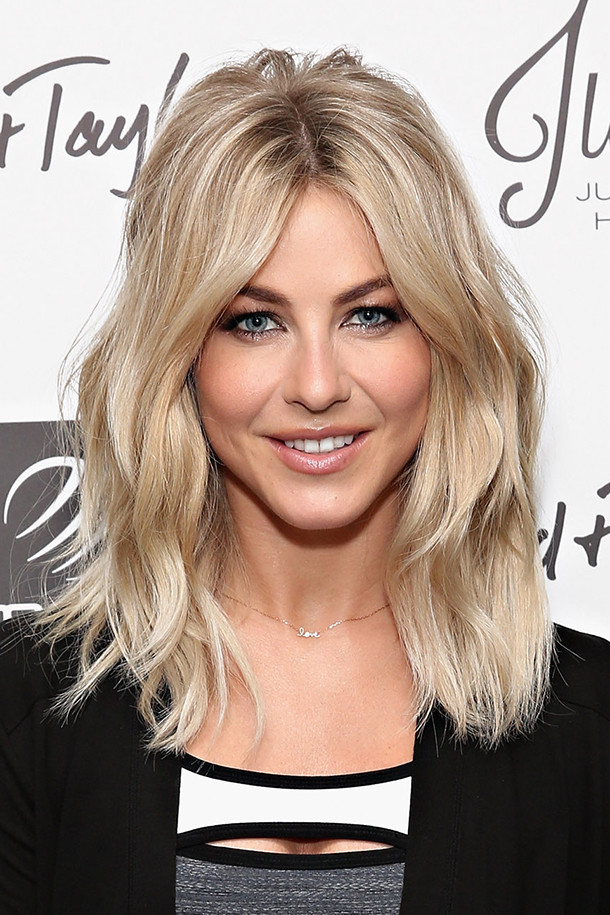
I will admit it. Curtain bangs and beige blonde work together in a way I did not believe until I saw the tone hit the face-framing highlights. The soft beige blonde base sits a shade darker than the money pieces around the cheeks. The length is shoulder-length, the texture is wavy, medium density with a blowout and loose waves.
The season for this is late summer into fall. The tone is warm enough for summer, neutral enough for fall. The curtain bangs hit the cheekbone, the blowout keeps the wave defined for a day. It is a before-dinner look. Occasion is any event where you want your colour to be the conversation.
Layers Visual Idea
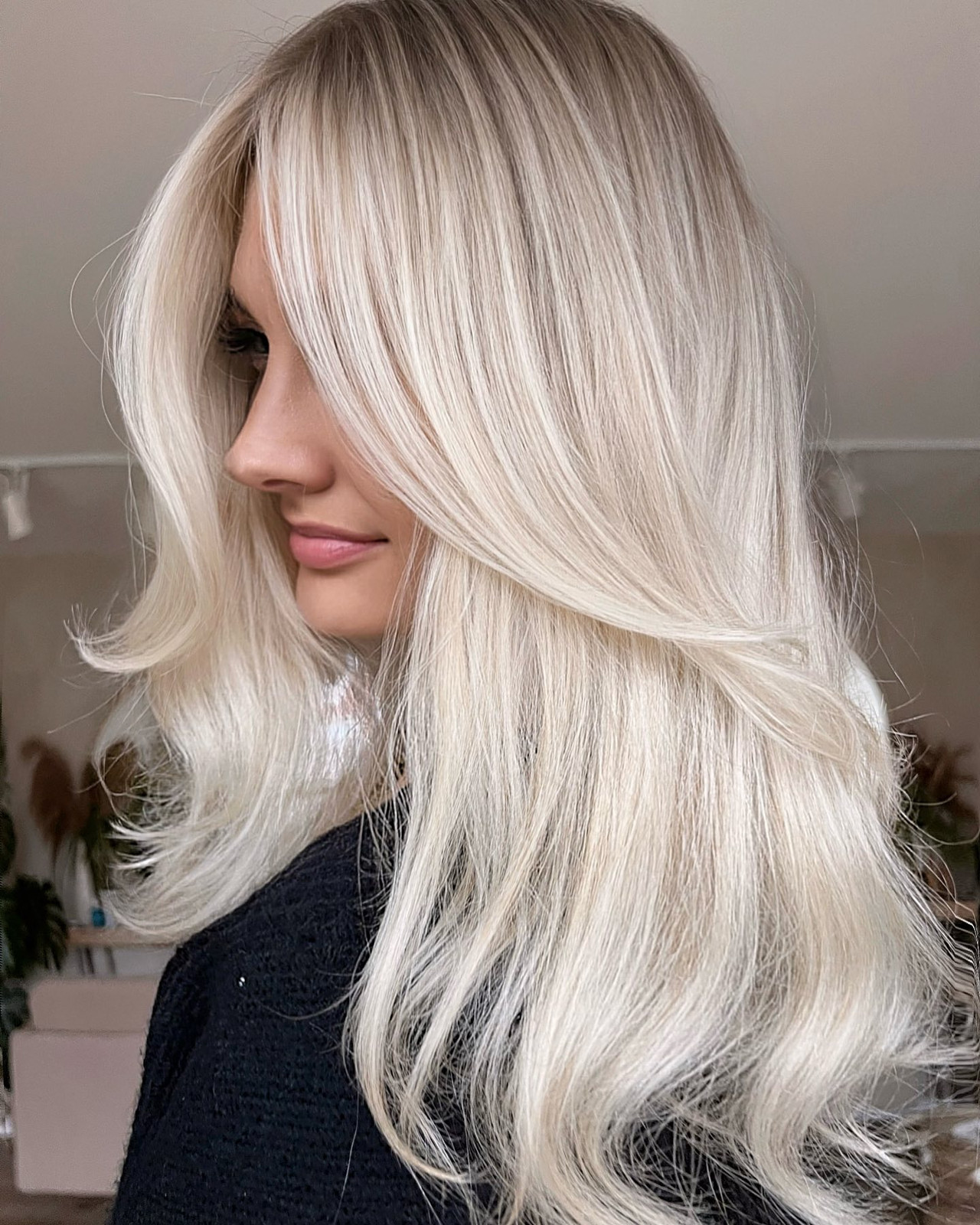
Thick, wavy collarbone-length hair with an ash beige blonde tone is the rare cut that flatters a round face without hiding it. The middle part and curtain bangs frame the cheeks, while the layers give the waves movement instead of a heavy triangle. Ash beige blonde keeps the colour cool, so it reads modern next to warm skin. A wavy blowout holds the shape all day, even on my fine hair, which usually goes flat by 4 pm. This is the one to book if you want volume that looks like it happened by accident.
Salon Visual Idea
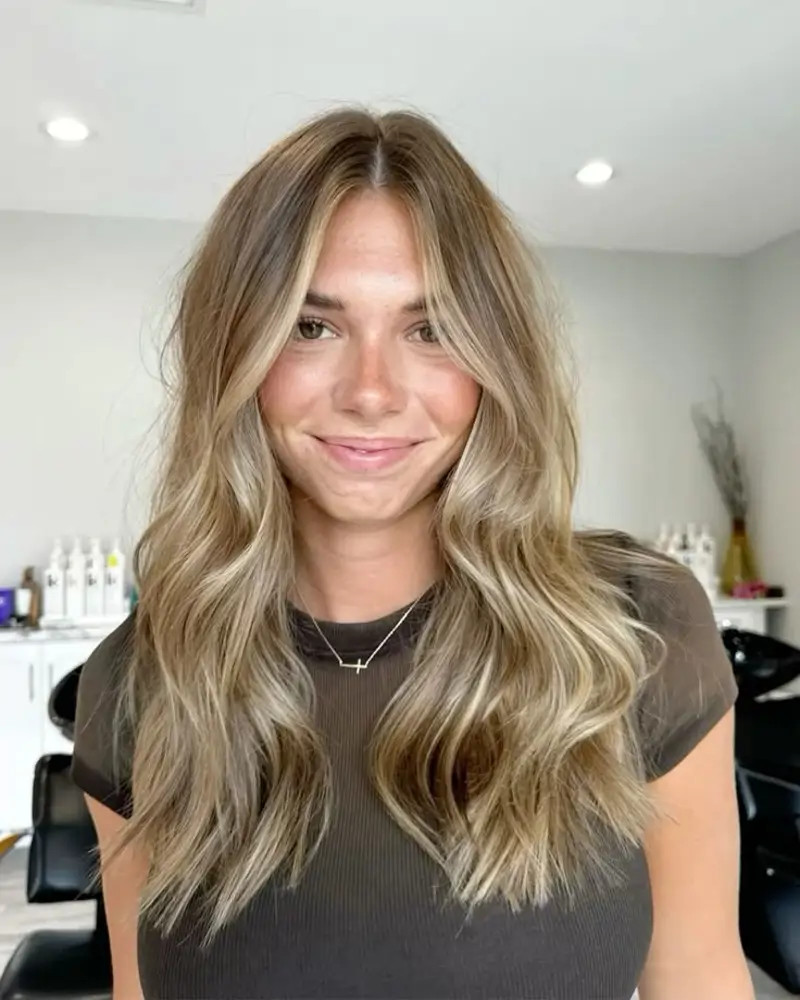
You walk in with a photo of shoulder-length beige blonde balayage and curtain bangs, and the stylist nods like it’s nothing. It’s not nothing. The balayage needs a skilled hand to keep the beige from turning brassy, and the curtain bangs require a blow-dryer and a round brush every morning to sit right. Medium-density wavy hair takes the colour well, but the grow-out shows at week six, so you’ll be back for a toner before you know it. Loose waves hide the root line for a while, which buys you a few extra weeks.
Wear it with a middle part and let the waves fall where they want. The upkeep is real: a trim every eight weeks to keep the bangs from getting heavy, and a toning appointment when the beige starts to pull yellow. It’s not a wash-and-go colour, but it’s the kind of blonde that makes you look like you have a stylist on speed dial. Because you do.
Back View Medium Crop Visual Idea
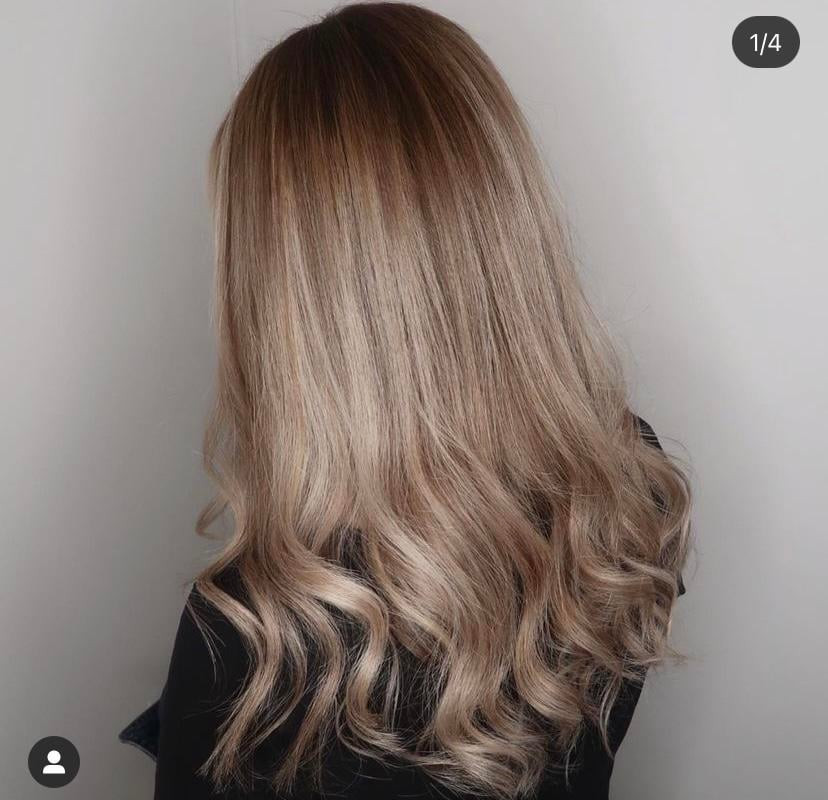
From the back, the medium crop is a lesson in smooth colour transition: a darker root shadow that melts into lighter ends, no hard line anywhere. The long layers keep the mid-back length from feeling heavy, and the loose waves give it movement without losing the shape. Beige blonde with a darker root is the smartest grow-out trick I know, because it lets you go six weeks between touch-ups without anyone noticing. Medium-density wavy hair carries this best, since the colour needs some body to show off the gradient.
Final Thoughts
After writing all forty-three, the one I keep coming back to is the collarbone curtain fringe blowout. It is not the most dramatic. It is the one that works with my fine hair and a busy week. I am booking it next week.