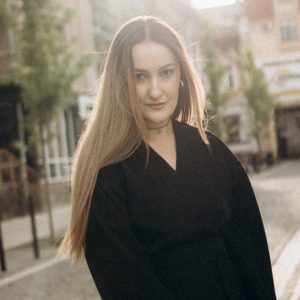
Blonde for olive skin is less about a single shade and more about how the tone lands. In 2027, that means lived-in color with soft face-framing layers and curtain bangs, not flat-ironed lengths or chunky highlights.
28 options here cover the spectrum: ash to honey, short bobs to mid-back lengths, low-maintenance balayage to salon-fresh toners. The collection solves common gripes, a grow-out line that shows too fast, fine hair that swallows dimension, a fringe that refuses to sit right, for anyone hunting Blonde Hair 2027 for Olive Skin.
Collarbone Lob With Dark Blonde Base And Light Balayage
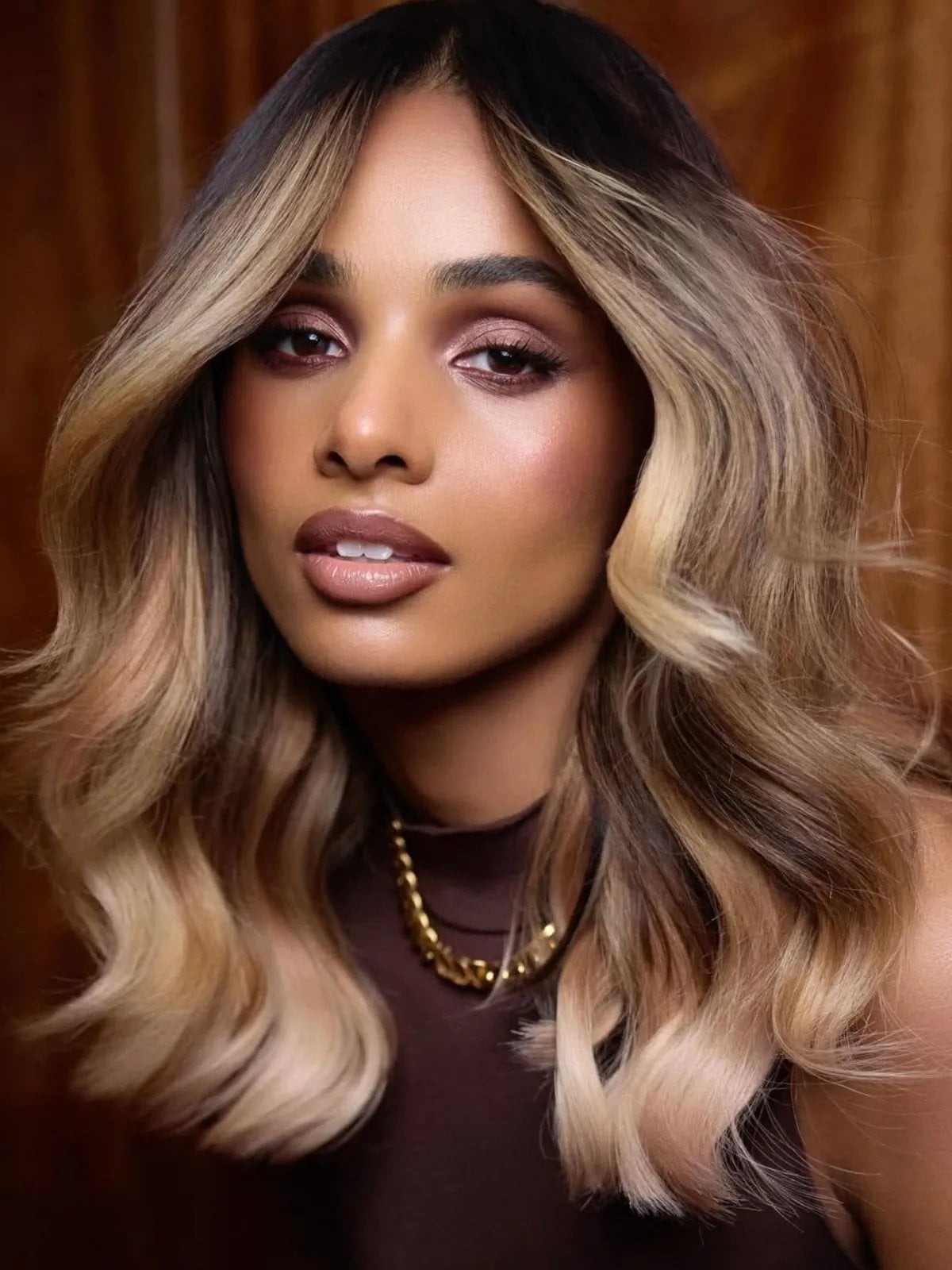
The design works because the balayage starts low enough to let the dark blonde base do the groundwork. Lighter blonde is painted through the mid-lengths and ends, so the color gains dimension without a visible root line ever forming. This dark blonde balayage lob suits medium density, wavy hair starting at collarbone length, and a middle part works well for oval and square faces. Ask your colorist for: collarbone lob, dark blonde base, light blonde balayage. The loose waves are the finishing move, held with a texturizing spray, and a trim every six to eight weeks keeps the shape honest.
Ash Blonde Collarbone Layers With Curtain Bangs
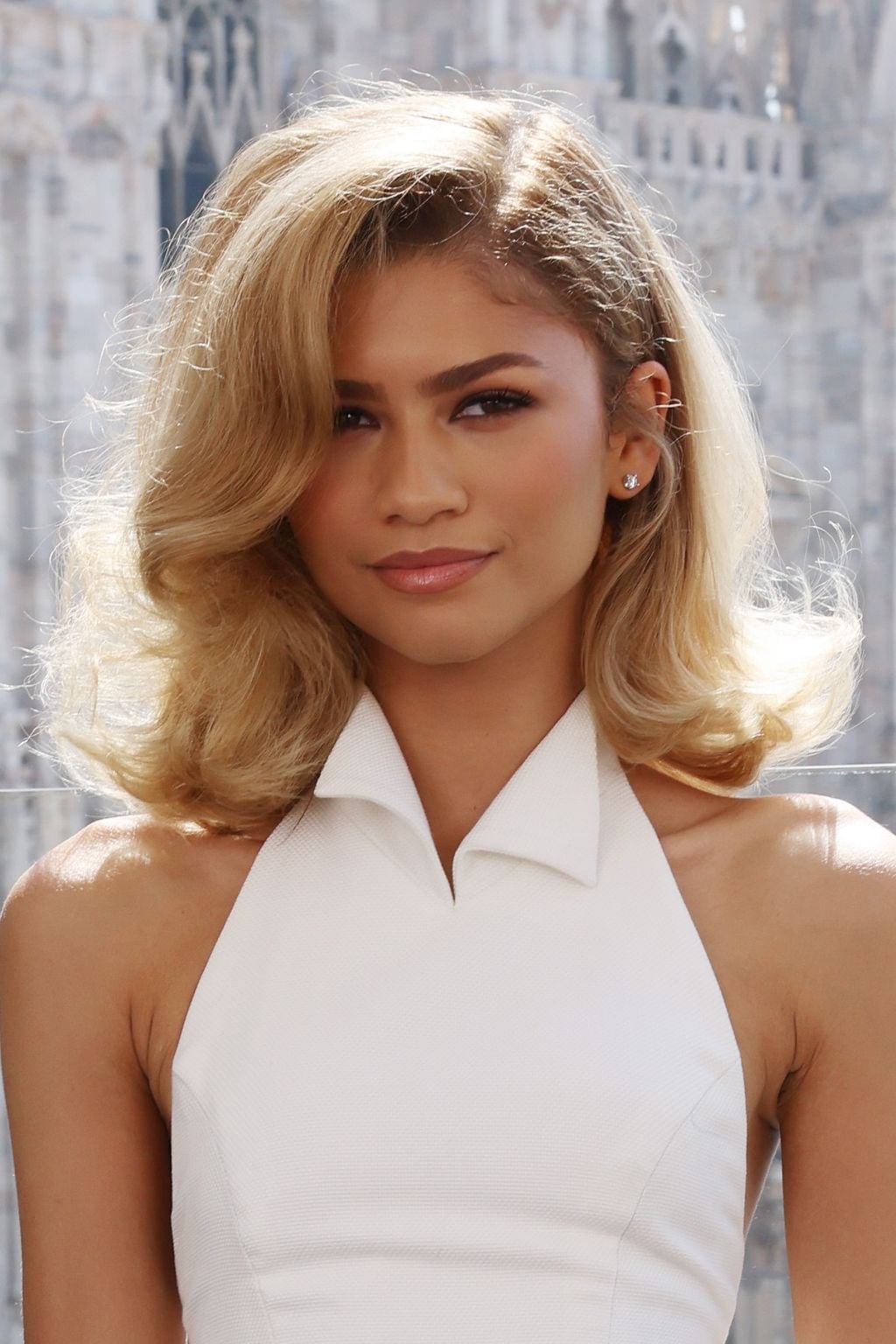
Wondering if ash blonde makes your hair look flat? The subtle lighter highlights woven through these soft layers say otherwise, and the curtain bangs add movement where it counts. This cut genuinely suits medium density, wavy hair at collarbone length, with the curtain bangs softening round and heart faces nicely. Ask your colorist for: collarbone layers, ash blonde with subtle highlights, curtain bangs. A round brush during the blowout builds the volume at the roots, and bangs need a trim every three to four weeks to hold their shape. The ash tone keeps brassiness away, but a purple shampoo once a week keeps it honest.
Collarbone Creamy Butter Blonde With Full Bangs
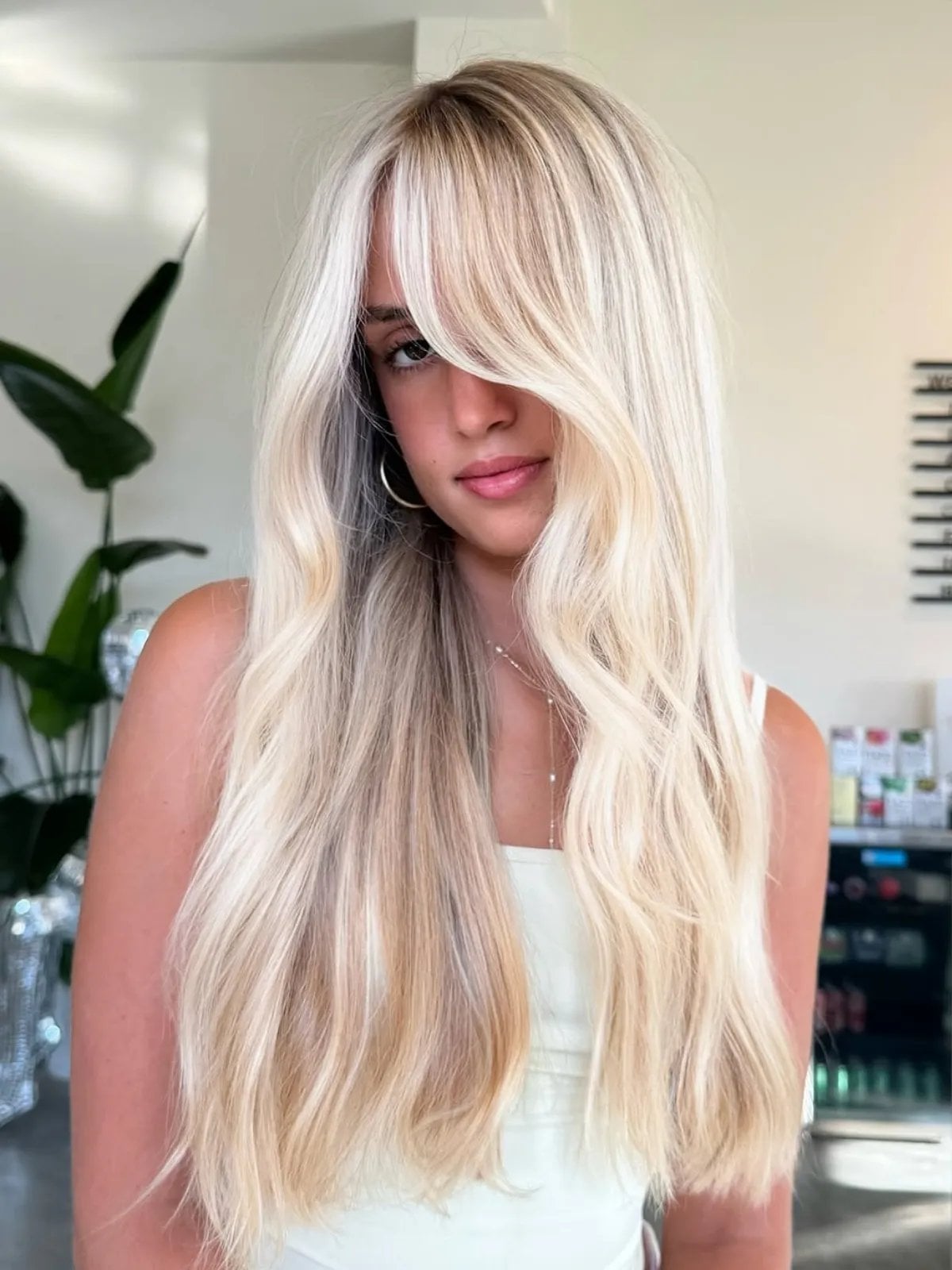
Set creamy butter blonde against a cooler champagne or ash tone, and the difference is warmth. This shade leans golden, which reads as richer on medium density wavy hair at collarbone length. The full bangs cover the forehead, which suits most face shapes, though they demand patience. They need styling every morning with a small round brush, and a trim every two to three weeks, or they start grazing your eyes. Ask your colorist for: collarbone length, creamy butter blonde, full bangs. The one real drawback: this warm blonde can pull brassy on olive skin, so a toning shampoo is part of the deal.
Champagne Blonde Collarbone Layers With Curtain Bangs, Wavy
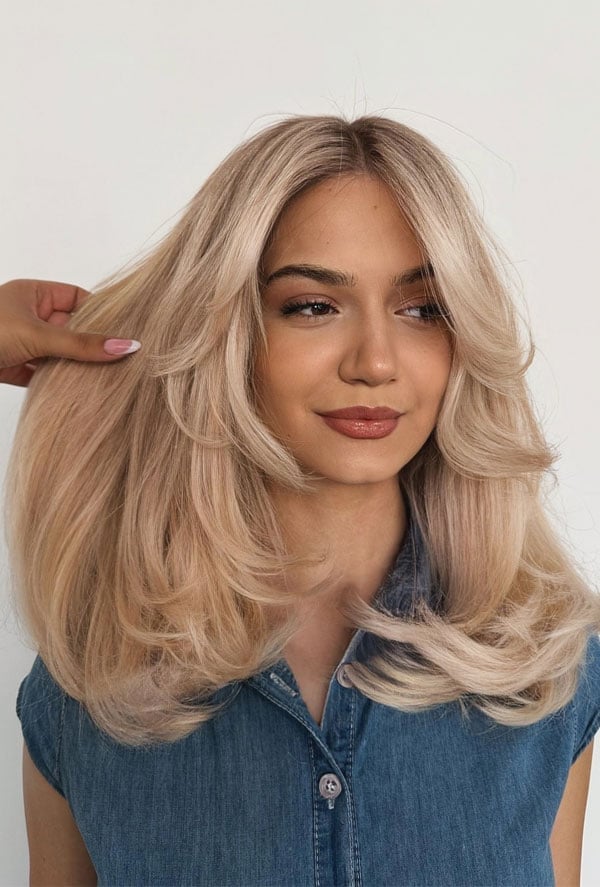
The champagne blonde shade sits between warm and cool, with lighter blonde face-framing pieces that catch the eye first. Soft layers give fine, wavy hair at collarbone length the illusion of more volume, and the curtain bangs blend into the layers rather than stopping abruptly. Ask your colorist for: collarbone layers, champagne blonde, curtain bangs. When you sit in the chair, be specific about wanting the face-framing lighter pieces to start at the cheekbone, not the ear. Root lift from a blowout adds volume, and the curtain bangs need a trim every four to six weeks to keep their sweep.
Ash Blonde Collarbone With Platinum Highlights And Curtain Bangs
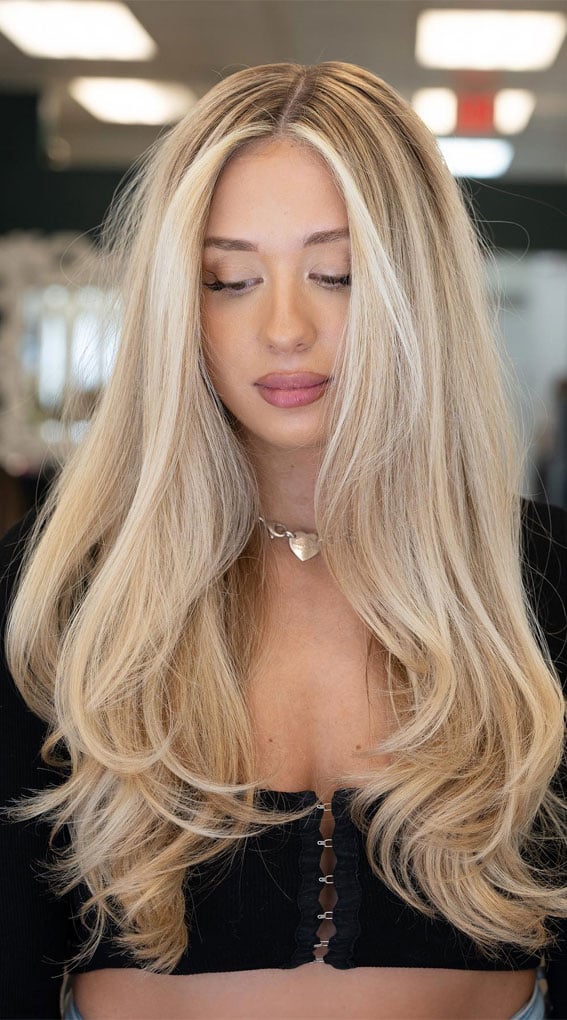
The contrast is the point here: a multi-dimensional ash blonde base with prominent platinum highlights concentrated around the face. This look suits medium density, wavy hair at collarbone length, with curtain bangs that soften round and heart shapes. Ask your colorist for: collarbone length, ash blonde with platinum highlights, curtain bangs. Be prepared for the upkeep, because platinum pieces against an ash base need a toner every four to six weeks to avoid turning yellow, and a smoothing product on the waves keeps the ends from looking dry. This is a bright, dimensional blonde, but it is a maintenance commitment, not a set-and-forget color.
Collarbone Neutral Blonde Balayage With Face-Framing Curtain Bangs
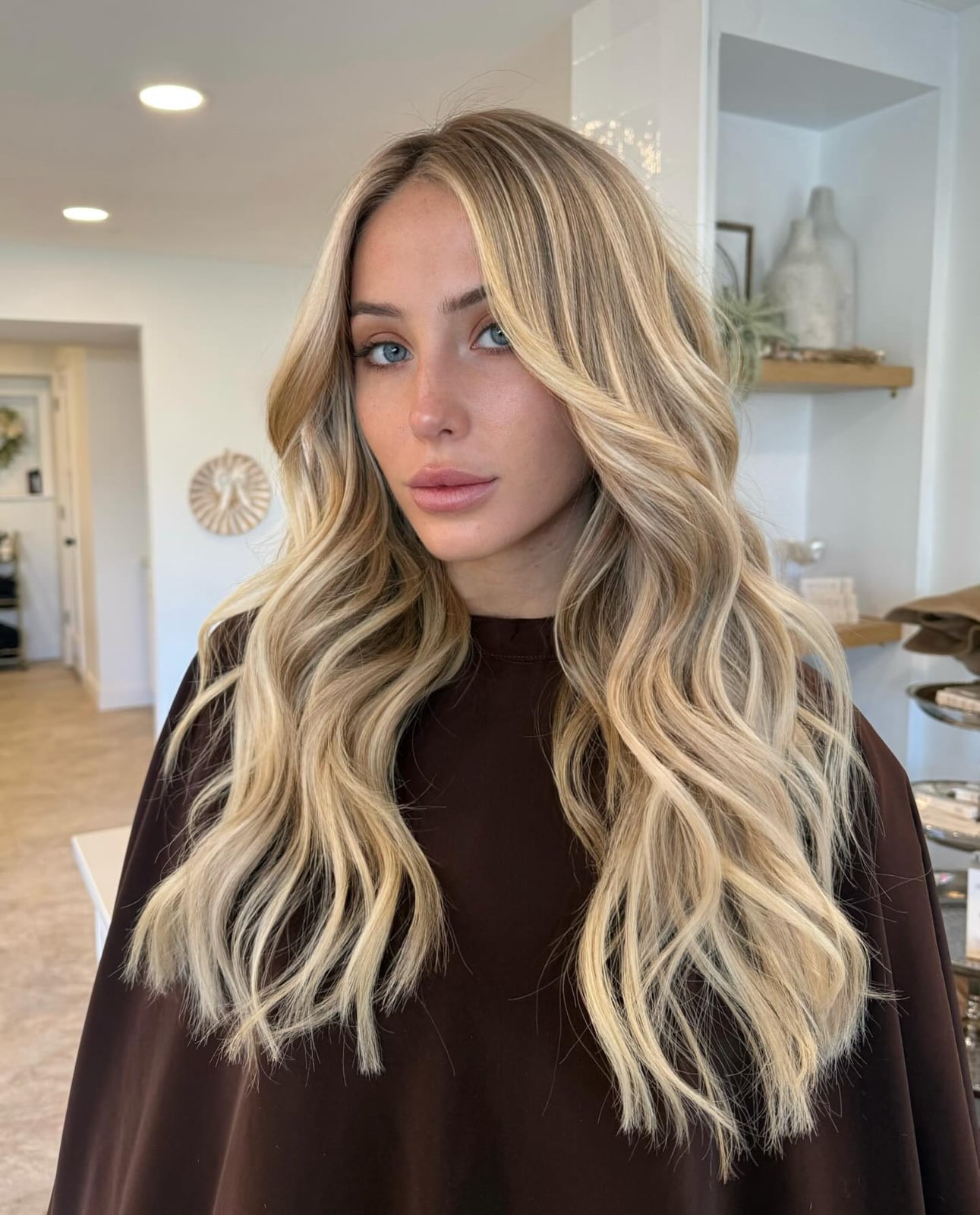
A neutral blonde balayage built with a middle part and face-framing curtain bangs lands somewhere between warm and cool, no leaning required. The collarbone length keeps the weight manageable while the wavy blowout gives the highlights room to travel through each layer. Ask your colorist for: collarbone length, neutral blonde balayage, face-framing curtain bangs. Thick, wavy hair starting at collarbone length takes best to this, and the curtain bangs soften round and heart shapes without demanding constant heat.
Light Brown Base With Blonde Balayage And Curtain Bangs
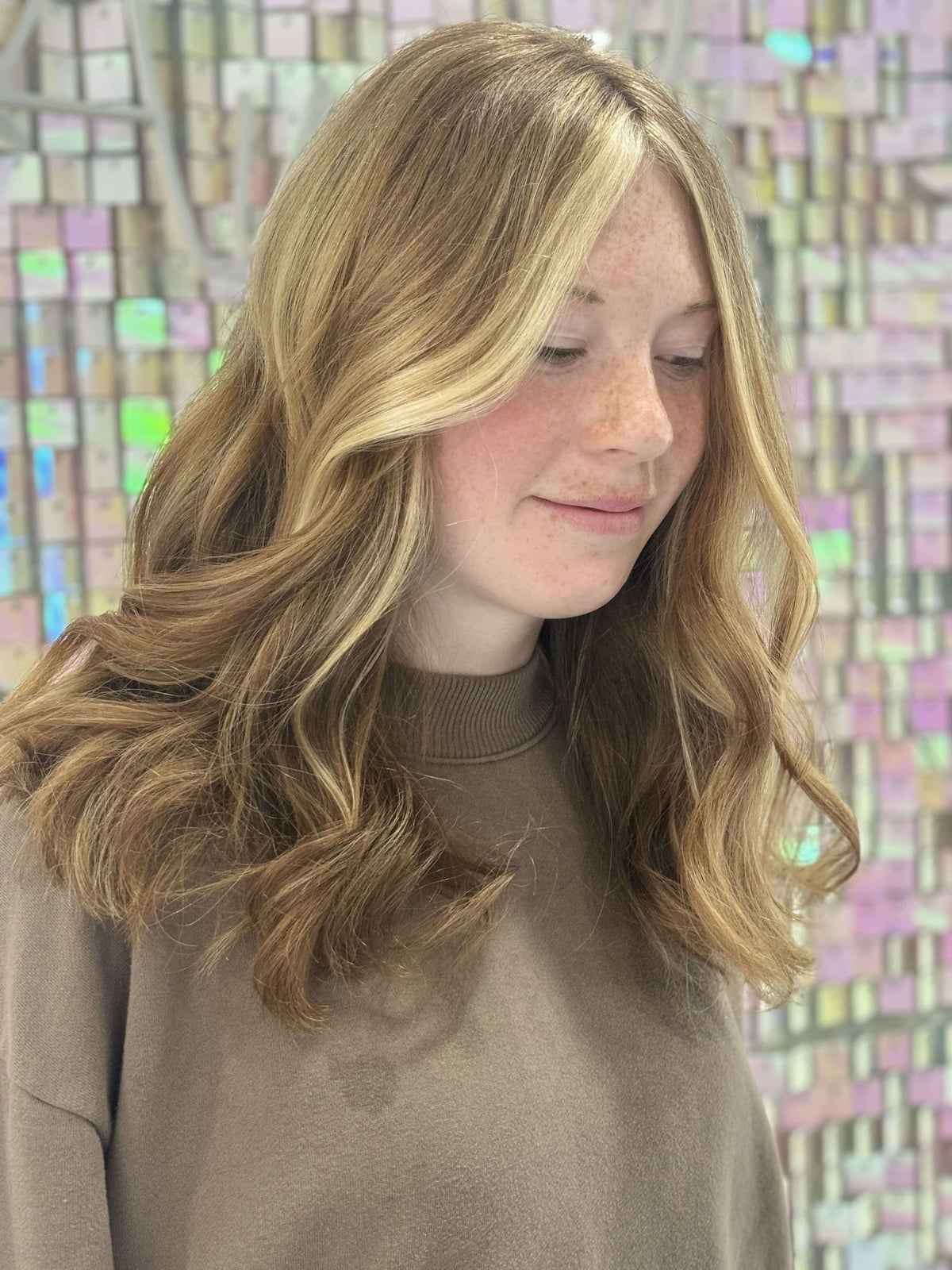
What happens when the blonde grows out on a light brown base? It fades into the background rather than announcing itself with a sharp line. That is the logic of this collarbone cut with curtain bangs and a middle part: the blonde balayage sits mostly on the mid-lengths and ends, so regrowth reads as shadow, not neglect.
Ask your colorist for: collarbone length, light brown base, blonde balayage, curtain bangs. Medium density, wavy hair starting at collarbone length handles the dimension well, and the curtain bangs soften round and heart faces. A curl cream and air drying keep the waves intact without extra heat.
Mid-Back Blonde Balayage With Face-Framing Curtain Bangs, Wavy
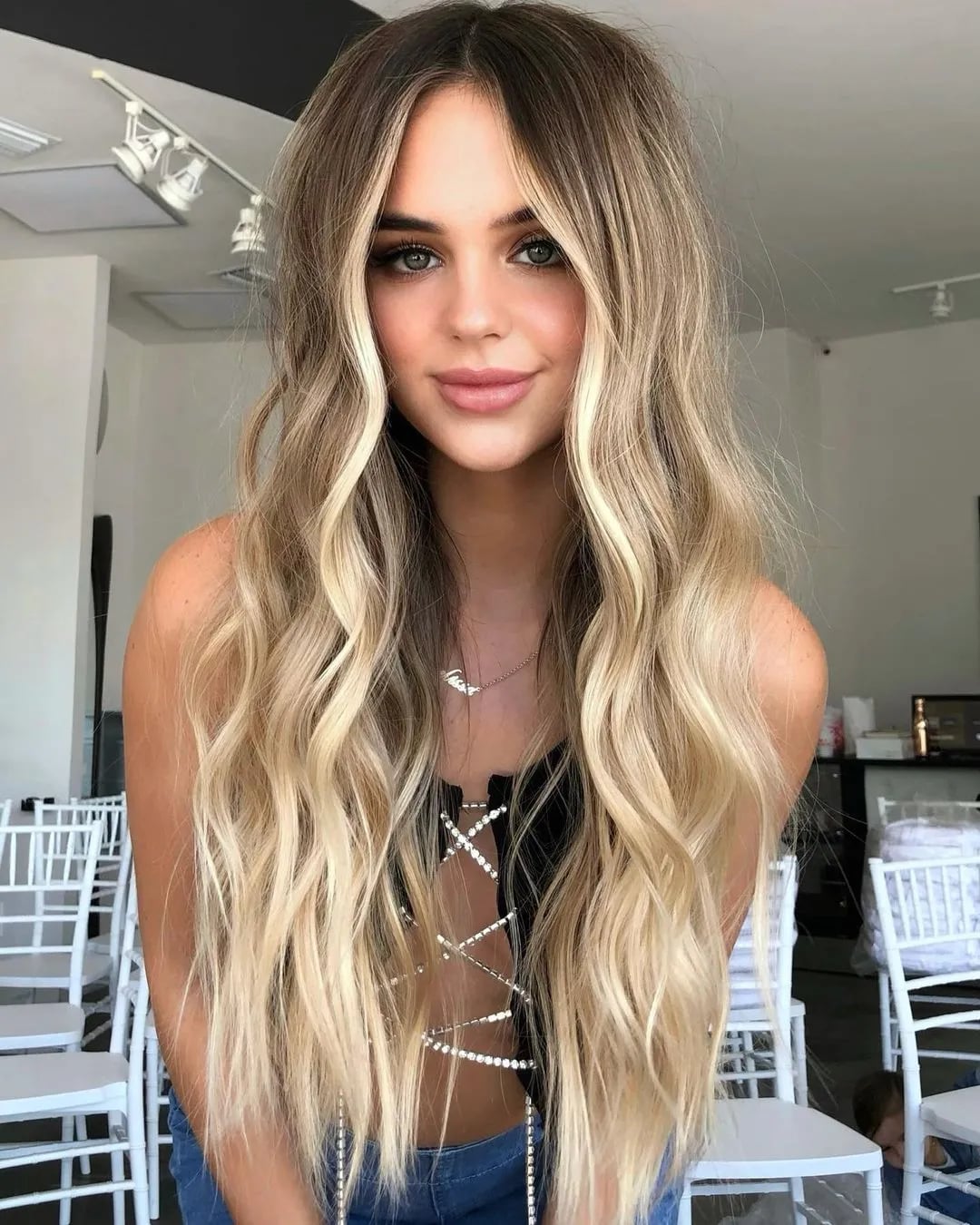
Mid-back length and a blonde balayage with a darker base make for a look that travels well from a desk to a beach vacation. The long layers let the lighter pieces fall through the wave pattern without creating a solid block of blonde, and the face-framing curtain bangs pull attention upward so the length does not weigh the face down.
Ask your colorist for: mid-back length, blonde balayage, face-framing curtain bangs. Thick, wavy hair of mid-back length is the natural candidate here, and the curtain bangs suit round and heart shapes best. A diffuser encourages the wave pattern without frizz, making this a solid choice for warm-weather months when air drying is the goal.
Bright Ash Blonde Collarbone Layers With Side Swept Bangs
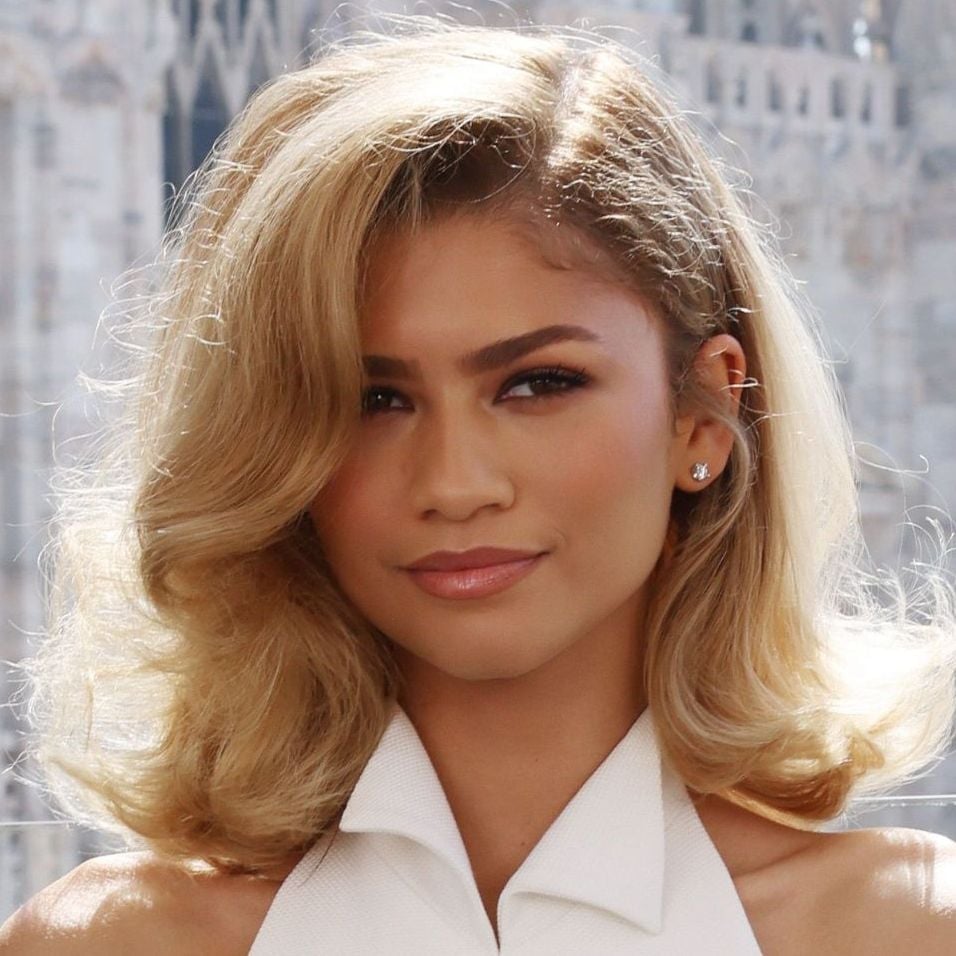
A bright ash blonde at collarbone length with side-swept bangs and voluminous, glossy waves proves that cool tones do not have to read flat. The layers add lift at the crown, which matters when the hair is fine and wavy, and the side part shifts the bangs across the forehead to soften square and oval faces. Ask your colorist for: collarbone layers, bright ash blonde, side swept bangs. Fine, wavy hair of collarbone length benefits from the layered movement, and a shine serum keeps the ash tone looking glossy rather than dusty.
Collarbone Lob With Dark Brown Base And Blonde Balayage, Close-Up Take
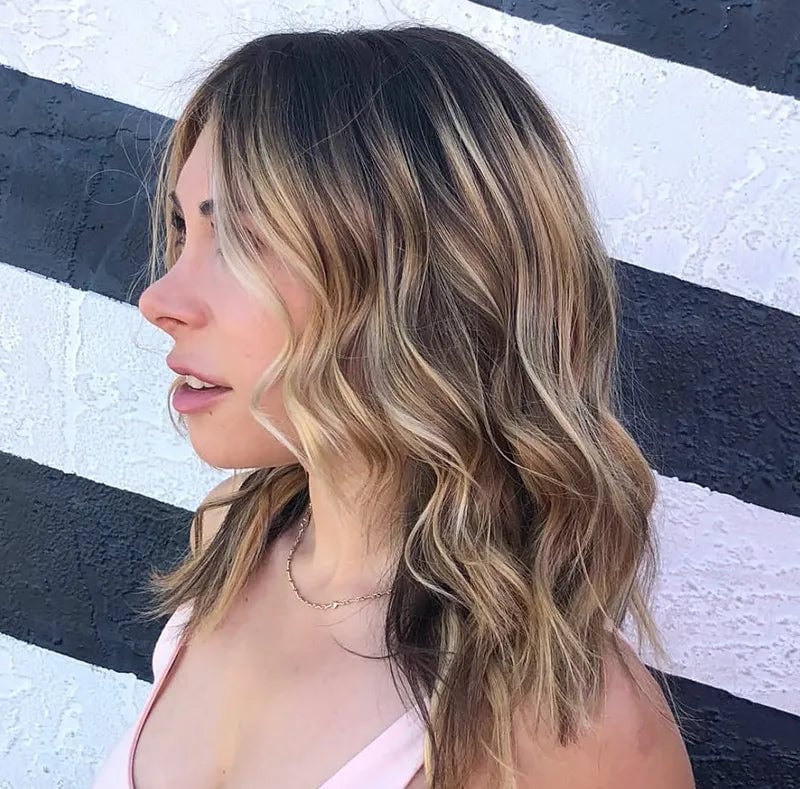
If a full blonde lob feels like too much commitment, a dark brown base with blonde balayage offers contrast without the root vigilance. The collarbone length lob with casual waves and a side part keeps the blonde pieces concentrated on the surface, so the base stays rich underneath. Ask your colorist for: collarbone lob, dark brown base, blonde balayage. Medium density, wavy hair starting at collarbone length works well here, and a side part suits oval and square faces. A sea salt spray adds texture without weighing the waves down.
Shoulder Length Dark Blonde With Lighter Highlights
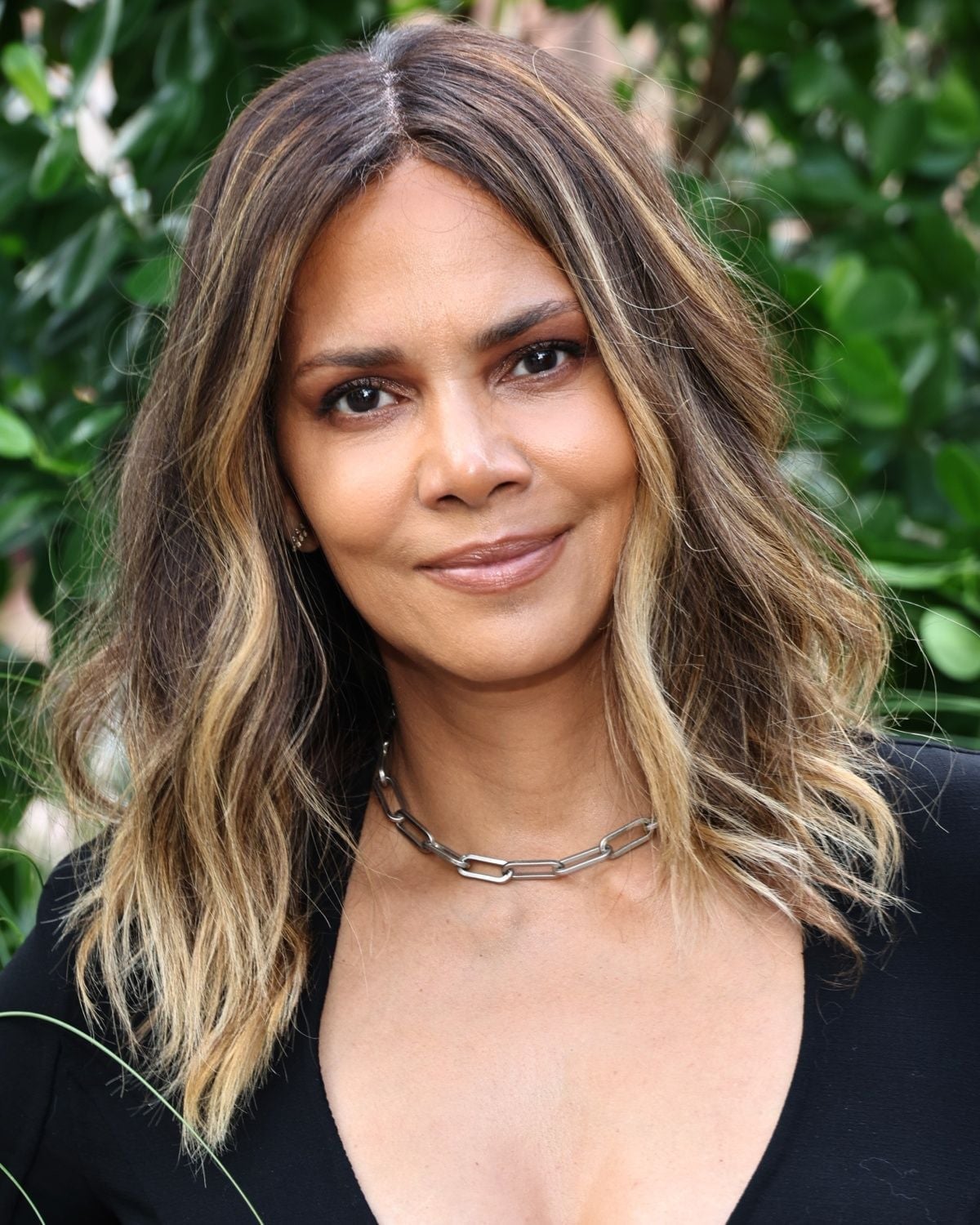
The design here is a shoulder-length cut with a dark blonde base, but the lighter blonde highlights are doing the real work. They are woven through the mid-lengths and ends, not starting at the root, so the color looks dimensional without a harsh line of demarcation. Medium density wavy hair carries this technique best, as the texture catches the lighter pieces and spreads them through the wave pattern. Ask your colorist for: shoulder length, dark blonde base, lighter blonde highlights. A texturizing spray on the waves keeps the layers from looking too uniform, and a trim every six weeks maintains the shape.
The middle part keeps the weight evenly distributed, so the highlights fall on both sides without a heavy concentration on one side. The loose waves are a styling choice, not a permanent texture, which means you can switch to a sleek blowout when you want a cleaner line. The dark blonde base also means the grow-out is less dramatic than a full bleach situation.
Chin Length Bob Dark Blonde With Subtle Highlights
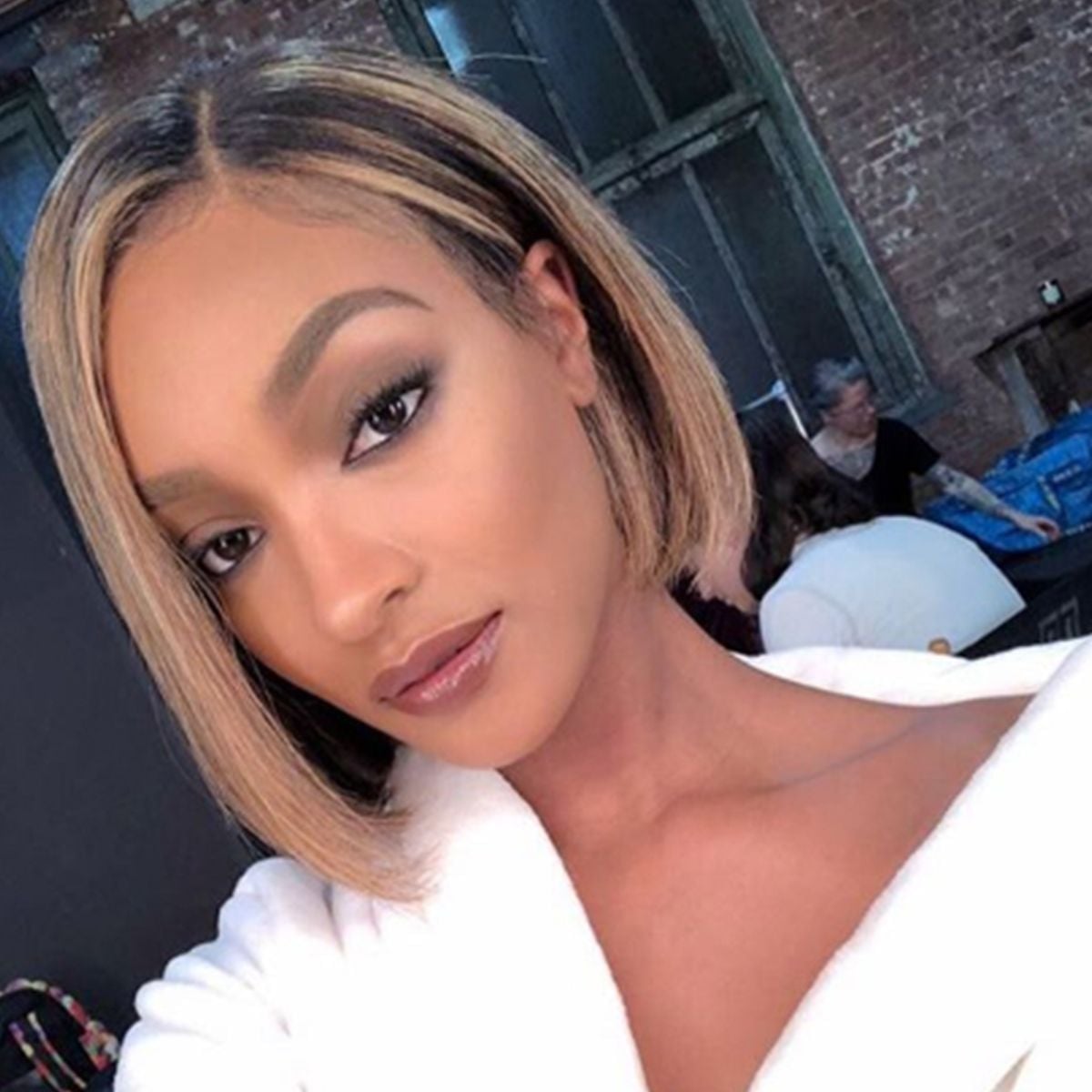
A sharp chin-length bob with a middle part and a dark blonde base, finished with subtle lighter blonde highlights. This is a precise cut that relies on clean lines, so the highlights are kept fine and minimal to avoid distracting from the silhouette. Fine, straight hair at chin length is the ideal starting point, and the bob helps elongate a round face. Ask your colorist for: chin length bob, dark blonde base, subtle blonde highlights. A smoothing serum on the ends keeps the sleek finish intact, and a trim every four to six weeks is essential for this shape.
Collarbone Honey Blonde With Loose Curls
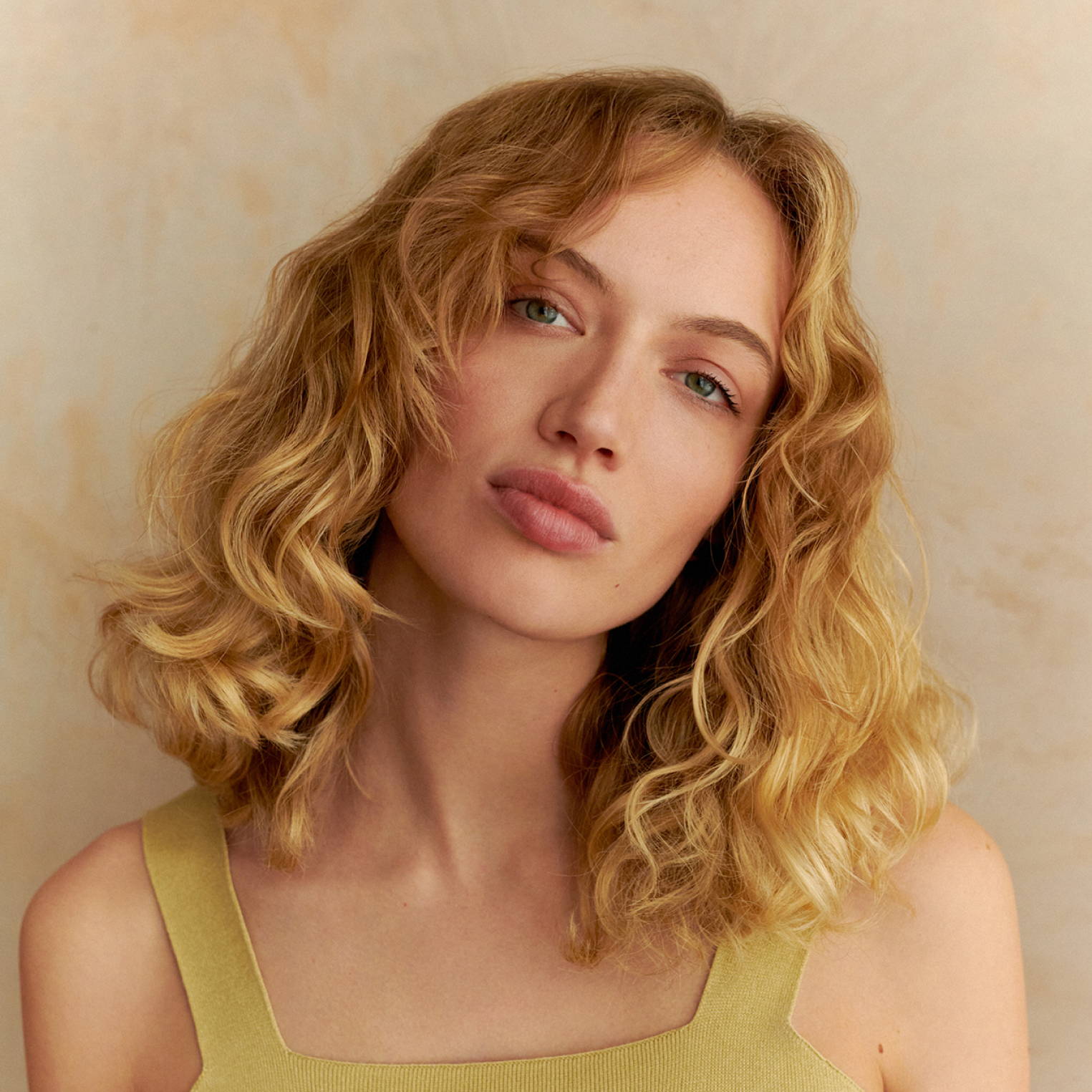
Can a warm honey blonde tone work on naturally curly hair? Yes, if the cut is built to support the curl pattern. This collarbone-length cut has layers that prevent the hair from sitting in a heavy triangle shape, and the middle part allows the curls to fall evenly on both sides. The honey blonde shade is applied as a single base color, so there is no complicated placement to worry about.
Medium density curly hair at collarbone length is the sweet spot: long enough to show the curl, short enough to avoid tangling. Ask your colorist for: collarbone length, honey blonde, loose curls. A curl-defining cream and a diffuser are the standard tools here, and a trim every six to eight weeks keeps the layers from losing their shape. The curls will naturally add volume, so skip any heavy styling products.
Collarbone Honey Blonde With Lighter Highlights
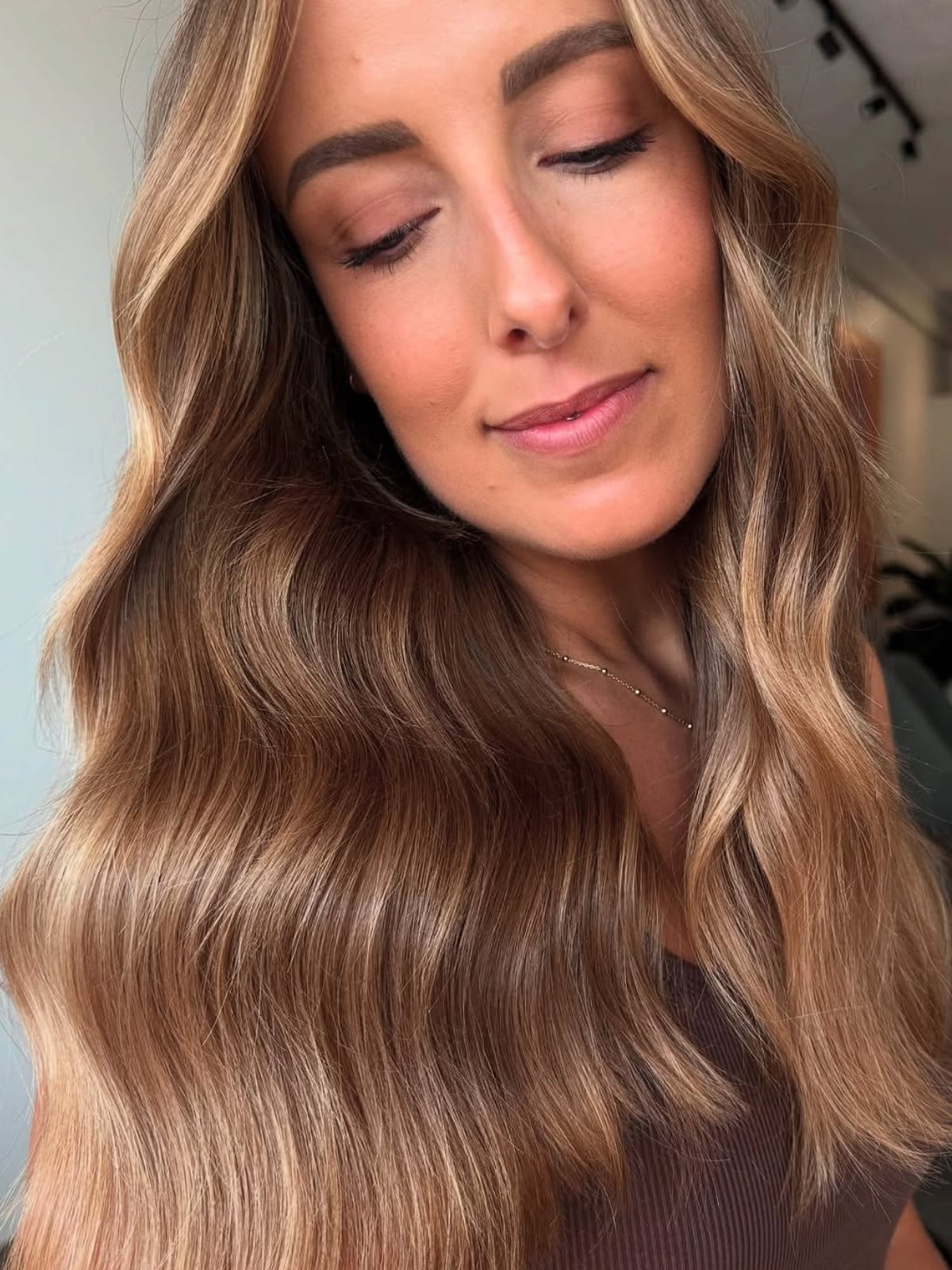
A warm honey blonde base with lighter blonde highlights sounds straightforward, but the upkeep is visible. Honey tones tend to warm up further over time, and those lighter highlights can turn brassy faster than a cooler blonde would. Medium density wavy hair at collarbone length with a side part gives the highlights a natural sweep, but you will need to plan for a toning session every six weeks to keep the honey from veering into orange territory. Ask your colorist for: collarbone length, honey blonde base, lighter blonde highlights. The waves benefit from a texturizing spray, and a trim every six to eight weeks keeps the shape clean.
Collarbone Honey Blonde Lob With Curtain Bangs
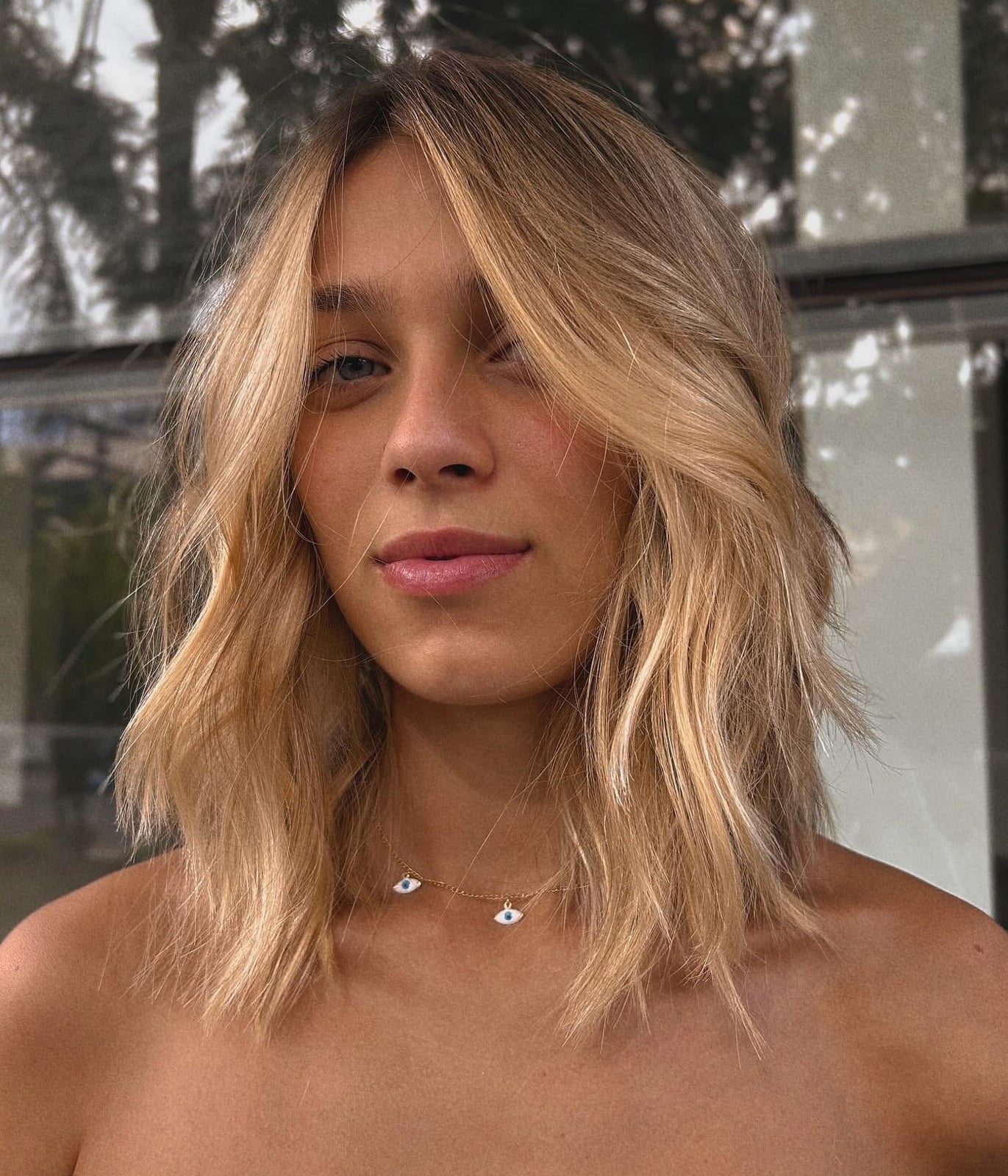
A collarbone-length lob with curtain bangs and a warm honey blonde base, finished with subtle lighter blonde pieces. The curtain bangs are cut to blend into the longer layers, so they frame the face without a separate grow-out phase. Medium density wavy hair at collarbone length is the starting point, and the curtain bangs soften round and heart face shapes. Ask your colorist for: collarbone lob, honey blonde, curtain bangs. Texturizing spray on the waves keeps the bangs from looking too heavy, and a trim every six to eight weeks keeps the shape intact.
Collarbone Neutral Blonde Balayage With Face-Framing, Close-Up Take
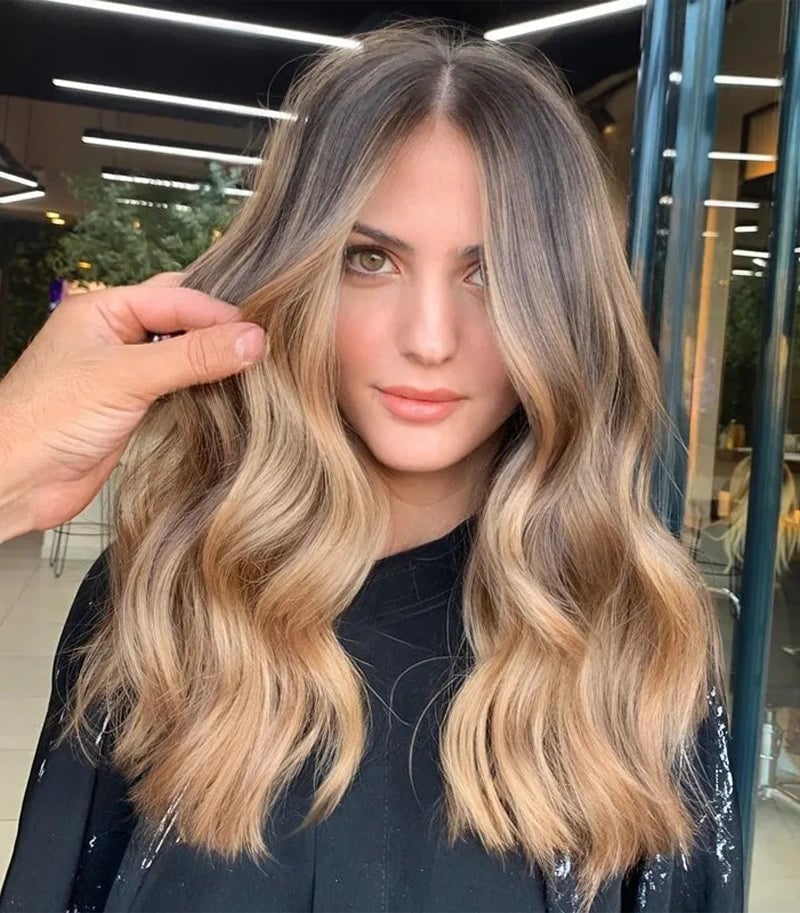
Wondering if a neutral blonde balayage will look too washed out on thick hair? The opposite happens: the weight of thick, wavy texture holds the lighter face-framing pieces so they create deliberate dimension, not a rooty accident. This collarbone-length cut with long layers keeps the bulk from turning triangular, and the neutral blonde balayage lands lighter around the face and ends while staying believable at the base. Ask your colorist for: collarbone length, neutral blonde balayage, face-framing pieces. The face-framing pieces suit most face shapes, and the middle part keeps the eye moving down instead of across. A round brush blowout gives the wavy texture its shape, and you will want a trim every six to eight weeks to keep the ends from splitting.
Collarbone Neutral Blonde Balayage, Office-Safe Version
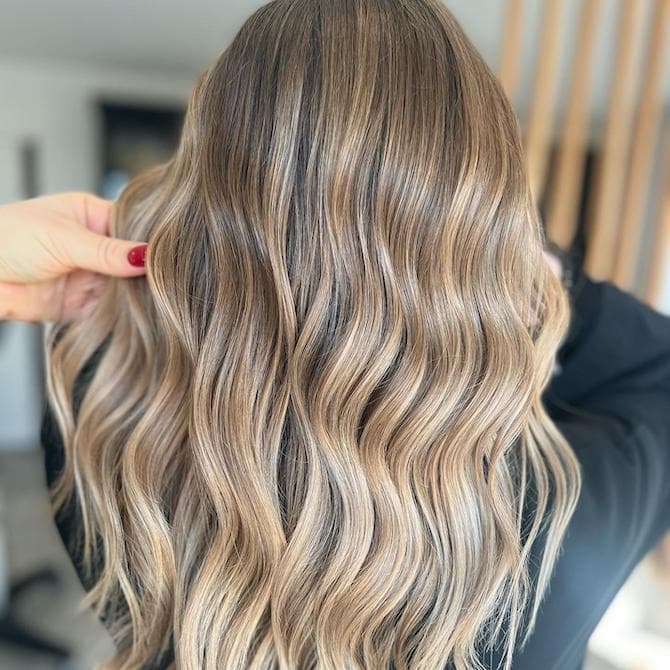
What makes this neutral blonde balayage office-safe is not the shade alone, it is the placement: the lighter blonde stays concentrated around the face and ends, so the color grows out with a soft line instead of a harsh band. The collarbone length with long layers and face-framing pieces holds up under fluorescent light, and the soft blowout with loose waves gives a put-together finish. It carries through transitional seasons because the neutral tone does not lean gold in summer or gray in winter. Ask your colorist for: collarbone length, neutral blonde balayage, face-framing layers. Thick, wavy hair holds the blowout shape well, and the face-framing layers work with most face shapes. Plan a trim every six to eight weeks to maintain the line.
Collarbone Neutral Blonde With Subtle Highlights
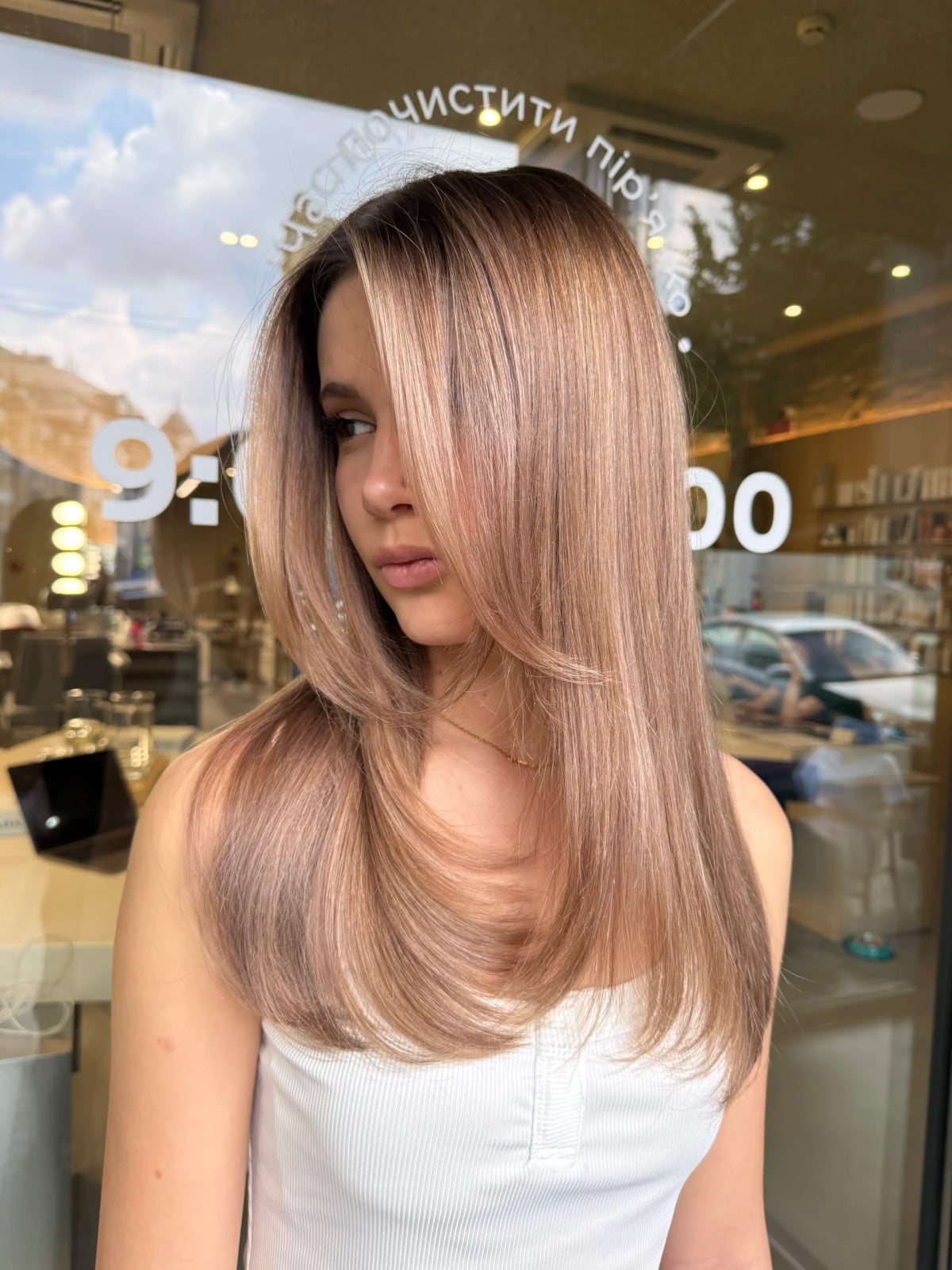
The trick to a natural neutral blonde is not going lighter, it is going subtle with the highlights. Here the collarbone length carries soft waves with face-framing pieces, and the neutral blonde base gets just enough lighter strands to catch movement without turning brassy. Ask your colorist for: collarbone length, neutral blonde, subtle highlights, face-framing pieces. For medium-density wavy hair, the face-framing pieces add lightness around the face without losing body. Use a texturizing spray on the mid-lengths to encourage the soft wave pattern, and book a trim every six to eight weeks to keep the ends sharp.
Mid-Back Ash Blonde With Subtle Highlights And Fine Texture
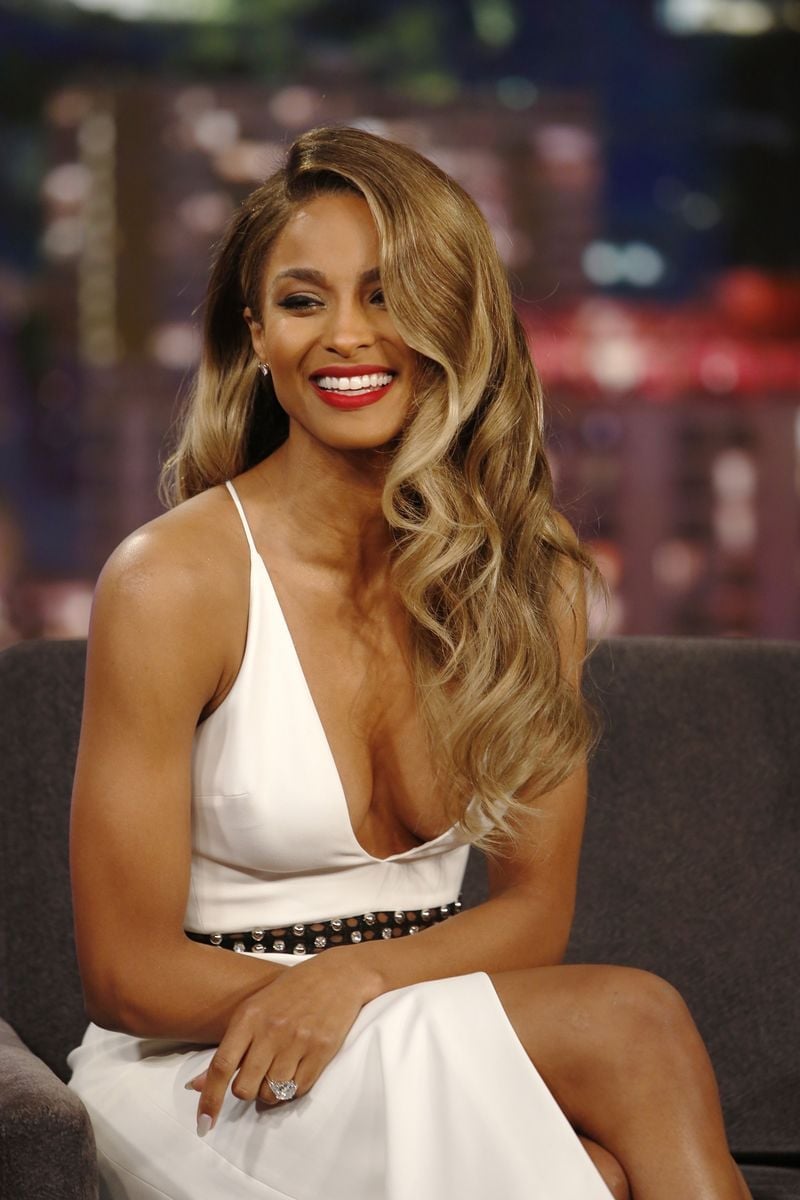
Can fine, wavy hair carry ash blonde without looking flat? Yes, as long as the highlights stay subtle and the layers do the work. This mid-back length cut with long layers and a middle part keeps the fine texture from clumping, and the ash blonde base gets soft, lighter blonde highlights that add dimension without a harsh stripe. The loose waves give the hair movement, which helps fine strands appear fuller than they are. Ask your colorist for: mid-back length, long layers, ash blonde with subtle highlights. The middle part and long layers keep the ends from feeling heavy. A lightweight serum on the lengths will tame frizz without weighing down the waves. Expect a trim every eight to ten weeks, because ash tones on fine hair show split ends faster than on thicker textures.
Mid-Back Ash Blonde Air-Dried Waves
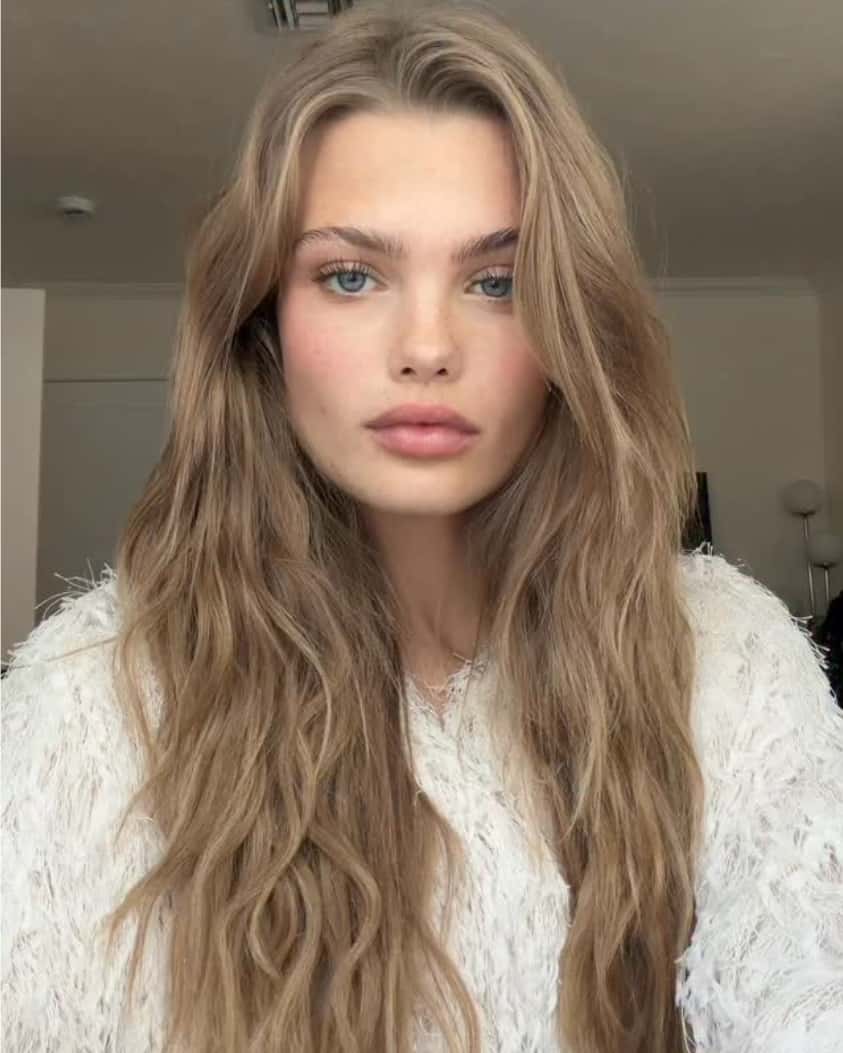
Air-dried waves are the low-stakes version of a blowout: you get the bend without the heat damage, but you also get whatever the humidity decides to add. The mid-back length with long layers and a side part lets the ash blonde with subtle lighter highlights catch light as it moves, and the fine, wavy texture actually behaves better when you let it dry naturally than when you fight it with a brush. Ask your colorist for: mid-back length, long layers, ash blonde with subtle highlights, air-dried waves. The side part works well with many face shapes, and the long layers mean the wave pattern has room to form. Frizz is a real concern: on humid days, air-dried waves on fine hair can turn fuzzy unless you use a curl cream to hold the pattern. A trim every eight to ten weeks keeps the ends from looking straggly.
Mid-Back Ash Blonde Balayage With Healthy Texture
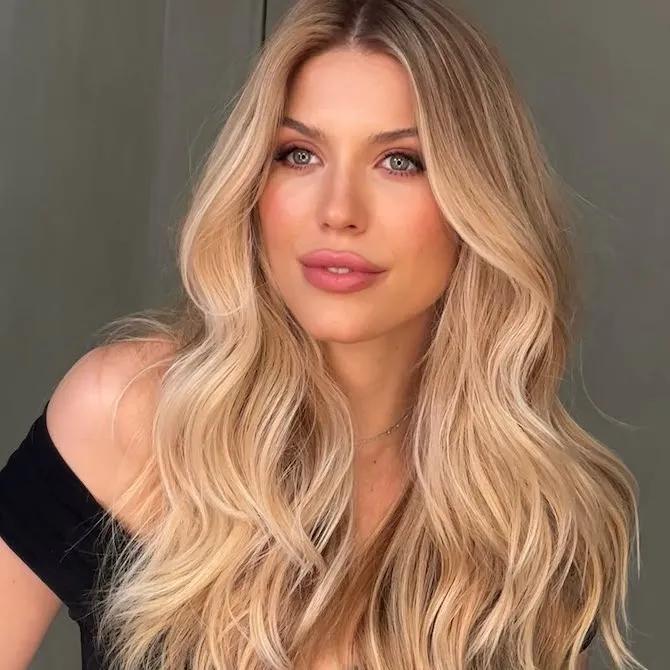
The balayage technique here starts darker at the roots and paints lighter blonde highlights through the mid-lengths and ends, which keeps the ash blonde base from looking flat on thick, wavy hair. It suits most face shapes with a middle part, and the long layers give movement without thinning out the density. Ask your colorist for: mid-back length, long layers, ash blonde balayage. A smoothing balm tames the wave pattern for a soft finish, and a trim every eight to ten weeks maintains the shape.
Mid-Back Ash Blonde Balayage With Platinum Ends
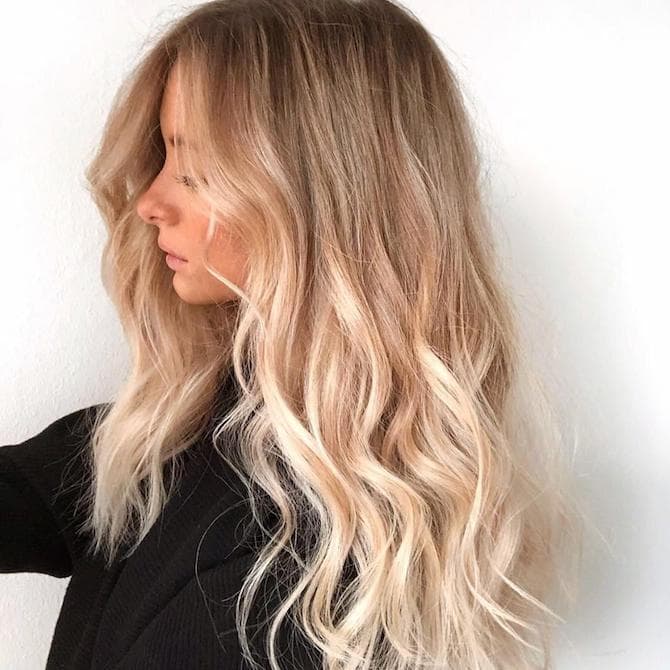
If you are deciding between a uniform ash blonde and one that shifts lighter at the ends, this version lands on the side of contrast. The balayage stays ash through the mid-lengths and graduates into almost platinum tones at the bottom, which adds brightness without pulling the whole look too cool. It suits thick, wavy hair of mid-back length, and the long layers keep the weight manageable.
A middle part works well here because the color placement is even on both sides. Ask your colorist for: mid-back length, long layers, ash blonde balayage with platinum ends. A toning conditioner used once a week keeps the platinum pieces from picking up yellow, and a trim every eight to ten weeks keeps the ends healthy enough to hold that lighter shade.
Mid-Back Ash Blonde Balayage With Darker Roots
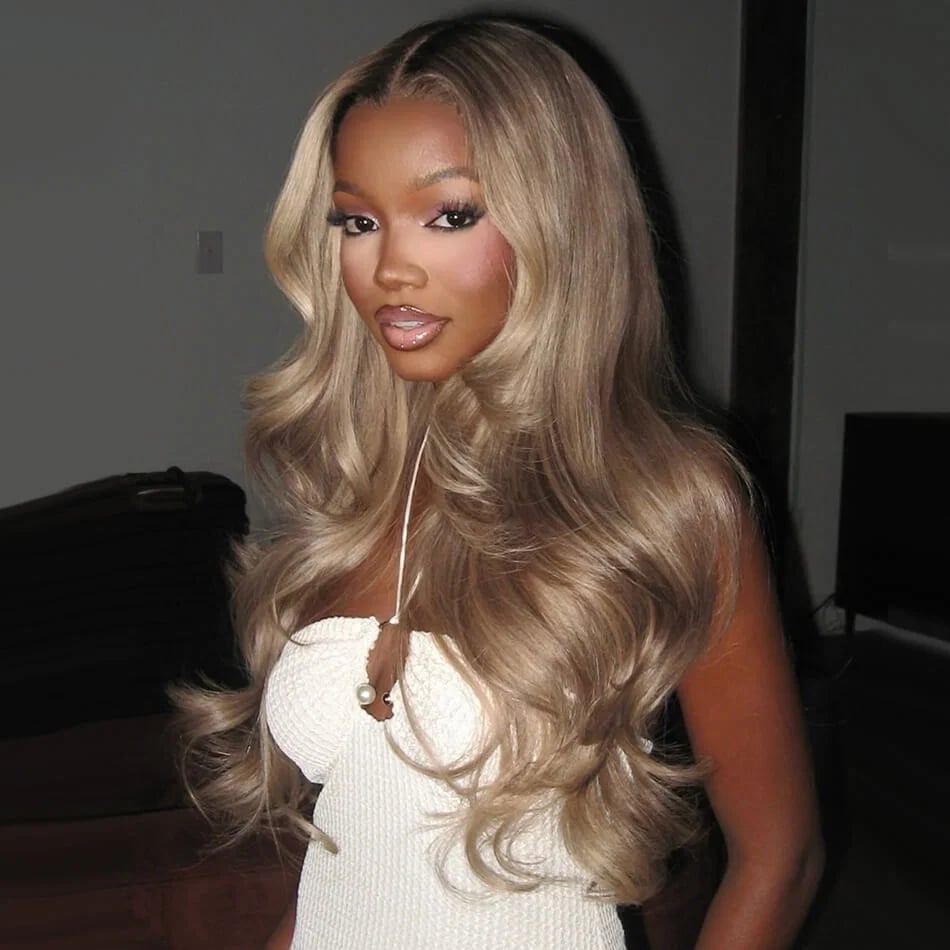
Is a darker root shadow a compromise or a design choice? On this ash blonde balayage, it is the latter. The deeper base at the roots gives the color depth, and the voluminous curls show off how the lighter pieces weave through the mid-lengths without a harsh line of demarcation. It works best on thick, wavy hair of mid-back length, and the middle part keeps the dimension balanced.
People with finer hair might find the contrast too heavy at the top, so a softer root melt would be a better call. Ask your colorist for: mid-back length, ash blonde balayage with darker roots. A volumizing mousse at the roots helps the curls hold their shape, and a trim every eight to ten weeks keeps the layers from looking straggly.
Mid-Back Trophy Blonde With Face-Framing Pieces
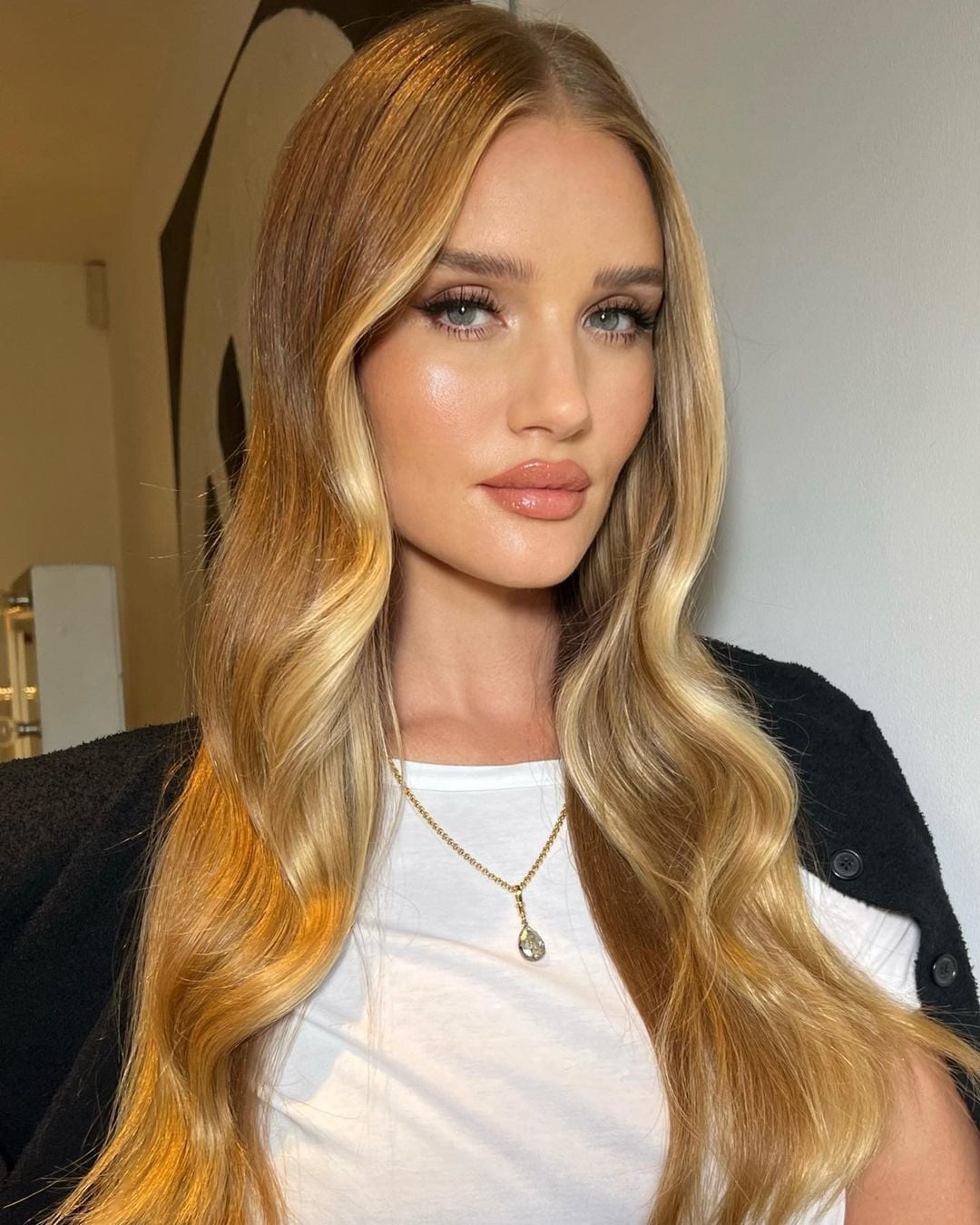
This bright ash blonde, often called trophy blonde, has subtle warm undertones that keep it from turning icy. The face-framing pieces are cut shorter than the rest of the length and start around the jaw, which draws attention to the lighter color around the face. It suits thick, wavy hair of mid-back length, and the side part adds volume at the root. Ask your colorist for: mid-back length, trophy blonde, face-framing pieces. A lightweight defining cream or mousse on the lengths defines the loose waves without weighing them down, and a trim every eight to ten weeks keeps the face-framing pieces at the right length.
Mid-Back Dark Blonde With Lighter Balayage Highlights
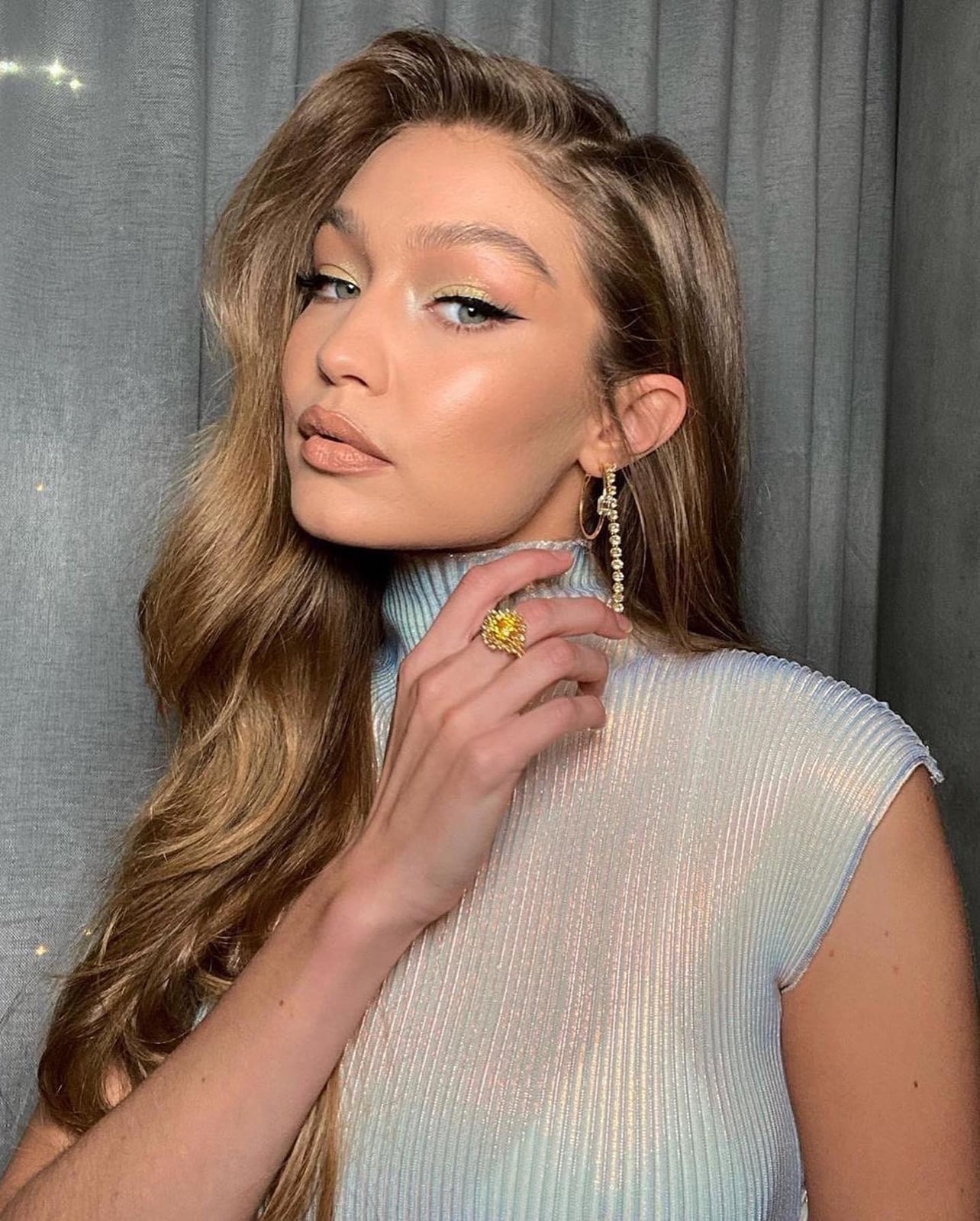
The dark blonde base on this mid-back length hair provides a solid anchor, and the lighter blonde balayage highlights are painted through the mid-lengths and ends to create a gradual lift. Because the base is darker, the grow-out is softer than on a full blonde, which means fewer salon visits between touch-ups. It suits thick, wavy hair of mid-back length, and the side parting adds a natural asymmetry to the waves.
Ask your colorist for: mid-back length, dark blonde base, lighter blonde balayage. A smoothing cream on damp hair controls any frizz during the wave styling, and a trim every eight to ten weeks keeps the ends looking polished. The balayage placement means you can go about twelve weeks between appointments before the roots become obvious.
Mid-Back Golden Blonde With Subtle Highlights
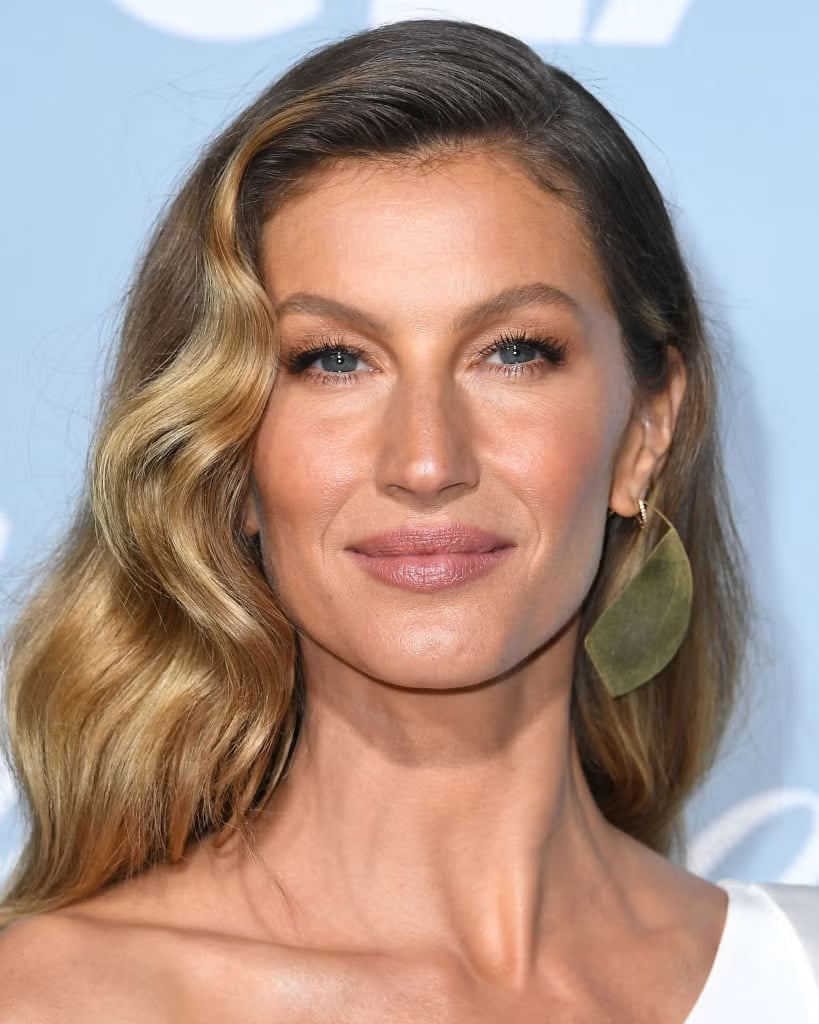
Golden blonde reads warm on its own, so the lighter highlights here do the quiet work of adding depth instead of letting the whole length go flat. The mid-back cut with long layers and a side part carries classic Hollywood waves well, especially on medium density hair that holds a curl without turning crunchy. Ask your colorist for: mid-back length, golden blonde with subtle highlights. The trade-off is brassiness: golden tones drift yellow faster than cooler ones, so a purple shampoo once a week keeps the color honest between salon visits.
A large barrel curling iron shapes the waves in about fifteen minutes, and a trim every eight to ten weeks keeps the layers from tangling at the ends. This is a look that suits most face shapes because the side part breaks up symmetry, though it leans evening rather than office. If you skip the toner, the golden base will announce itself loudly by week six. Book the salon for the initial color, then manage the fade at home.
Mid-Back Honey Blonde With Ash Blonde Highlights
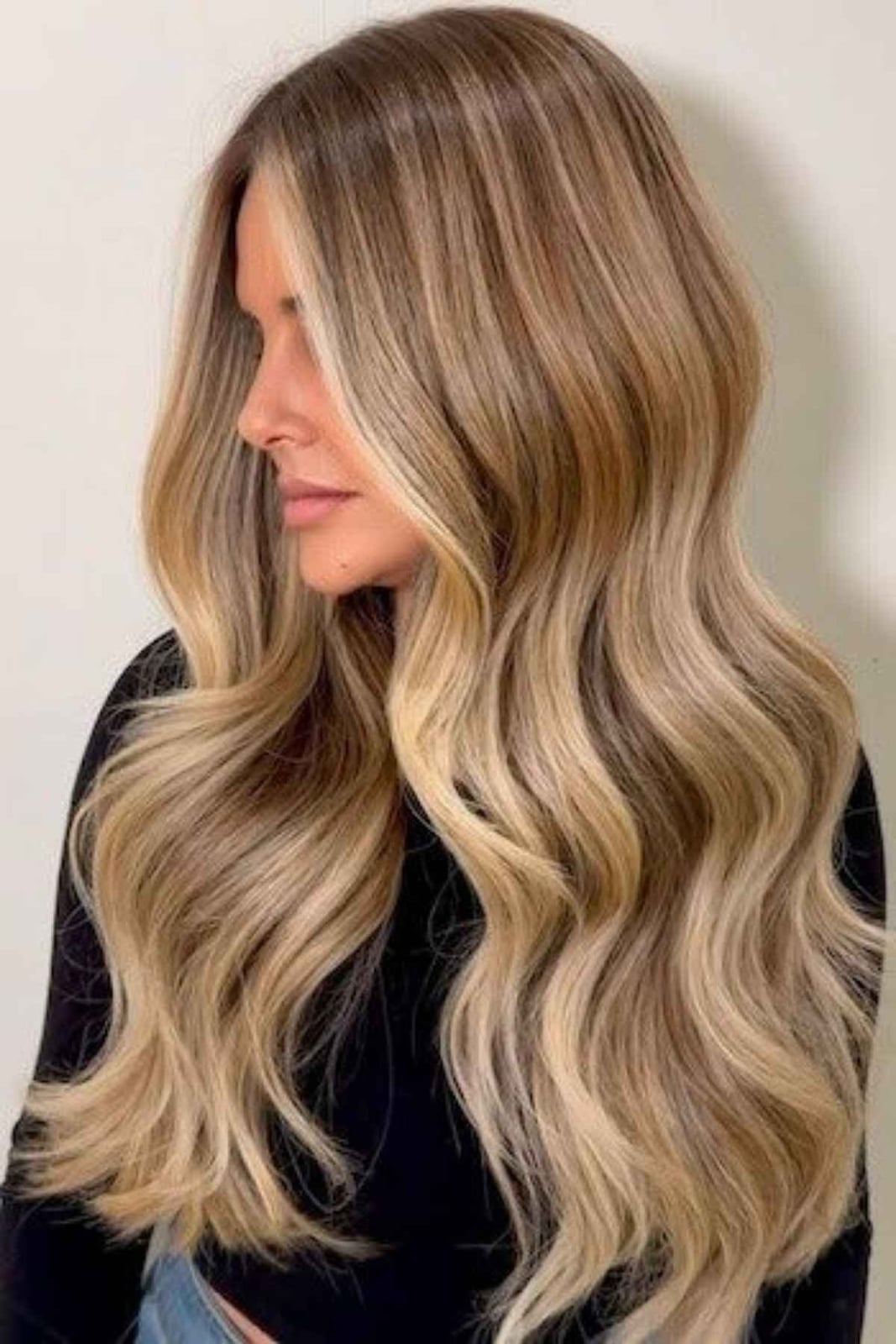
Thick, wavy hair takes the voluminous blowout without losing the face-framing layers, and the middle part lets the color weave evenly down both sides. Ask your colorist for: mid-back length, honey blonde base, ash blonde highlights. The technique is a balayage style application, so the highlights sit heavier toward the ends and leave the roots darker for a lived-in grow out. A volumizing spray at the roots helps the blowout hold its shape, and a trim every eight to ten weeks keeps the layers from splitting.
Mid-Back Icy Blonde With Platinum Highlights
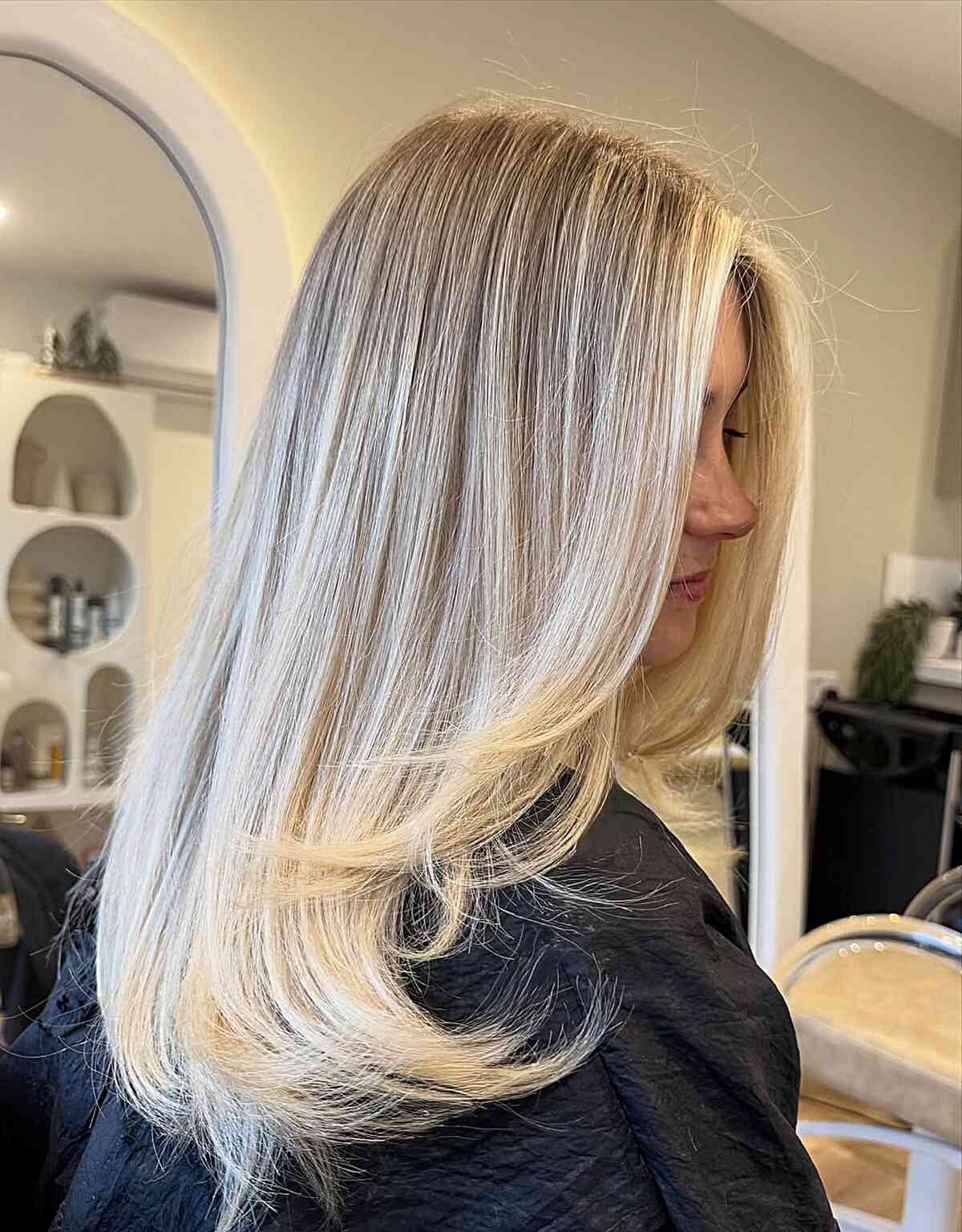
The mid-back length with long layers and a middle part works with fine, straight hair, giving it volume at the crown without weighing it down. Ask your colorist for: mid-back length, icy blonde with platinum highlights. This is not a DIY project: lifting hair to icy platinum requires precise lightener placement and toning, because the contrast between the base and highlights only reads correctly when the color is even. Straight styling with a flat iron and a heat protectant takes about ten minutes, and the tone needs refreshing every four to six weeks with a toner or purple shampoo. The payoff is a sharp, cool finish that suits oval and heart faces, but it demands a salon visit every couple of months to keep the platinum from turning brassy.
Final Thoughts
For olive skin, lean into ash or platinum highlights if you prefer cooler tones; stick with honey or golden blonde bases if warmer shades feel more natural. Either way, keep the color glossy and the grow-out soft.
- Schedule salon toning appointments every 6-8 weeks to maintain cool blonde tones.
- Use a color-safe shampoo and conditioner to preserve vibrancy.
- Incorporate a purple or blue toning shampoo once a week if brassiness appears.
- Trim ends every 8-10 weeks to keep blonde balayage looking fresh.
- Apply heat protectant before styling to prevent damage to highlighted hair.
Find the blonde that makes your olive skin glow.